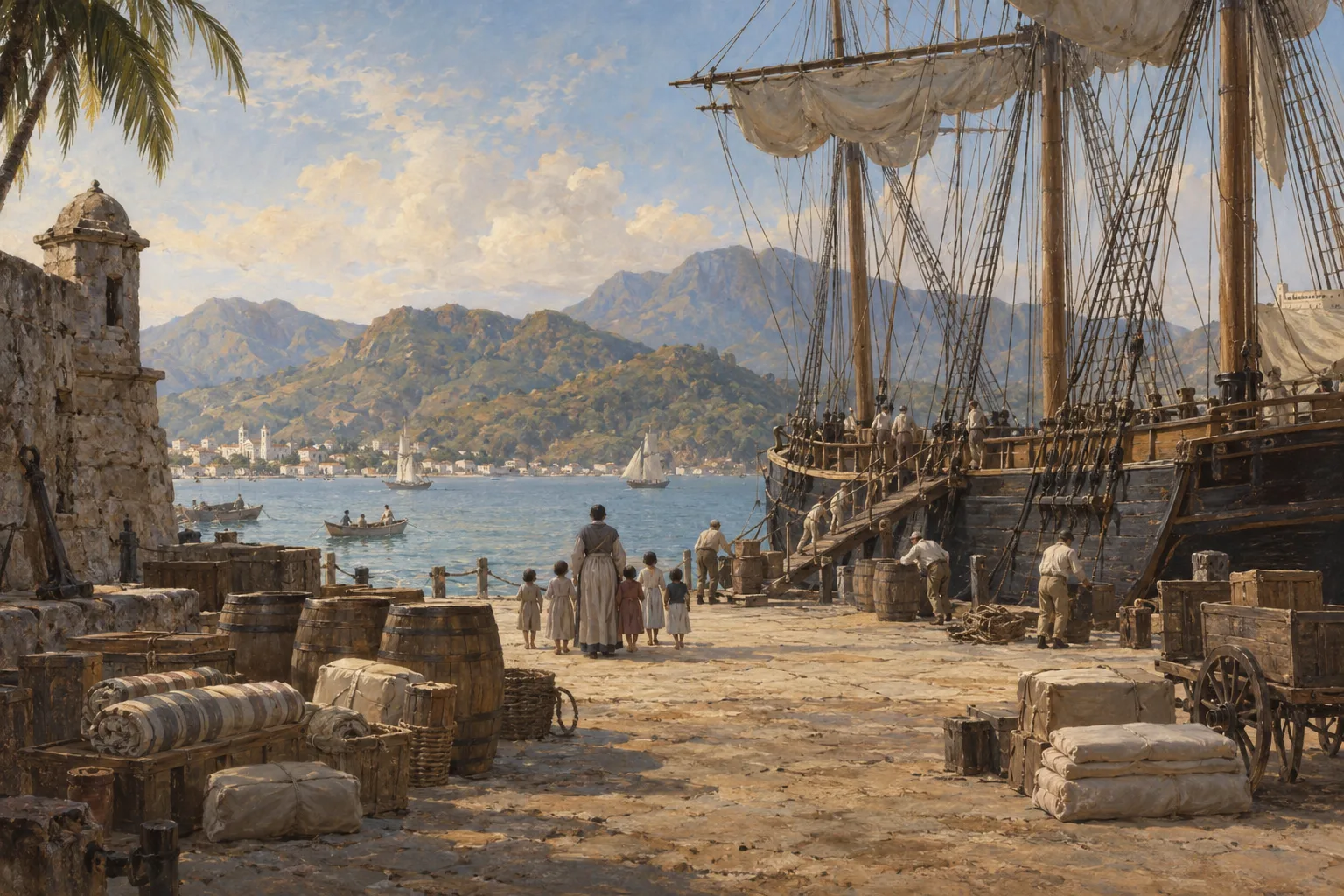
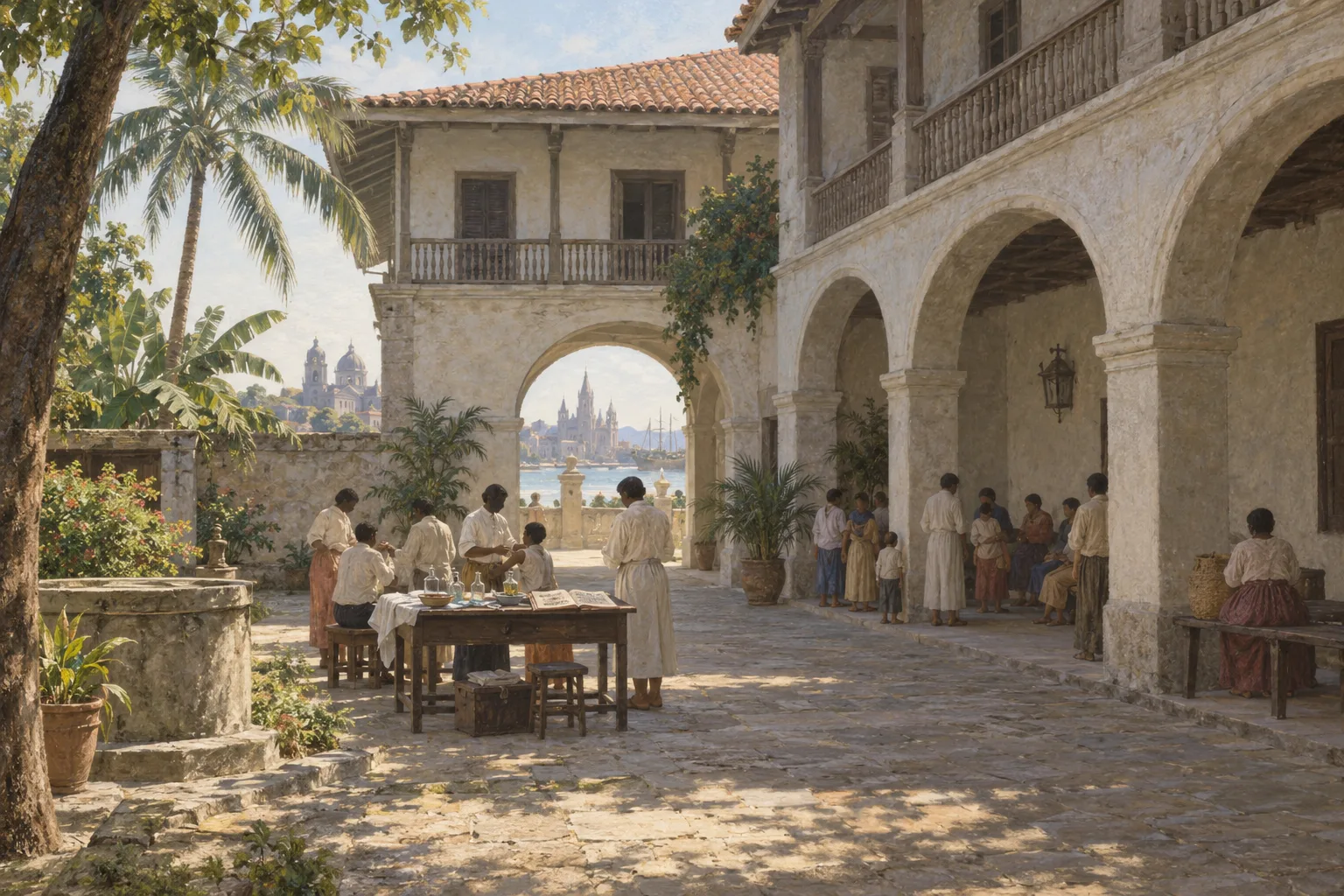
Balmis Expedition Smallpox Vaccine Transport in 1803
The Balmis Expedition carried the smallpox vaccine across oceans by vaccinating children in succession. Drawing on 1804 official correspondence about disputes over ship preparations and issues with the children's care, it distinguishes the challenges of transport from the achievements of local vaccination systems.
- The Balmis Expedition departed from A Coruña, Spain, on November 30, 1803.
- Vaccinating children in succession kept the vaccine viable during the long voyage.
- Official correspondence from 1804 records uncertainty about departure and disagreements over food and lodging arrangements.
- Training local medical workers and establishing vaccination boards were measures to keep vaccinations going after the expedition.
- The success of vaccine distribution should be evaluated separately from the children's treatment and the eradication of smallpox in 1980.
The Balmis Expedition was a smallpox vaccination campaign that set sail in 1803. It overcame the limits of transport without refrigeration by vaccinating children in sequence. It is remembered for bringing the vaccine to the Americas and the Philippines and leaving local vaccination systems in place.
This article draws on the PARES record listings of Spain's General Archive of the Indies and historical research, checked in October 2026.
Why did the Balmis Expedition begin?
The Balmis Expedition aimed to bring smallpox vaccination to overseas territories. King Carlos IV of Spain supported the campaign. Francisco Javier de Balmis led the expedition. Its official name was Real Expedición Filantrópica de la Vacuna. PARES expedition overview
The expedition arose amid smallpox outbreaks and the spread of a new vaccination method. In 1796, Edward Jenner administered a vaccine using cowpox. Cowpox is an infectious disease found in cattle. Vaccination using it was intended to prevent smallpox in humans. WHO smallpox overview
The expedition's task went beyond delivering the vaccine once. It also needed people and organizations to continue vaccination locally. The Spanish Empire's administrative network provided the foundation for this work. The political conditions differed from those of public health cooperation between independent countries today.
How was the vaccine transported without refrigeration?
The expedition kept the vaccine viable by vaccinating children in sequence. Here, viable means it could still be used to vaccinate the next person. Vaccination material could also be placed between pieces of glass for transport. But it might not survive a long voyage and high temperatures.
Sequential vaccination used fluid from a blister at one person's vaccination site to vaccinate the next person. It did not involve vaccinating the same child repeatedly. New recipients were needed in turn. The timing of vaccinations therefore had to match the voyage schedule. Universidad de Alicante researchers' study of child carriers
| Transport requirement | Response at the time | Potential point of failure |
|---|---|---|
| Keeping vaccination material viable | Sequential vaccination from person to person | Failing to obtain material for the next vaccination |
| Finding the next recipients | Recruiting children in several places along the route | Children having had smallpox or already been vaccinated |
| Maintaining vaccination intervals | Observing vaccination sites and managing the sequence | Material being transferred through contact before the scheduled vaccination |
| Sustaining a long voyage | Preparing food, shelter, and care | Deteriorating health and living conditions for the children |
This method used children's bodies to transport the vaccine. It required both medical observation and daily care. Successful transport alone does not establish that the children were treated appropriately.
A timeline through the Americas and the Philippines
The expedition split into several branches in the Americas. A detachment led by José Salvany headed to South America. Balmis's group traveled through Cuba and Mexico to the Philippines. Some activities continued after Balmis himself returned. 2009 study of the expedition's history
| Period | Event | Source |
|---|---|---|
| November 30, 1803 | The María Pita set sail from A Coruña, Spain | PARES expedition overview |
| Late 1803 through 1804 | Traveled through the Canary Islands and Puerto Rico to Venezuela | 2009 study of the expedition's history |
| 1804 | Activities divided between the South American route and the Cuba and Mexico route | 2009 study of the expedition's history |
| October and November 1804 | Personnel, food, and lodging for the voyage to the Philippines discussed in official correspondence | PARES file on expenses |
| February 1805 | Pacific crossing began from Acapulco, Mexico | 2026 study of the Asian route |
| April 1805 | Arrived in Manila with the vaccine still viable | 2026 study of the Asian route |
| Second half of 1805 | Balmis traveled toward Macau and Guangzhou | 2009 study of the expedition's history |
| 1806 | Balmis returned to Spain | 2004 study of Balmis's travels |
| 1807 | Expedition personnel who had worked in the Philippines returned to Mexico | 2009 study of the expedition's history |
Studies differ on whether the arrival in Manila was on April 15 or 16. The timeline therefore gives only the month confirmed by both. It also does not treat the South American detachment's activities as Balmis's personal travels.
What conflicted during preparations for the ship in 1804?
The issue in the official correspondence was how far preparations should go when departure was uncertain. The PARES file on expenses contains copies of correspondence from both sides. The account below summarizes the archive's descriptions of the individual documents.
| Document date | Sender | Contents described in the record listing |
|---|---|---|
| October 29, 1804 | Balmis | Informed Captain Ángel Crespo of the number of passengers and their needs for lodging and food |
| October 29, 1804 | Ángel Crespo | Replied that, because departure was uncertain, he could not promise to prepare the necessary food |
| October 30, 1804 | Balmis | Reported the difficulties of preparation and the need to train local medical personnel to the viceroy |
| November 6, 1804 | Viceroy of New Spain | Ordered measures to prepare for boarding and provide for passengers' convenience |
| March 20, 1805 | Balmis and Ángel Crespo | Complaint and reply concerning the children's meals, lodging, and treatment |
The 1804 orders did not guarantee conditions aboard the ship. The complaint written during the voyage in 1805 shows the gap. Balmis's complaint, however, cannot be treated as the result of an independent investigation. The captain's reply is also preserved in the same file. PARES listing of correspondence on expenses
What difficulties did the children face?
The children's meals and lodging were a vulnerable part of the expedition. A 2026 study of the Pacific voyage examined Balmis's report. It included complaints about conditions aboard the ship that differed from what had been promised. It also described unscheduled vaccinations occurring in cramped quarters.
In the case of accidental vaccination summarized by the study, 7 children were involved. If vaccinations happened ahead of schedule, fewer recipients remained for later use. This could break the chain that kept the vaccine viable. Even so, the expedition delivered a viable vaccine to Manila in April 1805. 2026 study of the Asian route
The children's origins and routes differed. Records list 22 children in the group that set sail from Spain. A group of 26 was recruited in Mexico to transport the vaccine across the Pacific. The same 22 children did not carry the vaccine on every route. Full text of the 2009 study of the expedition's history, study of child carriers
In Cuba, the expedition had difficulty finding new carriers. Research also records the purchase of enslaved girls. Some of the children recruited in Mexico had parents. It is inaccurate to describe all participants as orphans or volunteers. Study of records on the recruitment and travel of the children
Isabel Zendal Gómez was responsible for caring for the expedition's children. Care staff accompanied them during sea travel and activities on land. But the presence of a caregiver is not evidence of appropriate treatment. Whether promises of protection and education were kept must be checked separately. Spanish Ministry of Culture CIDA guide to the expedition
The shift from vaccine delivery to local vaccination systems
Continued vaccination required local organizations to take responsibility. Vaccination material had to be kept viable after the expedition left. Central and regional vaccination boards were designed to take on this work. The board in Venezuela became a model for later organizations. The warm chain on vaccination boards
Training local medical personnel served the same purpose. They needed to learn how to preserve and use vaccination material. The expedition's goals also included free vaccination for residents. Vaccination boards were intended to manage records as well. Study of the expedition's goals
In the Philippines, local networks of cooperation supported the expansion of vaccination. A 2026 study explains the role of Manila's regulations. They set out the responsibilities of those in charge and the management of vaccination records. This was a way to transfer the traveling expedition's work to local organizations. Study of Manila's vaccination system
How far did the expedition's achievements extend?
The expedition helped deliver the vaccine over long distances and establish a basis for local vaccination. It was not, however, the first to introduce the vaccine in every place it visited. It sometimes encountered medical personnel who had already begun vaccinating people.
Tomás Romay administered vaccinations in Cuba before the expedition arrived. He obtained vaccination material from Puerto Rico in February 1804. Vaccination was underway when Balmis arrived in May of that year. Romay later led the local vaccination board. CIDA account of vaccination history in Cuba
The Balmis Expedition did not eradicate smallpox worldwide. WHO intensified its eradication campaign in 1967. It then pursued vaccination alongside surveillance of cases. The World Health Assembly declared global eradication on May 8, 1980. WHO account of the eradication campaign, World Health Assembly resolution WHA33.3
| Category | Achievement documented for the Balmis Expedition | Outcome requiring separate evidence |
|---|---|---|
| Transport | Delivery of a viable vaccine to destinations | Reliable supply afterward |
| Vaccination | Vaccinations administered in several places | Vaccination rates across entire areas and long-term effects |
| Organization | Training and establishment of vaccination boards | Continued operation after the expedition |
| Disease control | Spread of a means to prevent smallpox | An end to global transmission and eradication |
How should expense records be distinguished from vaccination outcomes?
Expense records show the campaign's preparations and disputes. They do not, by themselves, measure the effects of vaccination. This distinction also matters when organizing official correspondence as historical data. The following table distinguishes what can be inferred from each type of record.
| Record item | What it can establish | What cannot be assumed from it alone |
|---|---|---|
| Requests to prepare food and lodging | Needs and plans at the time of the request | The quality of meals and lodging actually provided |
| Preparation orders or expense approvals | Administrative decisions and responsibilities | Whether orders were carried out on site |
| Balmis's complaint | Problems reported by Balmis | A final judgment that also considers the other party's account |
| Reports of vaccination totals | Vaccination activity counted by the person reporting it | A complete end to smallpox transmission |
The date a document was written and the date an event occurred are also different pieces of information. The 1804 correspondence about voyage preparations must be distinguished from records of the actual departure. When combining documents, their authors and the scope of their reports must be retained. Otherwise, plans and actions may be mistakenly combined into a single event.
Spain's UNESCO nomination describes the scope of the related records. The collection also includes administrative documents from before and after the expedition. It would therefore be inaccurate to read the full date range of the collection as the expedition's duration. Description of the records submitted to UNESCO
Records and interpretation
What the records directly support
The PARES listings establish the dates, senders, and main contents of the correspondence. They include discussions and complaints about the ship's preparation. This article has not presented the listing descriptions as quotations from the original letters. The exact wording of any particular passage should be checked against the linked images of the originals.
What historical studies commonly emphasize
The studies reviewed address both sequential vaccination and the role of local organizations. The technique for keeping the vaccine viable was not enough on its own to complete the campaign. Training medical personnel and administrative cooperation determined whether it could continue. This interpretation considers the history of transport alongside the history of public health.
Differences between sources and remaining limits
The expedition's end year varies with the scope of the account. The PARES event title uses 1803 through 1810. A 2009 study covers subsequent activities through 1813. Balmis's return in 1806 cannot be taken as the end of the entire campaign.
Some voyage dates still differ between studies. Nor can the children's long-term lives as a whole be reconstructed from one file. Promises of protection and the support actually provided require separate checks. A total number vaccinated across the expedition would also be misleading without specifying what the count includes.
Why read this as part of the history of vaccine delivery today?
This case shows the relationship between preservation methods and delivery organizations. At the time, the vaccine was kept viable through vaccination from person to person. Vaccine delivery today manages storage conditions specific to each product. Although the technology differs, people and systems of responsibility are still needed to maintain supply.
The historical points of connection are:
- Preservation: Keeping the vaccine usable until it reaches its destination.
- Operations: Whether local staff can continue vaccination and record management.
- Care: Assessing the campaign's achievements separately from its treatment of participants.
- Evaluation: Distinguishing the amount transported, vaccination totals, and reductions in disease.
The expedition's use of children as carriers is not a model for vaccination today. What can be compared are the preservation and operational problems it sought to solve. The children's experiences show who bore the burden of that solution.
Frequently asked questions
Were the children given smallpox?
The expedition carried cowpox vaccination material intended to prevent smallpox. This differs from variolation, which used material from smallpox patients. The use of people's bodies for transport must nonetheless be assessed separately.
Did the 22 children who first set sail carry the vaccine all the way to the Philippines?
Different groups carried the vaccine on different routes. In Mexico, 26 children were recruited for the Pacific crossing. The 22 children present at departure should not be counted as the participants for the entire expedition.
Do the 1804 letters show that the expedition failed?
The letters show disagreement over preparations for the ship. A dispute during preparations does not, by itself, mean the entire campaign failed. A viable vaccine reached the Philippines in 1805.
What were local medical personnel taught?
They were taught how to preserve the vaccine and administer vaccinations. The training was meant to enable local staff to continue vaccination after the expedition. Vaccination boards were responsible for organizing this work.
Did the Balmis Expedition eradicate smallpox?
The expedition helped spread vaccination in the early 19th century. Global smallpox eradication was achieved through an international campaign much later. The official declaration was made on May 8, 1980.
FAQ
When and where did the Balmis expedition depart?
It sailed from A Coruña, Spain, aboard the María Pita on November 30, 1803. It was a smallpox vaccination campaign supported by the Spanish royal court.
How was the vaccine transported without refrigeration?
The vaccine material was kept active by inoculating children in sequence. Material taken from one inoculation site was transferred to the next person.
Were the children inoculated with smallpox?
The expedition carried cowpox material for smallpox vaccination. This was different from variolation, which used material from smallpox patients.
Did the 22 children who first set sail serve on every leg of the journey?
New groups of children helped carry the vaccine on different legs of the journey. The 22 children who departed from Spain should be distinguished from the group of 26 recruited in Mexico to carry it across the Pacific.
Were all the children who took part in the expedition orphans?
They were not all necessarily orphans. Some of the children recruited in Mexico had parents. Research also documents the purchase of enslaved girls in Cuba.
What was the disagreement over preparations for the ship in 1804?
Balmis requested accommodations and food for the voyage to the Philippines. The captain replied that he could not promise to make the preparations because the departure was uncertain.
Why did unscheduled inoculations threaten the transport of the vaccine?
The sequence of inoculations required people who could be inoculated later. If contact caused inoculations to happen ahead of schedule, it could become difficult to maintain the chain during the later part of the voyage.
What role did Isabel Zendal Gómez play?
She cared for the children on the expedition. Looking after their daily needs and health was necessary to maintain the sequence of inoculations.
Had the vaccine been used in any places before the expedition arrived?
In Cuba, Tomás Romay carried out vaccinations before the expedition arrived. It would be inaccurate to say the expedition introduced the vaccine for the first time in every place it visited.
Why were training for local medical practitioners and vaccination boards needed?
Vaccinations had to continue after the expedition left. Medical practitioners learned how to preserve the vaccine and administer vaccinations. The boards organized vaccination activities and recordkeeping.
Why do sources give different end dates for the Balmis expedition?
Balmis's own return, the activities of the expedition's detachments, and follow-up efforts took place over different periods. PARES uses 1803 to 1810 in the event title. A 2009 study covers activities through 1813, including follow-up efforts.
Did the Balmis expedition eradicate smallpox?
The Balmis expedition was an early effort that helped distribute the vaccine. Global eradication was achieved through later vaccination and case surveillance efforts. The World Health Assembly declared smallpox eradicated on May 8, 1980.
Where can I find the exact wording of the 1804 official letter?
It can be found in a file concerning the Balmis expedition’s expenses on Spain’s archival portal PARES. The description of each document should be read separately from its original image.
Sources
- PARES: Real Expedición Filantrópica de la Vacuna, 1803-1810
- PARES: List of official correspondence in the file on the costs of the Balmis Expedition
- Catherine Mark·José G. Rigau-Pérez, The world's first immunization campaign: the Spanish Smallpox Vaccine Expedition, 1803-1813, 2009
- Original PDF of Mark·Rigau-Pérez's 2009 study of the expedition's history
- Jose Tuells, Preserving vaccination across the Pacific and beyond: the Asian route of the Royal Philanthropic Vaccine Expedition, 2026
- José Tuells·José Luis Duro-Torrijos, El viaje de la vacuna contra la viruela: una expedición, dos océanos, tres continentes y miles de niños
- Spanish Ministry of Culture CIDA: Expedición Balmis, 1803-1810
- J. Z. Bowers, The warm chain, 1985
- J. Antonio Aldrete, Smallpox vaccination in the early 19th century using live carriers: the travels of Francisco Xavier de Balmis, 2004
- UNESCO Memory of the World nomination form for the Royal Smallpox Vaccine Expedition records in Spain's national archives
- WHO: Smallpox
- World Health Assembly WHA33.3: Declaration of global eradication of smallpox, May 8, 1980
Images