Should Kidney Disease Patients Rest? Criteria for Exercise and Bed Rest
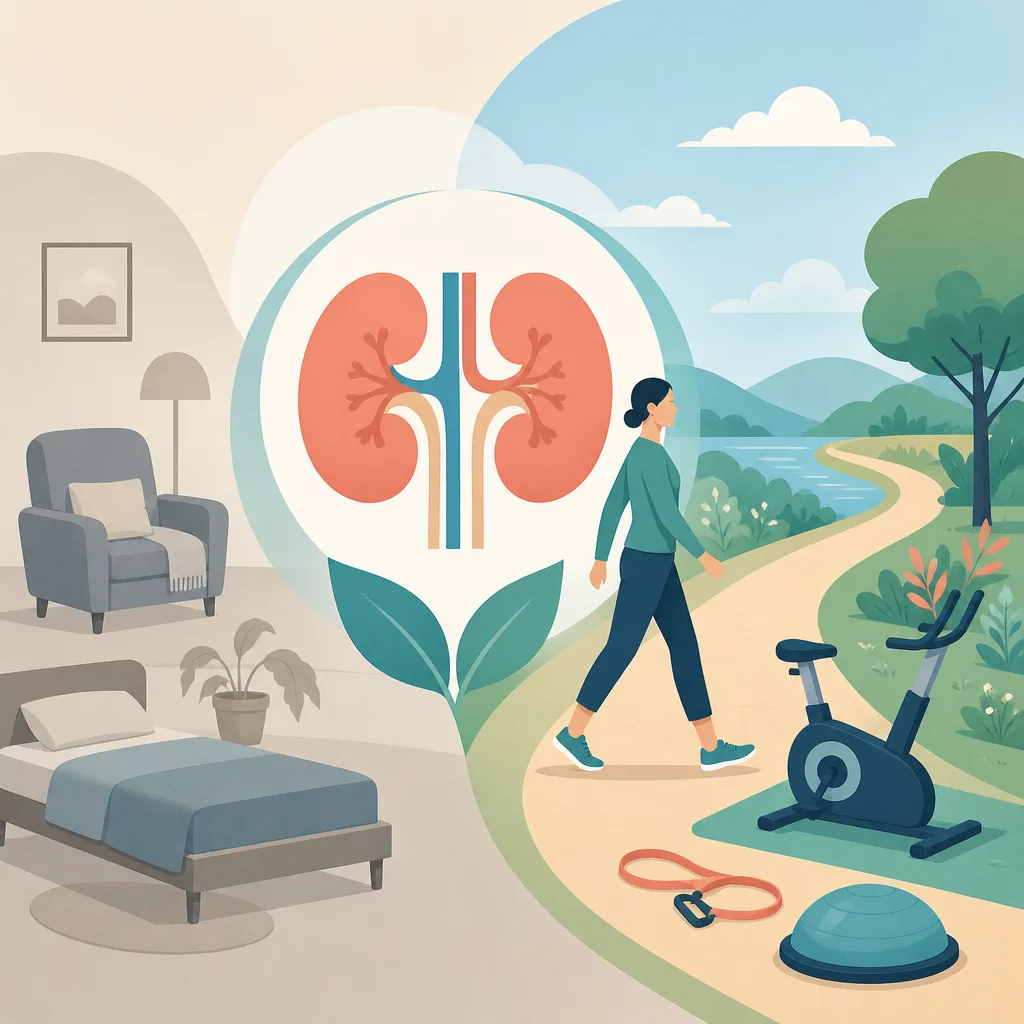
Having stable chronic kidney disease alone does not mean a patient needs to remain lying down at home. Appropriate physical activity can help maintain fitness and physical function, but it should not be assumed to directly prevent kidney function decline, and it must be tailored to the patient's condition and stage of treatment.
- Stable chronic kidney disease itself is not a reason for prolonged bed rest.
- Prolonged inactivity can reduce muscle strength, cardiorespiratory fitness, balance, and the ability to perform daily activities.
- International clinical guidelines recommend regular moderate-intensity activity within the limits allowed by the patient's cardiovascular condition and physical capacity.
- Clinical evidence is not conclusive enough to state that exercise necessarily slows kidney function decline or delays the start of dialysis.
- If the patient has an acute illness, unstable cardiac symptoms, severe shortness of breath, or a problem with dialysis vascular access, evaluation by medical professionals should take priority over exercise.
The idea that people with chronic kidney disease should minimize movement is generally incorrect. For patients whose condition is stable, prolonged bed rest can reduce muscle mass and physical fitness, making independent living more difficult. However, the same amount of exercise is not safe for every patient, and temporary rest and medical care may be necessary during an acute illness or when complications are unstable.
Myths and Facts
Myth: If your kidneys are not healthy, you must remain on complete bed rest at home.
Fact: If chronic kidney disease is stable, it is generally better to keep moving within your capabilities. The World Health Organization recommends regular aerobic activity and strength training for adult health, and the KDIGO clinical practice guideline for chronic kidney disease also recommends activity at a level permitted by cardiovascular health and physical capacity.
However, categorical claims such as “rest will inevitably accelerate kidney failure” or “exercise will restore kidney function” are also inaccurate. Exercise studies have relatively consistently observed improvements in physical fitness, muscle strength, walking ability, and health-related quality of life, but there is still uncertainty about the effects on long-term outcomes such as the timing of dialysis initiation or the risk of death.
Why Excessive Rest Is a Problem
When activity decreases substantially, the muscles do not receive the stimulus that comes from use. Spending prolonged periods lying down or sitting can lead to the following problems.
- Loss of muscle mass and strength
- Reduced cardiorespiratory fitness and walking ability
- Impaired balance and increased risk of falls
- A vicious cycle in which fatigue and activity avoidance worsen each other
- Reduced ability to perform daily activities such as eating, bathing, and going out
- Adverse changes in insulin sensitivity and cardiovascular health
These changes are not merely a matter of kidney test results. They also affect a patient’s ability to tolerate treatment and maintain an independent life.
Why Muscles May Be More Vulnerable in Chronic Kidney Disease
In addition to reduced physical activity, patients with chronic kidney disease may be vulnerable to muscle loss because of multiple overlapping factors.
- Poor appetite and insufficient energy intake
- Metabolic acidosis
- Chronic inflammation and comorbidities
- Anemia and impaired cardiopulmonary function
- Hospitalization and recurrent acute illnesses
- Fatigue before and after dialysis and long periods of sitting
- Older age, diabetes, and neurological or vascular complications
Because the causes vary among patients, muscle loss should not be attributed solely to a lack of exercise. If weight decreases, grip strength weakens, or walking speed becomes noticeably slower, nutritional status, anemia, acidosis, and comorbidities should also be evaluated.
Realistic Benefits of Exercise
The goal of exercise for patients with chronic kidney disease is not to repair damaged kidneys through exercise alone. More realistic goals are as follows.
- Maintain muscle strength and mobility.
- Improve the physical capacity needed for daily life.
- Help support the management of blood pressure, blood glucose, and weight.
- Help reduce the risk of falls and frailty.
- Increase the likelihood of improving fatigue and health-related quality of life.
Because blood pressure, heart rate, or test results may change temporarily after exercise, a single change in test results should not be taken as evidence that exercise has damaged the kidneys. Conversely, exercise cannot replace regular blood and urine tests or medication treatment.
How Much Should You Move?
The KDIGO 2024 guideline recommends at least 150 cumulative minutes of moderate-intensity physical activity per week, or an equivalent level of activity, for patients with chronic kidney disease if their cardiovascular condition and physical tolerance permit. This does not mean that every patient must complete 150 minutes from the outset.
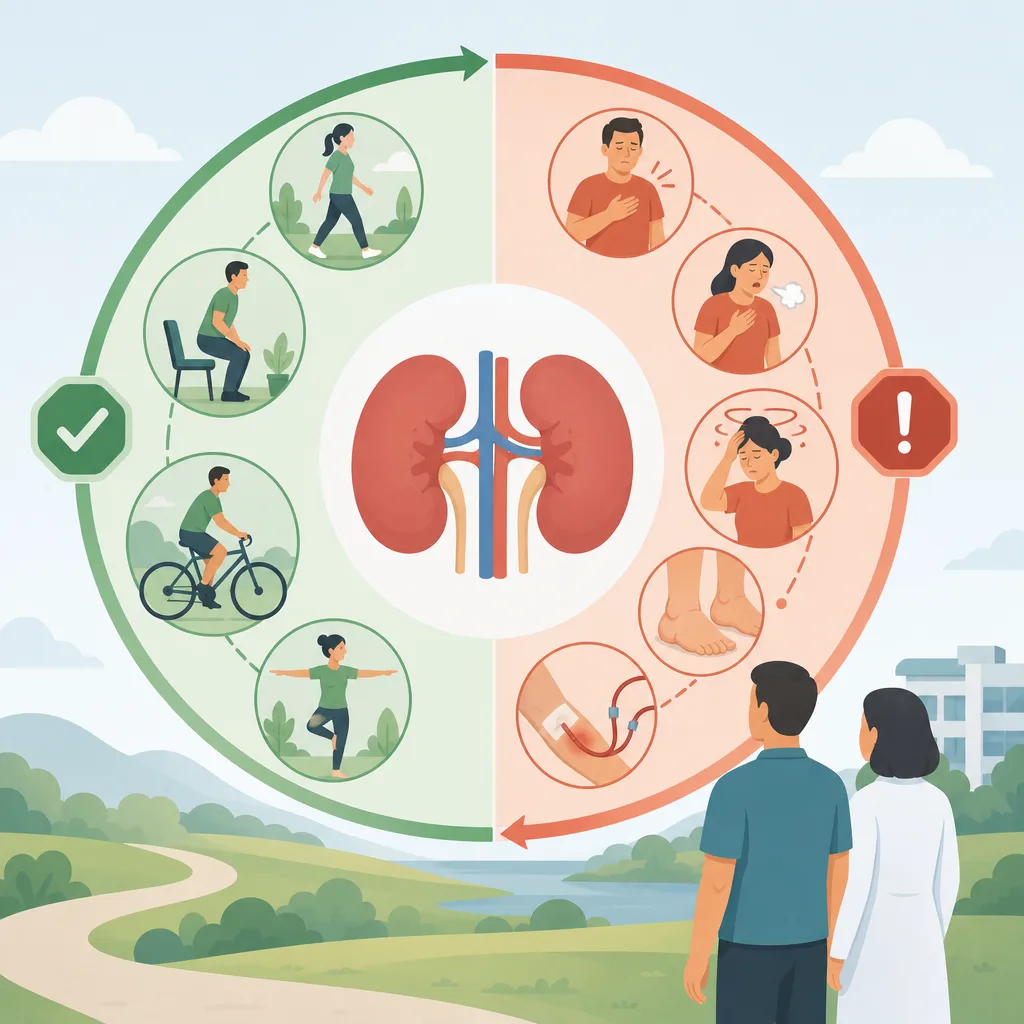
For people who are exercising for the first time or whose physical fitness has declined substantially, it is practical to begin with a manageable amount, such as walking for 5–10 minutes, and gradually increase the duration and frequency. Short bouts of activity can also be divided across multiple sessions.
| Exercise Component | Starting Examples | How to Assess Intensity | Main Purpose |
|---|---|---|---|
| Aerobic activity | Walking on level ground, stationary cycling | Conversation is possible, but singing is difficult | Cardiorespiratory fitness and walking endurance |
| Strength training | Standing up from a chair, light resistance-band exercises | An intensity that allows multiple repetitions while maintaining proper form | Maintaining strength and everyday movement |
| Balance exercises | Standing on one foot while holding a support, heel raises | Keep a support nearby to prevent falls | Fall prevention |
| Flexibility exercises | Gentle calf, thigh, and shoulder stretches | A pulling sensation without pain | Maintaining joint range of motion |
Strength training generally involves working all major muscle groups on nonconsecutive days. Exercises that involve prolonged breath-holding while straining or suddenly lifting very heavy weights can cause a sharp increase in blood pressure and should be avoided by those without experience.
How to Determine the Right Exercise Intensity for You
Target heart rates can be affected by beta-blockers, arrhythmias, autonomic neuropathy, and other factors. Therefore, the talk test and rating of perceived exertion are practical for patients with chronic kidney disease.
- Light intensity: You can converse comfortably.
- Moderate intensity: You can speak in short sentences, but you are more short of breath than usual.
- Excessive intensity: It is difficult to say even a few words, or you feel dizzy or have chest discomfort.
If severe fatigue and muscle soreness persist until the next day or make daily activities difficult, the amount of exercise may have been excessive. It is safer to adjust only one factor at a time—duration, speed, or resistance—in small increments.
Precautions by Dialysis and Treatment Stage
| Situation | Points to Consider |
|---|---|
| Chronic kidney disease before dialysis | Adjust intensity according to blood pressure, anemia, edema, cardiovascular disease, and complications of diabetes. |
| Hemodialysis | Exercise during dialysis should be performed only when the dialysis center has appropriate supervision and procedures. Do not apply excessive pressure or heavy loads to the arm with the vascular access. |
| Peritoneal dialysis | If dialysate in the abdominal cavity causes discomfort or there is a risk of hernia, discuss the type of exercise and dialysate status with the healthcare team. |
| After kidney transplantation | Immediately after surgery, follow a rehabilitation plan that considers the wound and risk of infection, and gradually increase activity after recovery. |
| Acute kidney injury | Because the causes and overall medical conditions vary, do not apply chronic kidney disease exercise principles without modification; follow the judgment of the healthcare team. |
Low blood pressure or fatigue may occur immediately after hemodialysis. Depending on the patient, exercising on non-dialysis days may be more comfortable, while a medically supervised exercise program during dialysis may be more suitable for others.
When to Consult a Healthcare Professional Before Exercising
If any of the following apply, it is advisable to check with a physician, nurse, or rehabilitation specialist before beginning a new exercise program or increasing the intensity.
- Recent chest pain, fainting, or unexplained severe shortness of breath
- Uncontrolled high blood pressure or an unstable arrhythmia
- Sudden increases in edema or body weight accompanied by shortness of breath
- Severe anemia, fever, infection, or acute illness
- Diabetic foot ulcers, severe peripheral neuropathy, or vision complications
- Recent surgery or problems with vascular access
- Recurrent hypoglycemia or difficulty controlling blood glucose during exercise
Signs That Mean You Should Stop Exercising Immediately
If any of the following symptoms occur during exercise, stop immediately and rest in a safe place. Chest pain, fainting, severe shortness of breath, or symptoms suggesting a stroke require emergency evaluation.
- Chest pain or pressure, or a cold sweat
- Sudden severe shortness of breath
- Fainting or dizziness that feels as though you may collapse
- A new irregular and rapid heartbeat
- Sudden paralysis of an arm or leg on one side, or difficulty speaking
- Bleeding, severe pain, or swelling at a hemodialysis vascular access site
- Symptoms suggesting hypoglycemia in a patient with diabetes
Another Myth to Avoid Regarding Exercise and Diet
Arbitrarily consuming large amounts of protein supplements to increase muscle mass may not be appropriate. Protein requirements differ between patients who have not started dialysis and those receiving dialysis, and they also vary according to nutritional status and kidney function. Before beginning a high-protein diet or workout supplements containing creatine, consult a nephrology healthcare professional or renal dietitian.
Fluid intake should also not be increased indiscriminately simply because you exercise. Patients who need fluid restrictions because of reduced urine output, heart failure, edema, or dialysis treatment should follow individualized guidance.
Indicators for Detecting Muscle Loss Early
It is difficult to assess muscle status based on body weight alone. When edema is present, body weight may remain stable or increase even as muscle mass decreases. Recording the following changes together can help during medical visits.
- Greater difficulty standing up from the same chair than before
- Needing to rest more often when walking the usual distance
- Reduced ability to climb stairs or lift objects
- Recent repeated falls or slower walking speed
- Unintentional weight loss and reduced food intake
- Persistent severe fatigue not only on dialysis days but also on non-dialysis days
These functional changes may not be apparent from serum creatinine or glomerular filtration rate alone. During a medical visit, patients can ask whether assessments of walking speed, chair stands, grip strength, and nutritional status are needed.
Key Conclusion
Prolonged complete bed rest is not standard management for patients with stable chronic kidney disease. Combining aerobic activity, strength training, and balance exercises within one’s capabilities may help maintain physical fitness and independent living. However, exercise does not replace medication, nutrition, blood pressure and blood glucose management, or regular testing, nor can it guarantee that the decline in kidney function will be slowed. The safest approach is to start with a small amount based on current physical fitness and complications and seek evaluation if warning signs occur.
FAQ
If I have chronic kidney disease, should I stay in bed and rest?
If the condition is stable, chronic kidney disease alone does not require prolonged bed rest. Since extended inactivity can reduce muscle strength and walking ability, patients are generally advised to stay active within the limits allowed by their physical fitness and cardiovascular condition.
Can exercise restore reduced kidney function?
It is difficult to say that exercise alone can restore damaged kidney function. Exercise can improve physical fitness, muscle strength, mobility, and quality of life and can help support blood pressure and blood sugar management, but there is insufficient evidence to conclude that it will necessarily delay the start of dialysis.
What types of exercise are generally safest for patients with kidney disease?
Walking on level ground, using a stationary bicycle, and doing light sit-to-stand exercises from a chair are common starting points. Start at an intensity that still allows you to speak in short sentences, and gradually increase the duration and frequency if there is no pain or excessive fatigue.
Do I have to complete 150 minutes per week?
150 minutes per week is a cumulative goal suggested for patients whose condition allows it, not a mandatory amount that everyone must achieve immediately. If you are frail or have no exercise experience, you can start with 5∼10 minutes at a time and divide the exercise into multiple sessions.
Can patients on hemodialysis also do strength training?
It may be possible depending on the individual's condition and the dialysis center's guidelines. However, avoid excessive pressure or heavy loads on the arm with the vascular access, and exercise during dialysis should be performed as part of a program supervised by the medical institution.
What symptoms mean I should stop exercising immediately?
Stop immediately if you experience chest pain, severe shortness of breath, dizziness that feels as though you may faint, sudden arrhythmia, paralysis on one side, bleeding from the vascular access, or symptoms suggesting low blood sugar. Severe or persistent symptoms require an emergency evaluation.
Can I take protein supplements to preserve muscle?
You should not take high-protein supplements on your own. Protein requirements differ between patients who have not yet started dialysis and those who are undergoing dialysis, and nutritional status, urine output, and coexisting conditions must also be considered, so it is safest to consult a nephrology care team or renal dietitian.
Should I drink a lot of water when exercising?
Not necessarily. Patients with low urine output, edema, or heart failure, as well as those undergoing dialysis, may need to restrict fluids. Do not increase your water intake based solely on how much you exercise; follow your individualized fluid guidelines.
Sources
Images