Rome's Turnaround After the Battle of Cannae
After its defeat at Cannae, Rome continued the war by rebuilding its forces and maintaining its alliances. Its counteroffensive in Iberia and expedition to Africa led to victory at Zama in 202 BC.
- The defeat at Cannae in 216 BC left Rome's forces and its Italian alliance system in crisis.
- Rome was wary of a large-scale battle with Hannibal while continuing counterattacks on several fronts.
- The capture of New Carthage in 209 BC weakened Carthage's military supply base in Iberia.
- At Zama in 202 BC, the cavalry of Masinissa and Laelius played a decisive role in the outcome.
- Victory at the Battle of Zama led to a peace settlement in 201 BC.
Rome suffered a major defeat at Cannae in 216 BC. It kept fighting by rebuilding its forces and maintaining its alliances. After a counteroffensive in Iberia and a campaign in Africa, it won at Zama in 202 BC. Rome is remembered for not allowing a defeat in battle to become defeat in the war.
This article was checked in October 2026, primarily against Polybius’s The Histories.
What crisis did the defeat at Cannae leave behind?
The defeat at Cannae shook both Rome’s military strength and its alliances. The battle took place in 216 BC, during the Second Punic War. Hannibal had already crossed the Alps and entered Italy. Rome had previously suffered defeats at Trebia and Lake Trasimene.
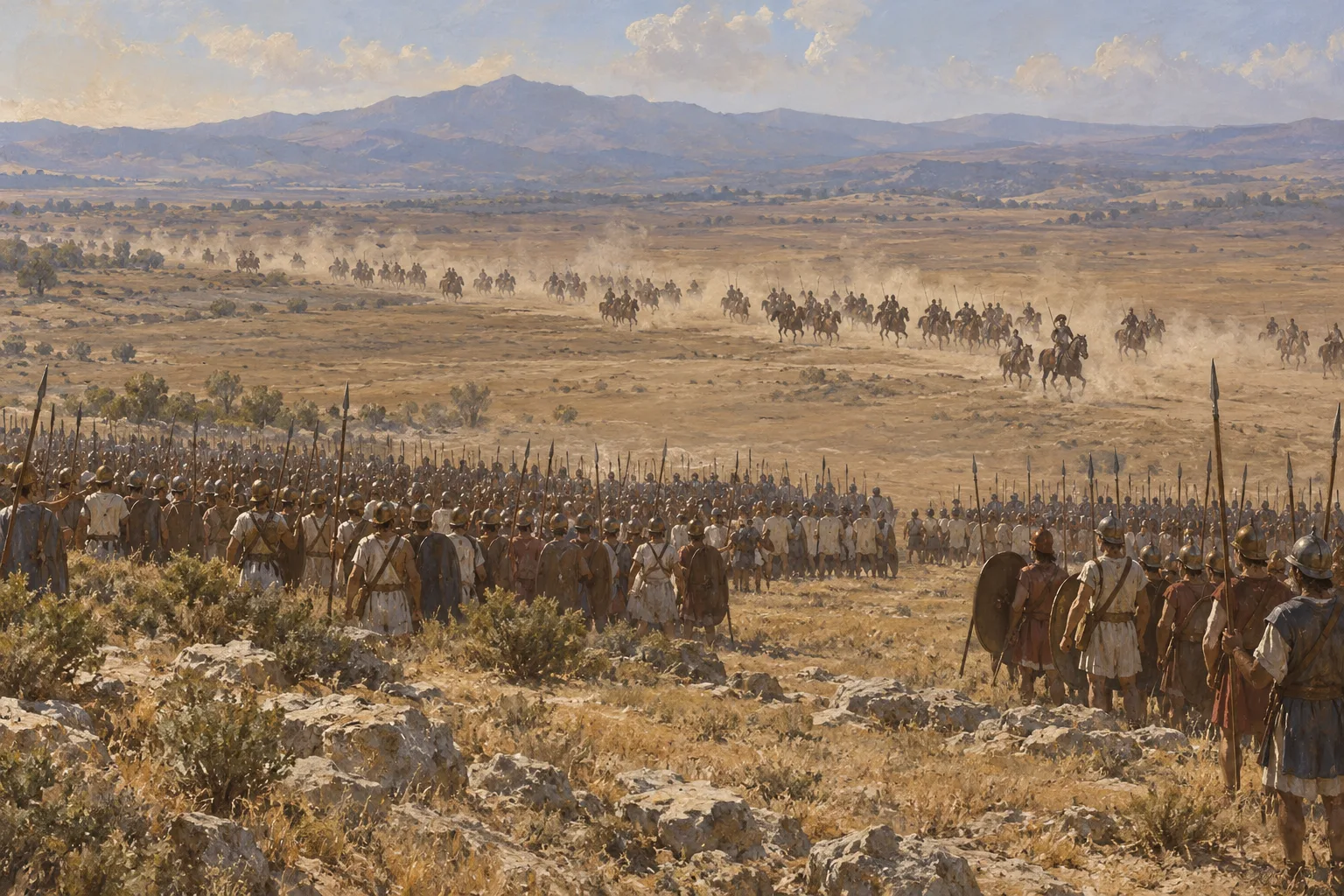
At Cannae, the Roman infantry pressed against the enemy center. As Hannibal’s center fell back, the Romans advanced deep into the formation. African infantry on either side attacked the Roman flanks. Carthaginian cavalry then struck from behind, completing the encirclement.
Rome’s advantage in numbers was of little use inside the encircled formation. Polybius recorded enormous troop losses in Book 3, chapter 117 of The Histories. In chapter 118, he describes fears for the safety of the city of Rome. The defection of some Italian communities also weakened Rome’s position.
The army defeated at Cannae was not, however, Rome’s entire force. The Senate and the city’s defenses remained. Some allied communities also maintained their ties with Rome. These provided a basis for further mobilization and a prolonged war.
Timeline from defeat to peace
Rome’s recovery came through changes that accumulated across several fronts. Fighting in Iberia had begun before Cannae. It would therefore be inaccurate to say that Rome first opened the Iberian front after the defeat.
| Year | Event | Source |
|---|---|---|
| 218 BC | Second Punic War begins, with campaigns in Italy and Iberia | The Histories, Book 3; Dickinson College Commentaries |
| 217 BC | Fabius Maximus adopts a strategy of avoiding a decisive battle with Hannibal | The Histories, Book 3; Dickinson College Commentaries |
| 216 BC | Roman army defeated at Cannae | The Histories, Book 3, chapters 113-118 |
| 211 BC | The Scipio brothers, Roman commanders, killed in Iberia | World History Encyclopedia |
| 209 BC | The younger Scipio captures New Carthage | The Histories, Book 10, chapters 6-20; World History Encyclopedia |
| 207 BC | Hannibal’s brother Hasdrubal defeated at the Metaurus | The Histories, Book 11, chapters 1-3; Dickinson College Commentaries |
| 206 BC | Scipio wins at Ilipa | The Histories, Book 11; World History Encyclopedia |
| 204 BC | Scipio’s North African campaign begins | World History Encyclopedia |
| 203 BC | Hannibal returns from Italy to Africa | World History Encyclopedia |
| 202 BC | Romans win at Zama | The Histories, Book 15, chapters 9-16 |
| 201 BC | Peace ends the Second Punic War | Dickinson College Commentaries |
How did Rome keep fighting?
Rome gathered new forces while remaining wary of a decisive battle that would favor Hannibal. Immediately after Cannae, the Senate strengthened the city’s defenses. Polybius linked this response to the capabilities of Rome’s political system. That was also the historian’s own interpretation of events.
Emergency measures helped supply troops. Book 22, chapter 57 of Livy’s History of Rome describes the recruitment of enslaved people. Chapter 61 of the same book records the decision not to pay ransom for prisoners. That decision also placed a heavy burden on their families.
The Fabian strategy of delay was central to Rome’s approach. It sought to weaken the enemy’s ability to wage war while avoiding a major decisive battle. Fabius had used it in 217 BC, before Cannae. Rome again gave weight to this approach after the defeat.
| Response | Role in the war | Limits and burdens |
|---|---|---|
| Reorganizing forces and recruiting more troops | Preserved a basis for fielding armies despite losses | Increased the burden on citizens and allied communities |
| Avoiding a decisive battle with Hannibal | Reduced the risk of large-scale troop losses | Prolonged the damage to Italy |
| Protecting allies and retaking cities | Weakened the political base Hannibal had gained | Required troops to be deployed across several regions |
| Using naval forces and diplomacy | Countered support for the enemy and intervention by other powers | Required resources outside Italy as well |
Alongside its delaying strategy, the Roman army conducted operations to retake cities. In Iberia, it continued its offensive against Carthaginian forces. Dickinson College’s account of the war explains this combined response.
What was the turning point in the Iberian counteroffensive?
The capture of New Carthage was a turning point at which Rome directly attacked the enemy’s war-making base. Iberia was important to Carthage for obtaining troops and resources. Rome’s counteroffensive did not go smoothly from the start, however. In 211 BC, the Scipio brothers, both Roman commanders, were killed.
Publius Cornelius Scipio took command afterward. He later became known as Africanus. The commanders who had died were his father and uncle. His capture of New Carthage in 209 BC was a major achievement.
Book 10 of Polybius’s The Histories emphasizes the intelligence gathered before the attack. Scipio learned that the enemy’s main forces were far apart. He also investigated the city’s terrain and defenses. The capture followed from this preparation.
What roles did New Carthage’s port, supplies, and hostages play?
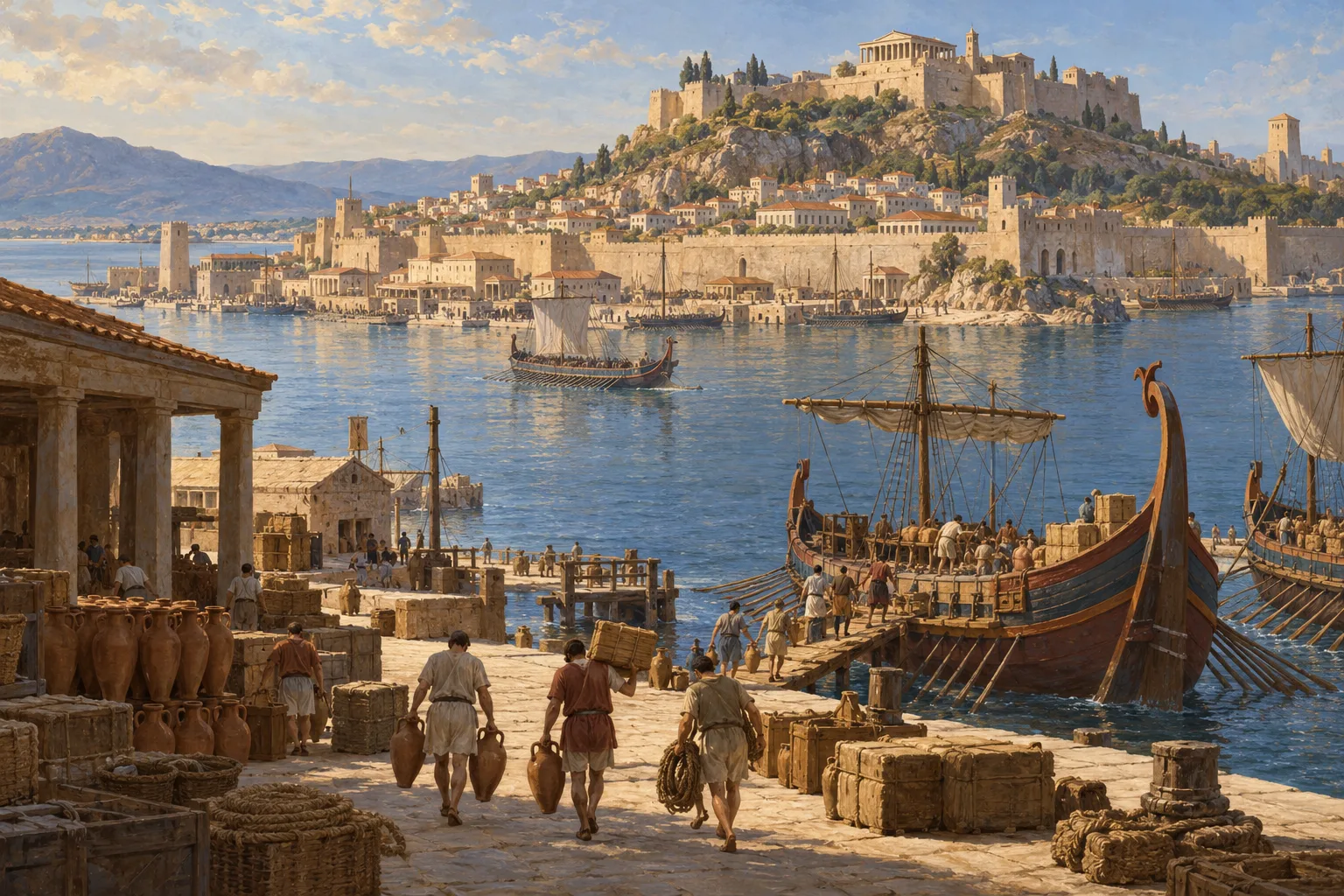
New Carthage was a center for both supply and alliance management. Its port connected it to North Africa. Carthage stored funds and military supplies there. Hostages taken from Iberian communities were also held there.
| Asset captured | Role recorded in the sources | Significance of its capture |
|---|---|---|
| Port | Supported fleet operations and the connection to Africa | Gave Rome a base for naval operations |
| Funds and military supplies | Supported the Carthaginian war effort | Weakened the enemy’s resource base |
| Hostages | Secured the compliance of Iberian communities | Gave Rome a means of negotiating with local powers |
Scipio linked the hostages’ return to alliances with Rome. This appears in Book 10, chapter 18 of The Histories. The capture could therefore also change local relationships. That is a strategic interpretation based on the account.
The capture of New Carthage did not, by itself, end the war in Iberia. Fighting against Carthaginian forces continued. The victory at Ilipa in 206 BC broke Carthage’s hold on the region.
The African campaign and Masinissa’s cooperation
The African campaign changed the war by putting pressure on the Carthaginian homeland. Scipio landed in North Africa in 204 BC. A series of defeats for Carthage followed. Hannibal returned in 203 BC to defend the homeland.
Masinissa of Numidia was a key Roman ally. He had his own interest in securing his kingship and territory. His cooperation with Rome served those political aims. At Zama, his cavalry strengthened the Roman forces.
It would be inaccurate to treat all of Numidia as having taken one side. Polybius wrote that Hannibal also had Numidian cavalry. Relationships among powers beyond Rome and Carthage played a part in the war.
How was the Battle of Zama decided?
The Battle of Zama ended in a Roman victory in 202 BC. Scipio left lanes between his infantry units to deal with the charge of the war elephants. Later in the battle, cavalry returning to attack from the rear decided the outcome.
Polybius describes the sequence as follows.
- Hannibal sent the elephants forward.
- Some elephants passed through gaps in the Roman formation.
- The infantry on both sides engaged.
- The cavalry of Masinissa and Laelius returned from pursuit.
- The cavalry attacked Hannibal’s army from behind.
Cavalry played a prominent role at both Cannae and Zama. The two sides’ troop compositions and deployments were different, however. Treating Zama as a simple replay of the tactics at Cannae overlooks those differences.
| Point of comparison | Cannae | Zama |
|---|---|---|
| Year | 216 BC | 202 BC |
| Victor | Hannibal’s Carthaginian forces | Scipio’s Roman forces |
| Main course of battle | Advance into the center, followed by encirclement from the flanks and rear | Response to the elephants, followed by an infantry clash and a cavalry attack from the rear |
| Effect on the war | Deepened Rome’s military and alliance crisis | Led to Carthage’s acceptance of peace terms |
What happened to Carthage after Zama?
Carthage survived, but its military independence was sharply restricted. The war ended in 201 BC, the year after the battle. Book 15, chapter 18 of Polybius’s The Histories records the peace terms.
| Item | Terms recorded |
|---|---|
| Warships | Surrender of all but 10 warships |
| War elephants | Surrender of the elephants Carthage possessed |
| Waging war | No war outside Africa; Roman consent required for war within Africa |
| Indemnity | A total of 10,000 talents over 50 years, with 200 Euboean talents paid each year |
| Masinissa | Return of territory and property that had belonged to him and his ancestors |
| Internal governance | Retention of Carthage’s own laws and customs, with no Roman garrison stationed there |
A talent was an ancient unit used to calculate weight and value. Simply converting it into modern currency can easily distort the burden it represented at the time. The treaty recognized Carthage’s internal self-government while restricting its actions abroad. The detailed terms can be found in Book 15 of The Histories.
How should the record be distinguished from interpretation?
Events reported by the sources should be distinguished from assessments of those events. Polybius explained Rome’s recovery through its political system and capacity for judgment. In Book 10 of The Histories, he emphasized Scipio’s preparation and planning. These explanations reflect the author’s interests and assessments.
What the sources record
Polybius covers events from Rome’s response to defeat through the peace terms after Zama. Livy adds details about troop recruitment and the treatment of prisoners. Neither author’s account is the equivalent of a modern administrative record.
- The Histories, Book 3: The Battle of Cannae and Rome’s response to the crisis.
- The Histories, Book 10: Preparations for the attack on New Carthage and decisions made after its capture.
- The Histories, Book 11: The Metaurus and subsequent battles in Iberia.
- The Histories, Book 15: The Battle of Zama and the peace terms.
- History of Rome, Book 22: Emergency mobilization and the question of ransom for prisoners.
Explanations widely used in modern histories
Rome’s recovery is explained through several connected factors. Dickinson College’s account emphasizes the maintenance of alliances and the ability to mobilize troops. World History Encyclopedia discusses campaigns on several fronts together. This approach considers both commanders’ tactics and the state’s use of resources.
Details that are difficult to establish
Ancient figures for troop numbers and deaths are difficult to treat as definitive modern statistics. The figures Polybius gives are numbers recorded in a historical source. Establishing the precise scale of the losses requires comparison with other sources.
The conversation between Hannibal and Scipio cannot be treated as a verbatim transcript either. Book 15, chapters 6-8 of The Histories recounts a meeting between the two generals. But there is no guarantee that their words were written down exactly as spoken. There is insufficient basis for quoting them as the generals’ exact words.
Why is Rome’s recovery still studied today?
This case shows the distinction between the outcome of a battle and the outcome of a war. The encirclement at Cannae alone cannot explain Rome’s subsequent recovery. Alliances, supplies, and further mobilization connect the two.
Who bore the costs of recovery is also a subject of study. The refusal to pay ransom for prisoners imposed losses on those left behind. Prolonged mobilization exhausted Italian communities. Livy’s account and modern histories describe these costs too.
The treatment of the hostages at New Carthage shows the connection between military action and political negotiation. Masinissa’s participation reveals the independent interests of allied powers. These perspectives explain the war more broadly than a contest between two generals.
Frequently asked questions
Did Rome successfully counterattack immediately after Cannae?
Recovery took place over a long period. In 211 BC, Rome suffered another major defeat in Iberia. The capture of New Carthage and the victory at Ilipa came afterward.
Was the Fabian strategy created after Cannae?
It was already in use before Cannae. Fabius avoided a decisive battle with Hannibal in 217 BC. Rome gave renewed weight to this approach after the defeat at Cannae.
Did Scipio restore Rome on his own?
Several commanders and allied powers took part in the recovery. Roman forces at the Metaurus stopped reinforcements headed for Hannibal. At Zama, the cavalry of Masinissa and Laelius added its strength.
Did the victory at Zama and the end of the war occur in the same year?
The Battle of Zama took place in 202 BC. The Second Punic War ended with the peace settlement in 201 BC. Victory in battle and the political end of the war should be distinguished.
FAQ
How did Rome recover after the Battle of Cannae?
Rome reorganized its forces and maintained its alliances. Wary of a major battle with Hannibal, it counterattacked on several fronts. Its successes in Iberia led to a campaign in Africa.
Why did the Roman army lose at Cannae?
Roman infantry pushed into the enemy center and advanced deep into its lines. Hannibal's infantry attacked both flanks. Carthaginian cavalry attacked from the rear, completing the encirclement.
Did Fabian delaying tactics begin after Cannae?
Fabius adopted a strategy of avoiding pitched battle in 217 BC, before Cannae. After the defeat at Cannae, Rome again gave weight to this approach.
Did the Iberian front arise because of the defeat at Cannae?
Rome and Carthage had been fighting in Iberia since before Cannae. What changed after the defeat was that Rome's counteroffensive advanced on that existing front.
Why is the capture of New Carthage considered a turning point?
New Carthage was a base with a port, military supplies, and funds. Scipio captured it in 209 BC. He also used the hostages he secured in negotiations with local communities.
What role did Masinissa play in the Battle of Zama?
Masinissa commanded Numidian cavalry on the Roman side. His cavalry returned from pursuit and attacked Hannibal's army from the rear. Laelius's cavalry also took part in the attack.
When did the Battle of Zama end, and who won?
The Roman side, commanded by Scipio, won in 202 BC. The Second Punic War ended with a peace agreement in 201 BC.
Was Carthage annexed by Rome after the Battle of Zama?
Carthage retained its own laws and customs. But it faced restrictions on its warships and its right to wage war. It was also required to pay reparations.
Is the account of Hannibal and Scipio's meeting a verbatim record of what they said?
An account of the meeting survives in Book 15 of Polybius's Histories. But there is no basis for treating it as a verbatim transcript in the modern sense. The exact words spoken should be distinguished from the historian's account.
Is the number of people killed at Cannae known exactly?
Ancient sources give figures, but it is difficult to treat them as definitive statistics. When citing a figure, the author who recorded it and the group counted should be identified.
Sources
- Polybius, Histories, Book 3: The Battle of Cannae and Rome's Response
- Polybius, Histories, Book 10: The Capture of New Carthage and the Treatment of Hostages
- Polybius, Histories, Book 11: Metaurus and the Iberian Front
- Polybius, Histories, Book 15: The Battle of Zama and the Peace Terms
- Livy, History of Rome, Book 22, Chapter 57: Emergency Mobilization after the Defeat at Cannae
- Livy, History of Rome, Book 22, Chapter 61: Refusal to Pay Ransom for Prisoners
- Dickinson College Commentaries, The Second Punic War
- World History Encyclopedia, Second Punic War
Images