Future Preparedness Fund Proposal: Funding, Investment Areas, and National Assembly Oversight
The Future Preparedness Fund is a fiscal proposal by the Korean government to set aside part of the increased tax revenue collected during economic booms for long-term investment in youth, growth engines, regional development, education, and talent. However, the fund's size, funding rules, individual projects, and asset management methods must be finalized through legislation and National Assembly review.
- The Future Preparedness Fund is a fiscal fund proposal to use additional tax revenue for long-term growth investment and to respond to fluctuations in tax revenue.
- The government's main proposed investment areas are youth, growth engines, locally led growth, education, and talent.
- The figures reported in the media—KRW 60 trillion~70 trillion and around KRW 100 trillion—are estimates based on different assumptions and periods and should not be viewed as finalized amounts.
- Establishing the fund and spending from it require a legal basis, a fund management plan, National Assembly review, and settlement procedures.
- Performance indicators, criteria for ending projects, and mechanisms for addressing overlap with existing policies will determine the fund's effectiveness.
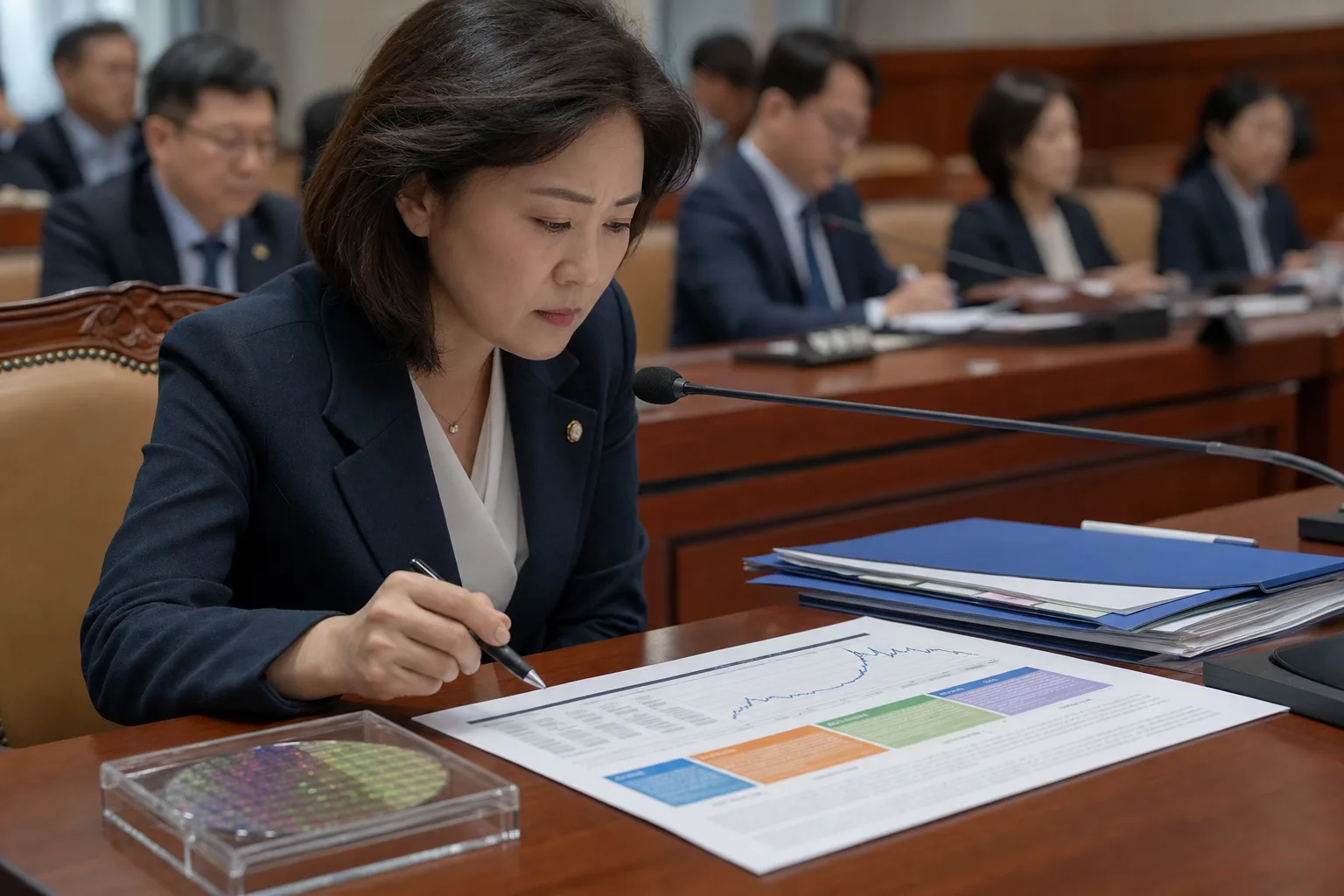
As the semiconductor industry improves, raising the likelihood that tax revenue will exceed expectations, the Korean government is moving to establish a Future Response Fund that would set aside part of the additional tax revenue to finance long-term investment. The central idea is to invest fiscal capacity generated during boom periods in the foundations for future growth rather than exhaust it entirely on short-term spending.
However, as of September 2, 2026, the proposal and policy direction must be distinguished from finalized laws and budgets. The fund’s actual launch date, total size, annual contribution amount, and detailed programs will be finalized only after the relevant legislation is enacted and the National Assembly reviews its fund management plan.
What Is the Future Response Fund?
The Future Response Fund is a fiscal fund proposal intended to set aside part of the revenue collected when tax receipts exceed the original budget and use it for projects that enhance the economy’s long-term productivity and fiscal capacity to respond to shocks.
The intent of the government’s explanation can be divided into three parts.
- Converting boom-period tax revenue into long-term investment: Tax revenue increased by booms in specific industries, such as semiconductors, would be used to strengthen the foundations for growth rather than for one-off spending.
- Buffering fluctuations in revenue: It would establish a financial buffer to reduce fiscal shocks when industry conditions deteriorate and tax revenue declines.
- Strengthening potential growth: It would invest in long-term projects responding to population decline, slowing productivity, and regional disparities.
Potential growth refers to the rate of growth that can be achieved by utilizing labor, capital, and productivity without causing significant inflationary pressure. Several institutions have forecast that Korea’s potential growth rate will decline over the long term, but figures for the 2040s and other periods vary depending on assumptions about demographics, productivity, and investment.
How Additional Tax Revenue Would Flow into the Fund
Additional tax revenue does not mean that every tax receipt collected above expectations would automatically be deposited into the fund’s account. A legal basis for the funding and budget and settlement procedures are required.
| Stage | Meaning | Points to verify |
|---|---|---|
| Revenue budgeting | The government estimates the taxes to be collected in the relevant year | Are forecasts for business-sensitive taxes such as corporate tax appropriate? |
| Compilation of actual tax revenue | Taxes are paid based on corporate earnings, income, and other factors | Can annual excess tax revenue be confirmed based only on monthly collection progress? |
| Confirmation of additional tax revenue | Determines whether actual revenue exceeds budget projections | Have refunds, year-end adjustments, and shortfalls in other tax categories been reflected? |
| Transfer of resources to the fund | Part of the resources is contributed in accordance with the law and fund management plan | Are there transfer ratios, caps, and conditions for suspending contributions? |
| Program implementation | Relevant ministries carry out approved programs | Do they overlap with existing budget programs? |
| Management of surplus funds | Funds not immediately needed are invested | What are the permitted assets, risk limits, entrusted institutions, and performance criteria? |
Under the National Finance Act, national funds cannot be established and operated at the government’s discretion without a legal basis. Even if the fund is established, its annual fund management plan and settlement of accounts will be subject to review by the National Assembly.
Has the Size of the Fund Been Finalized?
The figures currently being discussed should not be treated as finalized government numbers. The media and markets have presented differing projections, including KRW 60 trillion to KRW 70 trillion or around KRW 100 trillion, depending on semiconductor performance, the scale of the increase in corporate tax revenue, and the contribution period.
These figures may vary significantly depending on the following conditions.
- How long semiconductor prices and corporate profits remain elevated
- When corporate earnings actually translate into corporate tax payments
- Tax revenue shortfalls in other industries and tax categories
- How much of the additional tax revenue is allocated to debt repayment or other spending
- Whether the fund is built in a single year or accumulated over several years
- Whether investment returns are included in the fund’s size
Accordingly, comparisons of the fund’s size must distinguish among the total funding target, annual transfers, actual accumulated balance, and program expenditures. Until an official bill and fund management plan are disclosed, it is difficult to regard any single amount as a finalized target.
Where Would It Invest?
The broad direction presented by the government is closer to building the foundations for future growth than to stimulating short-term consumption.
| Priority area | Possible policy objective | Key criteria for review |
|---|---|---|
| Youth | Strengthen the foundations for employment, entrepreneurship, housing, and asset formation | Overlap with existing youth support and fairness in selecting recipients |
| Growth engines | Support AI, advanced industries, research and development, and commercialization | Whether the government is assuming risks that should be borne by the private sector |
| Regions | Expand regional industries and essential infrastructure | Whether population and industrial performance are reflected instead of politically motivated allocation |
| Education and talent | Improve science and engineering talent, science and technology education, and early childhood education and childcare environments | Alignment between long-term workforce demand and educational outcomes |
In advanced industries, small modular reactors, space and aviation, and quantum technology have been mentioned as candidates alongside AI. However, the fact that a particular technology has been mentioned is different from the fact that a budget has actually been allocated to it as a fund program. The final recipients must be confirmed through the bill, program plans, and National Assembly review materials.
There may also be calls to include the climate and energy transition as a separate priority area. Power grids and climate adaptation are linked to industrial competitiveness, but if the scope of investment is expanded too broadly, the fund could become a substitute for the general budget.
Is It the Same as a Sovereign Wealth Fund?
The Future Response Fund and a sovereign wealth fund are not the same concept.
- A fiscal fund is a national fiscal mechanism that manages revenue and expenditure for a specific public purpose.
- A sovereign wealth fund generally refers to an investment organization that seeks long-term returns by investing national assets in domestic and overseas financial assets and other instruments.
- Korea Investment Corporation KIC is an institution that manages assets entrusted to it from foreign exchange reserves, public funds, and other sources.
Even if a professional institution invests the Future Response Fund’s surplus funds in stocks or bonds, the fund as a whole does not automatically become a sovereign wealth fund. The distinguishing criteria are who owns the assets, under which law they are managed, and how the investment returns are used.
Even when management is entrusted to an external professional institution, permitted assets, risk limits, foreign exchange risk, fees, responsible investment standards, and responsibility for losses must be determined in advance. Because stock investment involves both the possibility of returns and the risk of losing principal, program funds to be spent in the short term must be separated from funds to be invested over the long term.
How Would the National Assembly Exercise Oversight?
Although a fund’s purpose and resource management are separated from the general account, it is not money outside the National Assembly’s oversight. The legislation providing the basis for establishing the fund, the annual fund management plan, and the settlement of accounts are subject to review by the National Assembly.
The issue is how much authority the government would have to adjust detailed expenditures after the plan has been approved. Because the National Finance Act provides certain amendment procedures and exceptions, not every change requires the same level of National Assembly approval. The specific level of control will depend on the restrictions included in the new legislation and fund management plan.
To improve transparency, at least the following information should be disclosed regularly.
- The method for calculating transferred resources by tax category
- Allocations and actual expenditures by program
- The share of surplus funds by asset class and investment returns
- Performance relative to benchmarks and risk levels
- Reasons for selecting, changing, or terminating programs
- Results of reviews for overlap with existing fiscal programs
- Results of external evaluations and audits
Risks That Will Determine Sustainability
Dependence on Semiconductors Could Be Repeated in the Fund’s Resources
Problems may arise during an industry downturn if a fund created from a semiconductor boom is treated as a stable source of financing. This is because long-term spending commitments remain even when tax revenue declines. Expanding permanent mandatory spending based on temporary tax revenue should be avoided.
It Could Merely Repackage Existing Programs
Youth, regional development, research and development, and education are already supported through the general account and multiple funds. If only the stated funding source for existing programs changes to the Future Response Fund, the additional growth effect will be limited. It is necessary to verify not only whether programs are new but also whether they are more efficient than existing policies.
The Investment Mandate Could Become Excessively Broad
If worthwhile programs continue to be added, the fund’s priorities will become unclear. To prevent the fund from becoming a second general account supporting every policy, eligible and excluded areas should be clearly defined in legislation or operating principles.
Asset Management and Policy Implementation Operate on Different Timelines
Industrial and educational investment requires a long period, while financial markets can move sharply even over short periods. If investment asset prices fall when program funding is needed, losses may have to be realized. The proportions of safe and risky assets should be adjusted to match the expected timing of expenditures.
Performance and Termination Criteria Must Come First
An easily overlooked part of the fund debate is not what to support, but when a program will be judged a success or failure. Because a fund can easily come to treat its own continued existence as an objective after it is established, evaluation rules should be set at the outset.
The following framework would be useful for assessing effectiveness.
| Evaluation category | Example question |
|---|---|
| Additionality | Is this a program that would not have been implemented without the fund? |
| Private-sector inducement effect | Did government spending actually increase private investment and employment? |
| Productivity | Did value added and productivity improve in the supported industries or regions? |
| Distributional effect | Did benefits actually reach young people and regions? |
| Fiscal sustainability | Did temporary revenue create long-term mandatory spending? |
| Duplication | Do the beneficiaries and objectives overlap with programs run by other ministries or funds? |
| Ability to terminate | Are there criteria for scaling back or ending underperforming programs? |
A review deadline for the fund itself could also be considered. Its continued necessity could be assessed at regular intervals, contribution rates could be reduced automatically when revenue conditions deteriorate, and programs without demonstrated results could be denied extensions.
Official Documents to Check Going Forward
To determine the final form of the Future Response Fund, it is more accurate to review the following documents in order rather than relying on the terminology used in announcements.
- The bill establishing the fund and providing the legal basis for its resources
- Review reports and amendments from the National Assembly’s deliberation process
- Annual fund management plans
- Program-specific budget explanatory materials and performance plans
- Settlement reports and the results of the National Assembly’s settlement review
- Surplus fund management guidelines and disclosures by entrusted institutions
Investment areas announced by the government represent policy direction, passage of legislation establishes the fund’s legal foundation, and approval of the fund management plan determines the actual authority to collect and spend funds in the relevant year. Distinguishing among these three stages helps prevent projections that have not yet been finalized from being mistaken for policies already under implementation.
FAQ
Has the Future Response Fund already been launched?
As of September 2, 2026, it is accurate to say that the government is still pursuing its establishment. Subsequent procedures, including legislation establishing the fund, funding provisions, and annual fund management plans, are required for its actual launch and expenditures.
Will all additional tax revenue go into the Future Response Fund?
No. The tax categories and proportions to be transferred to the fund, any cap, and the allocation between the fund and other fiscal uses must be determined by law and the fund management plan. The final amount of additional tax revenue can be determined only after accounting for shortfalls in other tax categories as well as refunds and reconciliations.
Has the size of the Future Response Fund been finalized at KRW 100 trillion?
It is difficult to say that it has been finalized. Various figures, such as KRW 60–70 trillion and around KRW 100 trillion, are estimates based on different assumptions regarding semiconductor performance, the accumulation period, and tax revenue projections. The annual transfer amount and total funding target specified in the official bill and fund management plan must be checked separately.
What will the Future Response Fund be used for?
The main pillars presented in the government's plan are youth, growth engines, locally driven growth, and education and talent. AI and advanced technology, regional infrastructure, and the development of science and technology talent have been mentioned as potential areas, but the actual programs and amounts will not be finalized until they undergo review by the National Assembly.
Is the Future Response Fund a Korean-style sovereign wealth fund?
The two are not automatically the same. The Future Response Fund is a proposed fiscal fund for managing funding for specific public programs, while a sovereign wealth fund refers to an entity that invests state assets over the long term. Even if surplus funds are managed by a specialized institution, the two should be distinguished based on asset ownership, intended use, and applicable laws.
Is the fund exempt from oversight by the National Assembly?
The law establishing the fund, the annual fund management plan, and the settlement of accounts are subject to review by the National Assembly. However, because there are parameters and procedures under which the government may modify an approved plan, it is important how the new legislation sets modification limits and reporting obligations.
What happens to the fund if the semiconductor industry declines?
If related tax revenue, including corporate tax revenue, decreases, new contributions may decline. The government should therefore establish contribution rules linked to revenue conditions, program priorities, and conditions for adjusting expenditures, and should ensure that temporary tax revenue is not used to create permanent mandatory expenditures.
Can individuals apply for and receive money from the Future Response Fund?
The Future Response Fund itself is not a subsidy distributed uniformly to individuals. If individual ministries later create separate youth, education, and regional programs, the eligible recipients, income criteria, application periods, and procedures for each program will be announced separately.
How should the fund's investment performance be evaluated?
The execution rate or investment return alone is insufficient. The evaluation should also consider the effect of stimulating private investment, productivity gains, benefits reaching young people and local communities, duplication with existing programs, fiscal sustainability, and whether underperforming programs are terminated.
Sources
Images