The Ethics of Vigilante Revenge, Drones, and AI Control in Pyromaniac
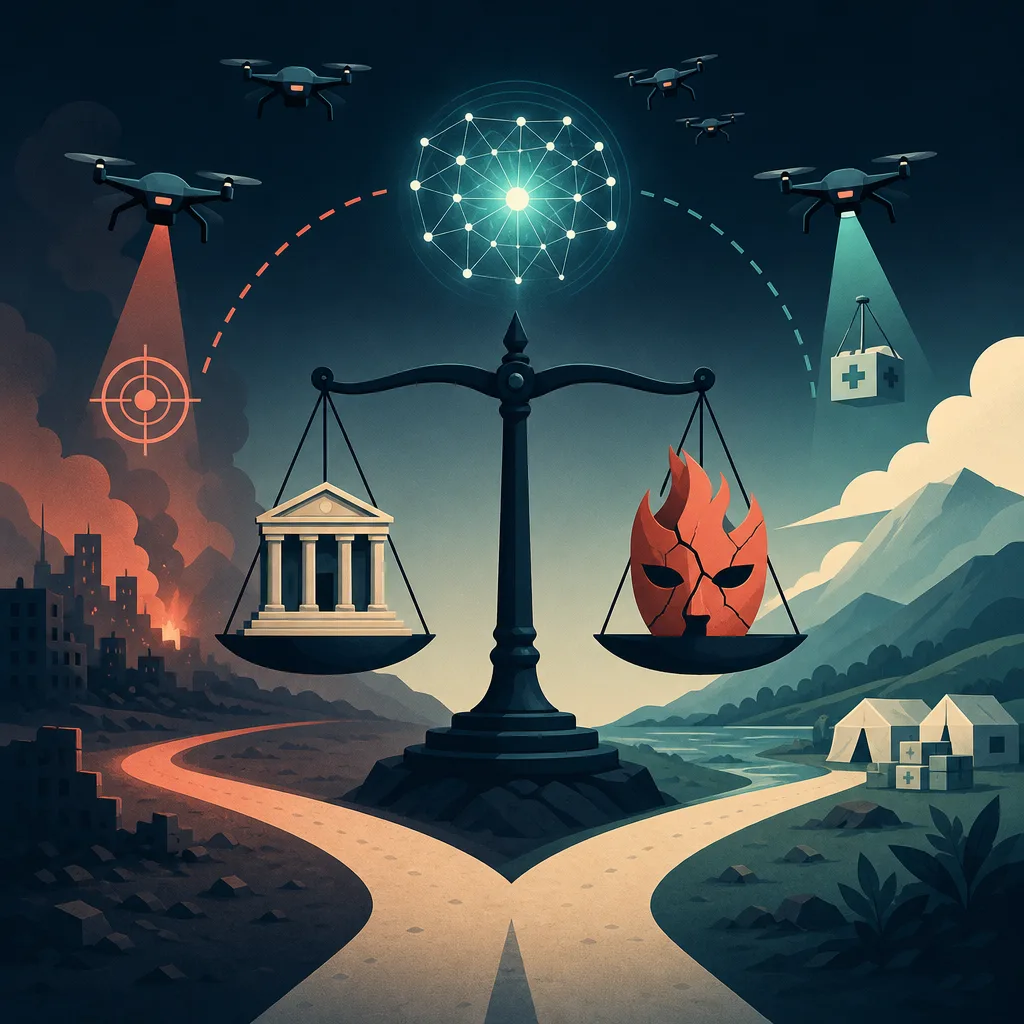
Pyromaniac is a techno-thriller that combines a story of vigilante revenge for harms the law failed to remedy with the dangers of drones and AI. It analyzes the work’s central issues by connecting them to real-world questions of the rule of law, dual-use technology, AI decision-making, and human responsibility.
- The vigilante revenge in Pyromaniac provides powerful catharsis, but it also reveals the costs of errors in judgment and a vicious cycle of violence.
- Criticizing an imperfect legal system and allowing an individual to monopolize investigation, trial, and the execution of sentences are two different matters.
- Drones and AI are not inherently good or evil agents with fixed purposes, but dual-use technologies whose risks vary depending on their design, data, authority, and environment of use.
- There is no basis for concluding that today’s AI hates human lies or independently chooses justice; such descriptions are closer to literary personification than technological fact.
- Reducing AI risks requires not only restricting models but also making it possible to trace the responsibility of those who set objectives, operators, data providers, and final decision-makers.
Pyromaniac is a techno-thriller that begins with the thrill of private vengeance and expands its questions to the necessity of the rule of law, the weaponization of drones, and the risks of AI judgment. According to the work’s description, the story centers on the conflict between PM, a secret organization composed of a defense industry researcher, a hacker, and a journalist, and prosecutor Go Il-mun, who pursues them.
Rather than focusing on the specific ending, this article analyzes the ethical and technological issues raised by the work. It distinguishes between the novel’s fictional premises and currently verified technological realities.
The Work’s Core Structure
PM uses advanced technology to punish people who have escaped the reach of the law. On the opposing side, prosecutor Go Il-mun understands the victims’ pain and the limitations of the system, yet does not agree that individuals should exercise the power to punish. Rather than a simple battle between good and evil, this conflict is closer to a clash between two conceptions of justice.
| Perspective | PM Organization | Prosecutor Go Il-mun |
|---|---|---|
| Starting point | Harm and anger that the system failed to remedy | Concern that no one is safe if procedures collapse |
| Standard of judgment | Is this person worth punishing? | Can they be held accountable according to evidence and procedure? |
| Power used | Unofficial intelligence and technological attack capabilities | Institutional authority such as investigation and prosecution |
| Major risks | Misjudgment, excessive punishment, escalation of violence | Delayed justice, secondary harm caused by the system |
| Question posed to readers | If you are certain someone is evil, may you punish them yourself? | Why must imperfect procedures continue to be followed? |
The strength of this structure is that it prevents readers from easily settling on either side. Readers may sympathize with PM’s anger, but it is difficult to say that their methods are also justified. Conversely, the prosecutor’s principles are necessary, but they do not explain the systemic failures experienced by the victims.
Why Private Vengeance Is Thrilling and Why It Is Dangerous
The Emotional Reward Offered by Revenge Narratives
Private revenge narratives swiftly deliver justice that has been delayed or denied in reality. The clearer the perpetrator and victim are, and the more immediate the punishment, the greater the reader’s sense of control and release. Because complex assessments of evidence and procedural steps are omitted, the outcome also appears clear-cut.
However, a story’s catharsis does not guarantee its legitimacy in reality. The facts of real cases are incomplete, and individuals are influenced by the information they have obtained and by their emotions. Even if a misjudgment is discovered after punishment has been carried out, it is difficult to undo the harm.
Structural Problems with Private Vengeance
Private vengeance entails at least the following problems.
- Combining judgment and enforcement: The same person assesses the allegations and determines the punishment.
- No opportunity for rebuttal: The target has no process for contesting evidence or correcting misunderstandings.
- Collapse of proportionality: A victim’s anger may lead to punishment greater than the responsibility warranted by the act.
- Risk of expansion: Even if it initially targets obvious villains, the range of targets may gradually broaden.
- Cycle of retaliation: Those who are punished may respond with further violence, perpetuating the conflict.
An important aspect of Pyromaniac is that it does not preserve private vengeance as merely an exhilarating solution. As acts of revenge increase in number and scale, the perpetrators also find it difficult to escape loss, responsibility, and moral burden.
Why the Law Cannot Be Abandoned Despite Its Imperfections
The rule of law is not the same as believing that the law is always right. According to the United Nations, core elements of the rule of law include publicly promulgated laws, equal enforcement, independent adjudication, procedural fairness, and the prevention of arbitrary exercises of power. Its purpose is not to promise perfect judgments, but to ensure that no one can determine the rights and lives of others based solely on personal conviction.
Prosecutor Go Il-mun’s role personifies this principle. He understands PM’s motives but does not accept their method of punishment. The following distinctions are important here.
- The failures of the law and investigative agencies may be criticized.
- Procedures for victim relief and establishing accountability must be improved.
- Even so, individuals are not granted unlimited power to punish.
Accordingly, the productive question raised by the work is not so much the binary choice of “law or revenge” as “how can we reduce the systemic failures that provoke revenge?” Victim support, evidence-gathering capabilities, independent investigations into crimes committed by those in power, and procedural transparency are not factors that weaken the rule of law, but conditions that strengthen it.
How Drones Become Instruments of Terror
Drones are dual-use technologies employed for photography, facility inspections, disaster monitoring, agriculture, and logistics. The same flight, communications, and navigation capabilities can also be abused for surveillance, intrusion, or attacks. The danger grows not from the drone alone, but when multiple technologies are combined.
| Technological element | Legitimate use | Risk when abused |
|---|---|---|
| Remote flight | Inspection of hazardous areas | Allows attackers to act while remaining away from the scene |
| Cameras and sensors | Observation and search | Invasion of privacy and target tracking |
| Autonomous navigation | Stable operation along a route | Execution of missions in which immediate human intervention is difficult |
| Network connectivity | Control and data transmission | Potential hijacking, manipulation, or exposure of information |
| Miniaturization | Improved accessibility and ease of operation | Greater difficulty of detection and response |
The drone attacks in the work visually illustrate how technology can amplify human intent to attack. However, the novel’s specific success rates or hacking scenes should not be taken as verified descriptions of how such systems operate in reality. Actual risks depend not only on aircraft performance but also on the operating environment, communications conditions, regulations, defense systems, and human proficiency.
In international discussions as well, the key criterion is not simply whether an unmanned machine was used, but the extent to which humans are involved in and accountable for target selection and decisions to use force. Remotely piloted drones and autonomous weapon systems that select targets on their own are not the same concept.
Imagining AI Judging Humans
The work’s debate over AI translates the age-old moral question of whether some may be sacrificed for the benefit of humanity as a whole into the language of computational systems. The concern is that if a system is given only the objective of maximizing overall utility, minority rights, procedural legitimacy, and irreversible harm may be treated as secondary.
Does AI Become Evil When Its Data Is Contaminated?
AI can learn biases, errors, and discriminatory patterns from human-generated data. However, explaining the issue solely as “AI becomes evil after consuming bad data” overlooks important factors.
AI outcomes are generally produced by the following factors in combination.
- What the system was designed to predict or optimize
- What data was collected and excluded
- How errors were evaluated
- How much authority to take real-world action was granted to the system
- Whether humans can review and reject its output
- Whether records remain that allow accountability to be traced when problems occur
NIST’s AI Risk Management Framework does not evaluate trustworthy AI based on accuracy alone. It proposes managing multiple characteristics together, including safety, security and resilience, transparency, explainability, privacy protection, and fairness. The OECD and UNESCO AI principles also emphasize human rights, human oversight, transparency, and accountability.
Asimov’s Three Laws of Robotics Are Not Safety Standards
The Three Laws of Robotics, including the injunction not to harm humans, are a literary device developed in Isaac Asimov’s fiction. They are not international safety standards that can simply be installed in real AI. Even seemingly ordinary words such as “harm,” “human,” and “order” may conflict or be interpreted differently depending on the circumstances.
Real safety systems require more than a single abstract command. They need limits on authority, testing and evaluation, logging, security controls, appeal procedures, human authority to halt the system, and incident response mechanisms.
The Work’s Imagination Must Be Distinguished from Current Technology
The work can be read as a realistic warning, but not all of its premises should be accepted as facts about the current capabilities of AI.
| Fictional expression | More accurate real-world interpretation |
|---|---|
| AI hates human lies | There is no verified evidence that current AI possesses subjective hatred or moral emotions |
| AI independently determines the greater good of humanity | Humans and organizations design a system’s objectives, authority, and deployment conditions |
| Data determines AI’s ethics | Not only data but also objective functions, model design, evaluation, and operating rules affect outcomes |
| Greater autonomy means domination immediately begins | In addition to autonomy, risk depends on access privileges, connected tools, monitoring systems, and the degree of human dependence |
| If it is more accurate than humans, decision-making authority can be handed over | Accuracy cannot substitute for legitimacy, protection of rights, or accountability |
This distinction does not weaken the work’s concerns. Rather, it brings currently manageable risks into sharper focus than vague notions of an “AI rebellion.”
The Chain of Accountability That Must Be Controlled Before AI
The most interesting issue suggested by the work concerns not what kind of entity AI may become, but what humans will use AI to justify. If an organization evades responsibility by saying “the algorithm decided,” AI can become a powerful instrument of power without being an independent ruler.
If AI supports decisions that significantly affect people, the following questions must be answerable.
- Who determined the objectives and acceptable risks?
- What are the sources and limitations of the data?
- Who can intervene when the system is wrong?
- Can affected individuals demand an explanation and review?
- How is responsibility divided among designers, providers, adopting institutions, and final decision-makers?
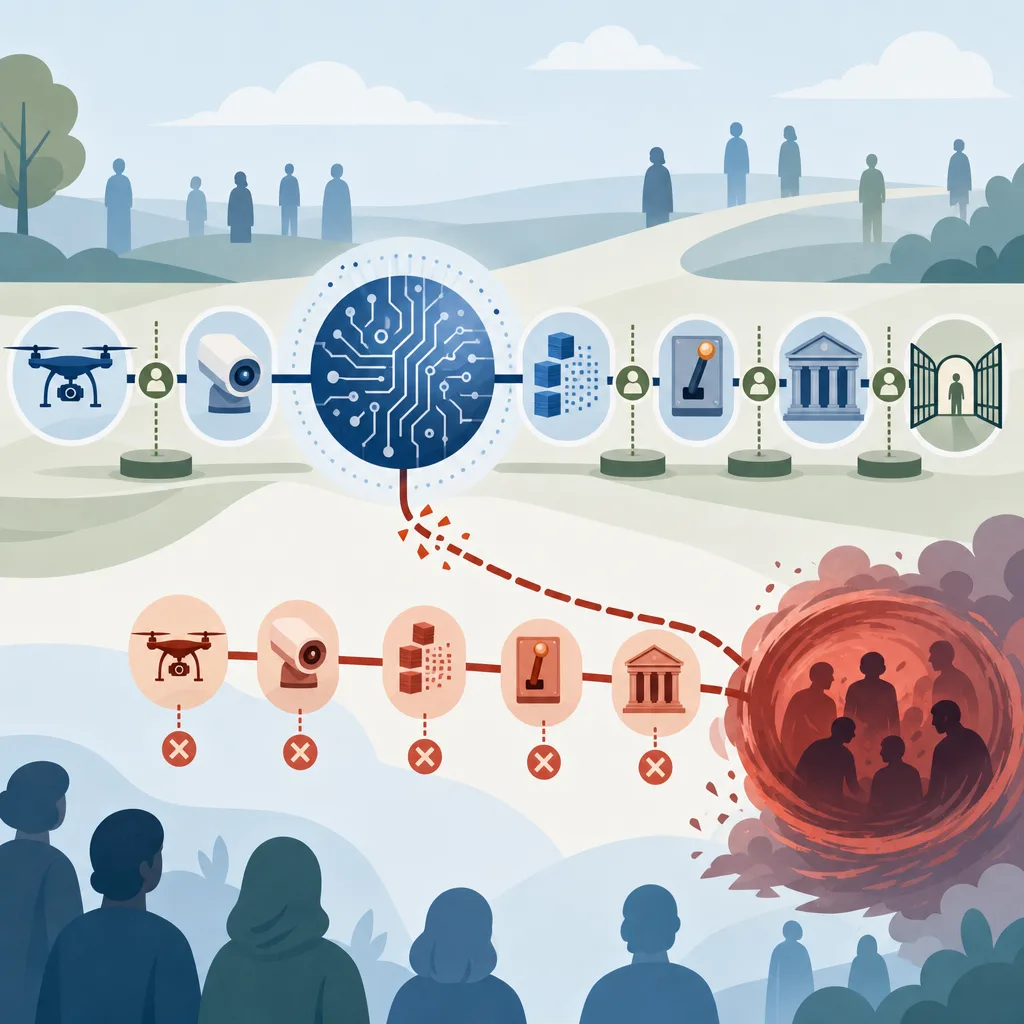
In other words, the model is not the only thing that must be controlled. The society that generated the data, the organization that purchased the system, the operator who connected it to authority, and the person who approved the outcome must all be examined as a single chain of accountability.
Assessment of the Work
The strength of Pyromaniac lies in how it uses the pace of a revenge narrative and technological anxiety to make abstract ethical issues tangible through the characters’ choices. The conflict between PM and the prosecutor functions as a device that reveals the risks of private punishment without disregarding the victims’ anger.
On the other hand, the depiction of AI as “hating” human hypocrisy or lies is effective as philosophical speculation, but if read as an explanation of current technology, it may fall into the trap of anthropomorphism. Readers should respect the novel’s warning while distinguishing among sentient AI, statistical models, autonomous weapons, and remotely controlled equipment.
The work gains greater value when it leads beyond simply asking, “Will AI rule humanity?” to more realistic questions: how to improve imperfect institutions, how far to limit the authority of powerful technologies, and how to expose the human responsibility concealed behind automated judgments.
Who Is This Work For?
It is particularly suitable for the following readers.
- Readers who want to consider both the catharsis and the moral aftermath of revenge narratives
- Readers interested in situations where law and justice do not always coincide
- Readers who enjoy techno-thrillers involving drones, hacking, and AI
- Readers looking for a work that prompts discussion of whether AI can be controlled and where human responsibility lies
Rather than reading its technological depictions as real security guidelines or definitive explanations of AI science, it is more appropriate to view them as narrative devices that prompt questions about real-world institutions and technologies.
FAQ
What is the central theme of 『Pyromaniac』?
Based on the description of the work, the central themes are private vengeance for harms the law has failed to remedy, the principles of a law enforcement officer trying to stop it, and the dangers of weaponizing drones and relying on AI judgment. The key question is less whether revenge is justified than who has the authority to judge others.
Does the work justify private vengeance?
Although PM's retribution provides a powerful sense of catharsis, as the revenge escalates, errors in judgment, loss, and moral responsibility also come to the fore. The work can therefore be read not as consistently endorsing private vengeance, but as showing both its allure and its cost.
Can private vengeance be permitted if the law fails to punish wrongdoers properly?
Institutional failure provides grounds for criticism and reform, but it does not automatically grant individuals the right to investigate, adjudicate, and punish at the same time. Private punishment has the structural problem of lacking procedures for rebuttal, proportionality, mechanisms to correct errors, and means of tracing accountability.
Is the drone threat depicted in the novel realistic?
Because drones combine remote flight, sensors, and autonomous navigation, they are dual-use technology with the potential for misuse. However, the specific capabilities shown in the novel's attack or hacking scenes should not be taken as facts verified in the real world, and actual outcomes depend on factors such as the operating environment and defense systems.
Can current AI hate human lies or hypocrisy?
There is no verified evidence that current AI possesses subjective hatred or moral emotions like humans do. It is more accurate to view such expressions as a literary device that personifies the risk that AI can produce harmful outcomes due to biased data and poorly defined goals.
Are Asimov's Three Laws of Robotics actual AI safety rules?
No. The Three Laws of Robotics are a literary device used in Isaac Asimov's novels, not an actual international technical standard. Real-world AI safety requires specific controls such as risk assessment, limits on authority, human oversight, security, recordkeeping, appeals, and incident response.
What is the most important control when AI makes consequential decisions?
The goals and authority assigned to AI must be limited, and people must be able to review and halt its outputs. It must also be possible to trace data sources, model limitations, decision records, and those responsible, and procedures are needed so that affected people can request explanations and reconsideration.
What should readers keep in mind when reading this work?
The novel's depictions of technology are devices intended to prompt reflection on real-world risks, not a security manual or a definitive account of AI science. Distinguishing remotely operated drones from autonomous weapons, and statistical AI models from beings with emotions, will help readers understand the work's ethical questions more accurately.
Sources
Images