Pa Kimchi Recipe for 500g of Scallions: Prep and Seasoning
This guide explains how to season 500g of scallions without a separate salting step. It compares this with a home-style recipe that first salts the white parts in fish sauce and distinguishes differences in measurement units from differences in the figures given in the original text.
- Remove any wilted leaves and outer skins from the scallions, then wash them under running water.
- Drain the scallions in a strainer and check the amount you will use.
- Check whether the recipe calls for a separate salting step, then measure the seasoning for your chosen recipe.
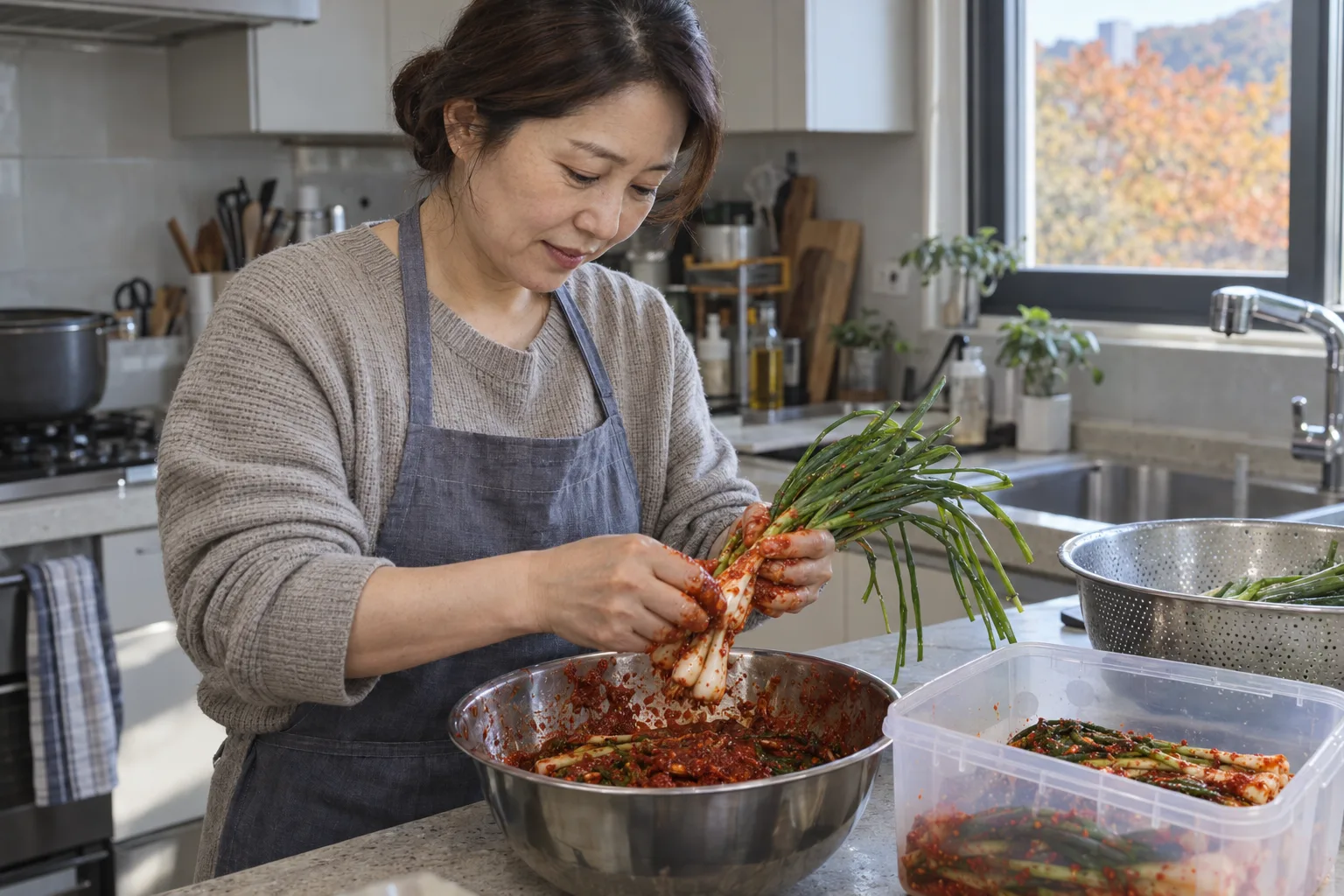
- Apply the seasoning to the white parts of the scallions first, then lightly coat the green leaves.
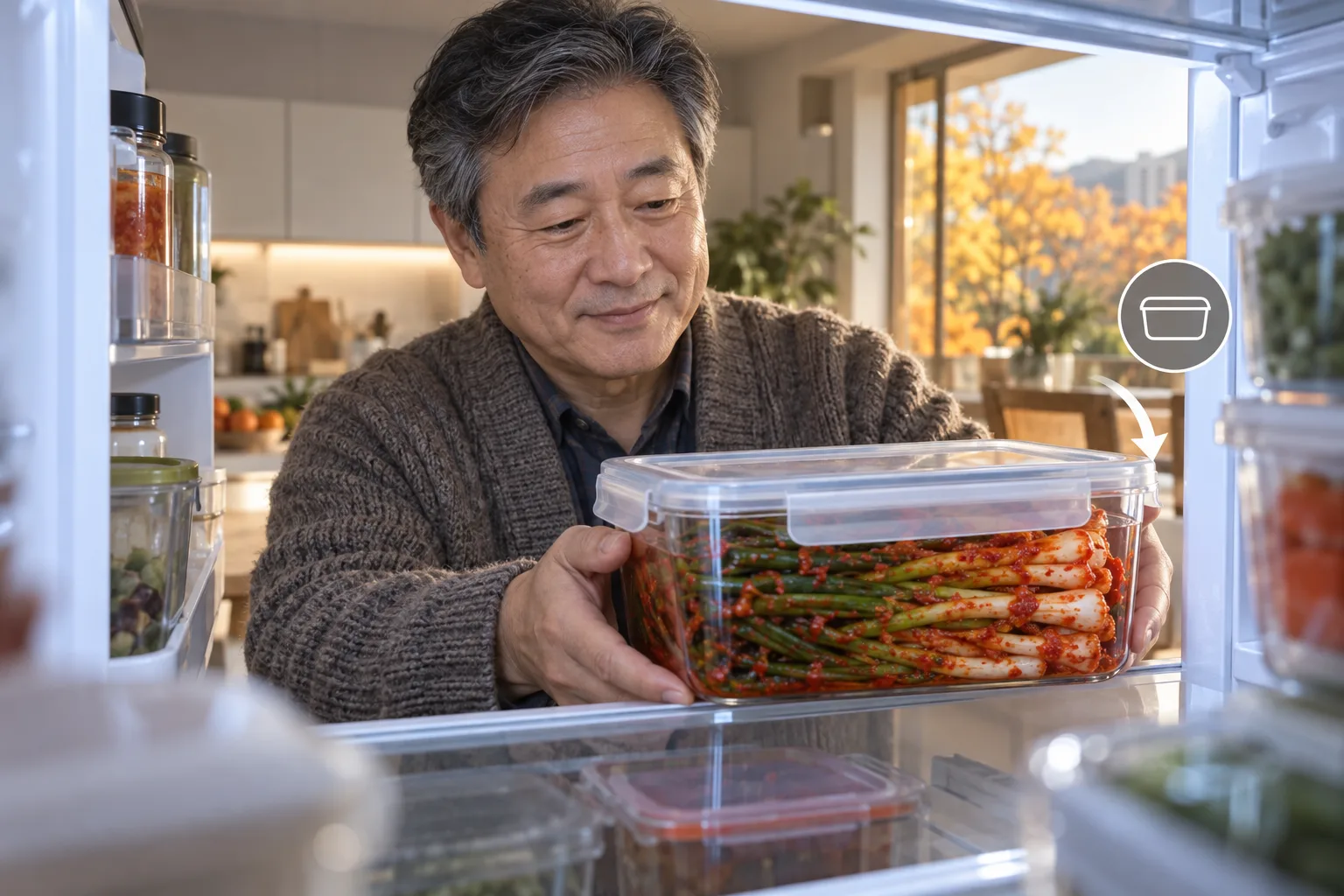
- Arrange the seasoned scallions neatly in a container and refrigerate.
To make scallion kimchi, first trim the scallions and drain them. The 500g scallion recipe can be made without pre-salting. Apply the seasoning to the white parts first. Keep the recipe that first salts the scallions in fish sauce separate.
The measurements are based on a post dated November 14, 2023, and a recipe revised on October 1, 2026.
Ingredients and tools
If this is your first time making it, choose a recipe that gives the scallion amount by weight. The 500g recipe below is a cooking record by 포남댁, a contributor to 만개의레시피. It is not a single standardized recipe, so use it as a starting point and adjust it to your taste.
- Main ingredient: 500g scallions
- Seasoning: red pepper powder, onion, pear juice, garlic, anchovy fish sauce, salted shrimp, plum extract, ground ginger
- Tools: scale, measuring spoons, strainer, large bowl, knife, blender, storage container
How to prepare scallions for scallion kimchi
First remove wilted parts and any outer skin with soil on it. After washing the scallions, drain them in a strainer. Too much water left from washing can thin the prepared seasoning.
- Cut off the root tips and remove yellowed, wilted leaves.
- Peel away any dirty outer skin from the white parts.
- Rinse the soil from between the white parts and the leaves under running water.
- As you wash, remove any other damaged outer leaves you find.
- Drain the scallions in a strainer, then measure out the amount to season.
Scallion kimchi seasoning for 500g
The measurements below are for a recipe without a separate pre-salting step. There is no step for adding glutinous rice paste, either. The ingredient list and instructions in the original give different amounts of garlic, so both are shown separately.
| Ingredient | Amount for 500g scallions |
|---|---|
| Red pepper powder | 5 tablespoons |
| Onion | 1/4 onion |
| Pear juice | 30mL |
| Garlic | 4 cloves in the ingredient list, 3 cloves in the instructions |
| Anchovy fish sauce | 3 tablespoons |
| Salted shrimp | 1.5 tablespoons |
| Plum extract | 2 tablespoons |
| Ground ginger | 1 teaspoon |
According to the site's measurement guide, 1 tablespoon is 15mL. A teaspoon is 5mL. These are units of volume, not the weight of a powder.
You can prepare 4 cloves of garlic if you follow the ingredient list. The instructions, however, say 3 cloves. Recording which amount you chose will make it easier to adjust the next batch.
How to season and pack the scallions without pre-salting
Apply the seasoning directly to the drained scallions. This method does not include a step for pre-salting them in fish sauce. It uses different amounts of seasoning on the white parts and the green leaves.
- Put the seasonings listed in the table into a bowl.
- Blend the onion and garlic, then mix them into the seasoning.
- Take a few scallions at a time and coat the white parts generously with seasoning.
- Lightly coat the green leaves with the remaining seasoning.
- Place the seasoned scallions neatly in a clean container.
- Season and pack the remaining scallions the same way, layering them neatly.
There is no need to massage the green leaves for as long as the white parts. Fold the leaves gently to fit the length of the container. Tying them tightly is not a required step.
Comparing pre-salting in fish sauce with seasoning directly
The main difference between the two methods is when the fish sauce is added. 제시카-라이프's cooking record salts the white parts first, then uses that same fish sauce in the seasoning.
| Category | Salt the white parts first | No separate pre-salting |
|---|---|---|
| Source | 제시카-라이프 cooking record | 포남댁 on 만개의레시피 |
| Scallion amount | About half a bunch of trimmed scallions | 500g scallions |
| Fish sauce | Sand lance fish sauce, amount not specified | 3 tablespoons anchovy fish sauce |
| Order of use | Salt the white parts, then reuse the fish sauce in the seasoning | Mix into the seasoning from the start |
| Glutinous rice paste | An example that added leftover kimchi seasoning | Not included |
| Measurement limitations | Scallion weight and fish sauce amount are unclear | Inconsistent garlic amounts |
The remaining seasonings for the half-bunch recipe are listed below. The original's spoon measurements are kept distinct. They have not been converted to mL because the size of the measuring spoons could not be confirmed.
| Ingredient | Amount used for about half a bunch of scallions |
|---|---|
| Sugar | 1 spoonful |
| Garlic | 1 teaspoon |
| Salted shrimp | 2 teaspoons |
| Red pepper powder | About 3 spoonfuls |
| Sand lance fish sauce | The fish sauce used for pre-salting |
| Leftover kimchi seasoning | Amount added not specified |
If you choose this method, take care not to add the fish sauce twice. The original uses the fish sauce from the pre-salting step. It does not call for a separate addition of fish sauce.
- Pour sand lance fish sauce over the white parts of the trimmed scallions to salt them.
- After about 30 minutes, turn them so the white parts make even contact with the fish sauce.
- Mix the remaining seasonings into the fish sauce used for pre-salting.
- Take 5~6 scallions at a time, coat them with seasoning, and place them in a container.
The 30 minutes given in the original is the point at which to turn the scallions. It is not a specified total pre-salting time. Without a fish sauce amount, it is difficult to reproduce the same saltiness exactly.
Example calculation for a half batch
Halving the 500g recipe gives you 250g scallions. Divide the other ingredients by the same proportion. The amounts below are calculated by halving the original recipe.
| Ingredient | Amount for 250g scallions |
|---|---|
| Red pepper powder | 2.5 tablespoons |
| Onion | 1/8 onion |
| Pear juice | 15mL |
| Garlic | 2 cloves, based on the 4 cloves in the ingredient list |
| Anchovy fish sauce | 1.5 tablespoons |
| Salted shrimp | 0.75 tablespoon |
| Plum extract | 1 tablespoon |
| Ground ginger | 0.5 teaspoon |
Do not apply this calculation to the half-bunch recipe. The actual weight of half a bunch has not been confirmed. First check whether the scallion weights are comparable.
Record measurements to make the same recipe again
Recording when you weighed the ingredients will make the next batch easier. The 500g recipe does not clearly distinguish between the weight before and after trimming. Do not assume that one bunch has a fixed weight.
| What to record | Why to record it |
|---|---|
| Weight before and after trimming | To account for the roots and leaves discarded |
| How thoroughly the scallions were drained | To check for differences in concentration caused by water left from washing |
| Measuring tools used | To avoid confusing a household spoon with a measuring spoon |
| Type and amount of fish sauce | To have a basis for adjusting the seasoning next time |
| Number of garlic cloves | To record your choice given the difference in the original |
| Added ingredients | To distinguish the original recipe from adjustments made to taste |
If you change the fish sauce, record the product name too. You cannot assume that different products are equally salty at the same volume. The heat level of the red pepper powder is also worth noting for future adjustments.
Common mistakes and adjustments to taste
Start by keeping the seasonings from different recipes separate. Make the recipe you chose first, then adjust it while recording which ingredients and amounts you change.
| Situation | What to check |
|---|---|
| Adding more fish sauce after pre-salting | The fish sauce used for pre-salting is part of the total seasoning |
| Adding both sugar and plum extract | Check whether you have combined two different recipes |
| Wanting less sweetness | Start by making small adjustments to the sweet ingredient in your chosen recipe |
| Having no glutinous rice paste | The 500g recipe can be made without it |
| Adding leftover kimchi seasoning | Account for the salted seafood and sweet ingredients already in it |
| Using large green onions instead of scallions | Their different thickness makes it difficult to use the same pre-salting time |
Leaving out glutinous rice paste is not the same as leaving out all liquids. The 500g recipe includes pear juice and fish sauce, among other ingredients. If you choose the recipe without paste, follow that recipe's ingredients.
What to check when fermenting and storing
The two home recipes do not establish a common number of days for fermentation. The rate varies with room temperature and the condition of the scallions. Do not set an arbitrary fixed time to leave the kimchi at room temperature.
- Close the lid and refrigerate the finished kimchi.
- Use clean tongs or chopsticks when taking some out.
- Write the date you made it on the container.
- Do not assume one storage period applies to all homemade kimchi.
For public-agency cooking information, check the food menu on 농촌진흥청 농사로. Its 이달의 식재료 section has information related to scallion kimchi. When consulting the agency's guidance, check ingredient weights and storage conditions as well.
Adjusting sweetness in a home recipe is a matter of taste. Do not treat that choice as a public agency's storage standard. Both recipes reviewed here are personal cooking records.
FAQ
Should I wash the scallions after trimming them?
Remove any wilted leaves and dirty outer layers first. Wash them under running water, removing any remaining dirt and damaged parts as you go.
Do I have to salt the green onion kimchi with fish sauce first?
Some methods skip the separate salting step. Choose one set of ingredient proportions designed for whether or not you salt the scallions.
Can I count one bunch of scallions as 500g?
Do not assume that one bunch weighs 500g. Check its actual weight, and distinguish between measurements taken before and after trimming.
Should I use 3 or 4 cloves of garlic?
Ponamdaek's recipe lists 4 in the ingredients but 3 in the cooking instructions. The half-batch calculations in this article are based on the ingredient list.
Can I make it without glutinous rice paste?
The 500g recipe described here does not use glutinous rice paste. Prepare the other ingredients according to the proportions for the version without the paste.
Should I apply the seasoning the same way to the white parts and green leaves?
Apply plenty to the white parts first, then lightly coat the green leaves. There is no need to massage the leaves for long.
Do I discard the fish sauce used for salting?
In the sand lance fish sauce salting method described here, the fish sauce is reused in the seasoning. Make sure you do not add the same recipe's fish sauce a second time.
How many days should I let it ferment before eating it?
There is no fermentation period that applies to both recipes I checked. It varies with the temperature and the condition of the ingredients, so it is difficult to give a fixed number of days.
Can I convert the mL measurement for a tablespoon directly into grams?
Volume and weight are different units. Do not convert the mL measurements for chili powder or salted shrimp into the same number of grams.
Sources
- Ponamdaek, Simple seasoning recipe and how to make scallion kimchi, posted 2026-09-30, updated 2026-10-01
- Jessica-Life, Making green onion kimchi with scallions, salting only the roots with sand lance fish sauce + seasoning, 2023-11-14
- Jessica-Life, Collection of kimjang and kimchi-making recipes, from napa cabbage kimchi to dongchimi, 2026-10-04
- Rural Development Administration Nongsaro, Food and ingredients of the month
Images