How Extreme Heat Is Reshaping Commercial Districts and Wedding Culture
Extreme heat is driving consumers into well-cooled indoor spaces and imposing new costs on outdoor commercial districts and event operations. Fan use and hydration should also be guided by temperature, humidity, and health conditions rather than a single number.
- As extreme heat intensifies, facilities with air conditioning, shade, and rest areas gain a competitive edge by encouraging consumers to stay longer.
- Outdoor markets and small stores may be affected relatively heavily due to heat exposure and limited capacity to invest in cooling.
- In environments with very high temperatures, do not rely solely on fans; move to a cooler place and use active methods to cool the body.
- A uniform daily fluid intake such as 2–3 liters does not apply to everyone; health conditions and activity levels must be considered.
- Weddings and outdoor events must manage extreme heat risks by considering the season, time of day, cooling capacity, and emergency response plans.
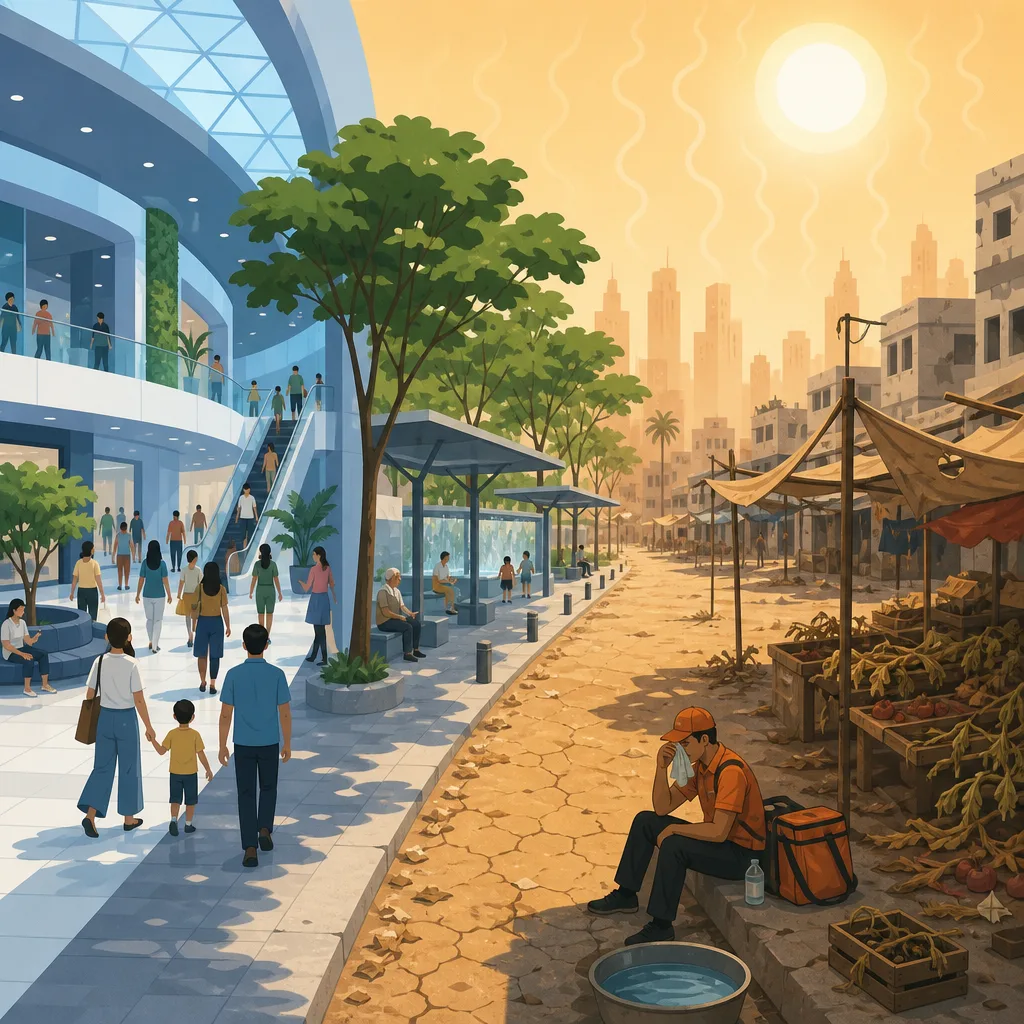
Extreme heat is not simply a phenomenon that increases discomfort during summer. It is an economic and social variable that changes when and where people travel, how they consume, event schedules, and even building operating costs. In particular, the gap may widen between large, well-air-conditioned indoor facilities and outdoor commercial districts directly exposed to heat.
Why Extreme Heat Changes the Commercial District Map
Traditional commercial district analysis places importance on foot traffic, transportation accessibility, demand from surrounding areas, and the mix of stores. As extreme heat becomes more frequent, another condition is added: how safely and comfortably people can stay while avoiding the heat.
Facilities such as large shopping malls or department stores, where people can dine, shop, and enjoy cultural activities all at once in an air-conditioned space, become destinations during periods of extreme heat. Visitors can reduce the number of trips they make and their exposure to the outdoors, while operators may benefit from longer stays. This can be described as an increase in stay-based consumption.
By contrast, traditional markets, open-air shopping areas, outdoor tourist attractions, and pedestrian-oriented commercial districts face the following burdens.
- Midday foot traffic and visiting hours may decrease.
- Refrigeration and storage costs for fresh food, as well as the risk of disposal, may increase.
- Merchants and delivery workers face greater heat exposure.
- Funds are needed to install shade structures, air conditioners, insulation, and ventilation equipment.
- If demand shifts to the evening, operating hours and staffing arrangements must change.
Commercial competitiveness during periods of extreme heat should therefore be assessed not simply by whether air conditioning is available, but by comprehensive heat-adaptation capacity, including access routes, shade, ventilation, rest areas, drinking water, and nighttime operations.
New Disparities Created by Air Conditioning
Air-conditioning facilities protect visitors but increase electricity use and operating costs. Large facilities with capital and building management capacity can invest in equipment more easily, while small businesses and open-air markets find it difficult to respond at the same level. If extreme heat persists, these differences may lead to disparities in customer numbers and sales.
Moreover, even if air-conditioned commercial facilities become informal places where local residents can escape the heat, they differ in nature from public cooling spaces that anyone can use freely. Local governments and communities need to provide accessible cooling spaces such as libraries, community facilities, and public shelters rather than relying solely on commercial facilities.
Increased Delivery Demand Is Another Mobility Effect of Extreme Heat
As temperatures rise, consumers may choose to have food or household goods delivered instead of going out. This is not so much the disappearance of consumption as the replacement of consumer travel with delivery-worker travel.
This change increases convenience but is accompanied by the following problems.
- Delivery workers’ exposure to heat from road surfaces and direct sunlight
- Restricted release of body heat due to helmets and protective equipment
- Packaging and delivery costs required to maintain food at an appropriate temperature
- Concentrated orders and delivery delays during periods of extreme heat
- Increased use of disposable packaging materials and refrigerants
Businesses should analyze not only order volume but also orders by time of day, apparent temperature, delivery duration, worker breaks, and accident indicators. During hours of severe heat, they can also consider safety measures such as adjusting delivery intervals, providing breaks, ensuring access to drinking water, and limiting orders.
How Should the Presented Sales and Facility Figures Be Interpreted?
Reports on extreme heat frequently present figures such as increases in visitor numbers and food and beverage sales at specific department stores, the percentage of traditional markets with air-conditioning facilities, and increases in convenience-store delivery sales. However, figures from an individual company or a short period should not immediately be interpreted as a nationwide trend.
| Item to verify | Information needed | Problem if not verified |
|---|---|---|
| Comparison period | Whether it is the same period in the previous year or the preceding week | Seasonality and holiday effects may be mistaken for the effects of extreme heat |
| Scope of the indicator | Whether it covers one store, selected stores, or stores nationwide | A case may be extrapolated into a change across the entire market |
| Sales basis | Whether it refers to order value, payment value, or sales volume | It becomes difficult to distinguish price increases from actual growth in demand |
| Definition of facilities | Whether it refers to individual air conditioners, shared air conditioning, or cooling shelters | Air-conditioning facility coverage rates may be calculated differently |
| Weather conditions | Maximum temperature, average temperature, humidity, and number of days under extreme heat advisories | It becomes difficult to distinguish the effect from a normal summer peak-season effect |
For the figures of 15~20%, 29%, and at least 200% included in the presented materials, the source survey organizations, periods, samples, and calculation criteria were not provided. Therefore, this article does not use them as confirmed nationwide statistics. To cite such figures, their definitions and comparison periods must first be verified in corporate disclosures, government surveys, or the original data.
Should Fans Not Be Used at 40°C or Above?
A fan is not a device that cools the surrounding air. It increases airflow, helping sweat evaporate and heat dissipate from the skin. However, if the air temperature is much higher than skin temperature, or if high humidity prevents sweat from evaporating effectively, the cooling effect diminishes and the body may absorb more heat from the hot air.
WHO and several health organizations advise people not to rely solely on fans in extremely hot indoor environments. However, the figure of 40°C should not be understood as an absolute threshold that applies to every environment and every person. Actual risk varies not only with temperature but also with humidity, airflow, sunlight, activity level, age, medications, and underlying medical conditions.
When temperatures are extremely high, take the following measures.
- Move to an air-conditioned location or public cooling space.
- Take a cool shower or wet the skin, and use cold, wet towels or similar items.
- Block direct sunlight and reduce unnecessary physical activity.
- Even when using a fan, monitor the indoor temperature and your physical condition while combining it with other cooling methods.
- If dizziness, headache, nausea, severe thirst, or muscle cramps occur, immediately get out of the heat and seek help.
Confusion, fainting, seizures, and very high body temperature may be signs of heatstroke. In such cases, contact emergency medical services without delay while cooling the body by any available means.
Is It Necessary to Drink 2~3 Liters of Water a Day?
The principle of replenishing fluids gradually before feeling thirsty is useful during periods of extreme heat. However, 2~3 liters a day is not a medical standard suitable for everyone. The amount of fluid needed varies according to body size, activity level, diet, temperature, pregnancy status, and health condition.
In particular, people whose fluid intake is restricted because of heart or kidney disease should not arbitrarily drink large amounts of water and should follow medical guidance. If someone has been sweating heavily for a long time, replenishing electrolytes through meals and other sources, as well as drinking water, may be considered. Conversely, drinking too much water in a short period can create a risk of low blood sodium levels.
Practical principles include the following.
- Drink water in portions before going out and during activities.
- Avoid alcohol because it can cause dehydration and impaired judgment.
- Do not rely solely on beverages high in sugar or caffeine.
- Watch for very dark urine or reduced urine output.
- If a medical condition or medication requires fluid management, ask medical professionals about the appropriate amount.
Is It Safe to Cover a Stroller With a Cloth?
Covering an entire stroller with a dry blanket or thick cloth creates shade but may obstruct air circulation, preventing internal heat from escaping. Blocking sunlight is different from sealing the stroller.
The following principles are important when protecting infants and young children.
- Do not wrap the entire stroller in a thick cover that blocks ventilation.
- Use the stroller canopy while leaving room for air to circulate.
- If possible, avoid going out at midday and use shaded or air-conditioned spaces.
- Frequently touch the child’s neck, back, and chest to check whether they are excessively hot.
- Even when using a wet cloth, do not block ventilation, and continue monitoring the child’s condition and the temperature inside.
- Never leave a child alone in a parked car, even for a short time.
A wet cloth may help with cooling under conditions that allow evaporation, but its effect is limited when humidity is high or airflow is insufficient. Therefore, no single covering method should be treated as a universal safety formula.
How Extreme Heat Changes Wedding and Event Operations
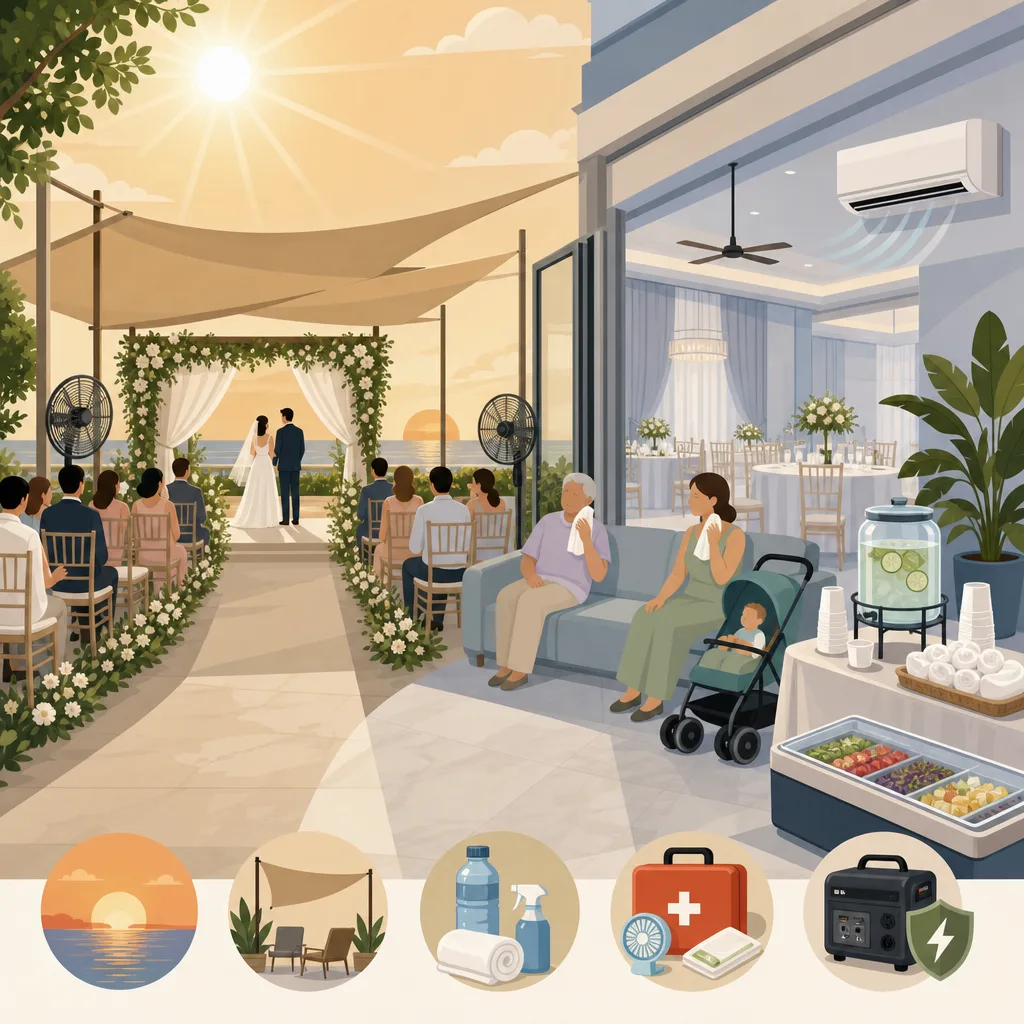
As high temperatures become more likely even in regions where summers were relatively mild, heat management has become important for outdoor weddings and event venues with abundant natural light. Possible changes include the following.
- Moving midday ceremonies to the morning or evening
- Shifting demand for summer events to spring or fall
- Securing indoor alternative venues for outdoor ceremonies
- Selecting venues based on cooling capacity and the availability of emergency power
- Adopting lightweight clothing, makeup, and food-storage methods
- Including conditions for schedule changes during extreme heat advisories in contracts
However, a few media reports alone are not enough to conclude that wedding demand throughout the United Kingdom has shifted to particular months. Confirming this would require a long-term analysis combining monthly marriage and wedding statistics, venue reservation data, and temperature data. Specialized dress materials or coating technologies also cannot be regarded as universal measures against extreme heat until manufacturers’ performance testing, safety, and wash-durability data have been verified.
Extreme Heat Plans Event Venues Should Prepare
| Area | Items to inspect |
|---|---|
| Facilities | Cooling capacity, ventilation, blocking of direct sunlight, emergency power |
| Schedule | Avoidance of the hottest hours, break times, criteria for shortening schedules |
| Attendees | Priority cooling spaces for older adults, pregnant women, infants, and young children |
| Food and beverages | Sufficient drinking water, refrigerated food storage, and hygiene management |
| Emergency response | Heat-related illness training, emergency contact network, cooling supplies |
| Contracts | Conditions for changing or canceling the venue or time during extreme heat advisories |
Indicators to Monitor in Commercial Districts and Daily Life in the Era of Extreme Heat
To properly understand the impact of extreme heat, maximum temperature should not be considered alone. Monitoring the following data together makes it possible to distinguish causes and effects more accurately.
- Temperature, humidity, apparent temperature by time of day, and nighttime minimum temperature
- Indoor and outdoor foot traffic and average dwell time
- Sales, number of orders, average transaction value, and cancellation rates by industry
- Electricity consumption for cooling and electricity costs
- Delivery times, worker break times, and safety accidents
- Rates of event schedule changes and cancellations, and the number of emergency responses
- Access distance to shade, drinking water, and cooling shelters
Adapting to extreme heat is not simply a matter of installing more air conditioners. Building insulation and shading, green spaces, nighttime operations, public cooling spaces, and worker protection must be designed together. Only then can the gap between those who can escape the heat and those who cannot be reduced.
FAQ
Does extreme heat always increase sales at large shopping malls?
Not always. Air conditioning and multipurpose facilities can motivate people to visit, but an overall decline in consumption, holidays, events, and price changes also affect sales. To determine the effect of extreme heat, data from the same stores during the corresponding period of the previous year should be compared together with weather and foot traffic data.
Should you never turn on a fan when the temperature exceeds 40°C?
It is difficult to regard 40°C as an absolute threshold that applies in every situation. In extremely hot or humid environments, a fan's evaporative cooling effect may be insufficient, so do not rely solely on a fan; also use methods such as moving to an air-conditioned space, showering, or wetting the skin.
Should you drink 2–3 liters of water every day during extreme heat?
The same amount does not apply to everyone. The amount needed varies depending on activity level, body size, diet, medical conditions, and medications. People who have been instructed to restrict fluids due to heart or kidney disease or other conditions should follow their healthcare provider's guidance.
Is it safe to cover a stroller with a thin cloth?
Even a thin cloth can prevent internal heat from escaping if it covers the entire stroller and obstructs air circulation. Use a sunshade and seek shade, ensure adequate ventilation, and frequently check the child's condition and the conditions inside the stroller.
Why is extreme heat more disadvantageous for traditional markets?
This is because they often have open walkways, require substantial outdoor movement, and have difficulty installing cooling and insulation systems. In addition to fewer visitors, merchants' exposure to heat, food storage costs, and electricity bills for cooling can also be burdensome.
What should you check when choosing a summer wedding venue?
You should check the venue's cooling capacity, ventilation, protection from direct sunlight, emergency power supply, drinking water availability, and alternative indoor space. It is also advisable to clearly specify in the contract the terms for changing the time or venue or canceling the event if an extreme heat advisory is issued.
How can you distinguish heat exhaustion from heatstroke?
Heavy sweating, headache, dizziness, nausea, and weakness may occur with heat exhaustion. Confusion, fainting, seizures, or a very high body temperature are emergency warning signs of possible heatstroke, so contact emergency medical services immediately and cool the person's body.
Sources
Images