The Shift Toward Monthly Rent in South Korea’s Jeonse and Monthly Rent Market: The Structure of Jeonse Weakness, Supply Shortages, and Policy Risks
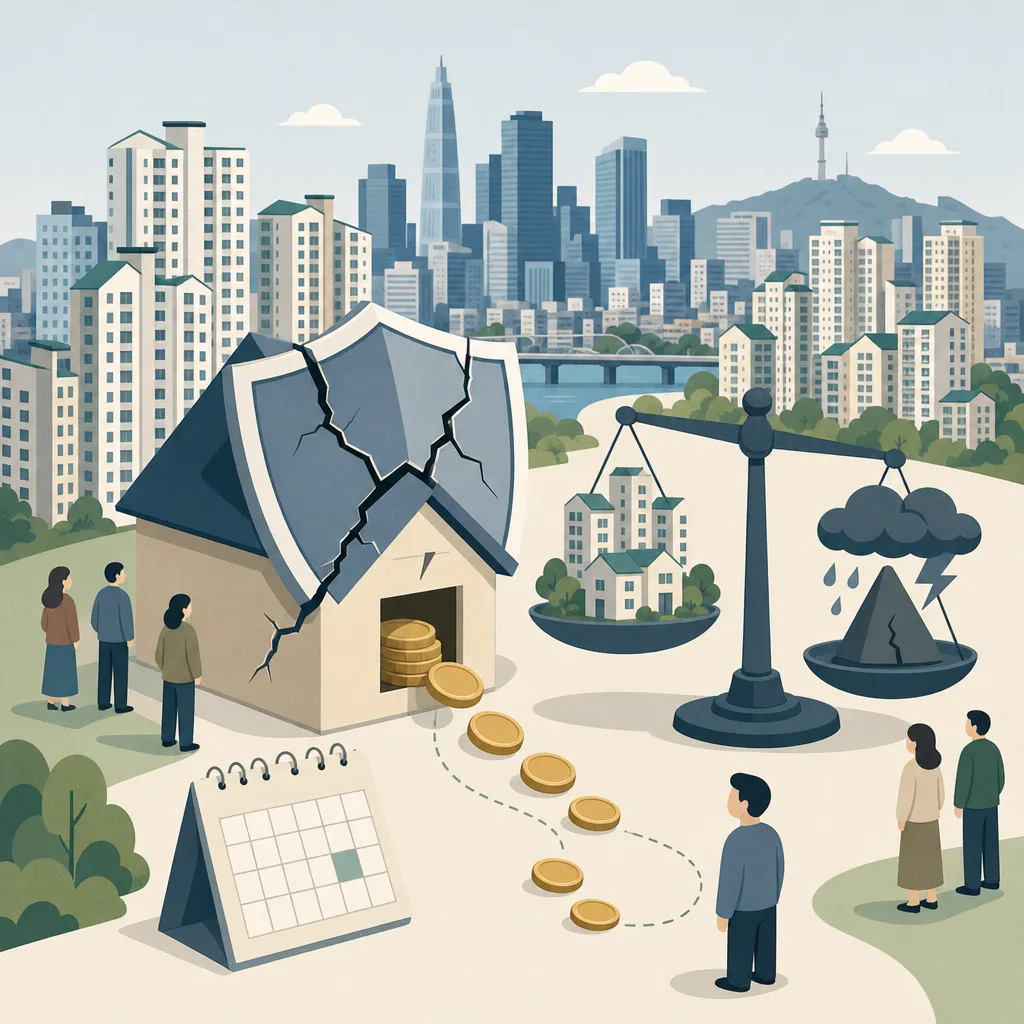
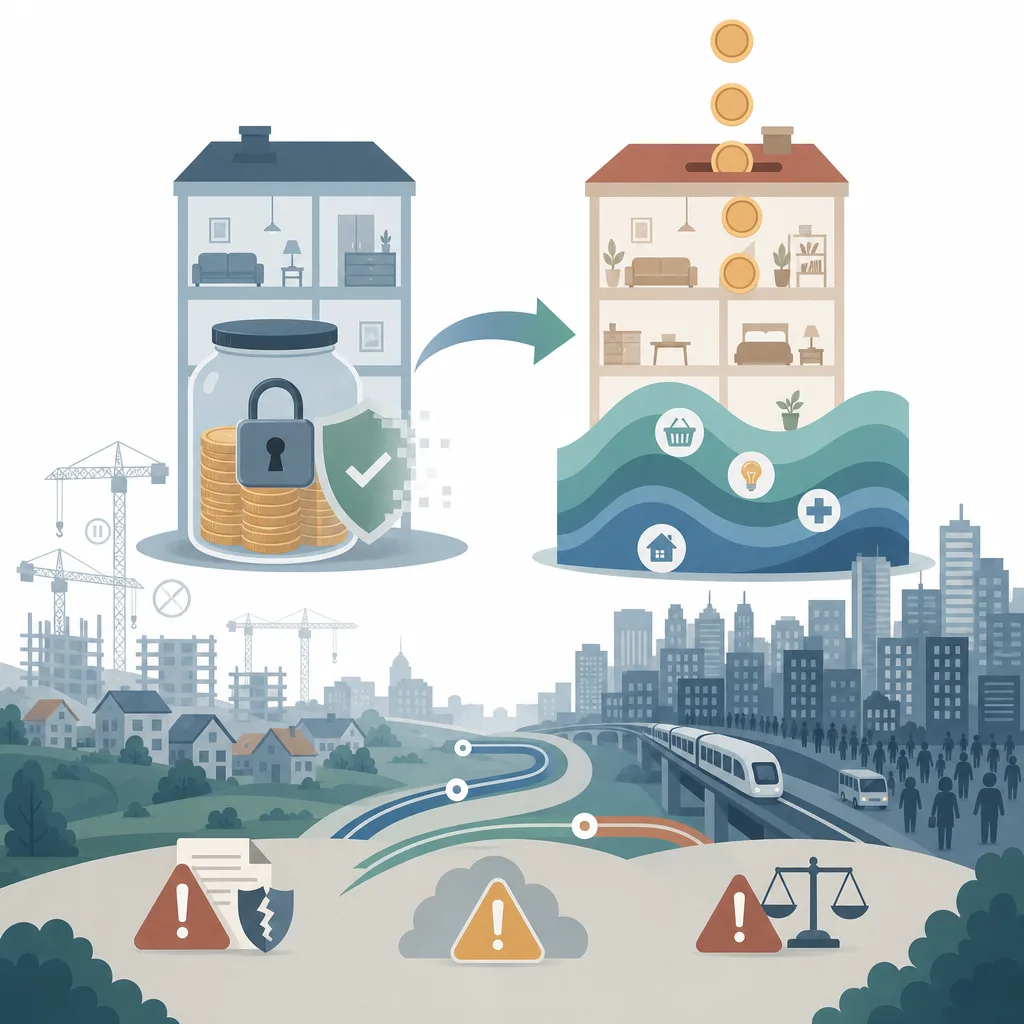
South Korea’s jeonse and monthly rent market is facing pressure to shift toward monthly rentals due to a confluence of factors, including interest rates, the risk associated with the return of jeonse deposits, a shortage of housing supply in urban areas, regulations on the rental business, and changes in household structures. The decline of jeonse is not merely a shift in rental practices; it is an issue that simultaneously alters tenants’ cash flow, the supply of private rental housing, and the structure of urban housing costs.
- While the jeonse system has served as a buffer to lower tenants’ monthly housing costs, the risk of not getting the deposit back and rising interest rates are eroding its sustainability and undermining trust in the system.
- The rise in monthly rent cannot be explained solely by the greed of certain landlords; rather, it results from a combination of factors, including the concentration of jobs in downtown areas, delays in new housing supply, a reduction in the rental housing stock, and changes in loan and guarantee conditions.
- While owners of multiple homes also serve as private rental providers, excessive leverage and gap investments can lead to security deposit disputes; therefore, a distinction must be made between their role as providers and risk management.
- Since it is difficult to meet the entire demand for rental housing through public rental housing alone, it is necessary to simultaneously establish a stable supply of private rental housing and tenant protection measures.
- Policy evaluation must take into account not only the stability of sales prices but also the number of properties available for rent or lease, rental rates, incidents involving security deposits, and the displacement of vulnerable housing groups.
Overview
The South Korean residential rental market has a unique structure in which jeonse and monthly rent coexist. Jeonse is a system in which tenants pay a large security deposit and pay almost no monthly rent, while monthly rent combines a relatively low security deposit with monthly rent payments. When the jeonse system functioned effectively, it reduced tenants’ monthly housing costs and allowed landlords to raise capital by utilizing the security deposits.
However, a recent trend in the Korean rental market shows that the stability of jeonse is weakening, while the share of monthly rent and the burden of monthly rent payments are increasing. This phenomenon is not merely a matter of changing rental arrangements. It is a structural problem linked to interest rates, the risk of security deposit non-refund, regulations on multi-property owners, private rental supply, urban concentration, delays in redevelopment and reconstruction, and housing accessibility for young people and newlyweds.
Definitions of Key Terms
| Term | Meaning | Role in the Market |
|---|---|---|
| Jeonse | A rental arrangement where the tenant deposits a security deposit and receives it back at the end of the contract | Has served as a buffer to lower monthly housing costs. |
| Monthly Rent | A rental arrangement where the tenant pays both a security deposit and monthly rent | Directly increases the tenant’s cash flow burden. |
| Banjeonse | A hybrid form between jeonse and monthly rent, involving a combination of a partial security deposit and monthly rent | Serves as an alternative option when jeonse security deposits rise. |
| Private Rental | A market where individuals or corporations rent out their owned housing | Absorbs large-scale rental demand that is difficult to meet through public housing. |
| Gap Investment | An investment strategy involving the purchase of homes where the difference between the sales price and the jeonse deposit is small | While this may appear to increase supply during a market uptrend, it can heighten the risk of non-refunded deposits during a downturn. |
| Risk of Jeonse Deposit Non-Refund | The risk that the landlord will be unable to return the deposit upon contract termination | This can erode trust in the jeonse system and increase the preference for monthly rent. |
Major Causes of the Weakening Jeonse Market
1. Changes in Interest Rates Alter the Choice Between Jeonse and Monthly Rent
Jeonse is, by its nature, a contract that ties up a large deposit for an extended period. When interest rates are low, the interest burden on tenants taking out jeonse loans is relatively low, and landlords can use the deposit as a source of capital. Conversely, when interest rates rise, the interest burden on jeonse loans increases, prompting tenants to reassess whether jeonse or monthly rent is more advantageous.
From the landlord’s perspective, interest rates and financing conditions are also crucial. If demand for new jeonse contracts declines or jeonse prices fall just as a landlord is due to return an existing security deposit, the landlord may struggle to secure the funds for repayment. In such cases, incidents of failed jeonse deposit refunds may increase, potentially eroding market confidence.
2. Deposit-Related Incidents and Jeonse Fraud Eroding Trust in the Jeonse System
The jeonse system is based on the trust that the security deposit will be safely returned. However, when falling housing prices, excessive mortgage debt, landlords’ lack of liquidity, and fraudulent contracts converge, tenants are exposed to the risk of significant losses. In particular, young adults just entering the workforce, youth, and newlyweds—who have limited experience verifying property rights and few alternative housing options—may bear the brunt of these losses.
Deposit return guarantees, certified dates, change-of-address registration, and land registry verification are important safeguards. However, even with these safeguards, not all risks are eliminated, and the actual scope of protection varies depending on guarantee eligibility requirements, coverage limits, prior claims, and housing price calculation methods.
3. Demand in City Centers Is Strong, but Supply Is Slow
Jobs, universities, hospitals, transportation, and commercial facilities are concentrated in key areas of Seoul and the greater Seoul metropolitan area. As demand continues to flock to specific areas, upward pressure is placed not only on home prices but also on jeonse and monthly rent prices. Housing cannot be mass-produced in the short term like factory goods; it requires lengthy procedures such as securing land, obtaining permits, urban renewal projects, securing financing, and obtaining resident consent.
If urban renewal projects are delayed or new housing supply fails to keep pace with demand, tenants will have to compete for a limited number of available units. In such cases, if jeonse (lump-sum deposit) options decrease while monthly rent options increase, monthly housing expenses can rise rapidly.
4. Regulations on Multi-Property Owners Have a Dual Effect on Rental Supply
Multi-homeowners play a dual role in the market. On the one hand, they own rental housing and provide tenants with housing options. On the other hand, they can amplify market risks through excessive leverage, purchases aimed at short-term capital gains, and investments reliant on security deposits.
Therefore, approaches that view all multi-homeowners as speculators or, conversely, as merely necessary suppliers are both incomplete. Policy must distinguish between the following:
| Category | Positive Effects on the Market | Risks to Be Managed |
|---|---|---|
| Holding for long-term rental purposes | Stable supply of rental units | Need to prevent sharp rent hikes and deterioration in housing quality |
| Registered rental businesses | Supply possible within a framework of contract management, tax incentives, and obligations | Potential contraction in supply if the system changes |
| Excessive gap investment | Appears to simultaneously generate purchase demand and rental supply during market upturns | Potential for deposit refund incidents and a chain reaction of defaults during market downturns |
| Short-term speculative purchases | May provide some liquidity | Increased price volatility and higher barriers to entry for genuine buyers |
The key is to maintain rental supply while reducing risky leverage and tenant harm. Indiscriminate regulation could reduce the volume of private rental housing, while unrestricted laissez-faire could fuel security deposit disputes and price instability.
The Impact of the Shift to Monthly Rent on Tenants
The shift from jeonse to monthly rent changes the financial burden structure for tenants. Jeonse requires a large security deposit but involves low monthly cash outflow. Monthly rent may have a lower initial deposit but increases fixed monthly expenses.
Impact by Tenant Type
| Tenant Type | Major Impacts of the Shift to Monthly Rent | Key Points to Check |
|---|---|---|
| Young single-person households | The proportion of monthly rent relative to income may increase | Must factor in maintenance fees, security deposit protection, and commuting costs |
| Newlyweds | Childbirth and childcare costs may increase alongside housing costs | Compare jeonse loan interest rates with monthly rent |
| Middle-class households without home ownership | Likely to shift from jeonse to banjeonse or monthly rent | Check for rent changes at the time of contract renewal |
| Elderly tenants | The burden of monthly rent relative to fixed income may increase | The possibility of long-term residency and the security of security deposit refunds are important |
| Workers moving from rural areas to the Seoul metropolitan area | Initial settlement costs and the burden of monthly rent occur simultaneously | Access to the workplace and total housing costs must be calculated together |
How to Interpret the Term “Monthly Rent Hell” Using Data
“Monthly Rent Hell” is an emotional expression, but when converted into analyzable indicators, it breaks down as follows:
- The rent-to-income ratio is rising.
- The number of jeonse listings is decreasing, while monthly rent and half-jeonse listings are increasing.
- Incidents involving the non-return of security deposits and demand for jeonse insurance are on the rise.
- Monthly rent for small homes in prime downtown locations is rising rapidly.
- Young people and low-income groups are being pushed into goshiwons, semi-basement units, and distant neighborhoods.
- The number of available rental units is decreasing, weakening tenants’ bargaining power.
If these indicators deteriorate simultaneously, the shift toward monthly rent can be interpreted not merely as a change in rental practices but as a deterioration in housing stability.
Key Issues in the Policy Debate
Is Public Rental Housing Alone Sufficient?
Public rental housing is essential for protecting vulnerable groups and providing a housing safety net. However, it is difficult for public rental housing alone to absorb the entire demand for rental housing. This is due to constraints on land, budget, location, and the pace of supply. Therefore, the expansion of public rental housing and the stabilization of the private rental market should be viewed as complementary rather than mutually exclusive.
How to Stabilize the Private Rental Market
To stabilize the private rental market, we must recognize landlords’ incentives to supply housing while strengthening tenant protection measures. For example, this requires a predictable tax system for long-term leases, transparency in lease contract information, verification of landlords’ ability to return security deposits, and early warning systems for substandard housing.
The Impact of Sales Regulations on the Rental Market
Policies that curb the sales market may temper price increases in the short term. However, if buyer demand shifts to rental demand, or if landlords reduce their housing stock, pressure on the jeonse and monthly rent markets could increase. Policy evaluations should consider not only sales prices but also jeonse prices, monthly rent prices, the number of listings, and the volume of lease transactions.
Checklist for Genuine Buyers
Before Signing a Jeonse Contract
- Check the property registry extract for the owner, mortgage liens, provisional attachments, and any trust arrangements.
- Verify that the jeonse deposit is not excessive relative to the property value and senior liens.
- Confirm that you can complete the change-of-address registration and obtain the confirmation date without delay.
- Check before signing the contract whether you are eligible for jeonse deposit return insurance.
- Compare actual transaction prices in the neighborhood with actual jeonse and monthly rent transaction prices.
Before Signing a Monthly Rent Lease
- Calculate the total housing costs, including not only the monthly rent but also maintenance fees, parking fees, internet, and heating costs.
- Verify that the lease agreement clearly specifies the maintenance fee items and the method of settlement.
- Even if the security deposit is low, verify the landlord’s legal rights and any prior liens.
- Check the contract renewal conditions and the possibility of rent increases.
- Calculate your actual living expenses, including commuting costs and commute time.
Key Data Indicators for Market Analysis
| Indicator | Why It’s Important | Where to Find It |
|---|---|---|
| Actual Jeonse and Monthly Rent Transaction Prices | Shows the actual level of rent agreed upon in contracts. | Ministry of Land, Infrastructure and Transport’s Actual Transaction Price Disclosure System |
| Jeonse Price Index and Monthly Rent Price Index | Allows for comparison of price trends by region. | Korea Real Estate Board’s Real Estate Statistics Information System |
| Homeownership Statistics | Necessary for understanding the structure of multiple-home ownership and the ownership status by household. | KOSIS National Statistics Portal |
| Base Rate and Loan Interest Rates | Influence the decision on jeonse loan interest payments and the option to switch to monthly rent. | Bank of Korea |
| Status of Jeonse Deposit Return Guarantees | Helps assess perceptions of jeonse risks and demand for guarantees. | Korea Housing and Urban Guarantee Corporation |
| Volume of Permits, Construction Starts, and Completions | A leading indicator for assessing the potential for future supply shortages or increases. | Statistics from the Ministry of Land, Infrastructure and Transport and the Korea Real Estate Board |
A Balanced Conclusion
The instability in Korea’s jeonse and monthly rent market cannot be explained by a single cause. A combination of factors—including eroding trust in the jeonse system, interest rate fluctuations, supply constraints in urban areas, a contraction in private rental supply, jeonse fraud, and regulatory uncertainty—is at play simultaneously. Therefore, solutions cannot be limited to simple slogans.
There are three necessary directions. First, we must restore trust in the jeonse system by reducing the risk of jeonse deposit non-refunds. Second, we must design supply incentives so that public and private rental markets function in tandem. Third, we must coordinate urban renewal projects, transportation, and live-work proximity policies to ensure housing is supplied where there is actual demand in city centers.
The trend of jeonse declining and monthly rent increasing is already a problem many tenants are experiencing firsthand. However, explaining the market solely through fear can lead to misguided policy decisions. What is important is to continuously monitor jeonse and monthly rent data and design a system that simultaneously achieves rental supply and tenant protection.
FAQ
Can we say that the jeonse system is about to disappear?
It is difficult to conclude that the jeonse system will disappear completely in the short term. However, if factors such as interest rates, the risk of not getting the security deposit back, jeonse fraud, and changes in landlords’ financial circumstances all converge, the appeal and trust in the jeonse system could weaken, and pressure to switch to monthly rent or banjeonse could increase.
What is the main reason for the rise in monthly rent?
It is difficult to attribute the rise in monthly rent to any single cause. A combination of factors—including the concentration of jobs in downtown areas, delays in housing supply, a decline in jeonse listings, rising loan interest rates, increased holding costs for landlords, and tenant demand for switching to monthly rent—is at play.
Do owners of multiple homes always play a negative role in the rental market?
That is not the case. Owners of multiple homes are also key providers of private rental housing. However, since excessive “gap investment” or investment reliant on security deposits can increase harm to tenants, we must distinguish between the role of providing long-term rental housing and risky leverage practices.
Will an increase in public rental housing solve the jeonse and monthly rent problem?
While expanding public rental housing is crucial for protecting vulnerable groups, it is difficult for it to fully meet the total demand for rental housing. Given the limitations in budget, location, and supply speed, both public and private rental markets must function stably in tandem.
Which is more advantageous: a jeonse lease or a monthly rent lease?
The answer depends on the interest rate, the size of the security deposit, the monthly rent, eligibility for a loan, the length of stay, and the risk associated with getting the security deposit back. You should compare the interest on a jeonse loan with the monthly rent and maintenance fees over the same period, and be sure to verify the security of the deposit.
What is the first thing you should check in a jeonse contract?
You must first verify the owner listed on the property title abstract, as well as any mortgage liens, prior liens, and whether the property is held in trust. Afterward, you should review the registration of change of address, the date of certification, the eligibility for a jeonse deposit refund guarantee, and the level of the deposit relative to actual transaction prices in the surrounding area.
Why are maintenance fees important in a monthly rent lease?
Even if the monthly rent seems low, the actual total housing costs can rise significantly if maintenance fees, heating costs, parking fees, and internet charges are high. It is important to check that the lease agreement clearly specifies the maintenance fee items and the method of settlement.
What statistics should you look at when assessing the rental market?
It is advisable to analyze the Ministry of Land, Infrastructure and Transport’s actual transaction prices, the Korea Real Estate Board’s jeonse and monthly rent price indices, KOSIS housing ownership statistics, the Bank of Korea’s interest rate data, and the Korea Housing and Urban Guarantee Corporation’s guarantee data together. Looking at just one indicator may cause you to overlook the spillover effects between the sales and rental markets.
Sources
- Ministry of Land, Infrastructure and Transport’s Actual Transaction Price Disclosure System
- Korea Real Estate Board's Real Estate Statistics Information System, R-ONE
- KOSIS National Statistics Portal
- Bank of Korea
- Housing and Urban Guarantee Corporation (HUG)
- National Law Information Center: Housing Lease Protection Act
Images