TikTok Ad Conversion and Setup Guide for Meta Marketers
Simply copying your Meta advertising experience to TikTok may make the campaign structure feel familiar, but it can easily lead to failures in creatives and optimization. This guide explains how to design your first campaign, from objective selection, tracking setup, and targeting to vertical video production, test budgets, and performance evaluation.
- First, select a campaign objective and optimization event that match your actual business goals, such as purchases, leads, or visits.
- Review TikTok Pixel and Events API, and check key events, deduplication, UTM parameters, and measurement in analytics tools.
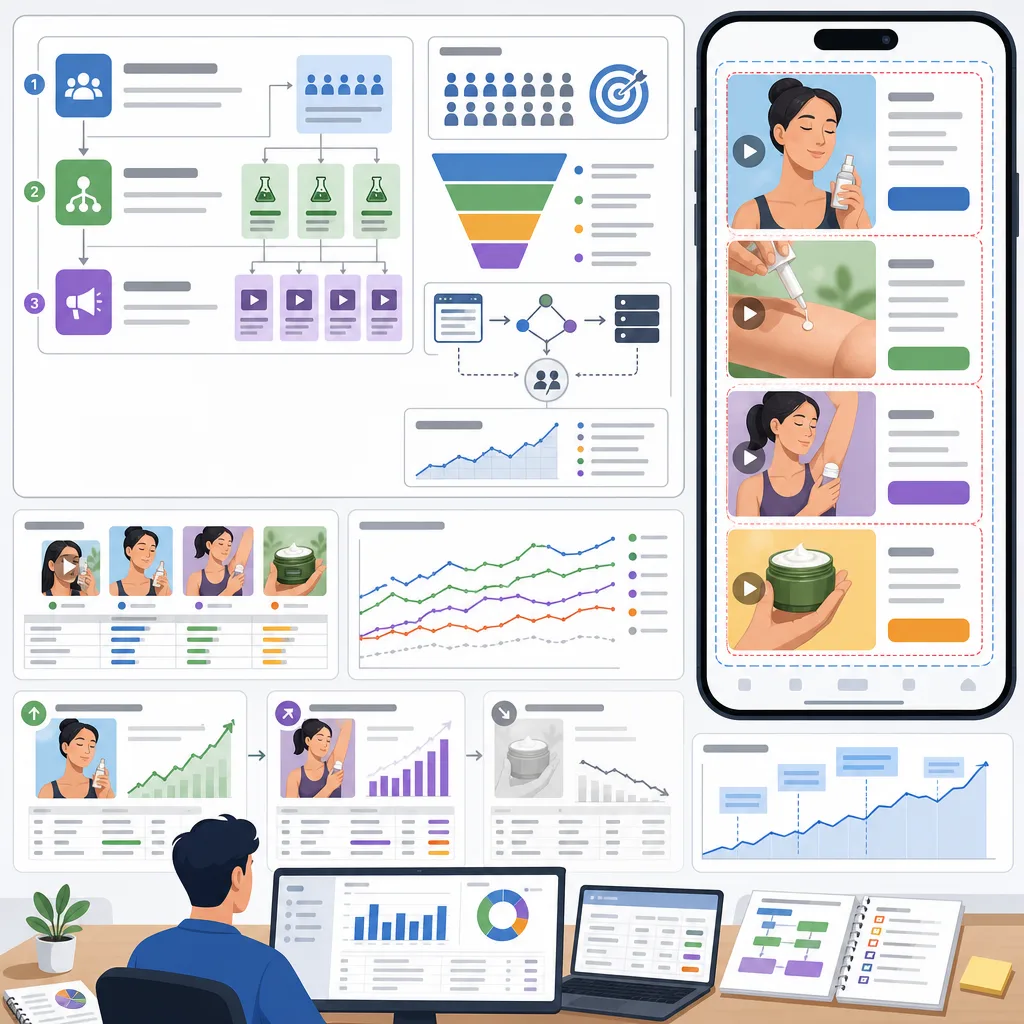
- Structure ad groups with broad audiences restricted only by essential criteria and separate testing budgets.
- Create 9:16 videos that fit naturally into the TikTok feed, using different hooks and a single selling point.
- Compare performance at the creative level rather than the ad-group level, and continually scale winners, address fatigue, and validate incremental performance.
Meta and TikTok both use a structure that places targeting and bidding conditions and ad creatives under campaigns. However, content is consumed differently on the two platforms. Rather than simply moving images or product-explanation videos that performed well on Meta to TikTok, you should retain the measurement framework while redesigning the creative language and testing approach.
This guide focuses on e-commerce and lead generation. Campaign objectives, menu names, supported placements, and minimum budgets may vary by country, account, and time, so the conditions shown in the actual Ads Manager should be treated as the final authority.
Step 1: Check TikTok’s Delivery Model and Suitability
TikTok Should Not Be Judged by Age Alone
Defining TikTok as a platform exclusively for a particular age group can cause you to miss opportunities to find actual customers. The age composition of users and buyers varies depending on the country, product category, price, creative, and targeting settings. It is safer to assess suitability based on estimated potential reach in the ad account, first-party customer data, and the results of small-scale tests.
TikTok’s core environment is a recommendation feed where users continuously swipe through vertical videos. Ads are also consumed between regular content, so users may immediately swipe away if the opening scene fails to capture their interest. Conversely, if a user review, demonstration, or problem-solving process feels natural, even a low-awareness brand may have an opportunity to explain itself to new customers.
Products That Are Particularly Worth Testing
- Beauty, fashion, food, and household products that can be shown in use in a short clip
- Products that can visually demonstrate a before-and-after difference or problem-solving process
- Products whose production process, comparisons, reviews, or usage tips can be turned into a series of content
- Products that can generate interest through short videos and provide additional explanations on the detail page, rather than relying solely on impulse purchases
Not every product is suitable for direct purchase ads. For products with long consideration periods or extensive regulations, it may be more practical to combine video views, educational content, lead generation, and follow-up consultations.
Check Placements
The primary placement is TikTok’s For You feed. Depending on the account and region, additional placements such as TikTok Lite or Pangle may appear as options. When using automatic placements, check delivery volume and conversion quality by placement. If brand safety or app network quality is important, review the actual available options and exclusion features.
Step 2: Map Meta’s Structure to TikTok’s
| Operational Element | Meta | TikTok | Practical Meaning |
|---|---|---|---|
| Top-level structure | Campaign | Campaign | Determines the objective and budget management method |
| Mid-level structure | Ad set | Ad group | Determines targeting, placements, schedule, bidding, and optimization |
| Lower-level structure | Ad | Ad | Configures the video, copy, landing page, and CTA |
| Primary consumption environment | Feed, Stories, Reels, etc. | Primarily a vertical recommendation feed | The natural feel of short-form video is especially important on TikTok |
| Use of organic posts | Existing posts can be advertised | Spark Ads supported | Allows the use of original posts and social engagement |
Similar structures do not mean identical operating principles. On Meta, it is easy to combine multiple formats such as images, carousels, feeds, and Reels. On TikTok, users can immediately move to the next video, so the opening scene, tone of voice, captions, editing pace, and demonstration scenes can significantly affect performance.
Step 3: Choose a Campaign Objective That Matches the Business Goal
First, define in one sentence the final action the ad should generate. Objective names in Ads Manager may differ by account, but the basic mapping is as follows.
| Business Goal | Campaign Objective to Consider | Key Performance Indicators |
|---|---|---|
| Build awareness of a brand or product | Reach or video views | Reach, frequency, viewing retention, completion rate |
| Drive website visits | Traffic | Landing page visits, engaged visits, drop-off |
| Generate online purchases | Sales or web conversions | Number of purchases, conversion rate, CPA, return on ad spend |
| Acquire inquiry or consultation leads | Lead generation | Number of valid leads, cost per valid lead, follow-up conversion rate |
| Acquire app users | App promotion-related objective | Post-install actions, sign-ups, purchases |
If purchases are the goal but you choose only a traffic objective because CPC is low, the system may learn to find people likely to click without learning to find people likely to purchase. The ad objective, optimization event, and business metrics should all be aligned in the same direction.
Insisting only on low-frequency events such as purchases may also leave insufficient data for initial learning. In this case, higher-funnel events such as add-to-cart or checkout initiation may be considered temporarily, but you should also verify that increasing the number of inexpensive events does not reduce actual purchase quality.
Step 4: Check Pixel, Events API, and Event Quality
Before launching a website conversion campaign, set up and test TikTok Pixel or Events API. If you use the browser-based Pixel and server-based Events API together, check the event identifiers and deduplication settings to prevent the same action from being counted twice.
Minimum Measurement Checklist
- Verify that product-view, add-to-cart, checkout initiation, purchase, or lead-completion events fire at the correct time.
- Check that the currency and order value are accurately passed with purchase events.
- Test whether page refreshes, revisits to the payment completion page, or payment failures create duplicate conversions.
- Consistently add UTM parameters to ad URLs so campaigns can be distinguished in web analytics tools and order data.
- Create test orders or test leads directly and compare the records in the ad platform, analytics tools, and CRM.
- Review whether privacy practices, cookie and tracking consent, and data transmission comply with the laws and your own disclosures in the applicable region.
Ad platform figures and web analytics figures may not match exactly. This is because attribution windows, cross-device estimates, cookie restrictions, time zones, and whether conversions are assigned by conversion date or click date can differ. Before and after the campaign, it is advisable to determine which system will serve as the source of truth for recognized revenue.
Step 5: Keep Initial Targeting and Ad Group Design Simple
For initial campaigns, consider limiting only the age, gender, and region strictly required by legal sales conditions or product suitability, while keeping interests broad. Excessive targeting segmentation reduces the budget and conversion data delivered to each ad group, making learning and comparisons more difficult.
For example, if a beauty product’s primary customers are women in their 20s, you can first apply those conditions and sales regions while designing a test that does not narrowly overlap multiple interests at once. After data accumulates, compare broad targeting, interest targeting, and lookalike targeting based on existing customers using the same criteria.
Ad Group Design Principles
- Define only one thing to validate in each ad group.
- When comparing targeting, keep creatives and landing pages as consistent as possible.
- When comparing creatives, keep targeting, bidding, and optimization events the same.
- Clearly determine whether to exclude existing purchasers from new customer acquisition campaigns.
- If the retargeting audience is small, do not divide time windows too narrowly.
Step 6: Produce TikTok-Style Vertical Videos
Non-Spark Ads and Spark Ads
| Type | How It Works | Advantages | What to Check |
|---|---|---|---|
| Non-Spark Ads | Upload videos and copy directly to the ad manager | Simple creative and message management | May look like content created specifically for advertising |
| Spark Ads | Use an existing TikTok post from a brand or creator as an ad after receiving authorization | Can leverage the post’s context and social engagement | Must verify post usage rights, the scope of authorization, and validity status |
Spark Ads are not a format that can automatically be used simply because the content was created by a creator. You must obtain the necessary authorization from the publisher and separately verify whether the contract includes advertising usage rights for music, video, featured individuals, trademarks, and other elements.
The Three Stages of Hook, Body, and Action
1. Hook
Show whose problem the video addresses and what that problem is within the first 3 seconds. Rather than relying on a fixed “3-second formula,” it is important to check drop-off and viewing-retention data for each opening scene.
- Problem statement: “Does your makeup fall apart by the afternoon?”
- Show the result first: Present the finished result before explaining the process
- Comparison: Immediately show the difference between the existing and new methods
- User review: “I tried it myself for a week”
Do not promise exaggerated results or benefits that cannot be substantiated. In particular, claims related to health, finance, weight, or appearance should be separately checked against the advertising policies and laws of the relevant region.
2. Body
Place one core selling point in each video. Rather than explaining absorption, durability, price, shipping, and design all at once, create a separate video for each so you can identify which message drove performance.
- Show the product being used in real life.
- Place the claim and supporting evidence in the same segment.
- Use captions so the video can be understood even without sound.
- Use concise language that actual users would be likely to say rather than conventional ad copy.
3. Call to Action
At the end, clearly present only one next action, such as purchasing, learning more, requesting a quote, or applying for a sample. The video CTA, button copy, and first screen of the landing page should communicate the same promise.
Why 9:16 Alone Is Not Enough
Even with a vertical aspect ratio, reaction buttons on the right, captions and CTA at the bottom, and the interface at the top may obscure the product or key captions. Place important faces, products, prices, and text within a safe central area and verify them in the actual ad preview. Because the UI may vary by account and placement, do not rely solely on fixed coordinates; check TikTok’s latest specifications and safe-zone tools.
Step 7: Run Meaningful Creative A/B Tests
Initially, place multiple videos in each ad group, but prepare creatives with substantially different hooks and selling points rather than duplicates that only change the caption color. Using 3–5 is a common operational starting point, not a mandatory rule. If the budget is small, avoid running too many creatives simultaneously and reduce the number so each creative receives enough impressions and conversion opportunities to support a decision.
Make Big Changes First, Then Small Ones
- Compare major concepts such as problem statements, demonstrations, reviews, and comparisons.
- Within the winning concept, vary the opening sentence, first frame, featured person, or editing pace.
- Then refine details such as captions, length, and CTA.
- When performance declines, examine frequency and trends by creative together to determine whether the cause is targeting or creative fatigue.
If multiple variables are changed at once, you cannot determine what caused the performance difference. However, because an ad platform’s delivery system does not guarantee equal impressions for each creative, consider the platform’s official split-testing feature or a separate experimental design when a fully controlled experiment is required.
Step 8: Set a Separate Test Budget and Stop Criteria
If Meta campaigns are delivering stable performance, it is better to avoid immediately cutting the existing budget in half and moving it to TikTok. Doing so may disrupt Meta’s delivery learning and revenue. Allocate a separate budget to TikTok for validating it as a new customer acquisition channel, and define the duration and evaluation criteria in advance.
There is no single optimal fixed budget. Product price, conversion rate, target CPA, purchase cycle, and minimum budget by country all differ. You can start with the following calculation logic.
- First, determine the acceptable customer acquisition cost.
- Define the minimum number of conversions to obtain during the test and the expected cost of failure.
- Record production costs and media spend separately.
- Check the minimum budget and estimated reach shown in Ads Manager.
- Review cumulative results over a predefined observation period rather than temporary single-day performance.
Stop criteria should include not only ad spend but also low landing-page conversion rates, invalid lead rates, refund rates, and the proportion of new customers.
Step 9: Validate Incremental Performance Beyond Platform ROAS
What many setup guides overlook is the difference between “reported conversions” and “additional conversions caused by advertising.” TikTok and Meta may each claim credit for the same purchase, so simply adding the conversion counts from both platforms can produce a total greater than the actual number of orders.
Common Criteria for Comparing Channels
| Criterion | What to Check |
|---|---|
| Cost | Whether media spend, production costs, and creator fees are included |
| Conversion | The difference between platform-reported conversions and actual orders or valid leads |
| Newness | Whether repeat purchases from existing customers are separated from new customers |
| Quality | Cancellations and refunds, invalid leads, and post-consultation contract rate |
| Period | Whether click-through and view-through attribution windows and purchase delays are compared consistently |
| Incrementality | Whether additional impact was verified using an ad-unexposed group or regional or period-based comparisons |
Where possible, consider an experiment that uses a region, period, or subset of the audience as a comparison group. If the scale is too small for a sophisticated experiment, review supplemental indicators such as the proportion of new customers, branded search volume, direct traffic, total revenue, and blended marketing efficiency. The purpose of this process is not to declare TikTok “better” or “worse” than Meta, but to distinguish the roles of the two channels.
Final Pre-Launch Checklist
- Does the campaign objective match the actual business goal?
- Have Pixel and Events API events and deduplication been validated?
- Can the results be externally validated through UTM parameters and order or CRM data?
- Have you avoided narrowing the target audience unnecessarily?
- Does each video have a clearly distinct hook and selling point?
- Are the product and captions unobstructed by the UI?
- Have you secured advertising usage rights for the Spark Ads post?
- Do the CTA and landing-page message match?
- Have the test budget, observation period, and stop criteria been defined in advance?
- Are new customers and incremental revenue being measured in addition to platform ROAS?
The key to operating TikTok ads is not to discard your knowledge of Meta setup. Goal alignment, conversion tracking, experimental controls, and profitability validation should remain in place, while the creative production system should be adapted to how users consume content. If you lack the capacity to continuously produce and validate new short-form videos, establish the production process before allocating media budget.
FAQ
Can I upload a video used in Meta ads to TikTok as is?
Even if a video can technically be uploaded, reusing it as is may not always be effective. For TikTok, it is better to re-edit the opening scene, vertical composition, captions, tone of voice, and actual usage scenes so they feel as natural as regular feed content, and to check that the on-screen UI does not obscure key elements.
Are TikTok ads only suitable for products aimed at teenagers and people in their 20s?
No. The actual ages of the people reached and those who make purchases vary depending on the country, industry, price, creative, and targeting settings. Rather than relying on assumptions about age, suitability should be assessed using the ad account's estimated audience size, first-party customer data, and small-scale conversion tests.
Even if purchases are the goal, should I start with a traffic campaign that has a low CPC?
Not necessarily. Since the traffic objective focuses on finding users who are likely to visit, it may not align with purchase optimization. If the ultimate goal is purchases, prioritize reviewing sales or conversion objectives and purchase events, and consider limited testing of upper-funnel events only when there is insufficient data.
Is it better to set a broad initial TikTok target audience?
Essential conditions such as sales regions, legal age requirements, and product suitability must be applied. Since excessively overlapping other interests can fragment learning data, you can consider using a broad audience as the control group and comparing interest-based or lookalike audiences in separate ad groups.
What is the difference between Spark Ads and regular TikTok ads?
With standard Non-Spark Ads, videos created for advertising are uploaded directly through the ad manager. Spark Ads use TikTok content already posted by a brand or creator in ads after authorization, allowing you to leverage the context and social engagement of the original post.
Can a creator's post be used for Spark Ads as long as I have permission?
You must obtain the platform authorization required to use the post in ads and also verify the contractual rights to use it for advertising. Review whether the scope of use for the video, audio, performers, trademarks, and secondary uses includes paid advertising, and manage the authorization status and permitted usage period.
Must a TikTok ad video hook viewers within 3 seconds?
The first 3 seconds are a critical period for preventing viewers from leaving. Quickly present the problem, result, or product in use in the opening scene, then adjust the length and progression based on actual audience retention and drop-off data by segment.
How many videos should I include per ad group?
3–5 is a practical starting point, not an officially fixed answer. If the budget is small, reduce the number of creatives so that each video has an opportunity to be evaluated. If the budget is sufficient, you can compare videos with clearly different hooks and selling points.
Do I need to install both TikTok Pixel and Events API?
It depends on the site structure, privacy consent framework, and measurement requirements. Using them together can help supplement measurement, but you should configure event identifiers and deduplication to prevent the same conversion from being recorded twice, and verify the setup with test orders.
Can I directly compare ROAS on TikTok and Meta?
Direct comparisons can be distorted if attribution windows, view-through conversions, cross-device estimates, and time standards differ. Apply the same order data, new-customer criteria, cancellations, refunds, and production costs, and, if possible, also assess incremental performance using an unexposed group or comparisons across regions or periods.
Is it a good idea to reduce the Meta budget and immediately move it to TikTok?
Since this could disrupt the delivery and revenue of existing Meta campaigns, starting with a separate test budget makes it easier to manage risk. First define the allowable customer acquisition cost, observation period, minimum data required for a decision, and stopping criteria, then adjust the allocation gradually once performance has been validated.
Sources
Images