2026 US Hurricane Season Insurance Gaps: Distinguishing Wind Damage, Flooding, and FEMA Aid
Coverage for hurricane damage varies depending on how water enters, such as through wind, surface water, storm surge, or sewer backup. This guide explains the roles of US homeowners and flood insurance, FEMA aid requirements, and the evidence to preserve before and after a storm.
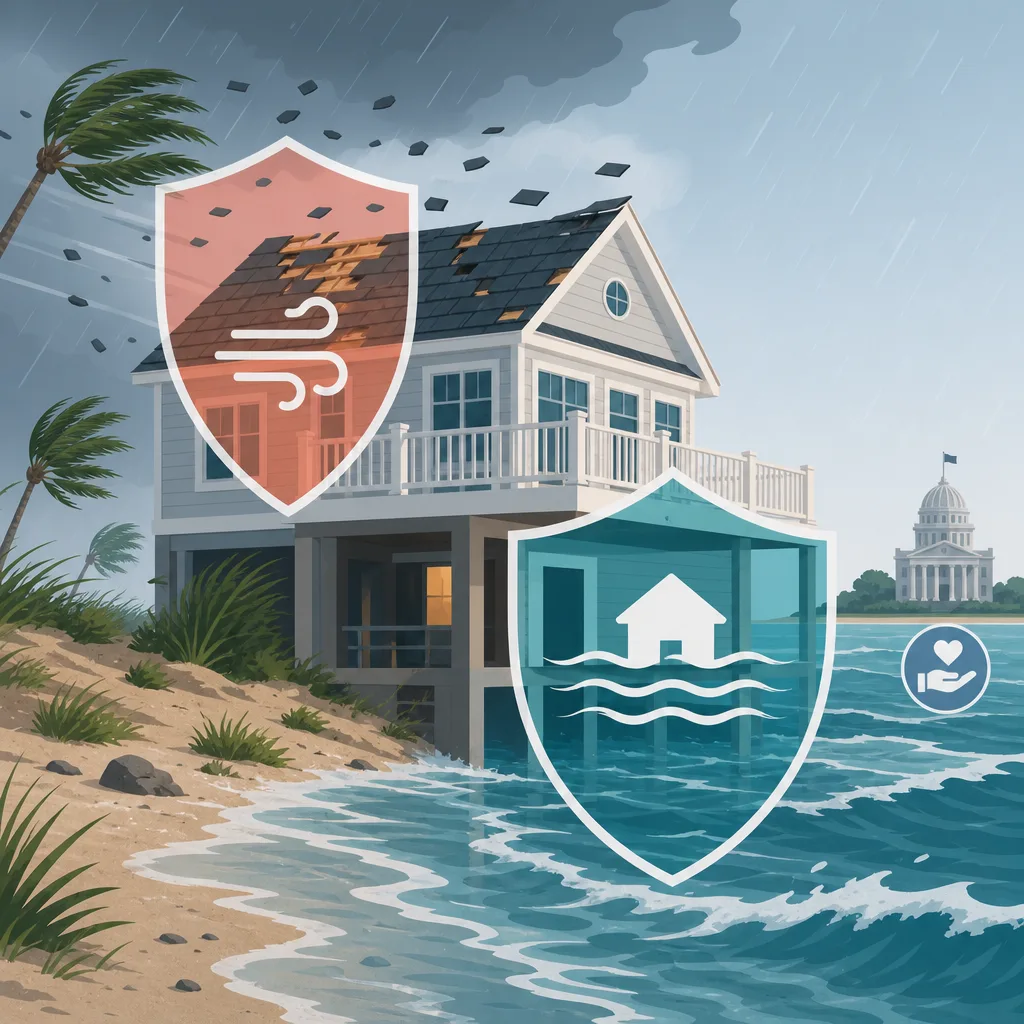
- Standard US homeowners insurance may cover eligible wind damage, but flooding caused by surface-water overflow and storm surge generally falls under separate flood insurance.
- Homes classified as low risk on FEMA flood maps can still flood because of torrential rain, limited drainage capacity, outdated maps, and other factors.
- The NFIP definition of flooding has no minimum flood-depth threshold that applies to every incident; both the extent of inundation and the source of the water are considered.
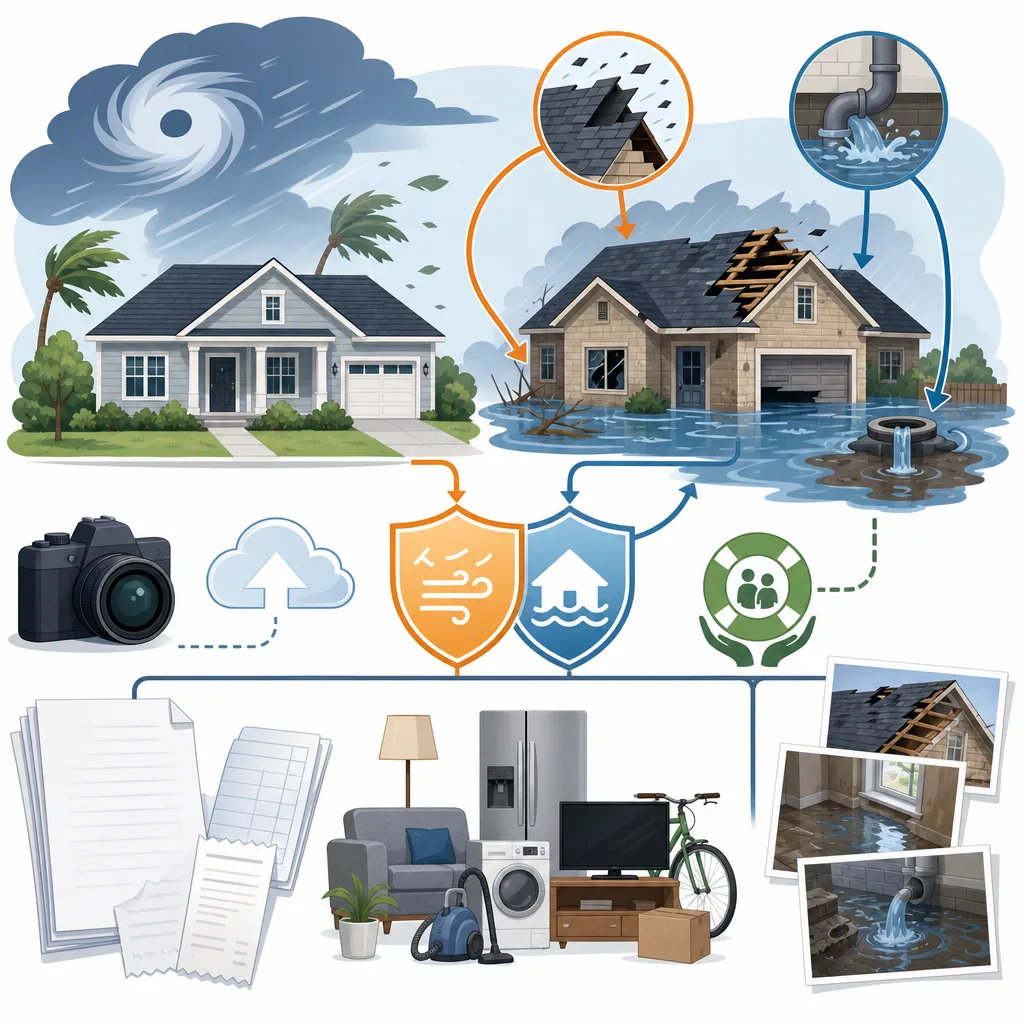
- Before a storm, document the condition of the home, personal property, product serial numbers, receipts, and insurance policies in a secure off-site storage location.
- FEMA disaster assistance is limited aid that requires a presidential disaster declaration and an individual eligibility review; it does not replace insurance proceeds or provide duplicate compensation for the same loss.
The 2026 Atlantic hurricane season began on June 1, and the official season runs through November 30. However, tropical cyclones can also occur outside this period. During the season, the important question is not simply whether you have “hurricane insurance,” but which policy applies to each cause of damage.
Insurance terms in the United States vary by state, insurer, policy form, endorsement, and separate coastal wind insurance programs. The following are general distinctions; actual coverage is determined by the wording of your policy and the results of the loss assessment.
Three Types of Protection to Distinguish First
1. Homeowners, Renters, or Condo Insurance
A standard homeowners policy may cover fire, theft, and wind damage insured under the policy. Examples may include a roof damaged by high winds or a tree falling onto a building.
However, the following gaps may exist in coastal areas.
- A separate deductible may apply to hurricanes, named storms, or windstorms.
- The deductible may be a percentage of the dwelling coverage limit rather than a fixed amount.
- Some policies exclude wind or hail, requiring separate windstorm insurance or state or regional residual-market insurance.
- Depending on the roof’s age and materials, a claim may be settled at depreciated actual cash value rather than replacement cost.
2. Separate Flood Insurance
Standard homeowners insurance generally excludes flooding caused by outside surface water flowing over the ground into a building, overflowing rivers or streams, or storm surge. These risks are covered through a National Flood Insurance Program, or NFIP, policy or private flood insurance.
NFIP building coverage and contents coverage are selected separately, and each may have its own deductible. Private flood insurance may differ from NFIP in terms of coverage limits, additional living expenses, below-ground spaces, pool-related structures, and other items, so the policies should be compared item by item.
3. FEMA Individual Disaster Assistance
FEMA assistance is not insurance. In areas where individual assistance has been approved through a presidential disaster declaration, it provides limited aid, subject to eligibility review, for essential disaster-related damage and expenses not covered by insurance. It should not be regarded as a means of fully restoring a home to its pre-disaster condition or compensating for all losses.
How to Distinguish Wind Damage from Flood Damage
Insurers do not determine which policy applies merely because “a hurricane occurred.” They examine the direct cause of the damage, the path by which water entered, the sequence in which the damage occurred, and the exclusions in each policy.
| Damage scenario | Coverage generally reviewed | Key terms to verify |
|---|---|---|
| High winds directly damage the roof or exterior walls | Wind coverage under homeowners insurance | Wind exclusions, hurricane deductible, roof settlement method |
| Rain enters after wind creates an opening in the roof or windows | Possible coverage under homeowners insurance | Whether a covered peril first created the opening, limitations on interior rain damage |
| Storm surge enters the home | Flood insurance | Whether the flood definition is satisfied, whether building and contents coverage were purchased |
| Surface water from heavy rain flows in from the street or yard | Flood insurance | Extent of inundation, whether flooding was temporary, direct physical damage |
| A river, canal, or reservoir overflows | Flood insurance | The policy’s flood definition and exclusions |
| Sump pump failure or below-ground drainage problem | Review homeowners endorsements or separate equipment breakdown coverage | Whether the cause was simply equipment failure or directly caused by an external flood |
| Sewer or drain backup | Review water backup endorsement or flood insurance terms | Direct cause of the backup, endorsement limit, whether the backup was directly caused by flooding |
| Groundwater pressure, long-term leakage, or seepage | Generally may be limited or excluded | Causal relationship to sudden flooding, whether maintenance issues were involved |
Wind and water may damage the same building in succession. In that situation, it is safest to report the loss separately to both the homeowners insurer and the flood insurer and provide the same photographs and timeline so that the two adjusters can allocate the causes.
Flood Depth and the NFIP Definition of Flood
A single depth threshold such as “flood insurance applies only when the water reaches at least a certain number of inches” is inaccurate. The NFIP standard definition generally refers to a temporary partial or complete inundation of at least 2 acres of normally dry land or of two or more properties, one of which must be the policyholder’s property.
Causes may include the overflow of inland or tidal waters, the unusual and rapid accumulation or runoff of surface waters from any source, certain mudflows, and coastal erosion. The relevant factors therefore include:
- Not only the depth of the water, but where it came from
- Whether the flooding was an internal problem affecting one building or an overflow affecting the surrounding area
- Whether outside surface water accumulated or flowed abnormally
- Whether the damage was a direct result of flooding
- Whether building coverage, contents coverage, or both were purchased
If it is difficult to verify flooding at a second nearby property directly, neighbor statements, photographs of flooded roads, government records, and weather data may help explain the circumstances. The final determination depends on the policy definition and loss assessment.
Limitations for Basements and Below-Ground Areas
NFIP substantially limits coverage for basements and low areas below ground level. Some items necessary for the building’s function, such as the foundation, electrical systems, and central heating and cooling equipment, may qualify under certain conditions, but basement furniture, electronics, flooring, and similar property may be excluded or subject to limitations.
The mere presence of a sump pump also does not mean that sump overflow or failure is automatically covered. The homeowners policy’s water backup or sump overflow endorsement, equipment breakdown endorsement, and flood insurance requirements for direct causation must each be reviewed.
Why Flood Insurance Should Be Considered Even in Low-Risk FEMA Flood Zones
FEMA flood maps do not divide locations into those with no risk and those with risk. They classify risk based on rainfall, terrain, waterways, levees, drainage conditions, and other factors at a particular point in the analysis, and they do not predict every possibility of localized flooding.
Buildings within a Special Flood Hazard Area, or SFHA, may be required to carry flood insurance in connection with federally regulated mortgages. By contrast, even where there is no legal or lender requirement in areas mapped as low or moderate risk, the following risks remain:
- Heavy rainfall that exceeds drainage capacity within a short period
- Changes in runoff caused by roads, parking lots, and new development
- Blocked drains or pump stations exceeding capacity
- Changes in terrain and the built environment since the map was created
- Localized surface-water flow unrelated to a river
- Elevation differences affecting buildings located just outside a mapped boundary
A mapped zone is a starting point for evaluating the need for insurance, not a guarantee that an individual home is safe. After checking the address-specific map through the FEMA Map Service Center, it is better to also review local government flood history, the building’s lowest-floor elevation, nearby drainage channels, and past water-flow patterns.
How to Identify Coverage Gaps Before a Storm
Items to Review on the Policy Declarations Page
- dwelling or building coverage limit
- whether personal property or contents coverage is included and its limit
- standard deductible and hurricane, named storm, and windstorm deductibles
- wind or hail exclusions
- flood or surface water exclusions
- sewer backup and sump overflow endorsements
- additional living expenses or loss of use coverage
- replacement cost or actual cash value settlement terms for the roof
- whether flood insurance building and contents coverage were purchased separately
- policy effective date and waiting period
New NFIP policies generally have a 30-day waiting period, although exceptions apply to mortgage transactions, map changes, and certain other situations. Waiting periods for private flood insurance vary by insurer and product, so you should not assume that a policy purchased after a storm approaches will provide immediate coverage.
Questions to Ask the Insurer or Agent
- Does this policy cover wind damage from a hurricane?
- Does it contain a wind or hail exclusion?
- Under what conditions does the hurricane deductible apply, and how much is it?
- Which policy or endorsement covers surface-water intrusion, storm surge, sewer backup, and sump pump failure, respectively?
- Is the roof settled at replacement cost or actual cash value?
- Have both building coverage and contents coverage been purchased under the flood policy?
- Is there a gap between the insurance limit and the current cost of rebuilding?
- Which policy pays temporary lodging expenses, and for which causes?
Whenever possible, obtain the answers in a form that can be retained, such as an email or renewal document.
How to Document Photographs, Videos, and Receipts Before a Storm
The purpose of documentation is not merely to show that you owned an item, but also to demonstrate its condition immediately before the storm and its value before the damage.
Exterior Documentation
- Photograph all four sides of the house from both wide and close-up angles.
- Photograph the roof from the ground or another safe location, and do not climb onto it solely to prepare for the storm.
- Document windows, shutters, exterior walls, garage doors, fences, and accessory buildings.
- Photograph drains, sump discharge outlets, gutters, and grading conditions.
- Do not conceal existing cracks, signs of leaks, or damaged areas; document them as well.
Interior and Contents Documentation
- Walk through each room while recording continuous video.
- Take individual photographs of valuables, appliances, tools, and furniture.
- Photograph product names, model numbers, and serial numbers so they are visible.
- Keep receipts, warranties, appraisals, and credit card purchase records.
- Save contracts and invoices for recently repaired or replaced roofs, windows, electrical systems, and plumbing systems.
Secure Storage
Do not keep photographs and documents only on one phone. Copy them to the cloud, an encrypted external storage device, or a secure location outside the home. Include insurance policy numbers, insurer contact information, agent information, and copies of identification in the emergency file. Naming files with the room, item, and date photographed will make them easier to find when filing a claim.
Steps for Filing an Insurance Claim After Damage
- Follow evacuation orders and electrical and gas safety instructions first.
- Notify the homeowners insurer and flood insurer separately as soon as possible.
- Before repairing or discarding anything, document the entire site and each area of damage with photographs and video.
- Take reasonable temporary measures to prevent additional damage and keep the receipts.
- If wet items must be discarded, record photographs, quantities, manufacturers, models, purchase dates, and estimated prices.
- Record the timeline of wind and water damage, where the water entered, and the highest water level.
- Keep a single log containing each insurer’s claim number, contact person, call dates, and requested documents.
- Review the scope and cost before signing a settlement agreement or assignment-of-benefits contract.
For NFIP claims, a signed Proof of Loss generally must be submitted within 60 days after the date of loss, although FEMA may extend the deadline following a major disaster. Reporting and documentation deadlines for homeowners insurance vary by policy and state law, so they should be confirmed in writing with the insurer.
Except for urgent safety issues, beginning permanent repairs before the loss assessment may make it more difficult to prove the cause and extent of the damage. However, do not delay reasonable emergency measures needed to prevent mold or additional flooding, and retain before-and-after documentation and receipts.
How FEMA Assistance Differs from Insurance
To receive assistance through the FEMA Individuals and Households Program, the area must have a presidential disaster declaration that includes individual assistance, and both the applicant and the damage must satisfy the applicable requirements. Assistance may be limited to temporary housing, essential home repairs, certain personal property, and other necessary expenses.
| Category | Insurance claim | FEMA individual disaster assistance |
|---|---|---|
| Basis | Insurance contract purchased by the policyholder | Federal disaster declaration and assistance program rules |
| Covered items | Direct losses covered by the policy | Eligible essential needs and expenses not met by insurance |
| Goal | Compensation for losses under the policy terms and limits | Basic recovery assistance, not a guarantee of complete restoration |
| Triggering conditions | A valid policy and covered loss | Approval of individual assistance for the area and individual eligibility review |
| Duplicate benefits | Coordination of causes and items with other insurance | No duplicate payment for the same purpose through insurance or other assistance |
Policyholders must accurately disclose insurance information on their FEMA applications. Even if the insurance payment has not yet been finalized, they may apply first to avoid missing the FEMA application deadline, but FEMA may request an insurance determination letter or settlement documents or may place the review on hold.
Items to Check for Duplicate Assistance
- Are the damage items paid by insurance the same as those included in the FEMA application?
- Do the purposes of assistance overlap, such as home repairs, temporary housing, or contents?
- If the insurance claim was denied or exceeded the policy limit, is there a determination letter from the insurer?
- If additional insurance payments are made later, must FEMA be notified?
- Was assistance for the same expense also received from a state government, charity, or another federal program?
Insurance payments and FEMA assistance cannot both be received for the same loss and the same purpose. If an insurance payment is later made and duplication is identified, some or all of the FEMA assistance may have to be repaid. Conversely, the existence of an essential need not covered by insurance does not automatically guarantee FEMA approval.
Key Decision Checklist
- Do not describe the cause of damage simply as “hurricane”; distinguish among wind, rain entering through an opening, surface water, storm surge, and sewer backup.
- Check whether the homeowners policy has a wind exclusion or separate hurricane deductible.
- Confirm whether the flood policy includes both building coverage and contents coverage.
- Do not interpret a low-risk flood zone as a no-risk zone.
- For sump pumps and sewer backup, verify separate endorsements and direct-cause requirements.
- Photograph the pre-storm and post-damage conditions from the same locations.
- Do not submit duplicate claims for the same expense to insurance and FEMA, and retain all determination letters and receipts.
Actual insurance coverage varies by location and policy. If you have questions, do not rely solely on a verbal explanation from the insurer; obtain written confirmation of the applicable provisions, endorsements, deductibles, and exclusions.
FAQ
Does standard homeowners insurance cover all hurricane damage?
No. Standard homeowners insurance may cover wind damage not excluded by the policy, but it typically excludes flooding caused by the overflow of external surface waters and storm surge. In coastal areas, wind itself may also be excluded, or separate windstorm insurance and a hurricane deductible may apply.
Which insurance covers rainwater that enters after wind damages the roof?
If covered wind first created an opening in the roof or a window and rain entered through that opening, the damage may be considered under homeowners insurance. It may be excluded if the cause is different, such as a pre-existing leak, inadequate maintenance, or the entry of surface water, so you must document the location of the damage and the sequence of events.
How many inches deep must flooding be to qualify as a flood under the NFIP?
There is no single minimum depth requirement that applies to every incident. The NFIP considers not only the depth of the water but also the extent of the temporary inundation of normally dry land, the number of properties affected, the source of the water, and whether it caused direct damage.
If a property is in Zone X on a FEMA map, is flood insurance unnecessary?
Zone X generally means that the risk is lower than in a Special Flood Hazard Area, not that there is no possibility of flooding. In light of localized heavy rainfall, limited drainage capacity, new development, and delays in map updates, you should also review the area's flood history and the building's elevation.
Is damage covered by flood insurance if a sump overflows or sewage backs up?
It is not automatically covered. A simple sump failure or sewer backup may fall under a separate water backup or sump overflow endorsement to homeowners insurance. For flood insurance, you must determine whether an external flood was the direct cause and whether the event meets the policy's definition of a flood.
Does NFIP flood insurance cover furniture and electronics in a basement?
Strict limitations apply to below-ground basements and low-lying areas. Some equipment necessary for the building's operation may be covered under certain conditions, but many basement items, including furniture, electronics, and finishing materials, are not covered or have limited coverage.
Can I file an insurance claim and apply for FEMA assistance at the same time?
You may submit both, but duplicate payments for the same loss and the same purpose are not allowed. You must disclose your insurance coverage and claim status to FEMA. If an insurance payment is subsequently made, the amount of FEMA assistance may be adjusted, or you may be required to repay the duplicated amount.
Does FEMA assistance automatically pay insurance deductibles?
No. The mere fact that you have incurred a deductible does not make you eligible for FEMA assistance. FEMA assesses each case individually to determine whether the disaster was approved for Individual Assistance, whether the applicant is eligible, and whether there are essential needs not met by insurance.
Can I throw away storm-damaged items immediately?
If items must be discarded for safety or sanitation reasons, first document their overall appearance and individual damage, as well as the manufacturer, model, serial number, and quantity. The insurer may require you to retain samples, so if possible, ask the adjuster for instructions before disposal.
If I purchase flood insurance after a hurricane approaches, does coverage begin immediately?
In general, you should not assume so. New NFIP policies generally have a 30-day waiting period, with some exceptions, while the terms of private insurance vary by product. You should obtain written confirmation of the effective date.
Sources
Images