November Temperature Swings of at Least 10℃: What to Wear
Across Korea, a typical November averages 17.5 days with a daily temperature swing of at least 10℃. Use the daytime feels-like high to narrow down your outerwear options, then choose what to wear underneath based on the local forecast for when you leave and return.
- Before heading out, check today's temperature swing in the [My Neighborhood] daily weather section of the weather panel on the left side of this site.
- See which range the daytime feels-like high falls into on the site's clothing chart, then choose what to wear during the day.
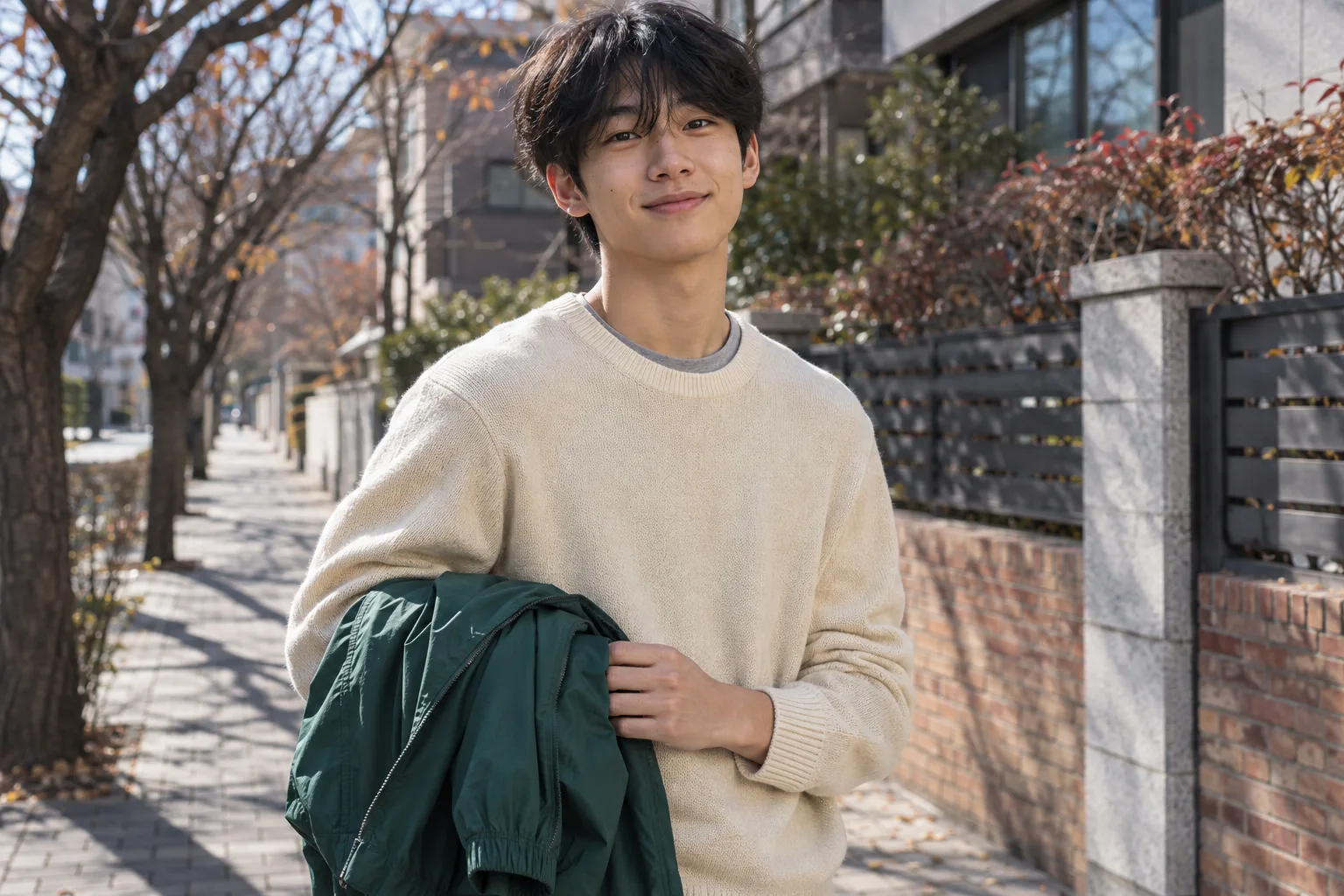
- Check the hourly forecast for temperatures when you leave and return. If the daily temperature swing is at least 10℃, bring an outer layer you can take off and carry.
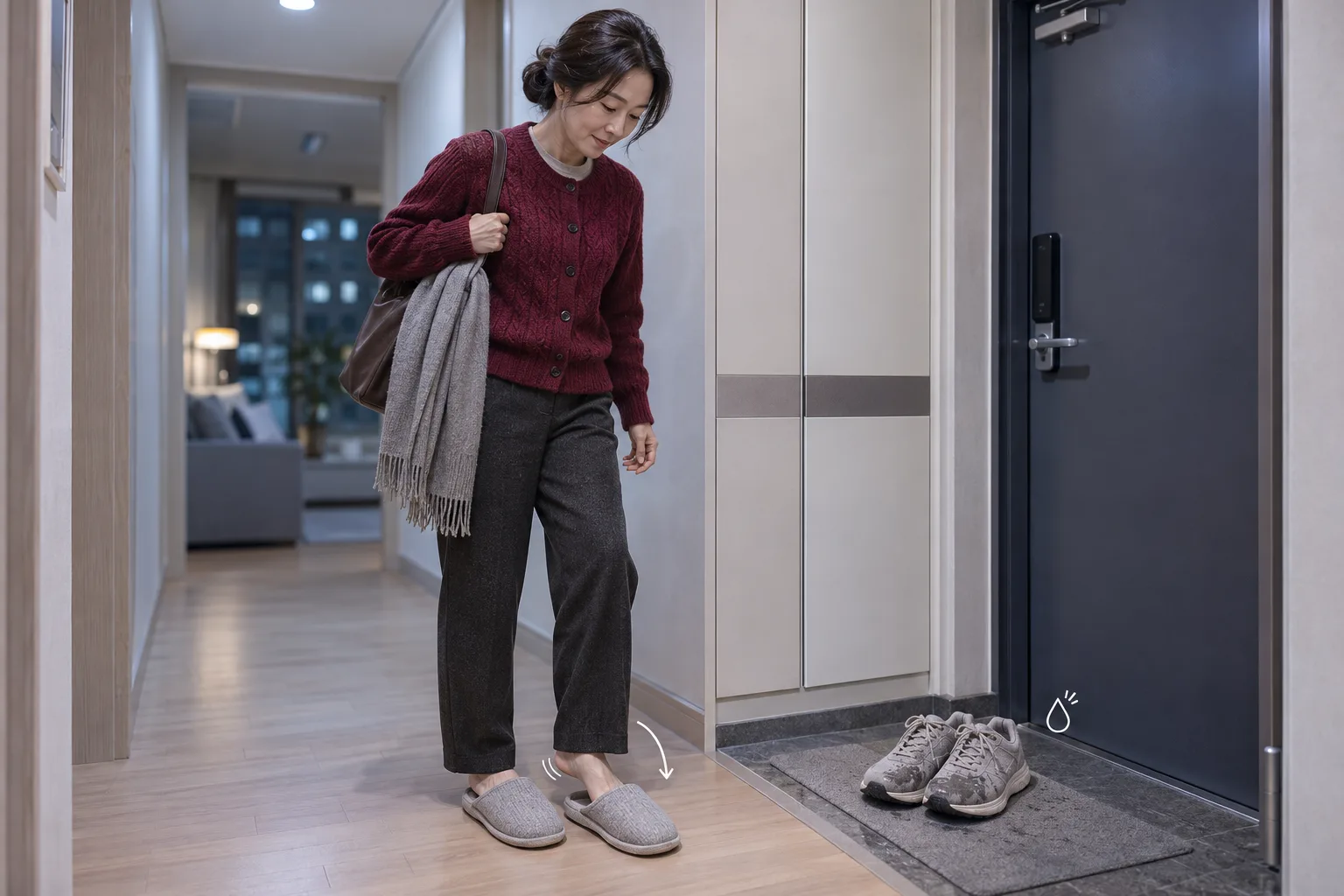
- On cold days, wear thermal underwear or layer thin clothes. If your clothes or shoes get wet, change into dry ones right away.
In November, use the day's highest feels-like temperature in [My Neighborhood] daily weather to decide what to wear during the day. If the daily temperature range is at least 10℃, it helps to wear an outer layer you can take off and carry. If you're leaving early in the morning or getting home late, use the forecast for that time to decide what to wear underneath, too.
The Korea Meteorological Administration's climate statistics and outlooks were checked on November 11, 2026.
How to choose what to wear today
Picking your daytime outfit first makes it easier to decide what to layer on when you leave and when you come home.
- Open [My Neighborhood] daily weather in the weather panel on the left side of this site to check today's temperature and daily temperature range.
- See where the day's highest feels-like temperature falls in the clothing table below.
- Check the hourly forecast for the temperatures when you leave home and when you return.
- If the daily temperature range is at least 10℃, bring an outer layer you can wear in the morning and take off during the day.
What to wear by daytime feels-like high
[My Neighborhood] uses its own 8-level guide to recommend what to wear based on the day's highest feels-like temperature. This is not an official clothing standard set by the Korea Meteorological Administration. The table below shows the levels to refer to when going out in November.
| Daytime feels-like high | Examples of what the site recommends wearing |
|---|---|
| 12 to 16℃ | Jacket, cardigan, denim jacket |
| 9 to 11℃ | Trench coat, field jacket, casual jacket |
| 5 to 8℃ | Coat, leather jacket, thermal underwear |
| At most 4℃ | Puffer jacket, heavy coat, scarf |
When the site recommends a cardigan and an outer layer
If the daytime feels-like high is 12 to 16℃, you can choose a cardigan for the day. If the daily temperature range is at least 10℃ that same day, the site also displays “Bring an outer layer.” Wear something light underneath so you can put on the cardigan in the morning and take it off during the day.
Time windows for the morning low and daytime high
On the Korea Meteorological Administration's Weather Nuri site, the morning low and daytime high are the lowest and highest temperatures in their respective time windows.
| Forecast item | Time window | Meaning |
|---|---|---|
| Morning low | 03:01 to 09:00 | The lowest temperature expected during this window |
| Daytime high | 09:01 to 18:00 | The highest temperature expected during this window |
The morning low alone doesn't tell you what the temperature will be when you leave for work. The daytime high doesn't mean it will still be that warm at 18:00, either. If you plan to stay out until evening, look up the time you'll be heading home in the hourly forecast.
November temperature normals nationwide and days with a daily range of at least 10℃
In a typical November, South Korea averages 17.5 days nationwide with a daily temperature range of at least 10℃. To get the daily temperature range, subtract the lowest temperature from the highest temperature recorded at the same location on the same day. The normals below are based on the Korea Meteorological Administration's averages for 1991 to 2020.
| Nationwide measure | November normal | November 2025 observation |
|---|---|---|
| Average temperature | 7.6℃ | 8.5℃ |
| Average high | 13.6℃ | 15.0℃ |
| Average low | 2.5℃ | 3.1℃ |
| Days with a daily range of at least 10℃ | 17.5 days | 19.7 days |
| Monthly precipitation | 48.0mm | 20.2mm |
Subtracting the normal November average low of 2.5℃ from the normal average high of 13.6℃ gives 11.1℃. This figure can help you gauge the November temperature difference nationwide. The actual daily temperature range and the number of days when it reaches at least 10℃ vary by region and year.
Layering up and changing out of wet clothes on cold days
The Korea Disease Control and Prevention Agency recommends wearing thermal underwear or layering light clothing when going out on cold days. Keep exposed areas warm with gloves, a scarf, a hat, and a mask. Limit outdoor activity on cold days whenever possible.
If your clothes and shoes get wet in cold weather, change into dry clothes and shoes promptly.
Korea Disease Control and Prevention Agency, “Cold Wave Health Guidelines”
Temperature swings in November 2025 and October 2026
November 2025 was warmer than normal, but temperatures dropped below freezing in most parts of the country on the 18th and 19th. The places that recorded temperatures from -10 to -5℃ were mainly in eastern Gyeonggi, inland Gangwon, North Chungcheong, and northern North Gyeongsang. The monthly average was 8.5℃, but the outer layer you needed depended on the day you went out.
October 2026 was also warmer than normal nationwide, with an average temperature of 15.8℃, 1.5℃ above normal. On October 22, lows in the central inland areas and northern North Gyeongsang were at least 5℃ below normal. The figures below are nationwide daily average temperatures for different dates.
| Date in October 2026 | Nationwide daily average temperature |
|---|---|
| October 18 | 19.8℃ |
| October 22 | 9.8℃ |
| October 25 | 16.9℃ |
| October 28 | 8.1℃ |
2026 winter outlook and the forecast for the day you go out
In its 3-month outlook issued on October 23, 2026, the Korea Meteorological Administration expected November and December temperatures to be above normal. January 2027 temperatures are also expected to be generally above normal. The agency noted, however, that cold air could briefly move in during January and cause temperatures to swing sharply. Before you leave, check the latest local forecast to decide what to wear that day.
FAQ
Does the reminder to bring an outer layer appear even if the daily temperature range is exactly 10℃?
Yes. This site displays “Bring an outer layer” when the daily temperature range is at least 10℃. The 8 clothing levels are determined separately based on that day's highest daytime feels-like temperature.
If the forecast daytime high is 13.6℃, does that fall within the cardigan range?
A cardigan is recommended when the highest daytime feels-like temperature is 12 to 16℃. The forecast daytime high and the feels-like temperature can differ, so check the feels-like temperature in [My Neighborhood] Everyday Weather.
Why are day counts shown as decimals, as in the long-term average of 17.5 days?
The November day counts were averaged across multiple observation stations and years. The figure of 19.7 days for November 2025 is also a nationwide average of the day counts from individual observation stations.
Can I use the long-term November average temperature of 7.6℃ in the clothing chart?
7.6℃ is Korea's nationwide average temperature for November from 1991 to 2020. For the clothing chart, use the highest daytime feels-like temperature in that neighborhood on the day you plan to go out.
Which forecast should I check if I'm only going out in the evening?
Check the hourly forecast for the temperatures at the times you plan to leave and return. The Korea Meteorological Administration's daytime high is the highest temperature expected between 09:01 and 18:00.
How does the Korea Meteorological Administration calculate the feels-like temperature in winter?
The Korea Meteorological Administration's Open MET Data Portal uses air temperature and wind to calculate the winter feels-like temperature when the air temperature is at most 10℃ and the wind speed is at least 1.3m/s. The portal's winter statistics give each day's lowest feels-like temperature. This site's clothing chart uses the highest daytime feels-like temperature.
Can I use the long-term averages to find out the actual daily temperature ranges for November 2026?
To find out how many days in November 2026 had a daily temperature range of at least 10℃, check that month's observation statistics. If you're going out today, check this site's [My Neighborhood] Everyday Weather and hourly forecast.
Sources
- Korea Meteorological Administration, “Climate Characteristics of Fall 2025,” Attachment 12: “Nationwide Weather Data for November 2025”
- Korea Meteorological Administration Weather Nuri, “Guide to Forecast Terms,” wording used in temperature forecasts
- Korea Disease Control and Prevention Agency, “Preparing for Winter Cold Waves: Emergency Department Surveillance System for Cold-Related Illnesses Begins Operating,” health guidelines for preparing for cold waves
- Korea Meteorological Administration, “Climate Characteristics of October 2026,” day-to-day changes in the nationwide average temperature
- Korea Meteorological Administration, “Strongest El Niño on Record Develops and Will Last Throughout This Winter,” November 6, 2026
- Korea Meteorological Administration Open MET Data Portal, “Feels-Like Temperature,” data description
Images