Baby Napa Cabbage Geotjeori: Salting and Washing Order
Baby napa cabbage geotjeori can be made by salting the cabbage or seasoning it right away. Understanding the roles of washing, salting, rinsing, and draining makes it easier to control the saltiness of the seasoning and the amount of moisture.
- Baby napa cabbage geotjeori can be made by salting the cabbage or seasoning the washed, raw cabbage right away.
- When salting the cabbage, you still need to rinse and drain it afterward, even if you washed it first.
- Salting times cannot be applied as-is to recipes with different salt concentrations or cabbage conditions.
- Adjust the seasoning based on how salty the cabbage remains after rinsing and draining.
- Draining cannot completely prevent moisture from coming out of the cabbage after seasoning.
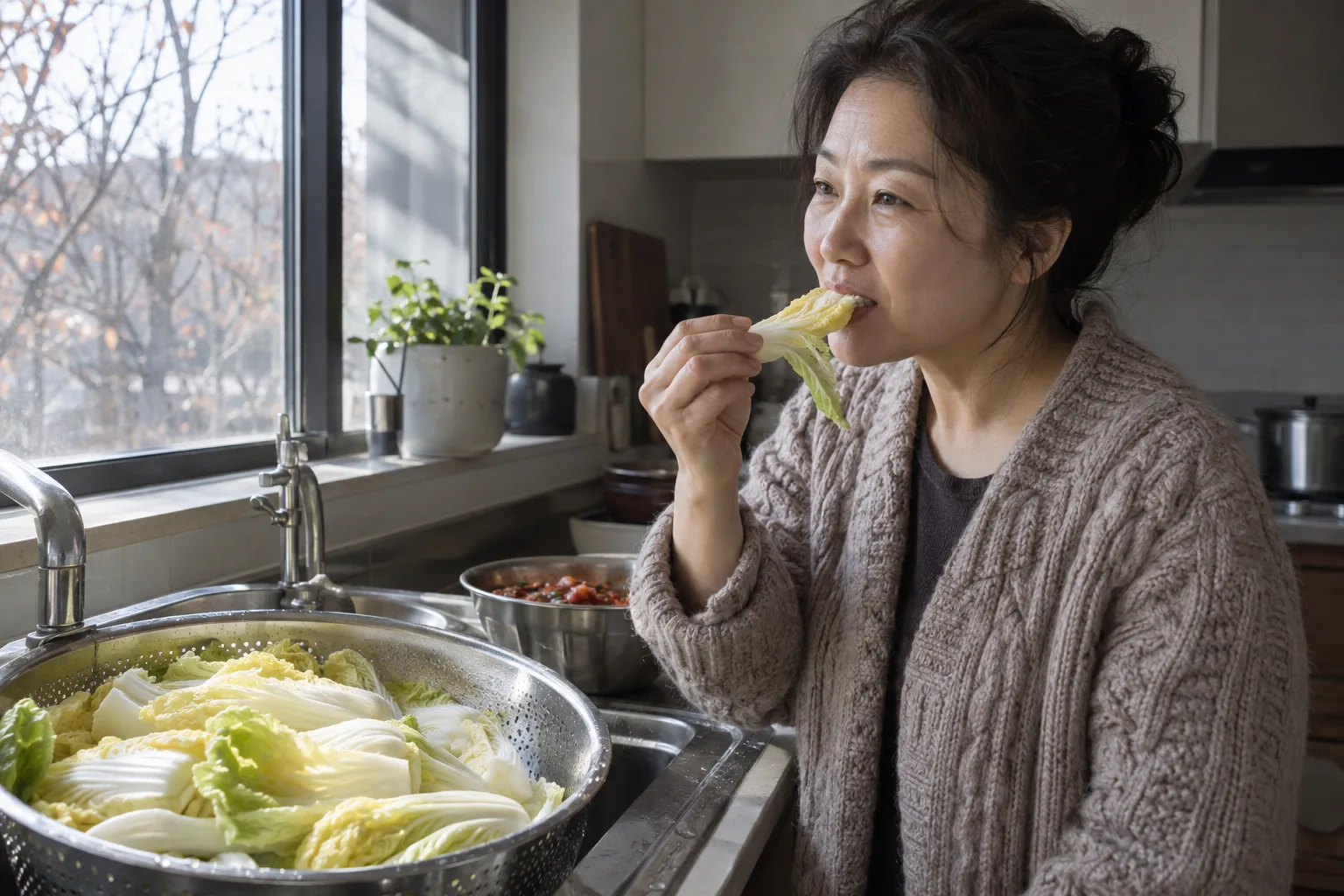
Baby napa cabbage geotjeori can be salted before mixing or mixed with seasoning without salting. The salting method involves washing, salting, rinsing, and draining. Even when mixing it right away, draining the washed cabbage helps keep the seasoning from becoming watery.
The ingredient amounts below come from Agri-Food Olbaro’s napa cabbage geotjeori recipe, which does not show a publication date. (Verified figures from the napa cabbage geotjeori recipe with no publication date shown: napa cabbage 200g, thin green onions 10g, salt 9g, red pepper flakes 5g, minced garlic 6g, minced ginger 2g, fermented anchovies 5g, sugar 3g, ground sesame seeds 2g, sesame oil 4g. · Source: nics.go.kr · Checked 2026-10-08)
Comparing salted and unsalted napa cabbage geotjeori
Whether to salt the cabbage depends on the texture you want and the seasoning recipe you use. Salting it beforehand draws out some of its moisture. Mixing it right away skips this step.
| Category | Salting method | Mix-right-away method |
|---|---|---|
| Preparation before seasoning | Wash, salt, rinse, drain | Wash, drain |
| Texture | Slightly softened | Firm, like raw cabbage |
| Basis for adjusting saltiness | Saltiness remaining in the rinsed cabbage | Saltiness added by the seasoning |
| When to check moisture | After salting and after mixing | After washing and after mixing |
Sempio has published a recipe that does not salt baby napa cabbage separately. It uses a store-bought geotjeori seasoning. Salting beforehand is therefore not a required step for geotjeori. The seasoning mixture needs to suit the method. Sempio’s baby napa cabbage geotjeori recipe.
Order of washing, salting, rinsing, and draining
When using the salting method, distinguish the initial wash from the rinse after salting. The initial wash removes soil and debris from the cabbage. Rinsing after salting also washes away salt and brine left on the surface.
Gwangju Kimchi Town’s recipe includes this instruction. Kimchi Town napa cabbage geotjeori.
Salt lightly, then wash under running water
For home cooking, the sequence is as follows.
- Trim the base and any damaged parts.
- Wash the cabbage, making sure to remove debris between the leaves.
- Salt it according to the recipe you have chosen.
- Rinse the salted cabbage with clean water.
- Place it in a colander or sieve to drain.
- Check how salty the cabbage remains, then season it.
The mix-right-away method skips salting in this sequence. There is also no need to rinse off salting salt. The raw cabbage still needs to be washed and drained.
How to judge salting time for napa cabbage geotjeori
Salting time alone does not reliably predict the cabbage’s condition. Changes in salt concentration also change how much moisture is drawn out. Leaves and thick stems do not soften in the same way.
A 2010 study by Hwang Eun-sun measured changes in moisture under different salting conditions. In the experiment, moisture content decreased as salt concentration and salting time increased. The results did not, however, establish a recommended salting time for baby napa cabbage geotjeori. Study on napa cabbage salting conditions.
- Interpret salting time alongside the amounts of salt and water in the same recipe.
- Check the thick stems as well as how much the leaves have softened.
- Do not apply the salting time for a whole-cabbage recipe directly to finely cut baby napa cabbage.
- Judge how much the cabbage has been salted partly by the saltiness remaining after rinsing.
How rinsing geotjeori cabbage affects seasoning
Adjust the seasoning’s saltiness based on cabbage that has been rinsed and drained. Brine on the surface also contributes to its saltiness immediately after salting. If you decide how much fish sauce to add based only on the cabbage before rinsing, it is hard to get the finished dish’s saltiness right.
| Cabbage condition | What it means | What to consider when adding seasoning |
|---|---|---|
| Still very salty after rinsing | A lot of salt remains in the cabbage itself | Do not add all the fish sauce or salted fermented seafood at once |
| A lot of water remains on the surface | Wash water may mix with the seasoning | Drain further before judging saltiness |
| Raw cabbage that has not been salted | No salt was added through salting | Use seasoning intended for the mix-right-away method |
| Liquid appears after mixing | Moisture from the cabbage may be mixed in | Taste the liquid and cabbage together before deciding |
Adding sugar does not remove salt. Even if the dish tastes sweeter, the salt in it remains. Adjusting saltiness and adjusting sweetness are separate matters.
The difference between wash water and water released by cabbage
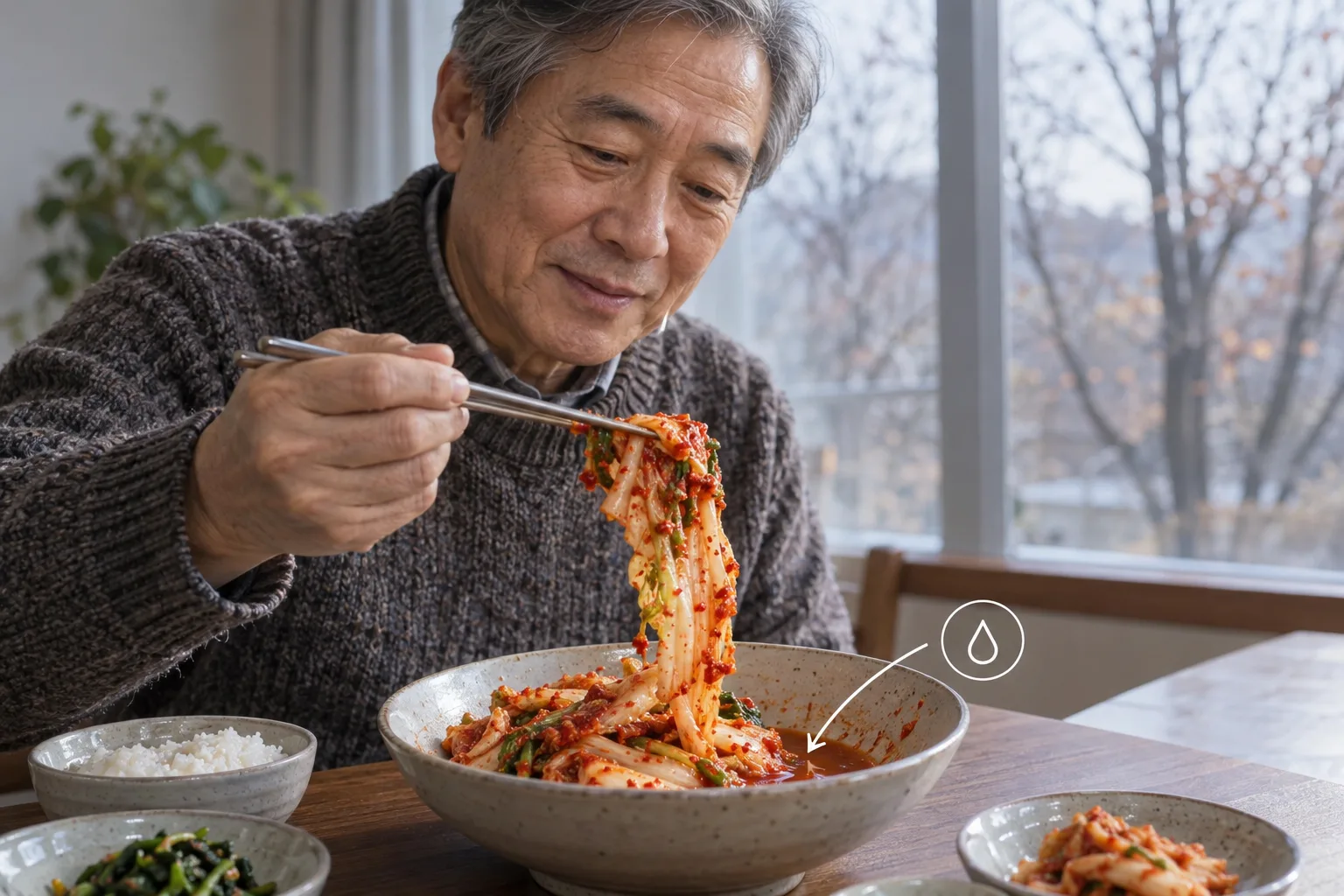
The liquid in geotjeori does not come only from water left after washing. Moisture released from the cabbage also mixes into it. Liquid can therefore appear after mixing even if the cabbage was drained well.
This explanation applies the principle of moisture movement observed in salting research to cooking. Salt in the seasoning continues to affect the cabbage after they come into contact. Skipping the initial salting does not stop moisture from moving.
| Type of water | How it appears | How to manage it when cooking |
|---|---|---|
| Water left on the surface | Clings to the leaves after washing or rinsing | Drain in a sieve before seasoning |
| Water released from the cabbage | Drawn out when the cabbage comes into contact with salty seasoning | Consider how much you will mix and when you will eat it |
| Water in the seasoning | Added through fish sauce, water, or other ingredients | Check the amounts of liquid ingredients in the recipe |
Seasoning ingredients and cabbage weight
When comparing seasoning amounts, consider both the cabbage’s weight and the salting step. Even cabbages described as one head can differ in actual weight. Agri-Food Olbaro provides a recipe using tender napa cabbage leaves. Agri-Food Olbaro napa cabbage geotjeori recipe.
| Ingredient | Amount in this recipe | Use |
|---|---|---|
| Napa cabbage | 200g | Main ingredient |
| Thin green onions | 10g | Vegetable mixed with the cabbage |
| Salt | 9g | For salting |
| Red pepper flakes | 5g | Seasoning |
| Minced garlic | 6g | Seasoning |
| Minced ginger | 2g | Seasoning |
| Fermented anchovies | 5g | Seasoning |
| Sugar | 3g | Seasoning |
| Ground sesame seeds | 2g | Seasoning |
| Sesame oil | 4g | Finishing seasoning |
This recipe calls for washing and draining the salted cabbage. The 9g of salt is therefore not all added when mixing. Neither glutinous rice paste nor wheat flour paste appears in the ingredient list. This is an example of geotjeori made without a paste.
When switching to another recipe, also check at which stage the cabbage was weighed. Its weight before salting may differ from its weight after draining. The same weight does not necessarily mean the same seasoning ratio will work.
Common mistakes
Saltiness can easily be thrown off when the salting method and seasoning mixture come from different recipes. In particular, distinguish salt used for salting from seasoning added when mixing. The points below apply both the cooking sequence and the principle of moisture movement.
- Assuming that because the cabbage was washed first, it does not need rinsing after salting.
- Adding the salty seasoning from a mix-right-away recipe unchanged to salted cabbage.
- Deciding that cabbage with a lot of water on it is bland and adding fish sauce first.
- Assuming that draining the cabbage means no liquid will appear later.
- Counting all the salt used for salting as salt remaining in the finished dish.
Some of the salt used for salting leaves with the discarded brine and rinse water. It is difficult to calculate the sodium in the finished dish accurately from the ingredient list alone. You would need to know how much salt remains after rinsing and how much additional seasoning is used.
Frequently asked questions
Must baby napa cabbage be salted?
No. Some recipes season it without salting it separately. The salting and mix-right-away methods also differ in their seasoning requirements.
I washed the cabbage before salting it. Do I need to rinse it again?
If the recipe includes rinsing, rinse it after salting. The initial wash and the rinse after salting serve different purposes. Do not skip the later step just because you washed it first.
Is there a set number of rinses?
The geotjeori recipes checked do not specify a common number of rinses. The amount of salt and the salting method also vary by recipe. Follow the rinsing instructions in the recipe you are using.
Do I have to squeeze out the water?
Draining methods vary by recipe. Kimchi Town instructs cooks to transfer the cabbage to a colander to drain. Agri-Food Olbaro includes a step for squeezing out water. That does not mean every geotjeori needs to be squeezed with the same force.
Why does the seasoning become watery even after I drain the cabbage?
Moisture can come out of the cabbage after seasoning. Liquid in the seasoning itself also contributes. The appearance of liquid does not, by itself, mean the cabbage was not drained enough after washing.
Will using less salt for salting make the finished dish less salty?
The amount of salt used for salting does not alone determine the finished dish’s saltiness. Salt remaining in the cabbage after rinsing also matters. You also need to account for saltiness added by fish sauce or salted fermented seafood.
FAQ
Do I have to salt baby napa cabbage to make fresh kimchi?
Salting it is not required. You can salt it or season it right away without salting it first. The seasoning should suit the method you choose.
If I washed the cabbage first, do I still need to rinse it after salting?
If the recipe calls for rinsing, rinse it again. The first wash removes foreign matter. Rinsing after salting also washes away salt and brine from the surface.
How long should I salt baby napa cabbage for fresh kimchi?
It is difficult to give a single time that applies to all cabbage. Check both the amount of salt and the amount of water in the recipe you are following. Also consider the cabbage's size and the condition of its stems.
How many times should I rinse the salted cabbage?
The fresh kimchi recipes reviewed do not give a common number of rinses. Follow the rinsing instructions in the recipe you use. Judge the seasoning's saltiness after rinsing and draining the cabbage.
Do I have to squeeze the water out of cabbage for fresh kimchi?
It depends on the recipe. Kimchi Town instructs you to place the cabbage in a colander to drain. Nongsikpum Olbaro includes a step for squeezing out the water. You do not need to use the same method for every fresh kimchi recipe.
Why does liquid accumulate even after I have drained the cabbage thoroughly?
Cabbage can release moisture when it comes into contact with seasoning that contains salt. This is different from water left on the surface after washing. Liquid in the seasoning itself also affects how much liquid accumulates.
Can I make fresh kimchi without a paste?
Some methods do not use a paste. Nongsikpum Olbaro's ingredient list for napa cabbage fresh kimchi does not include glutinous rice paste or wheat flour paste.
Can I add all 9g of salt meant for salting the cabbage to the seasoning?
In Nongsikpum Olbaro's recipe using 200g of cabbage, the 9g of salt is for salting. The recipe calls for washing and draining the cabbage after salting it. Do not treat the 9g as the amount of salt to add when mixing in the seasoning.
Does adding sugar to overly salty fresh kimchi reduce the salt?
Adding sugar does not remove salt that is already in the kimchi. Adjusting sweetness and adjusting the amount of salt are separate matters.
Can I use the seasoning amounts for one whole cabbage as they are?
First check the actual weight of the whole cabbage. Also distinguish between its weight before salting and its weight after draining. The same number of heads of cabbage does not necessarily mean the seasoning proportions will be the same.
Sources
- Gwangju Kimchi Town Resource Center: Fresh Napa Cabbage Kimchi
- Agrifood Olbaro Traditional Local Cuisine: Fresh Napa Cabbage Kimchi
- Sempio: Ready in 5 Minutes Without Salting! Saemine Kitchen Fresh Kimchi WOW Recipe, May 17, 2021
- Hwang Eun-sun, Changes in Myrosinase Activity and Total Glucosinolates Content Depending on Cabbage Salting Conditions, Korean Journal of Food and Cookery Science, 2010
Images