Protein Intake in Chronic Kidney Disease: Why You Should Neither Cut Back Unconditionally nor Eat the Maximum Allowed
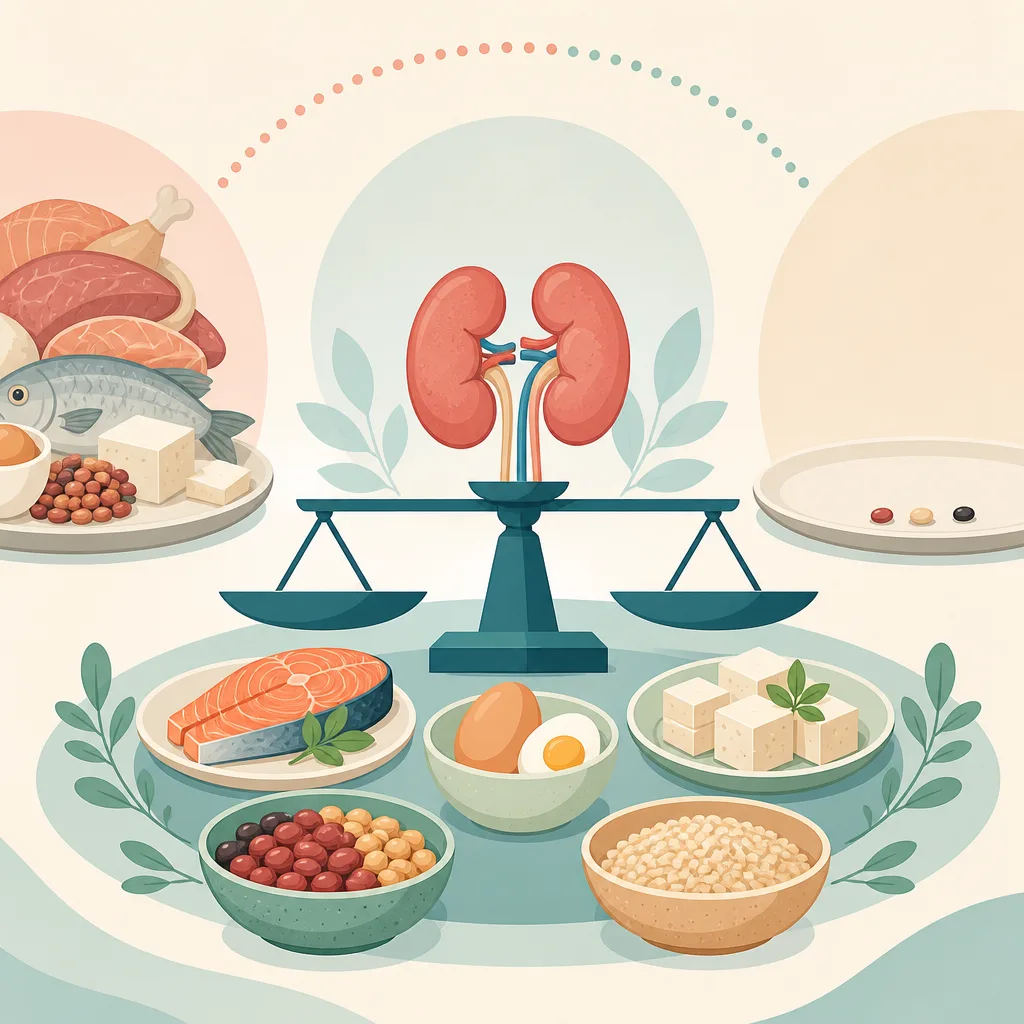
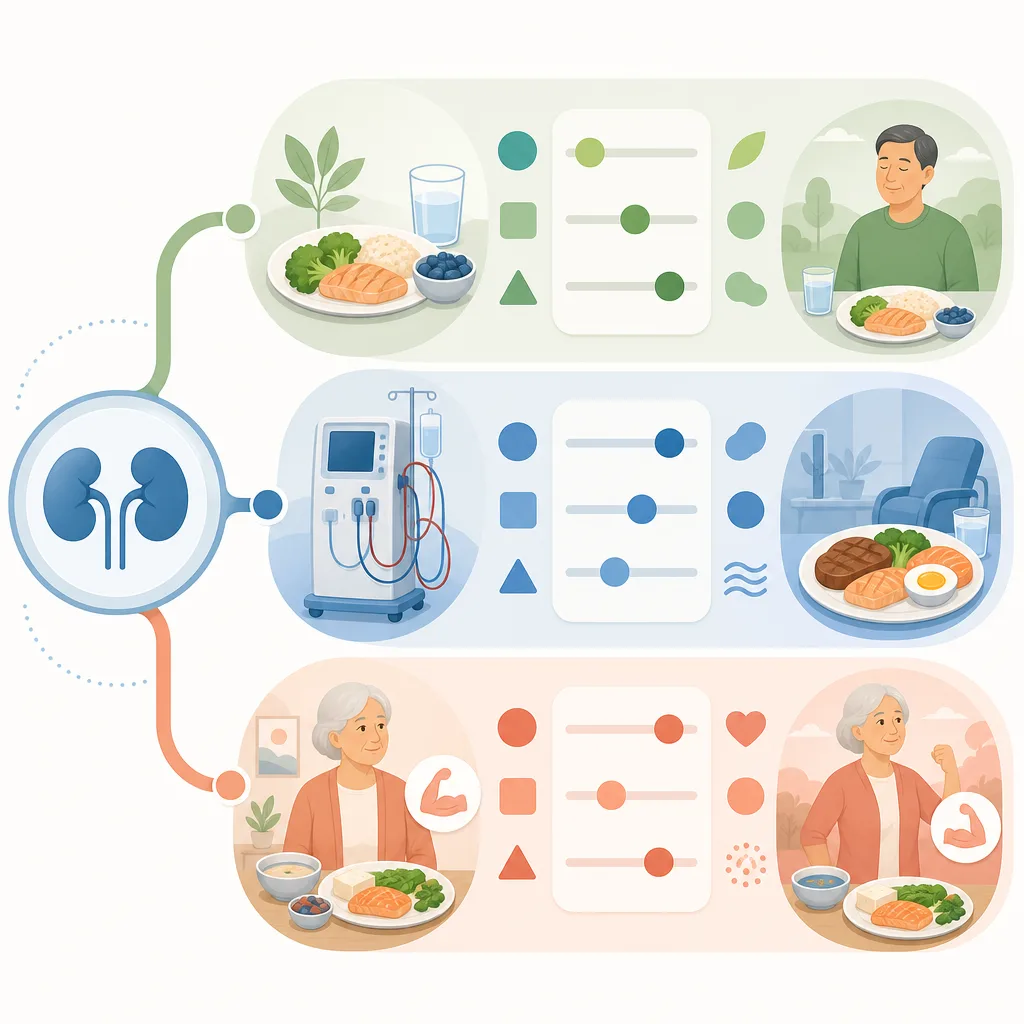
Neither unconditionally reducing protein because you have chronic kidney disease nor freely consuming up to the permitted upper limit is a universal answer. Because the requirements of dialysis and non-dialysis patients differ, kidney function, nutritional status, weight changes, and the treatment plan must be assessed together.
- Adults with non-dialysis chronic kidney disease should generally avoid excessive high-protein intake, but they should not begin an extremely low-protein diet on their own.
- Protein intake targets for adults with chronic kidney disease vary by stage of progression, so they should be confirmed with the treating healthcare team or the latest official guidelines.
- Because protein and amino acids may be lost during dialysis, dialysis patients generally require more protein than non-dialysis patients.
- If frailty, sarcopenia, weight loss, or inadequate intake is present, targets may be adjusted to prioritize nutritional recovery over kidney protection.
- Individual targets should not be determined simply by multiplying actual body weight, but should account for dialysis status, standard body weight, urinary protein, diabetes, and nutritional status.
For people with chronic kidney disease, protein is not a nutrient that can simply be classified as “good” or “bad.” Eating too much can burden the processing of nitrogenous waste and increase pressure within the glomeruli, while eating too little can increase the risk of muscle loss and malnutrition.
Therefore, for the phrase “eat as much protein as possible” to be meaningful, it should mean consuming enough protein within the individualized target range set by your healthcare team. It can be dangerous to interpret this as always eating up to the permitted upper limit or following a high-protein diet.
The Bottom Line First: Eat Your Target Amount of Protein
What matters in a chronic kidney disease diet is not restricting protein unconditionally or maximizing intake, but avoiding both excess and deficiency.
- Non-dialysis chronic kidney disease: Avoid excessively high-protein diets, considering the rate of decline in kidney function and the accumulation of waste products.
- During hemodialysis or peritoneal dialysis: Protein requirements may increase because of protein and amino acid losses during dialysis and the presence of inflammation.
- In cases of frailty, sarcopenia, or low body weight: Nutritional harm caused by excessive restriction may become a greater concern.
- During acute illness or recovery after surgery: The usual targets for a stable condition may be difficult to apply as they are.
In other words, the practical goal of “including protein at every meal” is useful, but the amount per meal and the daily total should be determined within an individualized prescription.
Why Does Advice About Protein Differ?
A doctor’s reason for saying “reduce protein” does not conflict with the reason for saying “do not eat too little.” These recommendations are intended to manage different risks.
Why Excess Protein Should Be Avoided
When protein is broken down, nitrogenous waste products, including urea, are produced. As kidney function declines, the ability to excrete these substances also decreases. In particular, sustained excessive intake from protein supplements, large meat-centered meals, or high-protein diets may not be appropriate for people with non-dialysis chronic kidney disease.
Adults with chronic kidney disease who are at risk of progression should ask their healthcare team or consult the latest official guidelines to determine what level of protein intake is considered high and should be avoided.
Why Protein Deficiency Should Be Avoided
Excessively reducing protein can lead to loss of muscle and body weight and impaired physical function. If overall food intake decreases and calorie intake also becomes insufficient, the body uses consumed protein as an energy source rather than for tissue maintenance. If this continues, it can lead to protein-energy wasting or malnutrition.
Older adults, dialysis patients, people with poor appetite, and those who have recently lost weight should be especially cautious about the adverse effects of restriction.
Protein Principles by Stage and Treatment Status
The figures below are guideline ranges intended for populations, not individualized prescriptions. Depending on the clinical condition, standard body weight or adjusted body weight may be used for actual calculations.
| Status | General principle | Points to consider when interpreting |
|---|---|---|
| Chronic kidney disease G1~G2 | Avoid excessive protein and maintain a balanced diet | G1~G2 is not diagnosed based on a low glomerular filtration rate alone; evidence of kidney damage, such as albuminuria, is required |
| Non-dialysis G3~G5 | KDIGO 2024 suggests maintaining approximately 0.8 g per kg of body weight per day for stable adults | This may be adjusted according to diabetes, albuminuria, obesity, frailty, and calorie intake |
| Medically supervised low-protein diet | Some guidelines recommend a lower range for certain stable non-dialysis patients | Adequate calories, nutritional counseling, and regular monitoring are required; it should not be attempted without supervision |
| Hemodialysis or peritoneal dialysis | Protein requirements are generally higher than for non-dialysis patients | Requirements vary depending on dialysis modality, residual kidney function, inflammation, and appetite |
| Frailty, sarcopenia, or weight loss | A higher target or relaxed restrictions may be necessary | Muscle strength, weight trends, and actual intake should be evaluated together |
| Acute illness, hospitalization, or recovery after surgery | Targets for stable chronic kidney disease should not be applied unchanged | The healthcare team and clinical dietitian account for disease severity and recovery requirements |
Some nutrition guidelines recommend lower protein ranges for certain stable non-dialysis patients under close medical supervision. The figures vary among guidelines because the target patient groups, diabetes status, level of nutritional management, and interpretation of evidence differ. A single number found online should not be applied to every patient.
How Is My Protein Target Determined?
At a minimum, the following information should be reviewed when setting an individualized target.
- Dialysis status and modality: Protein requirements are not the same for non-dialysis care, hemodialysis, and peritoneal dialysis.
- Kidney function and rate of change: Not only the current estimated glomerular filtration rate but also how it changes over time is important.
- Albuminuria or proteinuria: This is key information for assessing kidney damage and the risk of progression.
- Weight used for calculations: If edema or obesity is present, current body weight may not be used directly in the calculation.
- Nutritional status: Recent weight loss, appetite, muscle mass, strength, and blood test results are evaluated together.
- Comorbidities: Diabetes, liver disease, infection, cancer, heart failure, and gastrointestinal disease affect the target.
- Total calorie intake: If calorie intake is insufficient, even an appropriate amount of protein may not be used effectively to maintain muscle.
The body weight used for calculations and the daily target per unit of body weight should be confirmed with your healthcare team. Multiplying these two values gives the daily protein target. This merely illustrates the calculation method and is not a prescription that can be applied directly to the actual body weight of someone with edema or to every patient.
How to Safely Include Protein at Every Meal
Dividing the daily target among meals rather than consuming it all at one meal makes meal planning and intake tracking easier.
- First, confirm your daily protein target with a clinical dietitian or your healthcare team.
- For processed foods, distinguish between the serving size listed in the nutrition information and the amount actually eaten.
- Include not only meat but also fish, eggs, tofu, legumes, and dairy products in the total.
- Add protein powders, high-protein drinks, and workout supplements to the daily total.
- Adjust the overall meal composition, including grains and fats, to ensure that calorie intake is not excessively low.
- The need to restrict sodium, potassium, and phosphorus varies according to test results and medications, so do not restrict all of them across the board.
The protein content of food varies by product and by weight before and after cooking. For packaged foods, check the nutrition information. For cooked foods, it is safer to use a food exchange list provided by a clinical dietitian or an accredited nutrition database.
Does the Type of Protein Matter?
Total protein intake comes first, but the source and degree of food processing also affect diet quality. KDIGO recommends that people with chronic kidney disease eat a varied diet with a high proportion of plant-based foods and reduce ultra-processed foods.
Legumes and nuts provide protein, dietary fiber, and unsaturated fat, but their potassium and phosphorus content must also be considered. However, there is no need to prohibit all plant-based proteins regardless of test results. Intake should be adjusted based on potassium levels, dialysis status, medications, and portion size.
Processed meats may contain not only protein but also large amounts of sodium and phosphorus additives. Checking food ingredient labels for phosphate-based additives and sodium content can be helpful.
A Risk Easily Missed When Focusing on Numbers: Protein-Energy Wasting
Calculating protein intake alone can overlook actual nutritional decline. In chronic kidney disease, poor appetite, inflammation, metabolic changes, dietary restrictions, and dialysis-related losses can overlap, reducing the body’s protein and energy stores.
If any of the following changes occur, tell your healthcare team before reducing protein further.
- Unintentional weight loss continues.
- Food intake has noticeably decreased compared with usual.
- Climbing stairs or rising from a chair has become noticeably more difficult.
- The arms or legs have become thinner, or grip strength has weakened.
- Nausea, vomiting, or changes in taste make it difficult to continue eating.
- Recovery after dialysis takes a long time, or wounds do not heal well.
Nutritional status cannot be determined from a single serum albumin level. Albumin is also affected by inflammation, infection, fluid status, and liver function, so it should be interpreted together with weight trends, food records, and physical function.
Common Misconceptions to Avoid
“If Your Kidneys Are Bad, You Must Stop Eating Both Meat and Tofu”
That is not true. Food types and portions should be adjusted according to the required total amount and test results. Unconditionally banning multiple foods can lead to deficiencies in both calories and protein.
“You Need High-Protein Supplements to Preserve Muscle”
Muscle maintenance is not determined by protein alone. Adequate calories, safe resistance exercise, and management of inflammation and acidosis are also necessary. Supplements may contain potassium, phosphorus, sodium, or herbal ingredients in addition to protein, so it is safer not to start them on your own.
“If Creatinine Is High, You Must Immediately Reduce Protein Drastically”
Creatinine can be affected not only by kidney function but also by muscle mass, dehydration, recent meat intake, and medications. Rather than making major changes to dietary targets based on a single result, the estimated glomerular filtration rate, albuminuria, and repeated test results should be considered together.
“Even After Starting Dialysis, You Should Continue the Previous Low-Protein Diet”
Nutritional targets often change after dialysis begins. Continuing previous restrictions unchanged may increase the risk of protein deficiency, so confirm your new target with the dialysis care team.
Questions to Ask During a Medical Appointment
Preparing the following questions can help you create an actionable plan instead of relying on vague instructions to eat “less” or “more.”
- What body weight in kg should be used for my calculations?
- What is my daily protein target in g, and approximately how much should I eat per meal?
- Does my current target focus more on protecting kidney function or maintaining nutrition?
- How much change in my weight or appetite should prompt another consultation?
- Do I also need to restrict potassium and phosphorus, or do my current test results indicate that restriction is unnecessary?
- Can I take workout protein supplements or nutritional drinks?
The key is neither to fear protein nor to eat it without limits. A safe approach is to consume enough to meet the target set for your current treatment stage and readjust that target if your weight, strength, or test results change.
FAQ
If I have chronic kidney disease, do I always need to reduce protein?
No. In non-dialysis chronic kidney disease, it is important to avoid excessive high-protein intake, but excessive restriction can cause muscle loss and malnutrition. You should consume a target amount determined based on whether you are receiving dialysis, your kidney function, standard body weight, and nutritional status.
Is it best for patients with chronic kidney disease to eat as much protein as possible?
It may be appropriate if “as much as possible” means eating enough to meet the target range set by your healthcare team. However, consuming large amounts of meat or supplements without knowing your individual upper limit is not recommended. You should consult your healthcare team or the latest official guidelines to determine the high intake threshold that should be avoided.
What are the protein intake guidelines for non-dialysis chronic kidney disease?
The protein intake target for adults with non-dialysis chronic kidney disease varies by stage of progression, so you should consult your healthcare team or the latest official guidelines. However, some nutrition guidelines recommend a lower range under close supervision, and the actual target varies depending on diabetes, weight, frailty, and nutritional status.
Should I eat more protein after starting dialysis?
Generally, yes. Amino acids and protein may be lost during hemodialysis and peritoneal dialysis, and inflammation or metabolic stress may also increase, so protein requirements are often higher than before dialysis. The exact amount should be prescribed again according to the type of dialysis and your nutritional status.
Is plant-based protein always better for the kidneys?
A diet with a high proportion of plant-based foods may offer benefits in terms of dietary fiber and overall diet quality, but it is not suitable in unlimited amounts for every patient. Blood potassium and phosphorus levels, dialysis status, medications, and portion size must all be considered.
Can I take protein supplements or high-protein drinks?
You should decide after having your healthcare team or a clinical dietitian review the ingredients and serving size. Depending on the product, it may contain not only protein but also potassium, phosphorus, sodium, and herbal ingredients, and general sports nutrition products may not be suitable for the goals of patients with chronic kidney disease.
If my creatinine level has risen, should I reduce protein right away?
You should not drastically reduce protein based on a single increase in creatinine. In addition to kidney function, creatinine is affected by muscle mass, dehydration, recent meat consumption, and medications, so the estimated glomerular filtration rate, albuminuria, and repeat test results should be evaluated together.
What are the signs that I am eating too little protein?
Signs may include unintentional weight loss, reduced food intake, decreased muscle strength, thinning of the arms and legs, and delayed wound healing. If you notice these changes, inform your healthcare team and have your total calorie intake and nutritional status evaluated before restricting protein further.
Sources
Images