How to Interpret Seoul Apartment Sales at KRW 1 Billion or Less and What to Check Before Signing
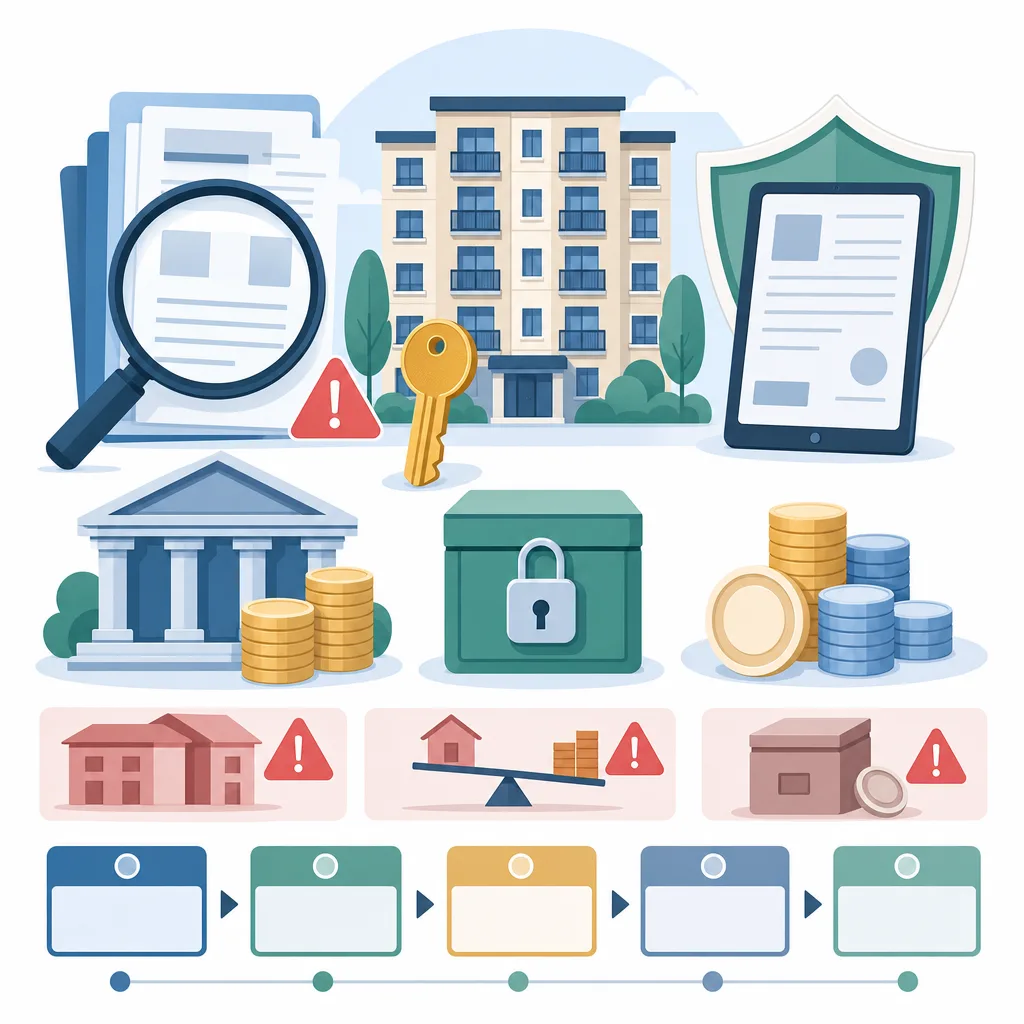
To determine whether increased sales of Seoul apartments priced at KRW 1 billion or less signal a broader market rebound, consider not only transaction volume but also reporting delays, canceled transactions, actual jeonse transactions, and financing conditions. Before sending a deposit, obtain written confirmation of the available loan amount, brokerage fees, registration and ownership rights, and electronic contract benefits.
- Increased sales in some outlying apartment complexes may signal a recovery in end-user demand, but they do not automatically mean that prices are rising across Seoul.
- The regional distribution of complexes with the highest transaction volumes and those regions' shares of all Seoul transactions are different statistics.
- Even if money is sent as a provisional deposit, a sale contract may be deemed concluded depending on the terms agreed upon.
- Loan limits should be estimated more conservatively than preliminary consultation figures, with contingency funds and a special contract clause prepared in case funds are insufficient at closing.
- Whether preferential interest rates apply to electronic contracts, and the size of the discount, vary by financial institution and loan product, so confirm with the relevant institution before signing.
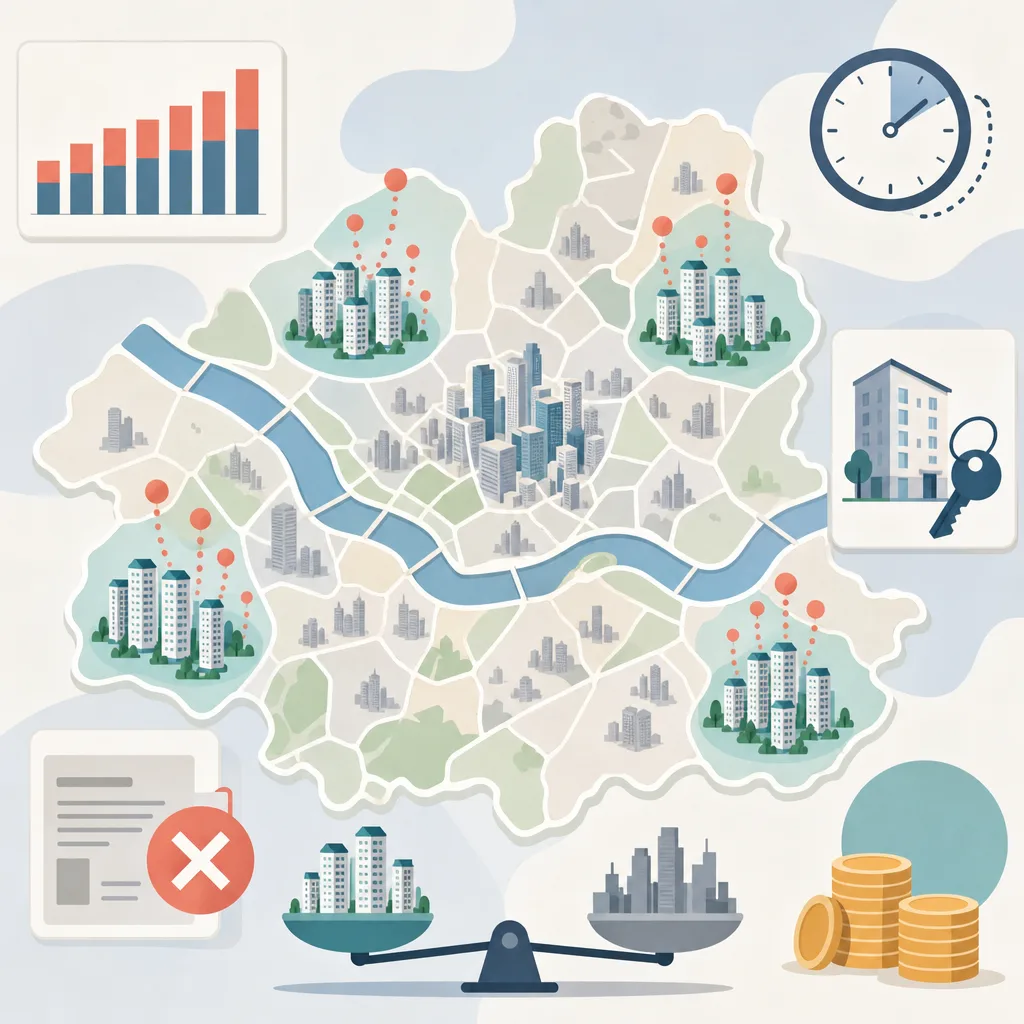
The observation that transactions are concentrating in apartments priced at KRW 1 billion or less on the outskirts of Seoul may attract the attention of end users. However, an increase in transactions at specific complexes, a rebound across Seoul, and future price increases do not mean the same thing. Market statistics should be reviewed for comparison criteria and reporting lags, while actual purchase decisions should focus on household cash flow and contractual risks.
How to Assess Claims of Increased Transactions on Seoul’s Outskirts
Seoul’s real estate market can move differently depending on price range, location, floor area, and year of completion. Transactions may increase in relatively affordable areas while high-priced areas remain flat or undergo corrections, but this should not immediately be interpreted as an upward reversal across Seoul.
Three Indicators to Distinguish First
| Indicator | Meaning | Points to Note When Interpreting |
|---|---|---|
| Transaction volume | Number of contracts reported during a given period | Reporting lags, contract cancellations, and possible duplicate counting must be checked |
| Actual transaction price | Contract price actually reported | Even within the same complex, simple comparisons are difficult when floor area, floor, orientation, and renovation condition differ |
| Asking price | Price proposed by the seller | It is not a completed transaction price, and duplicate listings and withdrawals may occur |
In principle, real estate transaction contracts must be reported within 30 days of the contract date. Therefore, transaction volume for the most recent month may still be provisional because reporting has not yet been completed. Since cancellation reports and corrections may also be reflected, it is safer to check monthly figures again at least after the following month.
Limitations of the Figure That “86% of the Top 50 Complexes by Transaction Volume Are on the Outskirts”
At minimum, the following information is required to reproduce this figure.
- Contract dates covered by the analysis and the date the data was extracted
- List of autonomous districts classified as Seoul’s outskirts
- Whether only apartments were included and whether presale rights and occupancy rights were included
- Method used to process corrections and cancellations of the same contract
- Whether transaction volumes by complex were aggregated without separating floor areas
- Method used to handle ties in rankings
A finding that many of the top 50 complexes by transaction volume are in outlying areas may reflect the fact that large complexes are more heavily concentrated there. It does not mean that 86% of all transactions in Seoul occurred on the outskirts. If the raw data and calculation method are not provided, the percentage should be treated as an unverified observation.
Why Demand May Concentrate in Apartments Priced at KRW 1 Billion or Less
Several factors may work together to make transactions in low- and mid-priced homes relatively active.
- Difference in total purchase costs: The lower the sale price, the less equity and loan principal are required.
- Owner-occupier demand: Households without homes may consider buying because of access to workplaces, plans for children, or the burden of renewing leases.
- Impact of lending regulations: The actual amount available for borrowing varies not only according to the LTV limit, but also according to DSR, income, existing debt, interest rates, and maturity.
- Comparison of jeonse and purchase costs: If jeonse deposits rise, some tenants may switch to buying, but acquisition tax, interest, and holding costs must also be calculated.
- Preference for living in Seoul: Buyers who value commuting time and living infrastructure may compromise on floor area or the age of the home and choose housing within Seoul.
A conclusion that “newlywed couples are leading the market” requires buyer statistics by age or an analysis of financing plans. It is difficult to determine the marital status and financing structure of all buyers based only on cases observed by real estate brokers.
Conditions Under Which Increased Transactions Lead to Price Growth in Higher-Tier Areas
If households that sell low- or mid-priced homes move into more expensive homes, a chain of move-up demand may emerge. However, this domino effect does not occur automatically.
- Whether sellers actually purchase higher-tier homes within Seoul after selling their existing homes
- Whether they have sufficient income and DSR capacity to handle additional borrowing
- Whether the gap between sellers’ asking prices and actual transaction prices in higher-tier areas narrows
- Whether there are enough listings available for transactions
- Whether interest rates, taxes, and move-in schedules permit the move
Accordingly, the transaction volume in middle price ranges, the pace at which listings are absorbed, and actual transaction prices by price range should be monitored continuously alongside increases in low- and mid-priced transaction volume.
How to Compare Jeonse Prices and Switching to Purchases
Rising jeonse prices may encourage buyers to consider purchases, but there is no causal relationship under which “sale prices must rise when jeonse prices rise.” To determine whether jeonse or purchasing is more advantageous, the following costs must be compared over the same period.
| Purchase Costs | Jeonse Costs |
|---|---|
| Opportunity cost of equity | Opportunity cost of the jeonse deposit |
| Mortgage interest | Jeonse loan interest |
| Acquisition tax and registration costs | Deposit guarantee insurance premiums and brokerage fees |
| Property tax, apartment management fees, and repair costs | Renewal or moving costs |
| Risk of price declines and disposal costs | Risk of the deposit not being returned |
When reviewing the jeonse-to-price ratio, do not compare only complex-wide averages. Actual contracts should be matched by the same floor area and similar floors and contract periods. Deposit levels for renewed contracts and new contracts must also be distinguished.
Items to Check Before Sending a Contract Deposit
1. Estimate the Available Loan Amount Conservatively
A limit quoted by a bank or consultation channel may not constitute final loan approval. The amount may be reduced or approval may be denied after the sales contract is signed, the collateral value is assessed, income and debt are verified, and the financial institution completes its review.
- Consult at least two financial institutions under the same conditions.
- Provide each institution with the same sale price, expected collateral value, annual income, existing loans, and maturity of unsecured loans.
- Base the financing plan on the lowest confirmed amount, not the maximum limit.
- Keep contingency funds for rising interest rates and unexpected expenses.
- For policy loans, reconfirm eligibility requirements as of the application date, housing price criteria, income and asset criteria, and limits with the official institution.
- For a home occupied by a tenant, review both the timing for returning the lease deposit and the timing when the loan can be disbursed.
A special clause may provide that the contract will be terminated and the deposit returned if financing is unavailable. However, disputes may arise if wording concerning the financial institution, application deadline, reasons attributable to the buyer, or timing of the refund is unclear. For a high-value contract, it is safer not to rely solely on the licensed real estate agent’s explanation and to have a legal professional review the special clause.
2. Record the Conditions for Formation of the Contract in Writing Before Transferring Money
A “provisional contract” is not a standard type of contract separately defined by law from a real estate sales contract. If the parties agreed on the property, price, parties involved, and major terms, the contract may be deemed to have been formed even if only a small amount was transferred.
Before transferring money, confirm the following details by text message or in a draft contract.
- Exact building and unit number and sale price
- Total contract deposit and the nature of the amount sent in advance
- Date for signing the main contract and balance payment date
- Conditions for a refund or double repayment upon withdrawal from the contract
- Termination conditions, such as loan rejection or changes in legal rights
- Whether the account is in the seller’s name
It is advisable not to transfer money to a third-party account based only on the broker’s statements, or to send money merely on the explanation that it is “to secure the listing” when no refund conditions are specified.
3. Verify Registration and Legal Rights Using the Latest Documents
The real estate registry certificate should be checked not only when first viewing the property, but again immediately before signing the contract and immediately before paying the balance.
- Whether the owner and the contracting party are the same person
- For a contract signed by an agent, whether documentation of authority is available, such as a power of attorney and certificate of seal impression
- Whether there are mortgages, seizures, provisional seizures, injunctions, or trust registrations
- Whether the method and sequence for canceling security interests that are to be discharged are specified in a special clause
- If there is a tenant, whether the deposit, contract term, and delivery conditions have been confirmed
The building register, land-use plan, unpaid management fees, and planned repair work should also be reviewed. For complexes whose prices reflect redevelopment expectations, the actual stage of procedures such as designation as a redevelopment zone or safety inspection should be confirmed through official documents.
Brokerage Fees: Distinguishing Maximum Rates from Negotiated Amounts
Brokerage fees for housing sales are negotiated between the client and the licensed real estate agency within the maximum rate for the relevant transaction amount bracket. The maximum rate itself is not a fixed rate that must be paid.
The main maximum-rate structure applicable to housing sales and exchanges, including in Seoul, is as follows. At the time of the actual contract, the latest ordinance of the relevant local government and the rate schedule posted at the real estate agency should be checked again.
| Transaction Amount | Maximum Rate | Maximum Amount |
|---|---|---|
| Less than KRW 50 million | 0.6% | KRW 250,000 |
| At least KRW 50 million and less than KRW 200 million | 0.5% | KRW 800,000 |
| At least KRW 200 million and less than KRW 900 million | 0.4% | No separate maximum |
| At least KRW 900 million and less than KRW 1.2 billion | 0.5% | No separate maximum |
| At least KRW 1.2 billion and less than KRW 1.5 billion | 0.6% | No separate maximum |
| At least KRW 1.5 billion | 0.7% | No separate maximum |
For example, because the maximum rate for a KRW 800 million home is 0.4%, the brokerage fee at the maximum rate is KRW 3.2 million. Value-added tax may be charged separately depending on the broker’s taxation status and other factors, so the total amount payable and the conditions for issuing supporting documentation should be confirmed.
It is advisable to record the negotiated rate or amount before signing the contract in a text message, confirmation and explanation statement, or separate agreement. The buyer does not have the right to unilaterally demand a particular rate; agreement with the broker is required.
Benefits and Limitations to Check for Electronic Real Estate Contracts
The Ministry of Land, Infrastructure and Transport’s Electronic Real Estate Contract System is an official system that allows contracts to be concluded online through identity verification and electronic signatures instead of paper contracts. It can help with contract storage, linkage to actual transaction reporting, and prevention of document forgery and alteration.
Some financial institutions and loan products may offer preferential interest rates to users of electronic contracts. However, not all banks provide the same 0.2 percentage-point discount or extend the benefit to every borrower. The size of the preferential rate, applicable period, availability of combined discounts, and application procedure may vary by product.
If you want to use an electronic contract, check the following in order.
- Ask whether the licensed real estate agent handling the transaction can use the Electronic Real Estate Contract System.
- Confirm whether the seller and buyer can participate in the electronic signature process.
- Ask the prospective lending institution about the exact product name and the preferential rate for electronic contracts.
- Confirm the contract number and submission method required to receive the preferential rate.
- Obtain the final loan terms reflecting the preferential rate in writing.
An electronic contract is not a system that makes the contract terms more favorable. As with a paper contract, special clauses, legal rights, and loan terms must still be reviewed.
Total Funding Checklist Before Purchase
If only the sale price and contract deposit are prepared, there may be a funding shortfall on the balance payment date. It is advisable to prepare a total funding table that includes the following items.
- Sale price and schedule for the contract deposit, interim payment, and balance
- Taxes at the acquisition stage, including acquisition tax and local education tax
- Registration-related expenses and judicial scrivener fees
- Brokerage fees and applicable value-added tax
- Costs of purchasing and discounting National Housing Bonds
- Funds for assuming or returning an existing tenant’s deposit
- Moving, repair, appliance, and furniture expenses
- Interest before and after loan disbursement and early repayment fees
- Emergency funds covering at least several months
Monthly repayments should be calculated not only at current interest rates, but also under scenarios in which rates rise further. If the period of owner occupancy will be short, future disposal costs such as brokerage fees and taxes should also be considered.
How to Monitor the Seoul Apartment Market Continuously
Rather than rushing to buy, repeatedly monitoring data using the same criteria can help determine the market’s direction more accurately.
- Check transactions for complexes of interest by contract date through the Ministry of Land, Infrastructure and Transport’s Actual Transaction Price Disclosure System.
- Review cancellation status and the displayed registration date as well.
- Compare recent transactions for the same floor area by floor and building conditions.
- Cross-check transaction and reporting data by autonomous district through the Seoul Real Estate Information Plaza.
- Record sale asking prices and jeonse asking prices separately from actual transactions.
- Monitor the direction of transaction volume, prices, and the number of listings together for at least 3–6 months.
Increased transactions in low- and mid-priced complexes on the outskirts may be an important signal to watch. However, relying on official actual transaction data, an affordable level of borrowing, legal rights, and contract terms—rather than unverified percentages or forecasts of price increases—is the way to reduce the risk of losses when buying a home.
FAQ
If apartment transaction volume rises in the outskirts of Seoul, do home prices necessarily rise as well?
No. An increase in transaction volume may signal that the price gap between buyers and sellers has narrowed, but it does not guarantee a price increase. Transactions may decline again after urgently listed properties are sold, or interest rates and lending conditions may worsen, so you should also examine actual transaction prices for units of the same size, the number of listings, and canceled transactions.
Why does the apartment transaction volume for a recent month change later?
In principle, real estate transactions must be reported within 30 days of the contract date, so data for a recent month may not yet include all contracts. Subsequent contract cancellations and amended reports are also reflected, so the number of transactions varies depending on the date the data was extracted.
Can I get a provisional deposit back immediately if I change my mind?
Not always. What matters more than calling it a provisional contract is whether there was an agreement on key terms such as the property, price, deposit, and closing date. Before transferring money, put the refund terms and conditions for entering into the main contract in writing, and have a legal professional review them if there is a possibility of a dispute.
If my loan is denied, is the sale contract automatically terminated?
Generally, it cannot be assumed that the contract is automatically terminated. To make loan denial a condition for termination, it is safer to clearly specify in a special provision matters such as the applicable financial institution, application deadline, minimum approved amount, circumstances attributable to the buyer, and conditions for returning the deposit.
How much is the brokerage fee for an apartment priced at KRW 800 million?
For a residential sale transaction amount of at least KRW 200 million and less than KRW 900 million, the maximum rate is 0.4%. The maximum fee for KRW 800 million is KRW 3.2 million, and the actual fee is negotiated within this limit. You should also check whether value-added tax applies and the requirements for supporting documents such as cash receipts.
Can the brokerage fee still be negotiated after the contract has been signed?
Negotiation itself is possible, but to reduce disputes, it is better to determine the rate or total amount and put it in writing before transferring the deposit and signing the contract. The maximum rate is the highest rate permitted by law, not a fixed price that applies automatically.
Does using an electronic real estate contract always lower the loan interest rate by 0.2 percentage points?
No. Whether a preferential interest rate is available and the size of the discount vary depending on the financial institution, loan product, application timing, and other preferential conditions. Before signing the contract, you should provide the prospective lender with the product name and the conditions for applying the electronic contract benefit and obtain written confirmation.
Is it more advantageous to buy when jeonse prices rise?
You cannot decide based solely on rising jeonse prices. Buying entails loan interest, acquisition tax, ownership costs, the risk of a price decline, and disposal costs. After determining your expected period of residence, you should compare the cost of a jeonse loan and the opportunity cost of the deposit with the total cost of buying.
Where can I check actual apartment transaction prices?
You can check them on the Ministry of Land, Infrastructure and Transport's Actual Transaction Price Disclosure System and the Seoul Real Estate Information Plaza. You should review the contract date, exclusive-use area, floor, and whether the transaction was canceled, and compare units with similar conditions within the same apartment complex.
Sources
- Ministry of Land, Infrastructure and Transport Real Estate Transaction Price Disclosure System
- Seoul Real Estate Information Plaza
- Ministry of Land, Infrastructure and Transport Electronic Contract System for Real Estate Transactions
- Korean Law Information Center Licensed Real Estate Agents Act
- Korean Law Information Center Enforcement Rule of the Licensed Real Estate Agents Act
- Korean Law Information Center Act on Report on Real Estate Transactions, Etc.
Images