Gwak Jae-u Raises a Militia and Defends Jeongamjin in 1592
In 1592, Gwak Jae-u used his own money to raise a militia in Uiryeong. His forces stopped the Japanese advance toward Jeolla Province at Jeongamjin. After Gwak Jae-u clashed with Governor Kim Su, Kim Seong-il asked the royal court to let him keep fighting. That fall, the militia helped defend Jinju Fortress.
- The Annals of King Seonjo record that Gwak Jae-u raised a militia in Uiryeong on the 24th day of the 4th lunar month of 1592.
- According to Kim Seong-il's report, Hapcheon County Magistrate Jeon Hyeon-ryong suspected even the militiamen who had secured military supplies at Chogye Fortress of being bandits.
- In a petition to the throne, Gwak Jae-u called for Governor Kim Su to be held accountable. In an official report, Kim Seong-il asked that Gwak Jae-u be given a chance to keep fighting.
- The militia defending Jeongamjin stopped Japanese troops from crossing there on their way to Jeolla Province.
- During the First Battle of Jinju Fortress in the 10th lunar month of 1592, the militia Gwak Jae-u sent was assigned to help from outside the fortress.
When government forces suffered one defeat after another in the Imjin War in 1592, Gwak Jae-u used his own money to raise a volunteer army in Uiryeong. With Kim Seong-il's help, he settled his dispute with the provincial governor. His troops guarded the route to Jeolla Province at Jeongamjin and helped government forces outside Jinju Fortress.
The relevant entries in the Annals of King Seonjo and the Revised Annals of King Seonjo were checked in November 2026.
Why a Volunteer Army Formed in Uiryeong
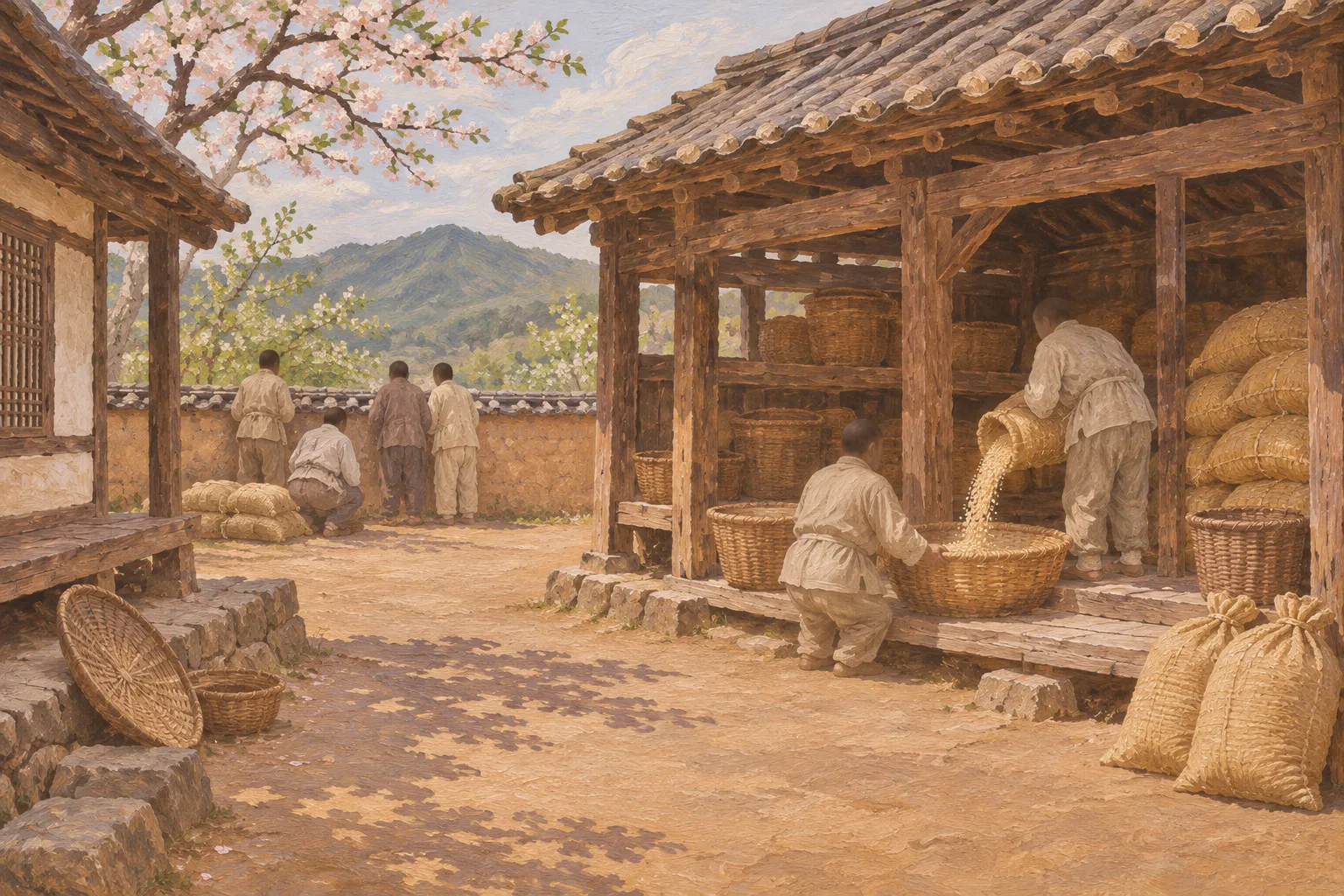
After government forces withdrew from Uiryeong, the town needed both people to defend it and food to feed them. At the time, Gwak Jae-u was a scholar living in his hometown and held no government post. He used his family's wealth to raise troops and provided for their families as well. The Annals of King Seonjo dates the uprising to the 24th day of the 4th lunar month of 1592.
A volunteer army is a force that local people organize on their own when the country is in crisis. Among Gwak Jae-u's first followers were enslaved members of his household. The force grew as people from the Uiryeong area joined.
Why the Weapons and Provisions from Chogye Fortress Raised Suspicions
Kim Seong-il's report explains why the magistrate of Hapcheon suspected Gwak Jae-u's troops of being bandits. The volunteers took weapons and provisions from Chogye Fortress after government forces left. At the time, Jeong Dae-seong had gathered a band of followers and was carrying out robberies in the area. Jeon Hyeon-ryong, the magistrate of Hapcheon, became suspicious of Gwak Jae-u as well and reported his suspicions to his superior.
According to Kim Seong-il, when Jeong Dae-seong was captured and punished, Gwak Jae-u's troops scattered as well. Deputy provincial official Kim Yeong-nam objected to accusing Gwak Jae-u of banditry. Kim Seong-il issued an official summons to Gwak Jae-u, appointed him as an assault commander, and put him in charge of defending Uiryeong.
Provincial Governor Kim Su and Kim Seong-il's Mediation
Kim Seong-il acknowledged that Gwak Jae-u had been wrong to publicly attack the provincial governor, but asked that punishment be delayed. Kim Su, the governor of Gyeongsang Province, called Gwak Jae-u a traitor after Gwak circulated a statement denouncing him. Their dispute is recorded in article 37 of the Revised Annals of King Seonjo, dated the 1st day of the 6th month of Seonjo's 25th year.
| Document | Submitted by | Position presented to the king |
|---|---|---|
| Memorial, a written statement of opinion to the king | Gwak Jae-u | He argued that Kim Su's rule and his retreat early in the war had alienated the people. |
| Dispatch, a report from a provincial official to the king | Kim Seong-il | He concluded that punishing Gwak Jae-u immediately would scatter his followers and make it difficult to defend the remaining fortresses. |
Kim Seong-il wrote to Gwak Jae-u, urging him to end his dispute with the governor. He reported that he had also written to Kim Su asking him to treat Gwak Jae-u well. The court accepted the recommendation to let Gwak Jae-u keep fighting and recalled Kim Su.
How Defending Jeongamjin Differed from Helping Jinju Fortress
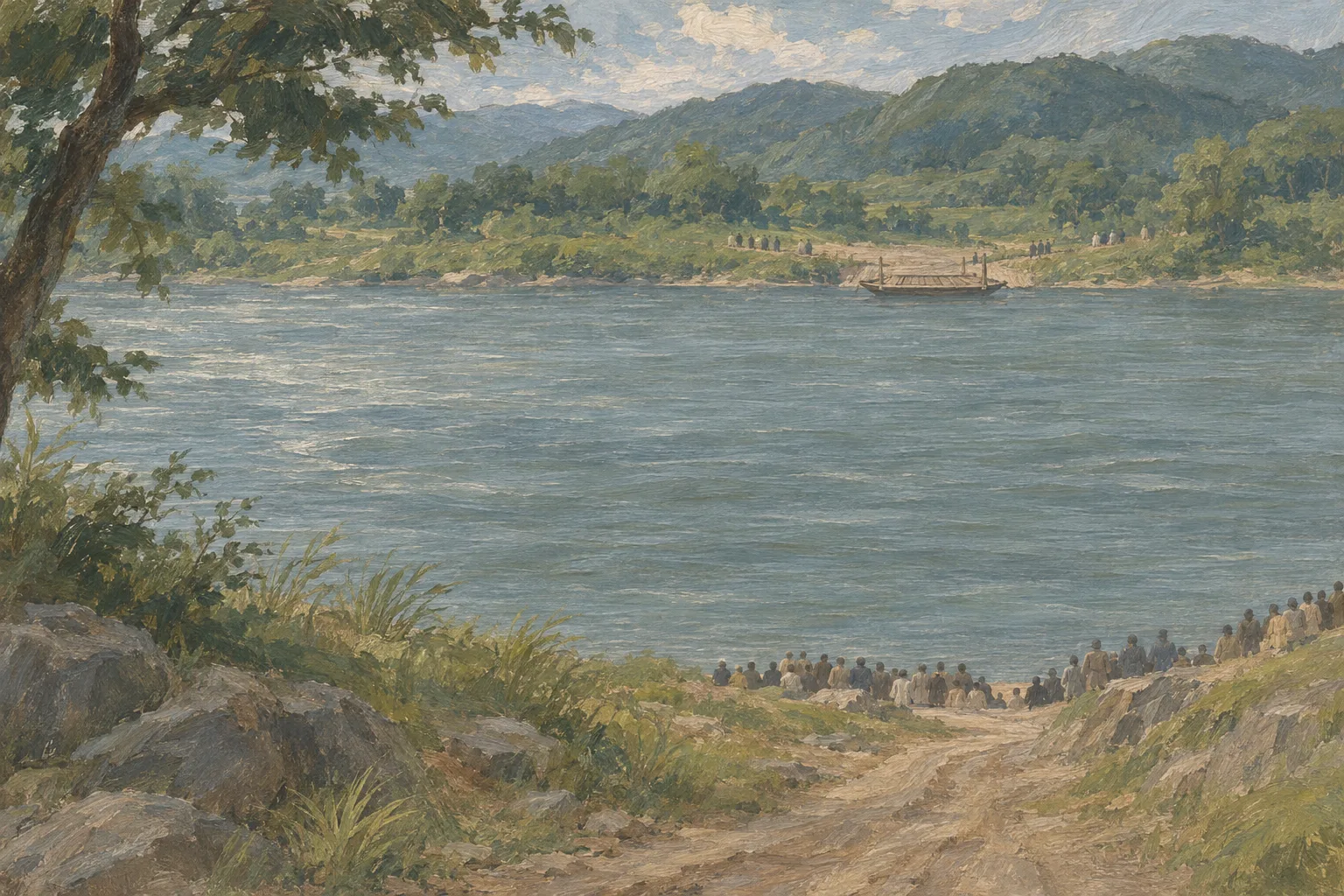
At Jeongamjin, the volunteer army's job was to stop Japanese forces from crossing the river and advancing toward Jeolla Province. Jeongamjin, in Uiryeong, was a ferry crossing that let travelers from Haman cross the river and head west. The Annals of King Seonjo credits Gwak Jae-u with preventing Japanese forces from crossing there and reaching Honam.
| Battle | Role of the volunteer army | Outcome |
|---|---|---|
| Battle of Jeongamjin, late in the 5th lunar month of 1592 | The volunteers guarded the ferry crossing on the route to Jeolla Province. | They stopped Japanese forces from advancing along this route. |
| First Battle of Jinju Fortress, 10th lunar month of 1592 | Volunteers sent by Gwak Jae-u kept Japanese forces in check outside the fortress. | The defenders, led by Jinju magistrate Kim Si-min, held the fortress. |
Timeline from the Uiryeong Uprising to the Defense of Hwawangsanseong Fortress
In 1592, the troops raised in Uiryeong guarded the ferry crossing and helped defend a fortress in a neighboring town. During the second Japanese invasion in 1597, Gwak Jae-u defended Hwawangsanseong Fortress in Changnyeong as defense commander of eastern Gyeongsang Province. The months and days in the table follow the lunar calendar, and dates that refer to entries in the annals are marked separately.
| Date | Event | Source |
|---|---|---|
| 24th day of the 4th month of 1592 | Gwak Jae-u raised a volunteer army in Uiryeong. | Supplementary account in article 4 of the Annals of King Seonjo for the 28th day of the 6th month |
| Late in the 5th month of 1592 | He prevented Japanese forces from crossing the river at Jeongamjin. | Encyclopedia of Korean Culture, "Gwak Jae-u" |
| Entry dated the 1st day of the 6th month of 1592 | The entry records Kim Seong-il's dispatch defending Gwak Jae-u and the court's decision. | Revised Annals of King Seonjo, article 37 |
| Entry dated the 28th day of the 6th month of 1592 | Kim Seong-il reported on the Chogye Fortress incident and explained why he had appointed Gwak Jae-u as an assault commander. | Annals of King Seonjo, article 4 |
| 10th month of 1592 | Gwak Jae-u sent volunteers under his command to the First Battle of Jinju Fortress. | Revised Annals of King Seonjo, article 2 for the 1st day of the 10th month; Encyclopedia of Korean Culture, "Gwak Jae-u" |
| 1597 | He led troops from Miryang, Yeongsan, Changnyeong, and Hyeonpung in the defense of Hwawangsanseong Fortress. | Encyclopedia of Korean Culture, "Gwak Jae-u" |
Records and Interpretation: Did Kim Su Suspect the Volunteer Army from the Start?
Even within a single entry in the annals, accounts differ on what Kim Su thought when he first heard about the Chogye Fortress incident. Article 4 of the Annals of King Seonjo for the 28th day of the 6th month contains Kim Seong-il's report. The compiler of the annals also comments partway through the report.
| Source | What the record says |
|---|---|
| Kim Seong-il's report | Kim Seong-il said that Kim Su did not believe the magistrate of Hapcheon and told him to summon Gwak Jae-u and admonish him. |
| Commentary in the annals | The compiler suggested that Kim Seong-il might have described Kim Su's attitude in a favorable light to reconcile the two men. |
| Later historical interpretation | Uri Yeoksa Net's "Volunteer Armies (Joseon)" interprets the incident as an example of friction between a force formed outside government command and local officials. |
The Revised Annals of King Seonjo also confirms that Kim Su later called Gwak Jae-u a traitor. But the records alone do not reveal what Kim Su really thought at the time of the Chogye Fortress incident. The 28th day of the 6th month is the date of the entry recounting earlier events, so it cannot be taken as the day the provisions were removed from Chogye Fortress.
What This Tells Us About the Imjin War Today
The Uiryeong case shows how the relationship between volunteer armies and government forces changed during the war. At Chogye Fortress, suspicions arose over who had taken the provisions left in the fortress. When Jinju Fortress came under siege, Kim Seong-il asked the volunteers for help. The Draft Report on the Course of the Defense of Jinju, a draft of the report submitted to the court at the time, records the help provided by volunteers outside the fortress as part of its account of the fighting.
FAQ
Was Gwak Jae-u a commander in the government army when he raised a volunteer militia?
When he gathered volunteers in Uiryeong on the 24th day of the 4th lunar month of 1592, he was a scholar who held no government post. Kim Seong-il summoned him and appointed him as an assault commander only after he had gathered the volunteers.
Who suspected Gwak Jae-u of being a bandit at Chogye Fortress?
According to Kim Seong-il's report, it was Jeon Hyeon-ryong, the magistrate of Hapcheon County. The suspicion arose when Gwak Jae-u's troops took weapons and military provisions from the empty fortress while Jeong Dae-seong and his gang were carrying out robberies in the county.
What actions of Gwak Jae-u did Kim Seong-il defend?
Kim Seong-il defended Gwak Jae-u by pointing out that he had used his family's wealth to raise a volunteer militia and protect the area. He thought Gwak was wrong to publicly denounce the provincial governor, but judged that the fortress would be hard to defend if punishing him caused his troops to disperse.
Where did the route through Jeongamjin lead?
Jeongamjin was a ferry crossing on the route from Haman in Gyeongsang Province through Uiryeong toward Jeolla Province. Late in the 5th lunar month of 1592, the volunteer militia guarded the crossing and kept Japanese troops from crossing.
What roles did Kim Si-min and Gwak Jae-u each play in the First Battle of Jinju Fortress?
Kim Si-min, the magistrate of Jinju, commanded the defenders inside the fortress. Gwak Jae-u sent volunteers under his command to keep the Japanese troops in check outside the fortress.
Where can the nickname Red-Robed General be found?
It appears in Kim Seong-il's report in the Annals of King Seonjo, in the entry for the 28th day of the 6th month of the 25th year of King Seonjo's reign. Kim Seong-il wrote that Gwak Jae-u wore a red silk robe. The account that Japanese troops also called him the Red-Robed General came from someone who had been taken prisoner and later returned.
What kinds of names are Mangudang and Chungik in Gwak Jae-u's case?
Mangudang was Gwak Jae-u's pen name, and Chungik was the posthumous title he received after his death. His ancestral clan seat was Hyeonpung, and his courtesy name was Gyesu. He was born in 1552 and died in 1617.
Sources
- National Institute of Korean History, Annals of King Seonjo, Vol. 27, 28th day of the 6th month of the 25th year of King Seonjo's reign, Article 4
- National Institute of Korean History, Revised Annals of King Seonjo, Vol. 26, 1st day of the 6th month of the 25th year of King Seonjo's reign, Article 37, “Pacification Commissioner Kim Seong-il Submits a Report to the King Assessing Gwak Jae-u's Merits and Failings”
- National Institute of Korean History, Revised Annals of King Seonjo, Vol. 26, 1st day of the 10th month of the 25th year of King Seonjo's reign, Article 2
- Our History Net, Chronicles of Korean History, “Gwak Jae-u”
- Our History Net, Chronicles of Korean History, “Righteous Army (Joseon)”
- Our History Net, Textbook Glossary, “Righteous Army”
- Our History Net, Fun History for Elementary Students, “Gwak Jae-u Wears Red and Faces the Enemy”
- Academy of Korean Studies, Encyclopedia of Korean Culture, “Gwak Jae-u”
- National Heritage Knowledge Portal, “Draft Report to the King on the Course of the Defense of Jinju Fortress,” Commentary
Images