Chairman Choi Tae-won’s View on Long-Term Holding of SK Hynix: The Key to AI Memory Demand and Investment Decisions
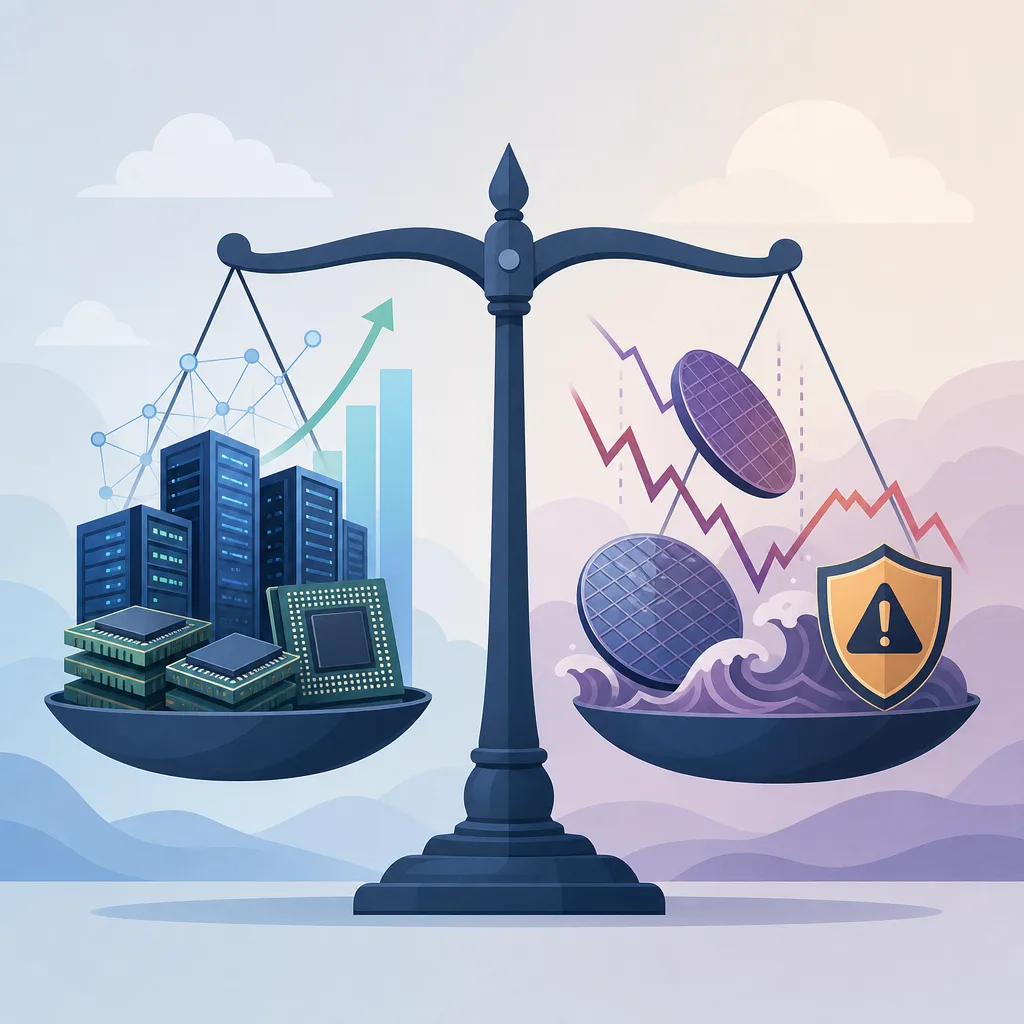
SK Chairman Choi Tae-won’s remarks regarding SK Hynix as a long-term holding are based on the view that the proliferation of AI could structurally boost demand for high-bandwidth memory and server memory. However, since the memory industry is heavily influenced by economic cycles and supply cycles, it is important to consider both the long-term growth rationale and the investment risks.
- Chairman Choi Tae-won's remarks focus on the potential for long-term growth in corporate value driven by expanding demand for AI memory, rather than short-term trading.
- SK Hynix’s core investment rationale is linked to its competitiveness in HBM, server DRAM, and high-performance memory, as well as the expansion of investments in AI data centers.
- Earnings volatility in the memory semiconductor sector can increase depending on price fluctuations, oversupply, adjustments to customer investments, and the pace of technological transition.
- Holding an investment for the long term does not always guarantee a return, and investors should carefully evaluate valuation, earnings, cash flow, the competitive landscape, and portfolio weighting.
- This content is not an investment recommendation, but rather a summary of the industry implications of the remarks and the key variables necessary for making investment decisions.
At a Glance
Attention is focused on the fact that SK Chairman Choi Tae-won has issued a message urging investors to hold onto their SK Hynix shares for the long term rather than engage in short-term trading. The core of his remarks lies not in mere optimism about the stock price, but in an industry outlook that suggests demand for memory semiconductors is highly likely to grow in the long term due to the spread of AI.
However, it would be risky to take this message at face value as an investment conclusion. While SK Hynix is a key player in the AI semiconductor supply chain, the memory industry is inherently cyclical. Profits may surge during price uptrends, but earnings and stock prices can fluctuate significantly when oversupply and slowing demand set in.
Key Implications of the Remarks
Chairman Choi’s message can be interpreted in three main ways.
-
AI structurally increases memory usage. Generative AI, large language models, recommendation systems, and cloud inference services require the ability to quickly read and write large volumes of data. In this process, the importance of high-bandwidth memory, such as high-performance DRAM and HBM, grows.
-
He is advising investors to focus on the direction of the industry rather than short-term stock price predictions. Stock prices fluctuate significantly in the short term due to changes in interest rates, exchange rates, supply and demand, investor sentiment, and earnings outlook. From a long-term investment perspective, however, it is more important to assess whether a company can sustain its competitiveness in a growing market.
-
This statement emphasizes confidence in SK Hynix’s memory competitiveness. SK Hynix is a memory semiconductor company whose business centers on DRAM, NAND, and HBM. As the markets for AI servers and accelerators expand, the ability to supply high-performance memory becomes a critical factor in corporate valuation.
Why Is AI Driving Memory Demand?
AI systems do not operate on computation alone. They require massive memory bandwidth to store and retrieve data, process model weights, and perform training and inference. As the performance of GPUs and AI accelerators increases, the surrounding memory must also provide faster speeds and wider bandwidth to reduce bottlenecks.
Key Factors Driving AI Memory Demand
| Factor | Impact on Memory | Related Products |
|---|---|---|
| Training large-scale AI models | Increased model parameters and training data throughput | HBM, server DRAM |
| Expansion of AI Inference Services | Increased continuous computation and response processing within data centers | HBM, DDR5, LPDDR |
| Investment in Cloud Data Centers | Server expansion and growth of high-performance computing infrastructure | Server DRAM, SSD, NAND |
| High-Performance GPUs and Accelerators | Increased bandwidth requirements between computing devices and memory | HBM3, HBM3E, etc. |
| Proliferation of On-Device AI | Increased demand for memory capacity and speed in smartphones and PCs | LPDDR, Mobile DRAM |
Why HBM Is Important
HBM stands for High Bandwidth Memory. It is a type of memory that significantly increases bandwidth by stacking multiple DRAM chips vertically and connecting them via a wide interface. As AI accelerators require the rapid supply of vast amounts of data, the importance of HBM has grown.
While standard DRAM is considered general-purpose memory, HBM can be viewed as high-value-added memory that is closely integrated with high-performance computing devices to rapidly exchange large volumes of data. Therefore, for HBM, factors such as technological capability, yield, packaging expertise, customer certification, and long-term supply contracts are more important than mere volume competition.
Rationale for the Case for Long-Term Holding of SK Hynix
The argument for long-term holding of SK Hynix is based on the following industry logic.
1. Investment in AI data centers is memory-intensive
AI data centers use more high-performance GPUs and AI accelerators than general-purpose servers. This equipment requires HBM and high-performance server DRAM. As AI services move beyond the experimental stage and are integrated into actual products and business systems, memory demand is likely to have a broader foundation than that of a short-term trend.
2. Memory Companies Have High Profit Leverage
The memory semiconductor industry is structured such that profits improve rapidly when prices rise. Because it is an industry with high fixed costs, operating profit margins can improve significantly as utilization rates and average selling prices increase. Conversely, losses can grow substantially during price downturns, resulting in high volatility in both directions.
3. HBM Has Higher Barriers to Entry Than General-Purpose Memory
It is difficult to compete in the HBM market simply by increasing production volume. It requires a combination of highly sophisticated stacking technology, thermal management, yield optimization, customer testing, and a packaging ecosystem. Therefore, leading companies are likely to command a premium for a certain period.
4. Memory Has Become More Strategic in the AI Supply Chain
In the past, memory semiconductors were often viewed merely as cyclical components. However, in the AI era, they are being reevaluated as core infrastructure components that determine computational performance. If this shift continues, the valuation criteria for memory companies may also change.
However, a long-term holding strategy is not always the right answer
While the long-term holding strategy emphasizes a company’s structural growth potential, investors must carefully assess the following risks.
| Risk Factors | Description | Key Metrics for Investors |
|---|---|---|
| Decline in Memory Prices | DRAM and NAND prices may fall due to increased supply or slowing demand | DRAM prices, NAND prices, inventory levels |
| Intensifying HBM Competition | Profitability may decline if competitors narrow the technology gap | Customer adoption status, yield rates, new product roadmap |
| Customer Concentration | Reliance on major AI semiconductor and cloud customers may increase | Customer diversification, long-term supply contracts |
| Capital Expenditure Burden | Expanding leading-edge processes and HBM production requires massive capital expenditures | CAPEX, depreciation expense, free cash flow |
| Slowdown in AI Investment | If the pace of data center investment slows, expected demand may be revised downward | Cloud CAPEX, GPU shipments, AI service monetization |
| Stock Valuation | Even a good company may yield low returns if purchased at too high a price | P/E ratio, P/B ratio, EV/EBITDA, earnings estimates |
Checklist for Investment Decisions
When deciding whether to hold semiconductor stocks like SK Hynix for the long term, it is better to review the following items rather than relying solely on statements from prominent figures.
- Earnings Trend: Are revenue, operating profit, and operating profit margin improving?
- HBM Competitiveness: Are certifications from major customers and supply expansion continuing?
- Sustainability of Demand: Determine whether AI data center investment is a one-time boom or will lead to long-term infrastructure investment.
- Supply Discipline: Is there a possibility that the industry will create another supply glut due to excessive capacity expansion?
- Financial Stability: Can the company manage its debt, cash flow, and capital expenditure burdens?
- Stock Price Level: To what extent are future growth expectations already reflected in the stock price?
- Portfolio Allocation: Is the portfolio overly concentrated in a single stock?
The Difference Between Short-Term Trading and Long-Term Holding
| Category | Short-Term Trading | Long-Term Holding |
|---|---|---|
| Key Focus | Charts, supply and demand, news, price fluctuations before and after earnings announcements | Industry growth, competitiveness, cash flow, valuation |
| Advantages | May offer opportunities for quick profits | Potential to benefit from compounding effects and corporate growth |
| Disadvantages | High difficulty in forecasting; significant transaction costs and psychological stress | May need to weather prolonged downturns |
| Suitable Investors | Investors with strong market responsiveness and the time to dedicate | Investors with industry knowledge and patience |
| Key Risks | Poor timing | Erosion of corporate value or buying overvalued stocks |
Chairman Choi’s remarks reflect a perspective leaning toward long-term holding rather than short-term trading. However, long-term holding is not the same as unconditional neglect. Long-term investors must regularly assess whether the company’s competitiveness is being maintained.
Key Data to Watch in the AI Memory Cycle
The following data is useful when evaluating AI memory investments.
-
HBM Revenue Share and Growth Rate As HBM’s share of total DRAM revenue increases, the likelihood of profit improvement driven by high-value-added products rises.
-
Trends in Average DRAM Selling Prices Memory companies’ profits are price-sensitive. It is crucial to determine whether prices are rising or falling.
-
Days of Inventory High inventory levels can increase downward pressure on prices, while low inventory levels can heighten the likelihood of supply shortages and price increases.
-
AI Infrastructure Investments by Major Customers Investment plans by cloud, GPU, and server companies serve as key indicators for gauging demand for HBM and server DRAM.
-
Capital Expenditures and Supply Growth Rate Even if demand is strong, prices may fall if supply grows faster. It is essential to monitor the pace of capacity expansion in the memory industry.
A Balanced Interpretation for Investors
Chairman Choi Tae-won’s message can be understood as emphasizing SK Hynix’s long-term growth potential. In particular, the fact that AI is driving memory demand and that HBM is establishing itself as a high-value-added product aligns with actual industry trends.
However, in the stock market, a promising industry does not always equate to strong returns. Even stocks in high-growth industries can yield poor long-term returns if purchased during an overvalued market phase. Conversely, even when facing short-term headwinds, a company with sustained long-term competitiveness can present a buying opportunity.
Therefore, the key is not “Should I not sell?” but rather clarifying “Why am I holding the stock, and what would cause me to revise my judgment?”
Conclusion
The argument for holding SK Hynix as a long-term investment is based on major trends such as the spread of AI, demand for HBM, and the rising strategic value of memory semiconductors. This logic is certainly worth considering. However, the cyclical nature of the memory industry, the high burden of capital expenditures, intensifying competition, and stock valuation risks must also be taken into account.
Investors should repeatedly review industry data and corporate earnings rather than relying on specific statements. Long-term holding is a process of assessment, not prediction, and SK Hynix’s long-term value depends on how long it can maintain its technological edge and profitability in the AI memory market.
FAQ
What is the significance of Chairman Choi Tae-won’s remarks about holding SK Hynix shares for the long term?
Chairman Choi Tae-won’s remarks are interpreted as urging investors to focus on the growing demand for AI memory and the company’s long-term competitiveness rather than buying and selling SK Hynix stock based on short-term price fluctuations. However, this does not guarantee investment returns, and investors should evaluate the company’s earnings and valuation independently.
Why is AI important to memory companies like SK Hynix?
AI training and inference require memory capable of quickly processing large volumes of data. In particular, high-bandwidth memory such as HBM is becoming increasingly important for GPUs and AI accelerators, which could present growth opportunities for memory companies like SK Hynix.
How is HBM different from standard DRAM?
HBM is a high-performance memory that stacks multiple DRAM chips vertically to provide high bandwidth. It is considered a high-value-added product because it involves more complex technology than standard DRAM and is widely used in AI accelerators and high-performance computing.
Is it safe to hold SK Hynix stock for the long term?
Holding an investment for the long term does not automatically guarantee safety or returns. Regular monitoring is necessary, as risks such as falling memory prices, oversupply, intensifying competition, a slowdown in client investment, and the risk of buying at inflated prices all exist.
What is the most significant risk associated with memory semiconductor stocks?
The most significant risk is the semiconductor cycle. While profits can grow rapidly when demand is strong, prices and profits can plummet if supply increases excessively or demand slows.
What should we look at when assessing SK Hynix's long-term value?
It is important to consider HBM competitiveness, supply status to major customers, DRAM prices, inventory levels, the scale of capital expenditures, operating profit margins, cash flow, and stock price valuation together. It is difficult to assess long-term value based on just one or two indicators.
Can Chairman Choi Tae-won’s remarks be considered an investment recommendation?
While remarks made by the chairman of a particular company may reflect industry outlooks or the company’s confidence, they should not be viewed as investment advice tailored to individual investors. Each investor must make decisions based on their own investment horizon, risk tolerance, and portfolio situation.
Could the stock price fall even as demand for AI memory continues to rise?
That’s possible. Stock prices may fall if positive industry outlooks are already overpriced into the market, if short-term earnings fall short of expectations, or if macroeconomic factors such as interest rates and exchange rates deteriorate.
Sources
Images