Unlearning in the AI Era: How to Let Go of Old Assumptions and Learn Again
Unlearning is not about forcing yourself to forget knowledge, but about identifying assumptions and work methods that are no longer valid and reducing their influence. This explains how to test outdated assumptions, conduct small experiments, and replace them with new criteria for judgment.
- Unlearning is not about erasing memories, but about reassessing the conditions under which existing knowledge still applies.
- The half-life of job skills is not a single standardized statistic, so a specific number of years should not be treated as a universal fact.
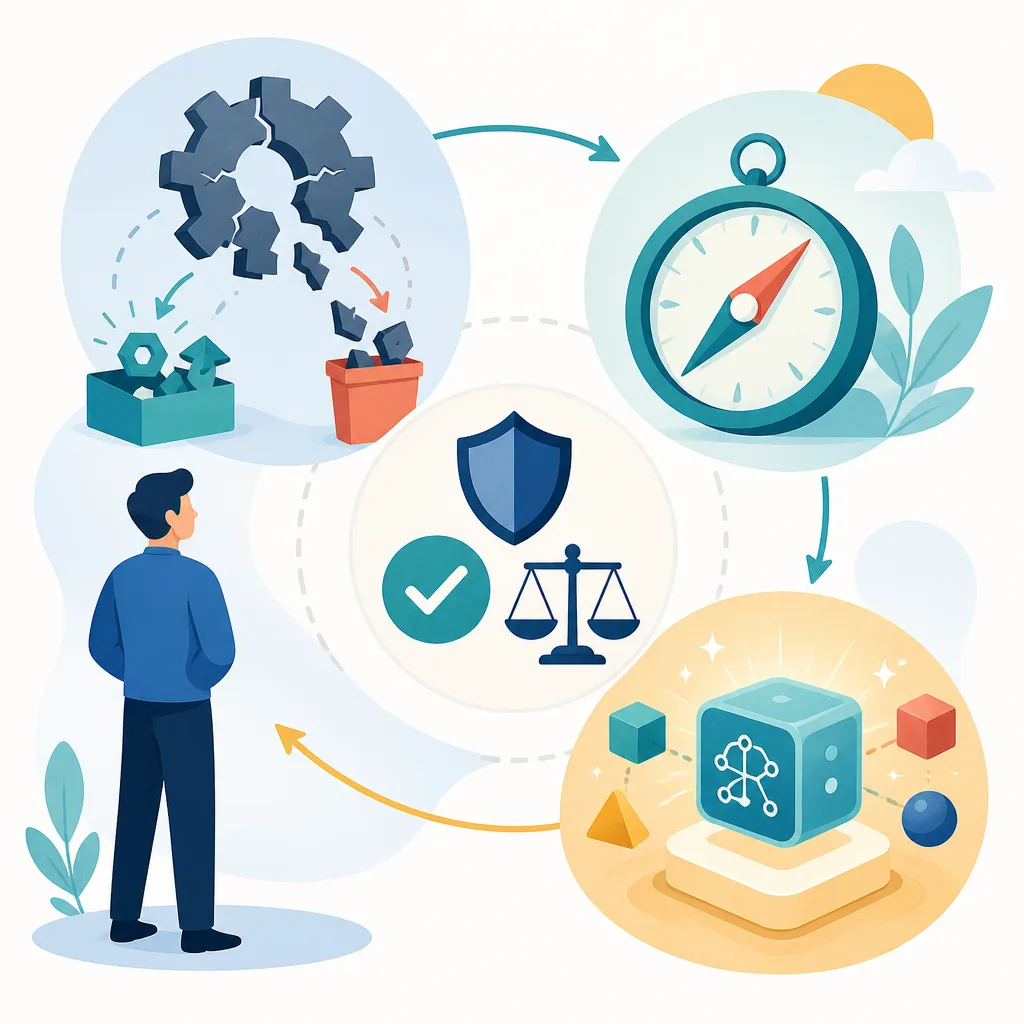
- Effective transitions occur through a cycle of unlearning, relearning, and new learning.
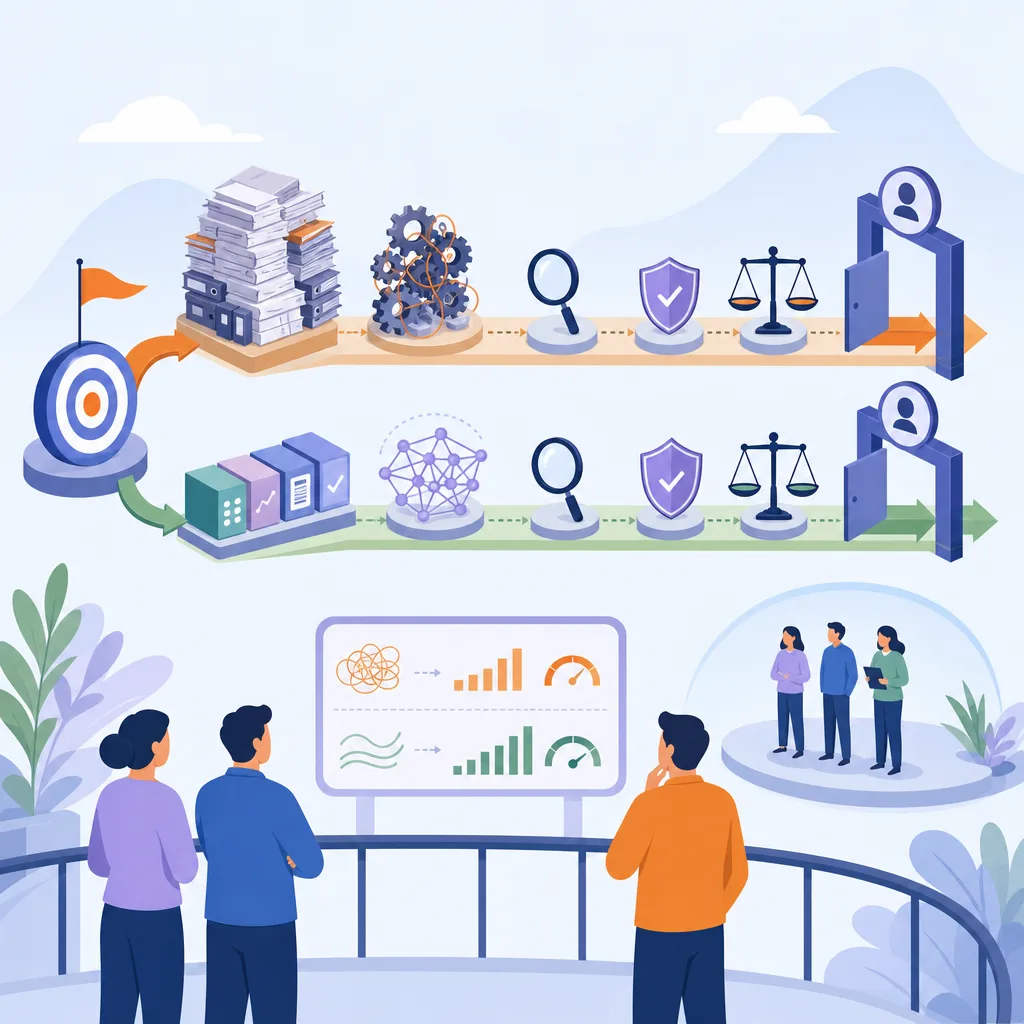
- Rather than immediately discarding existing methods, use small experiments to compare the effectiveness and risks of new approaches.
- Even when AI generates information, responsibility for setting goals, judging context, verification, and outcomes remains with people and organizations.
If the feeling of falling behind persists even though you keep learning new technologies, the problem may be less about how much you learn and more about outdated assumptions that remain in your mind. In an environment where AI and automation are rapidly changing work processes, you need not only the ability to add new knowledge but also unlearning, the practice of reassessing the scope in which existing knowledge applies.
What Is Unlearning?
Unlearning does not mean completely erasing what you have learned or rendering past experience worthless. It is the process of examining whether knowledge, habits, or assumptions that were once effective remain valid in the current situation and preventing outdated elements from continuing to dominate decision-making.
For example, in the past, it may have been reasonable for people to write every report from scratch. In an environment where generative AI is available, the drafting process can be changed, but responsibility for fact-checking and approval does not automatically disappear. Unlearning does not mean discarding an entire existing process. It means distinguishing again between what should be automated and what people must continue to be responsible for.
The Difference Between Unlearning and Forgetting
| Category | Meaning | Result |
|---|---|---|
| Forgetting | Losing memories or information regardless of intent | Existing knowledge may not be available when needed |
| Discarding | Deciding not to use specific information or procedures | A gap in operations may arise if there is no alternative |
| Unlearning | Reassessing the assumptions and conditions under which existing knowledge applies | Valid elements can be preserved while outdated ones are replaced |
| Relearning | Learning core concepts or skills again in a changed environment | Existing experience is reorganized according to new standards |
Why Unlearning Matters in the AI Era
The Combination of Skills Required for Jobs Is Changing Rapidly
In the World Economic Forum’s Future of Jobs Report 2025, the employers surveyed expected approximately 39% of workers’ existing skill sets to change or become outdated between 2025 and 2030. This does not mean that all skills will disappear at the same rate. Rather, it means that the composition and relative importance of the skills required for many jobs are likely to change significantly.
The period over which the market value of a job skill falls by half is often described as a “skill half-life.” However, this figure varies greatly by occupation, skill, industry, and measurement method, and there is no common international standard metric. Therefore, rather than accepting statements such as “the half-life of every skill is 5 years” or “the half-life of AI skills is 2 years” as universal facts, it is more accurate to treat them as metaphors explaining the direction of change or as estimates with limited scope.
New Tools Change the Assumptions Behind Existing Processes
Work processes are generally created based on the costs and technological constraints of their time. Typical examples include research procedures developed when searching took a long time, approval systems designed around in-person work, and production processes based on the assumption that people write every draft.
When AI supports search, summarization, translation, coding, and document drafting, some of these assumptions change. This does not mean that all existing processes become invalid. Some conditions must be maintained even when tools change, including privacy protection, copyright, security, fact-checking, and final accountability.
Knowing More and Exercising Better Judgment Are Different
AI can quickly present many options, but it does not decide which option best serves an organization’s objectives or determine the acceptable level of risk. Nor is responsibility for judging whether an output is factual, useful to users, and compliant with laws and organizational policies automatically transferred.
Capabilities in the AI era therefore cannot be explained simply by the amount of information a person possesses. The following abilities are also necessary.
- The ability to define problems and goals accurately
- The ability to verify sources and evidence
- The ability to distinguish important information from unnecessary information
- The ability to reflect the context of the organization and its users
- The ability to explain results and take responsibility for them
The Cycle of Unlearning, Relearning, and New Learning
Unlearning is not an activity that ends on its own. After letting go of existing assumptions, you must understand the essentials again and connect new methods to actual work.
| Stage | Core Question | Main Activities | Output |
|---|---|---|---|
| Unlearning | What is no longer true or essential? | Identifying assumptions, reviewing conditions of application, analyzing exceptions | A list of items to discontinue, retain, or verify |
| Relearning | What objectives and principles have not changed? | Redefining goals, checking the latest evidence, revising standards | New criteria for judgment and operating principles |
| New learning | What can be created with new tools and conditions? | Experimentation, measurement, feedback, process design | A validated new way of working |
These three stages form a recurring cycle rather than a straight line. Even new methods become subject to reassessment when the environment changes.
6 Steps for Putting Unlearning into Practice
1. Look for Signals of Change
If the following patterns recur, it may be necessary to examine the assumptions behind existing methods.
- More time is being invested, but the quality of results is not improving.
- New tools have been introduced, but the work stages remain exactly the same.
- Regulations, technology, or user requirements have changed.
- Team members cannot explain the purpose of a procedure and simply follow convention.
- The same mistakes or rework recur.
2. Write Hidden Assumptions as Statements
Turn the beliefs hidden behind procedures into specific statements. Avoid expressions such as “This is how it has always been done,” because they cannot be verified.
Examples include:
- A good report must be written directly by a person from beginning to end.
- You must attend meetings for a long time to understand the context of the work.
- Managers must know every practical task better than their team members.
- The longer a document is, the more thoroughly it has been reviewed.
3. Distinguish Facts, Assumptions, and Preferences
Classify each statement into one of the following three categories.
- Fact: Something that can be confirmed with current evidence
- Assumption: Something that is true only under certain conditions or has not yet been verified
- Preference: A way of doing things desired by an individual or organization
Treating preferences as facts makes unlearning difficult. Conversely, mistaking legal obligations or safety standards for mere conventions and removing them can be dangerous.
4. Check the Conditions of Application and Period of Validity
Identify when the existing method was created, the problem it was intended to solve, and the tools available at the time. Then ask whether the same conditions still apply today.
- What problem was this rule created to prevent?
- Does that problem still exist?
- Have the technology or cost structure changed?
- Do the same regulatory, security, or quality standards still apply?
- What is the greatest risk of discontinuing this method?
5. Run Small Experiments Instead of Replacing Everything
Unlearning is not indiscriminate disposal. Compare the existing method with a new one within a reversible scope.
For example, before eliminating weekly reports entirely, one team could reduce the number of reporting items by half and compare decision-making time, errors, rework, and user satisfaction. When introducing generative AI, it is also safer to begin by testing the drafting of documents that can be made public while maintaining separate control procedures for sensitive data and final approval.
6. Record the New Standards and Reasons for Discarding the Old Ones
Based on the results of the experiment, retain, revise, suspend, or discard the existing method. Do not record only what changed; also document the following.
- The purpose of the previous method
- Assumptions that are no longer valid
- Principles and controls that must be maintained
- Conditions under which the new method is valid
- The reassessment date and the person responsible
This record prevents the new method from becoming yet another unverified convention.
Examples of Workplace Applications
Report Writing
- Existing assumption: Quality is high only when the writer personally reads all materials and writes every sentence from scratch.
- Unlearning: Examine whether there is always an inevitable relationship between direct authorship and accuracy.
- Relearning: Redefine the essence of a report as a document with clear evidence that is useful for decision-making.
- New learning: Use AI to create the structure or draft, while people compare it against the original sources, verify figures, and provide final approval.
Running Meetings
- Existing assumption: Everyone involved must attend meetings in real time.
- Unlearning: Distinguish whether information sharing and joint decision-making require the same type of meeting.
- Relearning: Clarify whether the purpose of a meeting is to convey information, gather opinions, or make a decision.
- New learning: Move information sharing to asynchronous documents and use meetings only for agenda items requiring debate and decisions.
The Manager’s Role
- Existing assumption: Managers must know every answer and give direct instructions.
- Unlearning: Determine whether this approach slows decision-making in an organization where expertise is distributed.
- Relearning: Redefine the manager’s role as setting goals, allocating resources, resolving conflicts, and managing accountability.
- New learning: Delegate practical judgments to those responsible and create a structure for reviewing important assumptions and risks.
What Must Not Be Discarded
Rapid change does not justify discarding every principle. Even when introducing new tools, the following must be carefully preserved or strengthened.
- Compliance with laws and regulations
- Protection of personal and confidential information
- Essential verification for safety and quality
- Source verification and records management
- Principles of accessibility and nondiscrimination
- Final decision-making authority and accountability
AI outputs in particular may contain plausible but incorrect information, bias, or the risk of exposing sensitive information. Eliminating verification and accountability procedures in the name of efficiency is closer to a failure of control than to unlearning.
Common Reasons Unlearning Fails
Rejecting All Past Experience
Existing methods were created for reasons that addressed problems at the time. Erasing that history may cause previously resolved risks to reappear. Instead of rejecting people or their experience, examine the conditions under which that experience applies separately.
Treating a Trendy Tool as the Answer
Something is not necessarily better simply because it is new. If adopting a tool becomes the goal itself, it may only increase cost and complexity. Measurable goals such as quality, speed, risk, and user value must be defined first.
Discarding Existing Methods Without Preparing Alternatives
If there is only discontinuation without relearning, a gap in operations will arise. Identify the function performed by the procedure being discarded and establish new standards to replace that function.
Ignoring the Psychological Cost
Expertise developed over many years is closely connected to identity. A request to change an existing method may sound like a denial of an individual’s abilities. It is more effective to explain which conditions have changed rather than what was wrong.
An Unlearning Checklist You Can Start Today
You can begin simply by choosing and answering one of the questions below.
- What work has remained unchanged even though the environment changed during the past 1 year?
- Are there procedures explained with words such as “originally,” “obviously,” or “always”?
- What was the original problem that the procedure was intended to solve?
- Do the same problem and constraints still exist?
- What are the core principles that must be maintained, and what formats can be changed?
- What is the smallest change that can be tested while limiting risk?
- What metrics will be used to judge success and failure?
Conclusion
Unlearning is not an argument for no longer learning. It is a method of reassessing the conditions under which existing knowledge remains valid in order to create room for new learning to work. What matters is not discarding as much as possible, but developing the ability to judge what to retain and why, and what to replace and on what evidence.
There is no need to change every method today. You can begin by writing down one assumption behind something you thought “has always been done this way” and using a small experiment to determine whether that assumption remains valid.
FAQ
Is unlearning about forgetting what you have learned?
No. Unlearning is not about erasing memories, but about reexamining the assumptions and conditions under which existing knowledge or habits were valid and applicable. Principles that remain valid are retained, while only outdated elements are given less weight or replaced with new approaches.
How are unlearning and relearning different?
Unlearning is the stage of moving away from assumptions that are no longer valid, while relearning is the stage of understanding concepts and skills anew to fit a changed environment. Generally, unlearning creates room, relearning establishes new standards, and then these are connected to practical experiments at work.
What is the actual half-life of job skills in years?
There is no standard half-life that applies to all job skills. The rate at which the value of skills changes varies by industry, occupation, region, and measurement criteria. A specific number of years may be an estimate from an individual study or analogy, so its source and definition should be checked together.
Does unlearning mean ignoring existing experience?
No. Existing experience is valuable information that shows why a particular approach was developed. Instead of discarding experience, unlearning distinguishes between the conditions under which that experience still applies and those under which it no longer does.
What is the safest way to begin unlearning in an organization?
It is safest to start with small-scale, reversible experiments. Compare the quality, time, cost, errors, and risks of the existing and new approaches, and maintain mandatory controls related to legal, security, and safety requirements throughout the experiment.
As AI advances, will human judgment no longer be necessary?
AI can generate more options and drafts, but it does not independently determine an organization's goals, acceptable risks, user value, or ultimate accountability. Responsibility for fact-checking, contextual judgment, approval, and outcomes must be assigned to a clearly designated person or organization.
How can the outcomes of unlearning be measured?
Rather than measuring how much new knowledge has been learned, it is more useful to measure reductions in rework, decision-making time, error rates, quality, user satisfaction, and whether risks materialize. Baseline values must be established before the change, and the same metrics should be compared after a set period.
What should I do first to start unlearning today?
Choose one procedure at work that is explained as, “This is how we’ve always done it.” Write down the problem the procedure was intended to solve, the constraints that existed when it was created, and the risks that still remain, then design the smallest possible experiment to change it.
Sources
Images