Google Gemini Robotics 2.5 rolls out to partners
Google DeepMind is rolling out Gemini Robotics 2.5 to robotics partners. Availability in Korea, the public API release schedule for general developers, and pricing have not been disclosed.
- Gemini Robotics 2.5 is a VLA model that converts visual and language inputs into robot motor control.
- Google DeepMind said it is rolling out the model to robotics partners.
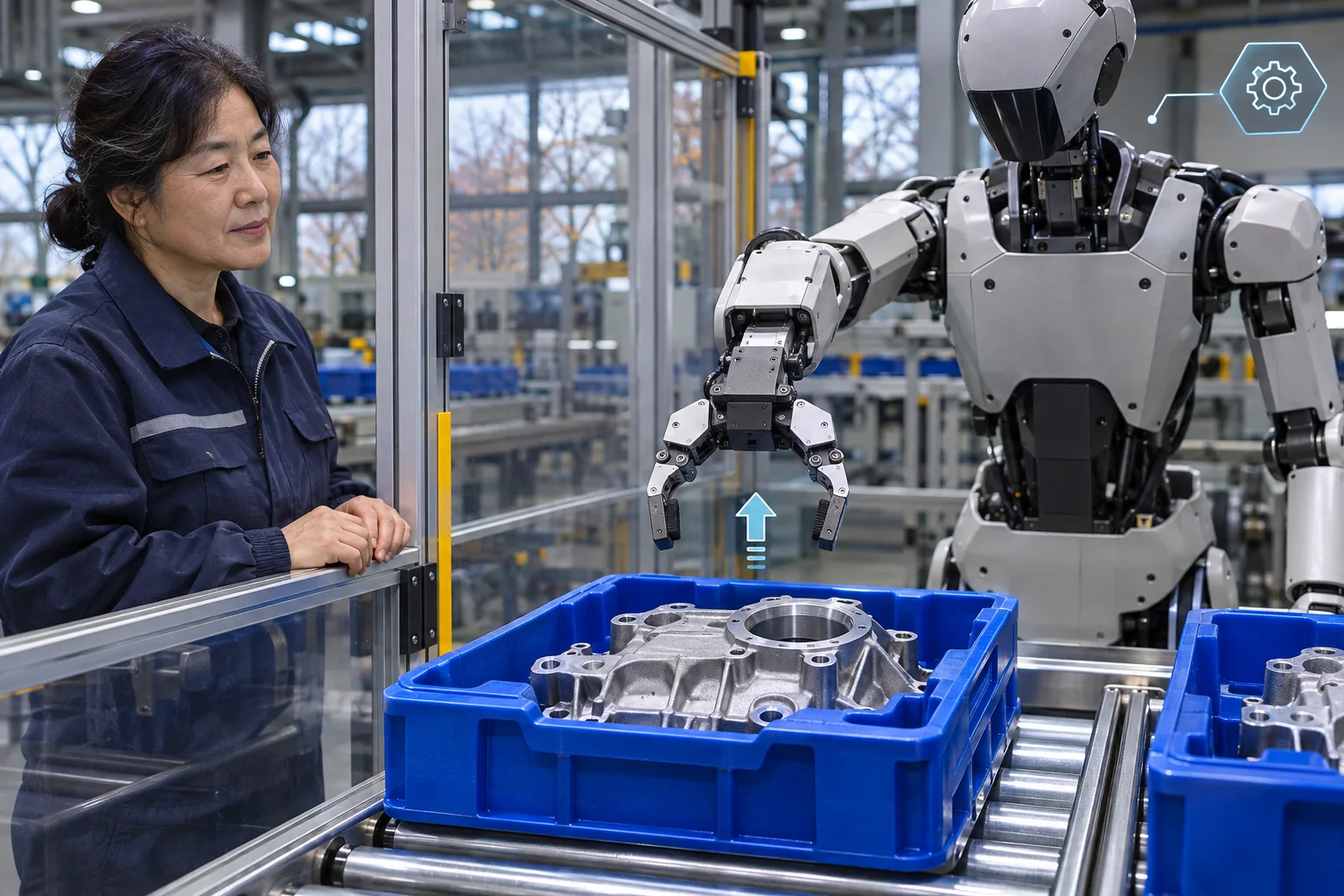
- Google reported that Apollo 2 achieved a 96% task success rate in a proof of concept for picking and packing automotive parts.
- Google said its own evaluations showed improvements in task success rates and completion speed over the previous baseline model.
- Availability in Korea, the public API release schedule for general developers, pricing, and usage limits have not been disclosed.
Google DeepMind has announced Gemini Robotics 2.5. The announcement was published on November 10, 2026. It is currently rolling out to robotics partners. Availability to general developers in Korea has not been disclosed.
Google DeepMind's announcement and model description were reviewed as of November 12, 2026.
A model that turns visual and language inputs into robot actions
Gemini Robotics 2.5 is a vision-language-action model. Abbreviated as VLA, it converts visual and language inputs into motor control. Its role is to enable robots to take physical actions based on those inputs.
Google says it can control robots ranging from tabletop robots to humanoids. This is the model's control scope as described by the company. The terms of use must be checked separately when applying it to individual robots. Google DeepMind model description
Rolling out to partners, with availability in Korea undisclosed
Google's robotics partners are the only recipients currently specified. Google DeepMind said it is rolling out the model to these partners. It did not announce a timeline for a public API for general developers.
Availability in Korea and regional coverage have not been disclosed either. The announcement alone therefore does not establish whether developers in Korea can use it immediately. The model ID needed for API calls has not been confirmed either.
Pricing and usage limits undisclosed
Pricing and usage limits were not disclosed in the official announcement. There is no basis for calculating costs from pricing plans or API call limits. The news of partner access should not be interpreted as an announcement of free access.
Company evaluations report improvements in success rates and task speed
The published performance figures are results reported by Google. They include proof-of-concept results from an automotive production line. The company also announced its own evaluations against the previous baseline model.
| Evaluation metric | Company-reported figure | Scope and conditions |
|---|---|---|
| Success rate for picking and packing automotive parts | 96% | Apptronik Apollo 2 proof of concept on a Mercedes-Benz production line |
| Improvement in task success rate | 30~100% higher than the previous baseline model | Google's own evaluation, with differences by task type |
| Improvement in task completion speed | 20~30% faster than the previous baseline model | Results against the previous baseline model in Google's own evaluation |
These figures appeared in the November 10, 2026 announcement. The 96% success rate applies to picking and packing automotive parts. It is not a success rate that applies to all robots and all tasks.
The improvement in success rate is a relative figure measured against a comparison baseline. It should not be read as an increase of 30~100 percentage points. The improvement in task completion speed must also be distinguished from a reduction in time taken. Google DeepMind announcement
Migration procedures and independent performance measurements not confirmed
Official sources did not specify migration procedures for users of existing models. Whether existing access permissions allow use of the new model has not been confirmed either. Anyone preparing to adopt it should check the migration requirements separately.
No independent performance measurements from Artificial Analysis were presented either. The company's own evaluations must be distinguished from independent measurements. There is no basis for labeling the figures currently presented as results verified by an independent organization.
Terms to check before adoption in Korea
Anyone considering adoption in Korea should first check whether it is available there. Access for partners must be distinguished from a public API for general developers. The following items should be checked before assessing use or costs.
- Whether it is available in Korea and whether you qualify for partner access
- The release timeline for a public API for general developers and the exact model ID
- Applicable pricing and usage limits
- Procedures required to migrate from an existing model
The sources to check are Google DeepMind's official announcement and model information page. Terms that are not currently public must be checked in subsequent official updates. When reviewing performance, the task conditions in the company's evaluations also need to be checked.
FAQ
Can regular developers in Korea use Gemini Robotics 2.5 right away?
Availability in Korea has not been disclosed. Google's robotics partners are the currently stated target users. The timeline for a public API for regular developers and the model ID have not been confirmed either.
What are the pricing and usage limits for use in Korea?
Pricing and usage limits have not been disclosed. Availability in Korea has not been specified either, so there is no basis for calculating the cost of using it in Korea.
Can the 96% success rate be used as the expected performance for robot deployments in Korea?
The 96% figure is the task success rate from a specific proof of concept reported by Google. It comes from Apollo 2 picking and packing automotive parts on a Mercedes-Benz production line. There is no evidence that other robots or tasks in Korea would achieve the same success rate.
Sources
Images