The Growth of the Used Cell Phone Market and Issues Surrounding Value-Added Tax (VAT)
The domestic used-phone market is growing rapidly due to the high cost of smartphones, demand for upgrades, the rise of online platforms, and the expansion of manufacturer trade-in programs. A key tax issue is that businesses cannot obtain tax invoices when purchasing used phones from individuals, making it difficult to claim input tax credits.
- The growth of the used phone market is not merely a trend toward thrifty consumption, but a structural shift driven by the convergence of high-end devices, platform-based transactions, trade-ins, and resource reuse.
- Under the current value-added tax (VAT) system, when a business purchases a used cell phone from an individual, it is difficult to claim a tax credit because no tax invoice is provided, and the business is required to pay VAT on the sales revenue when reselling the phone.
- The EU and the UK operate a margin tax system that taxes the difference between the purchase price and the sale price for secondhand goods.
- Since South Korea also has special provisions similar to input tax credits in the used car and recycled waste sectors, the possibility of applying them to the used cell phone market could be discussed.
- Reforms to the tax system for used cell phones should be designed not only to ease the tax burden but also to facilitate transaction tracking, prevent theft, ensure the deletion of personal information, and standardize quality ratings.
At a Glance
The used smartphone market is growing as a result of a combination of factors: rising prices for new smartphones, shorter replacement cycles, the emergence of platform-based buyback and resale operators, and the expansion of manufacturer trade-in programs. Industry estimates suggest that the volume of used phone transactions in South Korea has recently expanded from the previous annual range of 6 to 7 million units to between 9 and 10 million units. Although the market does not yet have a fully established official statistical system, even if we assume an average transaction price of just 200,000 won per used phone, the annual transaction volume can be estimated at nearly 2 trillion won.
However, as the market grows, the issue of value-added tax (VAT) becomes increasingly important. The primary sellers of used phones are mostly individual consumers. Since individuals are generally unable to issue tax invoices, businesses that purchase these phones from them find it difficult to claim input tax credits. Conversely, when businesses resell the phones to consumers, they are required to pay value-added tax on the sales price. Critics point out that this structure drives up distribution costs for used phones and can also affect the final consumer price.
Reasons for the Rapid Growth of the Used Phone Market
1. Rising Prices of New Smartphones
The prices of the latest flagship smartphones have continued to rise. Rather than buying new devices, consumers are opting for models from one or two generations ago, refurbished devices, or used phones in good condition to reduce costs. The financial burden of device prices—known as “phoneflation”—is a key factor driving demand for used phones.
2. Smartphone Replacement Cycles and Residual Value
The need to replace smartphones arises based on factors such as battery life, camera quality, storage capacity, and operating system support. However, high-end models retain significant residual value even after 2–3 years of use. As a result, existing users can sell their old devices to lower the cost of purchasing a new one, while buyers can acquire high-performance devices at relatively low prices.
3. The Emergence of Platform Operators
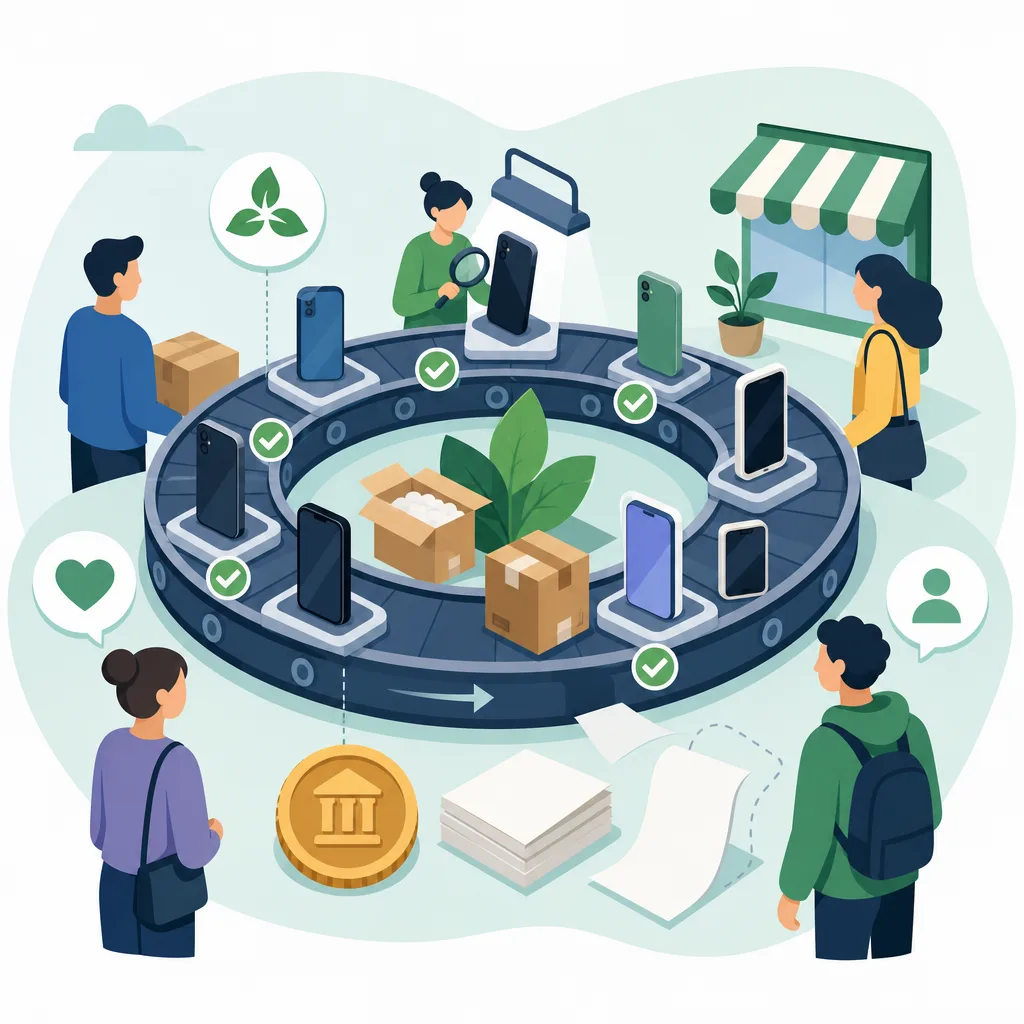
In the past, used smartphone transactions were primarily conducted through direct peer-to-peer sales or small retail stores. Recently, however, there has been a rise in platforms that offer inspection, grading, data erasure, warranties, shipping services, and instant buyback options. This shift toward platform-based services has increased trust in transactions and made used smartphones more accessible to the general public.
4. Manufacturer and Carrier Reward Programs
Manufacturers such as Samsung Electronics and mobile carriers operate used phone buyback, trade-in, and return programs to reduce customer churn and encourage the purchase of new products. These programs effectively bring used devices back into the distribution channel, thereby increasing the supply of used phones.
5. Reuse and the Circular Economy Trend
Used phones are products that can reduce electronic waste and promote resource reuse. Smartphones contain high-value components such as metals, batteries, semiconductors, and displays. Re-circulating usable devices rather than disposing of them can lower environmental costs.
The Structure of the Used Phone Trade and Where Tax Issues Arise
The used phone trade typically follows this process:
- Individual consumers sell their used smartphones to a platform or a buyer.
- The buyer checks the device’s condition, appearance, battery performance, whether it is locked, and whether it has been reported stolen or lost.
- The business repairs, resets, grades, packages, and provides a warranty before reselling the device to another consumer.
- The business reports value-added tax (VAT) on the resale revenue.
The problem arises in Step 1. Since individual consumers are generally not businesses, it is difficult for them to issue tax documentation—such as tax invoices or cash receipts—that serves as the basis for input tax credits. Consequently, even if a business actually incurs expenses when purchasing a used phone from an individual, it is difficult to claim the input tax credit under the Value-Added Tax Act.
Why Does VAT Seem Like a Double Burden?
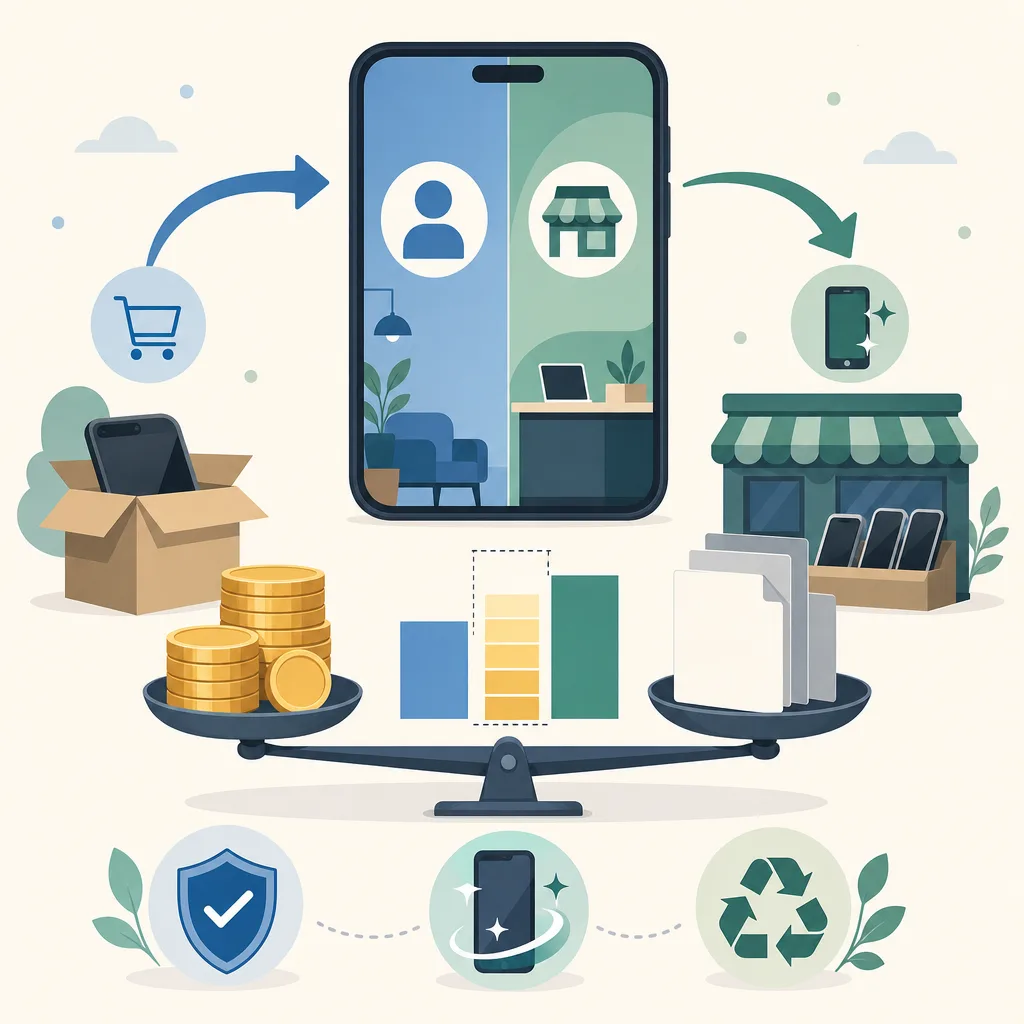
In principle, VAT is a tax levied on the value newly added at each stage of a transaction. Businesses subtract input tax from output tax and pay the difference. However, since it is difficult to deduct input tax on used phones purchased from individuals, the tax burden on the business may increase when it resells them.
Simple Example
The example below is a simplified calculation provided for illustrative purposes. Actual tax amounts may vary depending on the supply price, whether VAT is included, the business operator’s expenses, applicable special provisions, and the method of filing.
| Category | Amount or Calculation | Description |
|---|---|---|
| Purchase of a used phone from an individual | 1.1 million won | Individuals do not issue tax invoices |
| Resale to a consumer | 1.65 million won | Assumed to be a price inclusive of VAT |
| Output Tax Under General Taxation | 150,000 won | 1,650,000 won × 10/110 |
| Deductible Input Tax | 0 won | Difficult to deduct without a tax invoice |
| Tax payable | 150,000 won | Bear the full amount of output tax |
| Under the tax-on-the-difference method | Approximately 50,000 won | 550,000 won × 10/110, for simple comparison |
In this example, the business owner’s actual economic profit is 550,000 won. However, if the business cannot claim a deduction for purchases without tax invoices, it ends up bearing the VAT included in the entire resale price. Consumers have already paid a price that includes VAT when purchasing a new cell phone, and this tax burden may be reflected in the price again during the used goods distribution stage.
Overseas Systems: Margin Taxation and Deemed Input Tax Credit
The trade in used goods is characterized by the fact that individuals act as suppliers. Reflecting this characteristic, many countries have systems that differ from the standard tax invoice-based deduction method.
EU and the UK: Margin Taxation
The EU and the UK operate margin taxation systems for certain items, such as used goods, works of art, and antiques. The key feature of this system is that VAT is calculated not on the total sales price, but only on the difference between the purchase price and the sales price—that is, the margin.
| Item | Standard Taxation | Margin Taxation |
|---|---|---|
| Tax Base | Sales price or supply value | Difference between sales price and purchase price |
| Issues with Private Purchases | Difficult to claim deductions due to lack of tax invoices | System accounts for the nature of private purchases |
| Suitability for the Secondhand Market | May be low | Relatively high |
| Administrative Requirements | Management of standard tax invoices | Importance of tracking purchase and sales records and item details |
Margin taxation can alleviate the excessive tax burden in the distribution of used goods. However, rigorous record-keeping is essential to prevent false purchase prices, omitted transactions, and the distribution of stolen goods.
Australia and New Zealand: Deductions for Secondhand Purchases Without Tax Invoices
Australia and New Zealand operate systems that allow input tax credits for secondhand purchases that meet certain requirements, even if no tax invoice is available. In Korean terms, this can be understood as similar to a “deemed input tax credit.” “Deemed” means that even if an actual tax invoice is missing, the tax system treats the transaction as including a certain amount of tax if it meets the requirements set by law.
Unlike margin taxation, this method allows for a certain deduction at the purchase stage. In return, businesses must retain supporting documentation, such as details regarding the seller, item, price, transaction date, and whether the item was resold.
Similar Systems in South Korea: Used Cars and Recyclable Waste Materials
South Korea also has special deduction provisions designed to account for the characteristics of markets where purchases are made from individuals or non-business entities. Notable examples include used cars and recyclable waste materials.
When a used car dealer purchases a vehicle from an individual who cannot issue a tax invoice, the dealer may claim a deduction for a certain percentage of the purchase price as input VAT, provided certain requirements are met. Under the Act on the Limitation of Special Tax Provisions, the special provision for input VAT credits on recyclable waste materials is also administered based on a similar rationale.
For example, if a business purchases a used car from an individual for 11 million won, it can apply for an input tax credit based on a specific formula, provided it meets the statutory requirements and submits the necessary supporting documentation. However, the specific deduction rate, application period, eligible businesses, and documentation requirements may change depending on amendments to the law; therefore, a review of the latest legislation and tax advice is necessary for actual application.
The Logic Behind the Argument That Special Provisions Are Needed for Used Cell Phones
The used cell phone industry raises the need for special tax provisions for the following reasons:
- The market structure consists largely of individual suppliers.
- Businesses effectively bear the purchase costs but have difficulty obtaining tax invoices.
- If the burden of non-deductible expenses is reflected in the resale price, consumer prices may rise.
- This could create a distortion where undocumented transactions become more advantageous than those conducted through regulated platforms.
- Used phones can be relatively easily tracked using unique identifiers such as IMEI numbers.
In other words, just like used cars, used cell phones are items for which individual units can be easily identified and transaction records can be maintained. Therefore, there are arguments that special provisions for input tax credits or margin taxation could be considered, provided certain conditions are met, such as certified dealers, transaction records, identity verification, checks for stolen or lost devices, and confirmation of personal data deletion.
Risks to Consider When Designing the System
Tax reform for used phones is not simply a matter of reducing taxes. The following risks must be managed simultaneously.
1. Fictitious Purchases and Price Manipulation
Introducing margin taxation or deemed input tax credits could create an incentive to inflate purchase prices to reduce taxes. To prevent this, bank transfer records, purchase contracts, device identification numbers, seller identity verification, and resale records must be managed together.
2. Distribution of Stolen or Lost Devices
Used phones may involve issues such as stolen or lost devices, or devices still under contract. To grant tax exemptions, checks for stolen or lost devices and verification of device condition must be mandatory.
3. Personal Information and Data Deletion
Sensitive personal information—such as photos, contacts, financial apps, certificates, and messages—may remain on used phones. To build market trust, it is crucial not only to perform a factory reset but also to verify data deletion, check whether the device is unlocked, and confirm that accounts have been logged out.
4. Quality Grades and Warranty Standards
The value of used phones varies significantly depending on their physical condition, battery performance, repair history, and whether they contain genuine parts. If tax benefits are extended to licensed businesses, grading standards and consumer disclosure requirements must also be revised accordingly.
Comparison of Policy Options
| Option | Advantages | Disadvantages or Considerations | Applicability to Used Phones |
|---|---|---|---|
| Maintain Current System | Minimal burden of system changes | Burden of non-deductibility may be passed on to prices | Potential for increased conflict as the market grows |
| Margin Taxation | Taxation based on actual profit | Mechanisms needed to prevent manipulation of purchase prices | Can draw on examples from the EU and the UK |
| Deemed Input Tax Credit | Easy to integrate with Korea’s existing special exemption system | Requires design of credit rates, eligibility criteria, and documentation requirements | Can draw on examples from the used car and recycled waste resource sectors |
| Special Exemption Limited to Certified Businesses | Enhances manageability and transparency | Concerns about barriers to entry for small-scale businesses | Can be combined with transaction tracking requirements |
| Phased Pilot Implementation | Can be expanded while monitoring side effects | Initial system complexity | Can be applied starting with high-priced devices or certified platforms |
Important Checklist for Consumers
Regardless of the tax policy discussions regarding used phones, consumers are advised to verify the following points to ensure transaction safety.
- Check whether the device has been reported stolen or lost using the IMEI or device identification number.
- Verify that the seller is the rightful owner of the device.
- Check battery performance, screen condition, camera, speakers, charging port, and SIM card recognition.
- Check whether the device is account-locked, remotely locked, or logged out of the manufacturer’s account.
- Keep a record of the transaction details, receipts, and warranty terms.
- Verify that the device has been factory reset and all accounts have been removed to ensure no personal information remains.
Conclusion
The expansion of the used phone market has positive effects, including cost savings for consumers, resource reuse, and growth in the platform industry. However, in a system where businesses resell used phones purchased from individuals, the lack of tax invoices makes it difficult to claim input tax credits.
Overseas margin taxation systems and South Korea’s special tax credit provisions for used cars and recycled waste materials can serve as reference models for discussions on the tax system for used phones. However, the introduction of such a system must be designed in conjunction with measures to ensure transaction transparency, prevent theft, protect personal information, and establish quality disclosure standards. As the used phone market continues to grow, there is a need for discussions to simultaneously refine tax policies and rules ensuring transaction safety.
FAQ
Why is the used cell phone market growing so rapidly?
The used phone market is growing as a result of a combination of rising prices for new smartphones, the extended lifespan of high-performance devices, platform-based buyback services, manufacturer trade-in programs, and demand for resource reuse.
Why is it difficult for businesses that purchase used cell phones from individuals to claim a VAT deduction?
Individual consumers generally cannot issue tax invoices. Even if a business owner has actually incurred expenses for purchasing used cell phones, it is difficult to claim a VAT deduction due to a lack of supporting documentation, such as a tax invoice, for the input tax credit.
What does it mean when people say taxes are charged twice on the resale of used phones?
When consumers purchase a new cell phone, they have already paid a price that includes value-added tax. Later, when that cell phone is sold on the secondhand market, if the business is unable to claim a tax credit for the purchase from an individual, the value-added tax burden may be reflected again in the resale price, which could appear to be a double tax.
What is margin taxation?
Margin taxation is a method of calculating value-added tax (VAT) based solely on the difference between the purchase price and the sale price, rather than on the total sale price of used goods. The EU and the UK operate this system for certain transactions involving used goods.
What is the input tax credit?
The input tax credit for specified purchases is a system that allows a certain amount to be recognized as input tax and deducted even for purchases without a tax invoice, provided that the requirements stipulated by law are met. In South Korea, similar special provisions are in place for used cars and recycled waste materials.
Can the special input tax credit exception be applied to used cell phones, just as it is for used cars?
From a policy perspective, this is something that can be considered. However, in order to implement it, requirements such as business entity verification, management of device identification numbers, purchase agreements, checks for stolen or lost devices, confirmation of personal information deletion, and retention of resale records must be incorporated into the design.
If a special tax exemption for used phones is introduced, will consumer prices drop immediately?
We cannot definitively conclude that prices will drop immediately. For the reduction in tax burdens to lead to lower sales prices, market competition, platform fees, inspection costs, warranty costs, and changes in supply must all come into play.
What should consumers check first when buying a used phone?
You should verify whether the phone has been stolen or lost, check if the account is unlocked, assess battery performance, inspect the physical condition and functionality, confirm that personal information has been deleted, and review the receipt and warranty terms. In particular, the ability to track transactions using the device’s identification number is key to a safe used phone transaction.
Sources
- National Law Information Center: Value-Added Tax Act
- National Law Information Center: Act on the Limitation of Special Tax Exemptions and Deductions
- GOV.UK VAT Margin Schemes
- European Commission VAT Margin Scheme
- Australian Taxation Office: GST and Secondhand Goods
- Inland Revenue New Zealand GST Credits for Secondhand Goods
Images