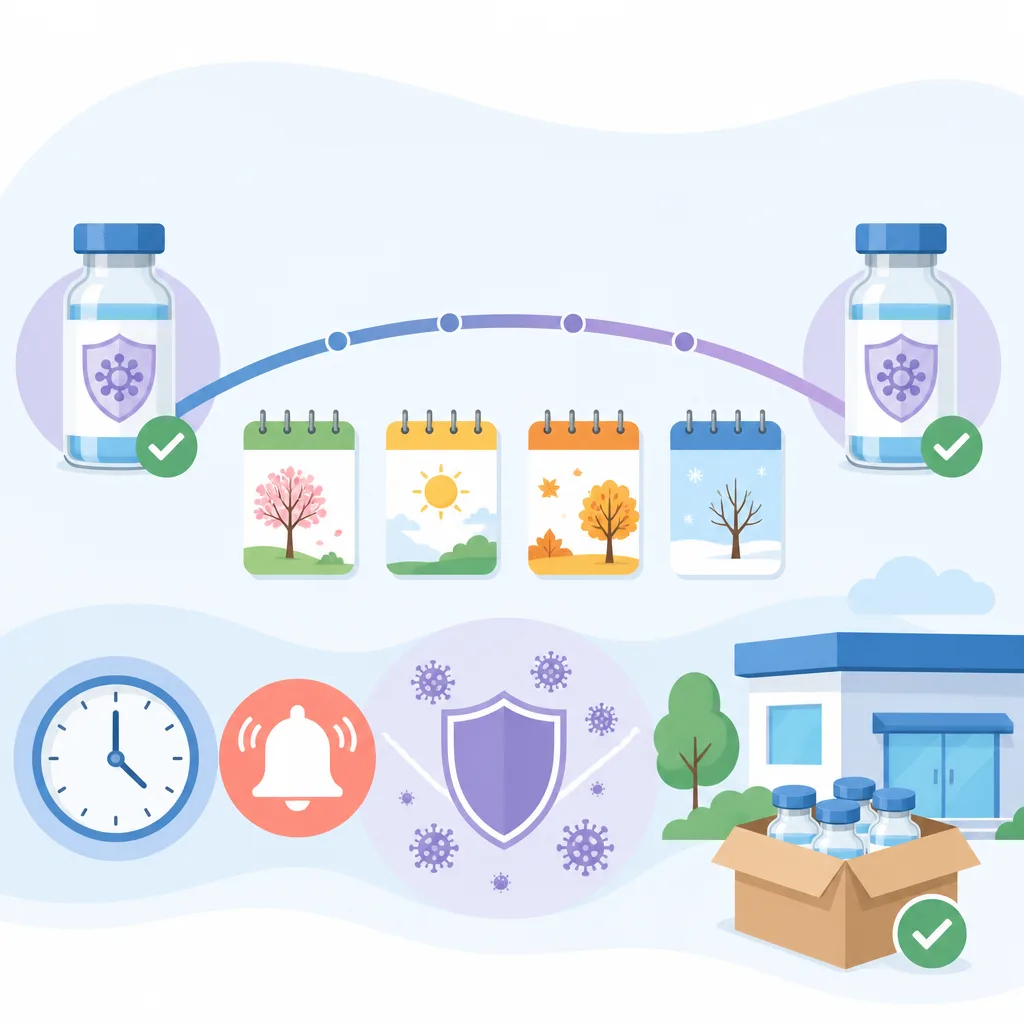
Free HPV Vaccination for Boys Born in 2014: Record Check and Two-Dose Schedule
Starting May 6, 2026, male adolescents born in 2014 became eligible for free quadrivalent HPV vaccination. Before vaccination, check past records in Immunization Assistant and manage the second-dose schedule for 6–12 months after the first dose.
- The newly eligible males in 2026 are adolescents born between January 1 and December 31, 2014.
- In the usual case of starting HPV vaccination before the 15th birthday, the second dose is given 6–12 months after the first dose.
- Before vaccination, first check the electronic vaccination records for yourself or your registered child in Immunization Assistant.
- If a record is missing, obtain proof of vaccination and ask the vaccinating medical institution or the relevant public health center whether it can be entered electronically.
- Because stocks of the quadrivalent HPV vaccine and available vaccination hours vary by designated medical institution, check before visiting.
Beginning May 6, 2026, male adolescents born in 2014 were newly included in the national HPV vaccination support program. According to the Korea Disease Control and Prevention Agency, the vaccination rate was 14.6% as of June 30, 2026. Families that have not yet checked their child’s vaccination status should review both the records and appointment schedule before the start of school.
HPV stands for human papillomavirus. The HPV vaccine does not treat existing infections; it is intended to prevent infections and related diseases caused by specific HPV types. The quadrivalent HPV vaccine provided to male students targets HPV types 6, 11, 16, and 18.
Who Is Eligible for Free Vaccination in 2026
The 2026 national vaccination support criteria are divided as follows.
| Category | Eligible in 2026 | Supported Vaccine and Conditions |
|---|---|---|
| Newly supported males | Male adolescents born from January 1 to December 31, 2014 | Quadrivalent HPV vaccine supported beginning May 6, 2026 |
| Female adolescents | Born from January 1, 2008 to December 31, 2014 | National HPV vaccination support criteria apply |
| Low-income females | Basic Livelihood Security recipients or members of the near-poor class born from January 1, 1999 to December 31, 2007 | Support provided after eligibility verification |
For male students born in 2014, eligibility is determined by birth year, not by whether their birthday has passed. However, eligible birth years and support conditions under the national vaccination program may change by program year, so the latest criteria should be checked through the Vaccination Assistance website or the competent public health center before visiting.
Free vaccination is available at participating public health centers and medical institutions designated for the national vaccination program. Not every medical institution participates in the program or keeps the quadrivalent HPV vaccine in stock at all times.
Why Vaccination History Should Be Checked First
If the adolescent previously received a self-paid vaccination or has a vaccination record from another medical institution, valid prior doses should be reflected in the schedule. Starting over without checking the records may result in unnecessary vaccination or incorrect intervals.
Checking vaccination history is especially necessary in the following cases.
- The adolescent previously received an HPV vaccine at a hospital but does not remember the dose number
- A record appears in the vaccination booklet but not online
- The adolescent has a history of vaccination overseas
- The vaccination provider has closed or its name is not remembered
- Vaccination information was not shared between guardians
Do not administer the vaccine again at your own discretion simply because the record is uncertain. Present verifiable materials, such as a paper certificate or overseas vaccination record, to medical personnel so they can determine whether the dose can be recognized as valid.
Checking Vaccination History Through Vaccination Assistance
The Korea Disease Control and Prevention Agency’s Vaccination Assistance service allows users to view computerized vaccination records for themselves and their registered children.
How to View a Child’s Records
- Access Vaccination Assistance and log in after verifying the guardian’s identity.
- If the child is not registered, register the child’s information first.
- In the vaccination management menu, go to the page for viewing the child’s vaccination history.
- Check the vaccination date, dose number, and vaccination provider under the HPV entry.
- If you have a paper vaccination booklet or a certificate issued by a hospital, compare it with the online record.
If the child does not appear in the guardian’s account, check the child’s registration status and guardian relationship information. Additional verification may be required depending on how the family relationship or identity verification is processed.
The inquiry screen displays records registered in the national computerized vaccination system. The absence of a record on the screen alone does not confirm that the child is unvaccinated.
When a Previous Vaccination Record Cannot Be Found
If a computerized record is missing, check it in the following order.
- Look for materials proving the vaccination, such as a vaccination booklet, vaccination certificate, medical expense receipt, or overseas vaccination certificate.
- Contact the medical institution where the vaccination was administered and confirm whether it was entered into the computerized system.
- If the vaccination is confirmed, ask that medical institution to register or correct the vaccination record in the computerized system.
- If the medical institution has closed or direct registration is difficult, as with overseas records, prepare supporting documents and ask the competent public health center whether the record can be registered.
- If it is unclear whether the record can be accepted, consult medical personnel at a designated medical institution to determine the schedule for the next dose.
Official documents listing the vaccination date, vaccine type, manufacturer or product name, and vaccination provider are helpful for verification. Registration may be difficult based solely on memory or photographs that do not show a date.
Two-Dose Schedule and How to Avoid Missing a Dose
In general, a two-dose schedule applies when HPV vaccination begins before the 15th birthday, with the second dose administered 6–12 months after the first. A three-dose schedule may be necessary depending on the individual’s health, age at the first dose, and previous vaccination intervals, so the final schedule should follow the judgment of medical personnel.
| Stage | General Schedule | What to Check |
|---|---|---|
| First dose | Administer after confirming eligibility and previous records | Availability of the quadrivalent HPV vaccine, previous vaccination records |
| Second dose | 6–12 months after the first dose | Appointment date, support eligibility, medical institution inventory |
The following steps are recommended to avoid missing the second dose.
- Record the recommended date for the second dose on a calendar on the day of the first dose.
- Set separate phone calendar reminders for the beginning and end of the recommended period.
- If the vaccination provider accepts appointments for the next dose, schedule it immediately after vaccination.
- If the second dose is scheduled for 2027, confirm in advance with the vaccination provider or public health center whether free support will apply.
- Even if the recommended date has passed, do not assume the series must be restarted from the beginning; ask medical personnel about the remaining vaccination schedule.
If the interval between doses is too short, the dose may not be recognized as valid and an additional vaccination may be required. It is important not to move the date forward at your own discretion.
What to Check Before Visiting a Designated Medical Institution
Even after finding a nearby designated medical institution through Vaccination Assistance, it is safer to call and confirm the following rather than visiting immediately.
- Whether it participates in the national HPV vaccination program for male students born in 2014
- Same-day stock of the quadrivalent HPV vaccine
- Whether an appointment is required and available vaccination hours
- Requirements for guardian accompaniment and consent form submission
- Identification documents that must be prepared
- Certificates to bring if there are previous records
- How to schedule the second dose and confirm financial support
Vaccine supply and operating hours may differ even among designated medical institutions. The institution list on Vaccination Assistance is useful for confirming participating providers, but it does not guarantee same-day inventory, so confirmation by phone is necessary.
Precautions on and After the Vaccination Day
Before vaccination, inform medical personnel of any medications currently being taken, allergies, adverse reactions after previous vaccinations, and acute illnesses. If the adolescent is not feeling well on the day of vaccination, a medical assessment is needed to determine whether vaccination is possible.
After vaccination, remain seated or lying down for the period specified by the medical institution to allow observation for sudden fainting or adverse reactions. Pain or swelling at the injection site and a mild fever may occur, but if symptoms are severe or persist for a long time, contact the vaccination provider or a medical institution.
The HPV vaccine reduces the risk of infection from the supported HPV types but does not prevent every HPV type or every related disease. Any future screenings recommended according to sex and age should be received regardless of vaccination status.
Checklist Before School Starts
- Have you checked the HPV vaccination record through Vaccination Assistance?
- Do the paper booklet and online record match?
- If a record is missing, have you asked the vaccination provider or public health center to register it?
- Have you confirmed that the designated medical institution has the quadrivalent HPV vaccine in stock?
- Have you saved the second-dose schedule for 6–12 months after the first dose?
- If the next dose falls in the following year, have you confirmed whether free support will apply?
FAQ
Who is eligible for free HPV vaccination for male students in 2026?
Male adolescents born between January 1 and December 31, 2014 are eligible, and support for the quadrivalent HPV vaccine began on May 6, 2026. Before vaccination, check the latest eligibility criteria through the Vaccination Assistance website or a public health center.
If someone was born in 2014 but has not yet turned 12, can they receive the free vaccination?
Eligibility for support for male adolescents in 2026 was announced based on whether they were born in 2014, not on their birthday. However, before visiting a medical institution, it is advisable to verify the date of birth on their resident registration and whether they are currently eligible for the program.
How many doses of the HPV vaccine are needed?
In general, if vaccination begins before the 15th birthday, the second dose is given 6–12 months after the first. A three-dose schedule may be required depending on age at the first vaccination, immune status, and intervals between previous doses, so follow the medical professional's assessment.
If there is no record in the Vaccination Assistance system, does that mean the person is unvaccinated?
Not necessarily. Records may not appear due to self-paid vaccination, vaccination overseas, or failure to register them electronically, so check the vaccination booklet and certificate and ask the vaccination provider whether the records were registered electronically.
Where should I request registration of a missing HPV vaccination record?
First, ask the medical institution that administered the vaccination to register or correct the record electronically. If the institution has closed or the record is for a vaccination received overseas, prepare supporting documents showing the vaccination date and vaccine type and ask the relevant public health center whether the record can be registered.
If I miss the date for my second dose, do I have to start over from the beginning?
You should not arbitrarily restart from the beginning solely because you missed the recommended date. Show your existing valid vaccination records to a medical professional and confirm the remaining doses and intervals.
Can I get vaccinated immediately without an appointment at a designated medical institution?
Not necessarily. Each institution may differ in the scope of its participation in the National Immunization Program, its stock of the quadrivalent HPV vaccine, its appointment procedures, and its vaccination hours, so call before visiting to confirm.
If I previously paid for an HPV vaccination, do I start the free vaccination series from the beginning?
Even a self-paid vaccination may count toward the full schedule if it is a valid vaccination record. Show a medical professional a record confirming the vaccination date and vaccine type, and then determine only the remaining doses needed.
If I receive the first dose in 2026 and the second dose in 2027, will the second dose still be free?
Because the second dose is given 6–12 months after the first, it may fall in the following year. To be safe, confirm at the appointment stage with the provider that administered the first dose or the relevant public health center which eligibility criteria will apply after the year changes.
Sources
- Korea Disease Control and Prevention Agency Vaccination Assistant Vaccination Management
- Korea Disease Control and Prevention Agency Vaccination Assistant HPV Vaccination Information
- Korea Disease Control and Prevention Agency Materials Related to the National HPV Vaccination Program for Male Adolescents Born in 2014
Images