2026 National HPV Vaccination Eligibility: Boys Born in 2014 and Summer Vacation Criteria
In 2026, boys born in 2014 were included in the national HPV vaccination program for the first time starting May 6. This guide covers eligibility requirements for girls ages 12–17 and low-income women ages 18–26, the two- or three-dose schedule based on age at the first dose, supported vaccines, and how to find participating medical institutions.
- Starting May 6, 2026, boys born in 2014 were included in the national HPV vaccination program for the first time.
- Women eligible for support in 2026 are those born from 2008 to 2014 and low-income women born from 1999 to 2007.
- Those who receive their first dose before their 15th birthday generally receive two doses, while those who start after turning 15 receive three doses.
- Even if the interval between doses exceeds the recommended period, there is no need to restart the series; the remaining doses should be continued.
- Supported vaccines and designated medical institutions offering vaccination must be checked through the Immunization Helper.
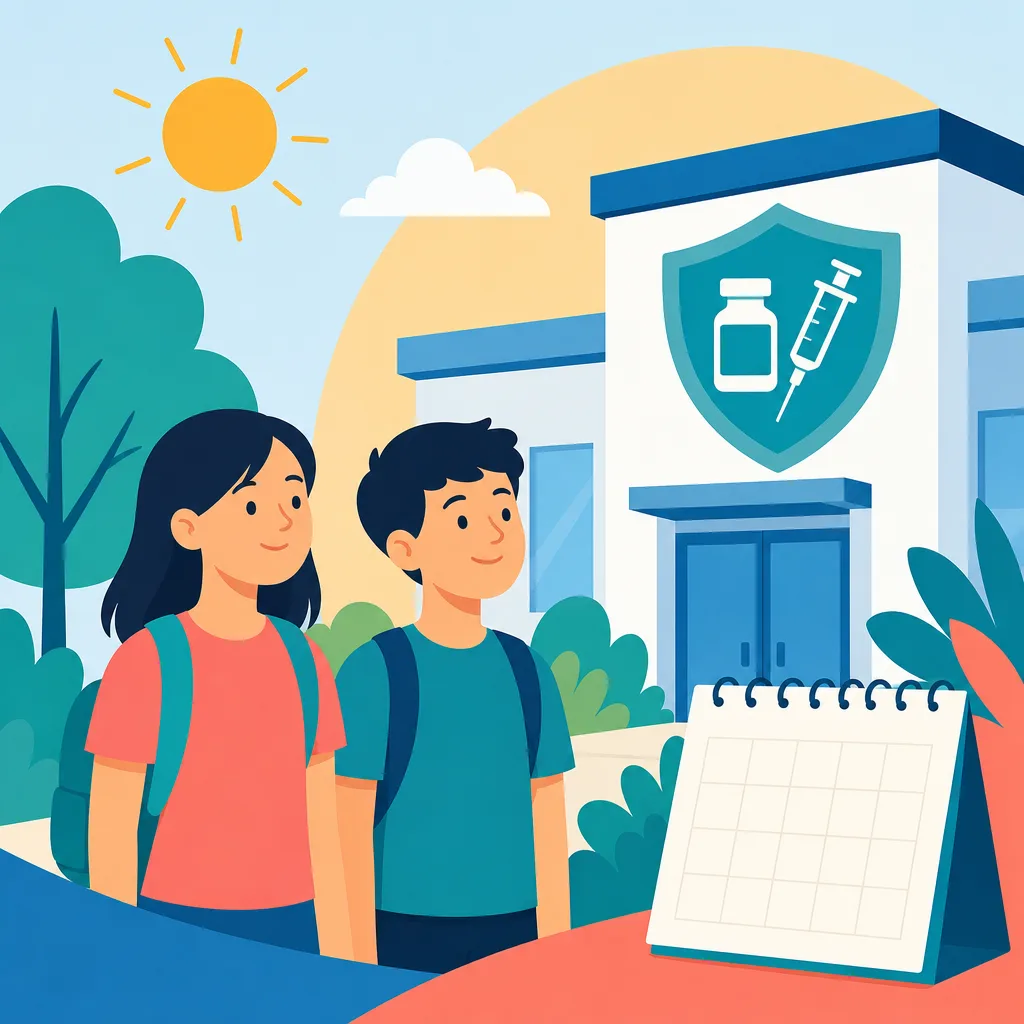
The biggest change to the 2026 National HPV Immunization Program is that boys born in 2014 have been included as eligible recipients for the first time. Coverage began on May 6, 2026, and on July 24, the Korea Disease Control and Prevention Agency recommended that adolescents use their summer vacation to get vaccinated.
This article summarizes eligibility for government coverage, the number of doses and intervals, covered vaccines, and what to do when vaccination is delayed, as of August 3, 2026. Before vaccination, eligibility and vaccine availability should be reconfirmed through the Immunization Assistance website and a designated medical institution.
Eligibility for Free Coverage in 2026
Eligibility for the 2026 National HPV Immunization Program is determined by year of birth, sex, and low-income status. Program eligibility is determined by year of birth, but whether 2 or 3 doses are required is determined by the person’s actual age on the date of the first dose.
| Category | Eligible in 2026 | Key Conditions |
|---|---|---|
| Boys | Born January 1–December 31, 2014 | Newly covered from May 6, 2026 |
| Adolescent girls | Born January 1, 2008–December 31, 2014 | Based on the birth years corresponding to girls aged 12–17 |
| Low-income women | Born January 1, 1999–December 31, 2007 | Eligibility as a National Basic Livelihood Security recipient, near-poverty household member, etc. must be verified |
If a low-income woman’s eligibility cannot be verified through administrative records, documents such as a recipient certificate or near-poverty status certificate may be required. It is advisable to ask the public health center or medical institution about the necessary documents before visiting.
Summer vacation is not a separate eligibility requirement or deadline. Vaccination is recommended because it is easier to schedule than during the school term, while actual eligibility for free coverage is determined by the national program criteria and the person’s eligibility on the vaccination date.
What Has Changed for Boys Born in 2014
Boys born in 2014 became eligible for coverage under the National HPV Immunization Program from May 6, 2026. Previously, coverage focused on girls of the same age, but beginning in 2026, one birth cohort of boys has been newly included.
Men can also be affected by anal cancer, penile cancer, oropharyngeal cancer, and genital warts caused by HPV infection. Because the HPV vaccine does not treat an existing infection, it is most effective when given before exposure to the virus.
Parents and guardians should check the following:
- Confirm that the child was born in 2014.
- Confirm that the vaccination is on or after May 6, 2026.
- Confirm that the designated medical institution provides national immunization services for boys.
- Check the type and availability of vaccines covered by the government.
- If the child has previously received an HPV vaccine, inform the medical institution of the vaccination date and vaccine type.
Criteria for 2 or 3 Doses Based on Age at First Vaccination
The number of HPV vaccine doses depends not only on the person’s current age but also on their age on the date they received the first HPV vaccine dose.
| Timing of First Dose | Usual Number of Doses | Recommended Schedule |
|---|---|---|
| Before the 15th birthday | 2 doses | Second dose 6–12 months after the first |
| On or after the 15th birthday | 3 doses | 0, 1, and 6 months or 0, 2, and 6 months, depending on the vaccine type |
| Immunocompromised | Generally 3 doses | A clinician’s assessment is required based on the condition, treatment status, and vaccine type |
Interval Precautions for a 2-Dose Schedule
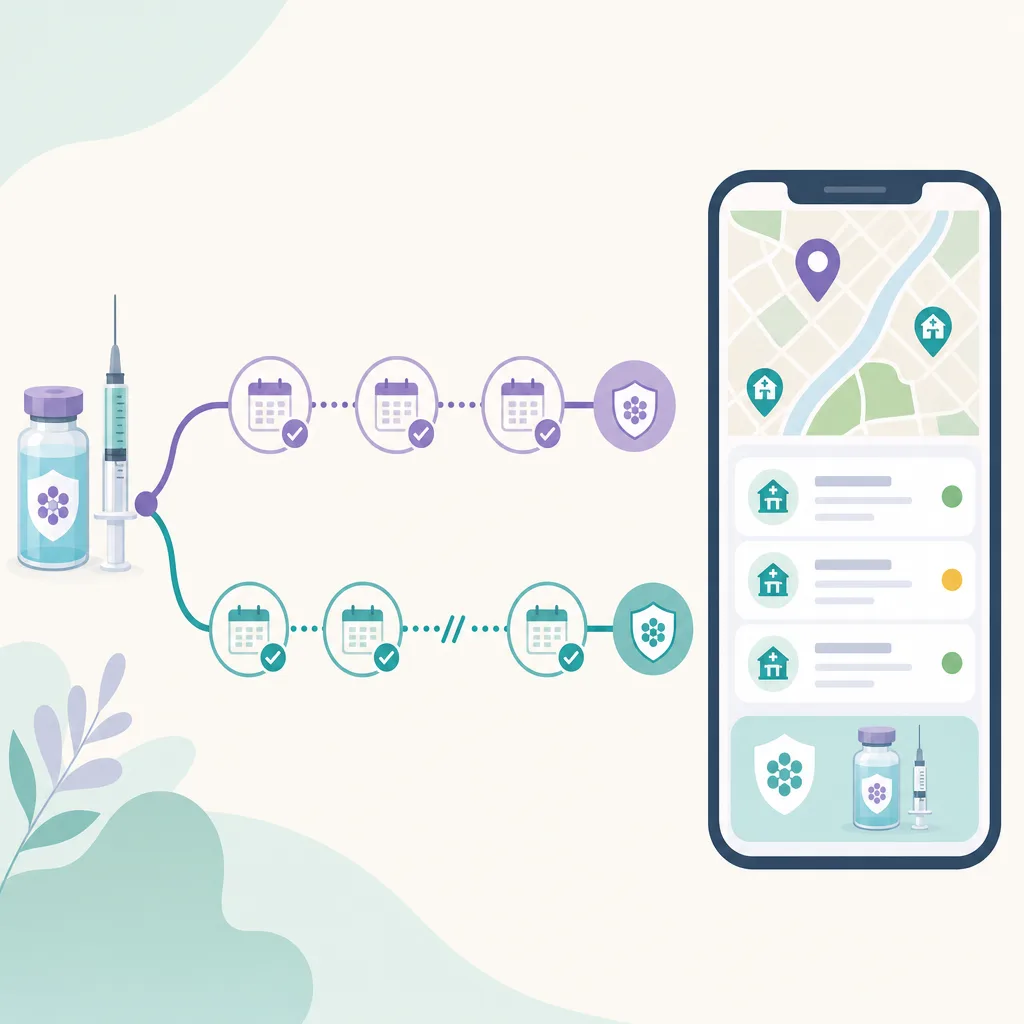
Healthy adolescents who receive their first dose before turning 15 generally receive 2 doses. The recommended interval between the two doses is 6–12 months.
If the interval between the first and second doses is less than 5 months, the series is not considered complete with only 2 doses, and an additional dose may be required. If the dates are close together or previous records are unclear, the medical institution should first review the vaccination history.
3-Dose Schedule
Those who receive their first dose on or after turning 15 generally need 3 doses.
- The bivalent vaccine generally follows a 0, 1, and 6-month schedule.
- The quadrivalent and 9-valent vaccines generally follow a 0, 2, and 6-month schedule.
- The minimum intervals for a 3-dose schedule are generally 4 weeks between the first and second doses, 12 weeks between the second and third doses, and 5 months between the first and third doses.
A dose given too soon before the recommended interval may not be valid, so it is important not to move the schedule forward without medical guidance.
What to Do When Vaccination Is Delayed
Even if the interval between HPV vaccine doses is longer than recommended, there is no need to restart the series. Previously administered valid doses still count, and the remaining doses should be continued.
For example, even if the second dose was not received 6–12 months after the first, the first dose should not be repeated. Instead, the vaccination record should be checked before proceeding with the second dose. However, the following should be checked separately:
- A dose given at too short an interval may require an additional dose.
- If previous vaccination records cannot be confirmed, a clinician should assess the vaccination history and future schedule.
- Vaccination costs after the government coverage age or eligibility period ends are not automatically covered, so the public health center or medical institution should be contacted before coverage ends.
- If pregnancy occurs during the vaccination series, it is generally recommended to postpone the remaining doses until after delivery, so the clinician should be informed.
Differences Between Free Covered Vaccines and the 9-Valent Vaccine
The National Immunization Program specifies not only eligible recipients but also which vaccine types are covered.
| Vaccine Category | Government Coverage | What to Check |
|---|---|---|
| Bivalent HPV vaccine | Used for eligible women within the scope of government coverage | Availability must be checked with each medical institution |
| Quadrivalent HPV vaccine | Used for people eligible for government coverage | Check covered vaccines for boys born in 2014 and availability at each institution |
| 9-valent HPV vaccine | Not covered by the National Immunization Program | Those who choose it must pay the vaccination cost themselves |
If someone eligible for free coverage chooses the 9-valent vaccine, it will not be provided as a free vaccination under the national program. Before vaccination, the vaccine product name, government coverage status, and out-of-pocket cost should be clearly confirmed with the medical institution.
Completing the series with the same type of vaccine is recommended whenever possible. If the previous vaccine is unavailable or the product is unknown, do not restart the series on your own. Show the vaccination records to a clinician and decide on the next dose.
How to Schedule Vaccination During Summer Vacation
If the first dose is given during summer vacation, the timing of subsequent doses should be calculated at the same time.
- Check the Immunization Assistance website for any previous HPV vaccination records.
- Determine whether a 2-dose or 3-dose schedule applies based on the person’s age on the date of the first dose.
- Confirm that the designated medical institution has the desired government-covered vaccine available.
- For a 2-dose schedule, record the second-dose timing of 6–12 months later on a calendar.
- For a 3-dose schedule, plan both the 1-month or 2-month point and the 6-month point based on the vaccine type.
It is not necessary to complete all doses during summer vacation. In particular, under a 2-dose schedule that begins before the person turns 15, the second dose must be given 6–12 months later, so the interval should not be shortened in an attempt to receive both doses during the vacation.
Checking Hospitals and Vaccines Through the Immunization Assistance Website
The designated medical institution search feature on the Immunization Assistance website allows users to search for institutions participating in the National Immunization Program by selecting a region and vaccination type.
Steps to Check
- Visit the Korea Disease Control and Prevention Agency’s Immunization Assistance website.
- Go to the designated medical institution search under the immunization management menu.
- Under National Immunization, select HPV or human papillomavirus infection.
- Enter regional criteria such as province or metropolitan city and city, county, or district, then search.
- Check the medical institution information and available vaccines in the search results.
- Before visiting, call the medical institution to reconfirm the recipient’s eligibility for vaccination and vaccine availability.
The information displayed on the website may differ from same-day inventory. In particular, those seeking vaccination for boys or a specific product should confirm with the medical institution before making an appointment or visiting.
What to Know Before and After Vaccination
- On the day of vaccination, inform the clinician of previous vaccination records, allergies, immunocompromising conditions, medications currently being taken, and pregnancy status.
- Adolescents may faint during the vaccination process, so they should remain seated or lying down for the period advised by the medical institution after vaccination.
- Pain, redness, or swelling at the injection site, as well as fever, may occur.
- Severe allergic symptoms, difficulty breathing, or changes in consciousness require immediate emergency care.
- The HPV vaccine does not prevent 100% of all HPV types or all related cancers, and it does not treat an existing infection.
- Even after completing vaccination, cervical cancer screening should continue according to the appropriate age and guidelines.
Key Checklist
| Question to Check | Criterion |
|---|---|
| Is the recipient a boy born in 2014? | Confirm whether newly eligible for coverage from May 6, 2026 |
| Is the recipient a girl born in 2008–2014? | Confirm eligibility for government coverage for adolescent girls |
| Is the recipient a woman born in 1999–2007? | Confirm eligibility as a National Basic Livelihood Security recipient or near-poverty household member |
| Was the recipient less than 15 years old on the date of the first dose? | A 2-dose schedule generally applies |
| Was the recipient at least 15 years old on the date of the first dose? | A 3-dose schedule generally applies |
| Was vaccination delayed? | Continue the remaining doses without restarting the series |
| Is the 9-valent vaccine preferred? | Check the out-of-pocket cost because it is not covered by the government |
| Has a vaccination provider been selected? | Search the Immunization Assistance website, then call to confirm vaccine availability |
FAQ
Which boys are eligible for free HPV vaccination in 2026?
Boys born between January 1 and December 31, 2014, are eligible, and support began on May 6, 2026. Before vaccination, you must check with a designated medical institution to confirm eligibility for government support and vaccine availability.
Are boys born in 2013 also eligible for government support in 2026?
The newly announced eligibility for boys in 2026 applies to those born in 2014. Boys born in other years are not automatically covered under the same criteria unless a separate expansion is announced, so eligibility should be confirmed through the Immunization Assistance website or the local public health center.
How is it determined whether someone receives two or three doses of the HPV vaccine?
Generally, two doses are given if the first dose is administered before the 15th birthday, and three doses if it is administered on or after the 15th birthday. People with an immunocompromising condition may need three doses regardless of their age at the first dose, so a healthcare professional should make the determination.
If I miss the recommended timing after the first dose, do I have to start over?
No. Even if more time has passed than the recommended interval, valid previous doses still count, so you should continue with the remaining doses. Conversely, if the interval between doses was too short, an additional dose may be required.
Can I complete both doses during summer vacation?
For the standard two-dose schedule, an interval of 6–12 months between the first and second doses is recommended. If the interval between the two doses is less than 5 months, an additional dose may be required, so the interval should not be shortened at your discretion to complete the series during vacation.
Is the 9-valent HPV vaccine also free?
The 9-valent HPV vaccine is not covered by the National Immunization Program. If you choose the 9-valent vaccine, you must pay the vaccination cost yourself, so you should first confirm the product name and cost with the medical institution.
Are all women aged 18–26 eligible for free vaccination?
No. As of 2026, women born between 1999 and 2007 must qualify as low-income, such as recipients of the National Basic Livelihood Security Program or members of the near-poverty group. Supporting documents may be required if eligibility cannot be verified through administrative records.
Where can I find hospitals that provide the vaccination?
You can search by selecting your region and the HPV vaccination category under “Find Designated Medical Institutions” on the Korea Disease Control and Prevention Agency's Immunization Assistance website. After searching, it is advisable to call the medical institution to confirm whether it vaccinates eligible recipients and whether the desired vaccine is in stock that day.
If I receive the HPV vaccine, can I skip cervical cancer screening?
No. Because the HPV vaccine does not prevent all HPV types, women who have completed vaccination should continue to receive cervical cancer screening in accordance with future national guidelines and their age.
Sources
Images