The Exact Relationship Between Fluid Intake and Frequent Urination for Kidney Health
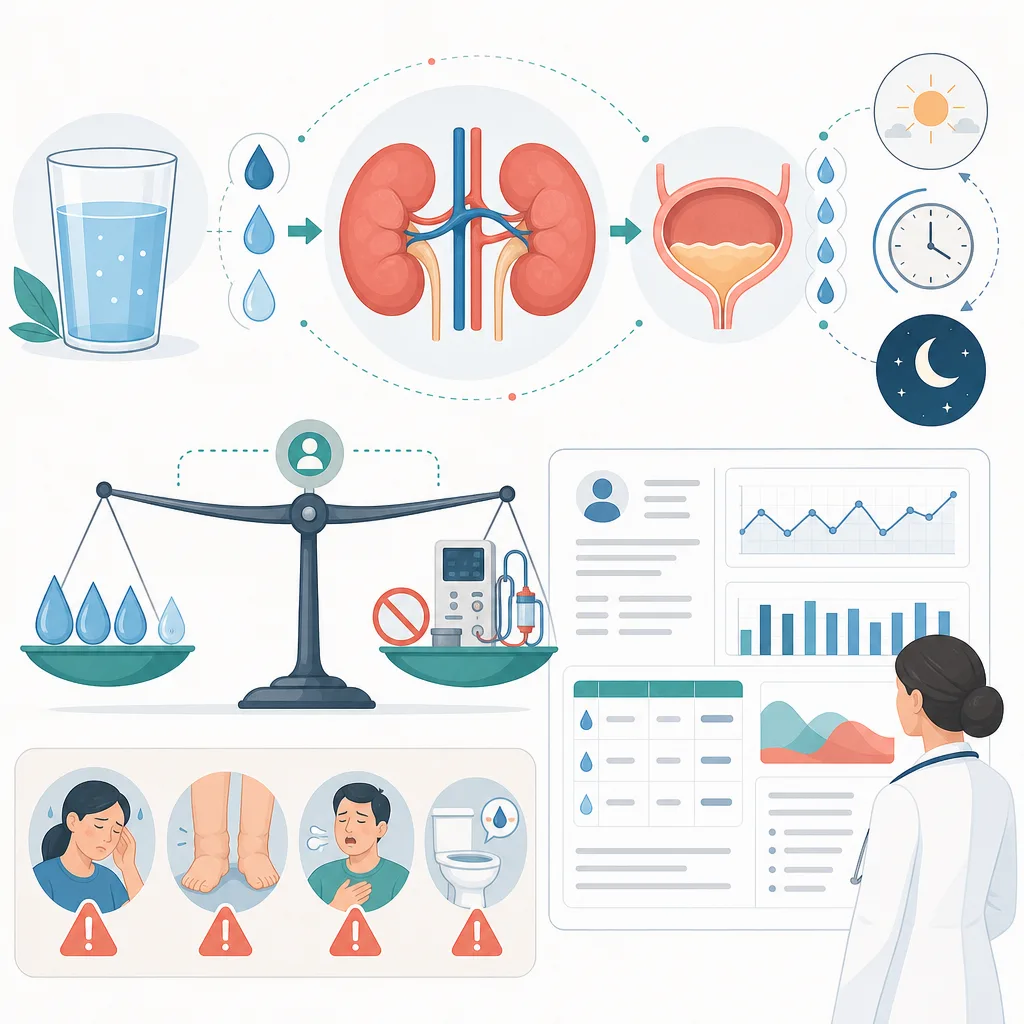
Adequate fluid intake is necessary to maintain blood circulation and kidney perfusion, but not everyone needs to drink a lot of water. The cause of frequent urination should be identified, and patients with chronic kidney disease, heart failure, or undergoing dialysis should follow the fluid targets set by their medical team.
- If dehydration reduces circulating blood volume, blood flow to the kidneys may decrease, increasing the risk of acute kidney injury.
- The amount of water consumed affects urine volume and urination frequency, but frequent urination may also be caused by impaired kidney concentrating ability, diabetes, bladder disorders, medications, and other factors.
- Even for healthy people, neither a uniform amount of water intake nor drinking water before bed without regard to individual needs is recommended.
- If you have chronic kidney disease, heart failure, edema, hyponatremia, or are receiving dialysis, do not increase your fluid intake on your own; follow the limits set by your medical team.
- Prompt medical attention is needed if urine output decreases sharply or severe dehydration, shortness of breath, edema, or changes in consciousness occur.
Adequate hydration is necessary to maintain blood volume and circulation and to help the kidneys regulate waste products and electrolytes. However, this does not mean that everyone should drink large amounts of water for kidney health. The appropriate amount varies depending on current kidney function, heart health, medications, weather, and activity level, and some patients may instead need to restrict fluids.
How Hydration Affects the Kidneys
The kidneys receive blood, filter out waste products, and regulate fluid volume, electrolytes, and acid-base balance. If body fluid levels decrease because of diarrhea, vomiting, high fever, excessive sweating, or insufficient fluid intake, circulating blood volume and blood pressure may fall. This can also reduce blood flow to the kidneys, increasing the risk of acute kidney injury.
Drinking water alone cannot treat kidney disease or necessarily help eliminate all waste products more effectively. Kidney perfusion is affected not only by hydration but also by blood pressure, heart function, bleeding, infection, and medications.
Situations Requiring Greater Caution About Dehydration
- Spending extended periods in hot environments or sweating heavily during exercise
- Persistent vomiting, diarrhea, high fever, or loss of appetite
- Being older and less able to sense thirst or drink water independently
- Using diuretics or having increased urine output due to high blood sugar
- Having a history of kidney disease or acute kidney injury
Because older adults may have a reduced thirst response, thirst alone is not a reliable guide for fluid intake. Family members or caregivers should also monitor access to beverages, changes in urination, dizziness, lethargy, and confusion.
Will Drinking Less Water Resolve Frequent Urination?
Reducing water intake may temporarily decrease urine output, but it does not address the cause of frequent urination. Excessive restriction can create a risk of dehydration. Conversely, because the amount of water consumed generally affects urine output and urination frequency, it should not be assumed that frequent urination is almost entirely unrelated to fluid intake.
When the kidneys’ ability to concentrate urine declines, a person may produce large amounts of dilute urine or urinate frequently at night. This can occur in some cases of chronic kidney disease, but urine output may instead decrease when kidney dysfunction is advanced. This is why kidney function cannot be assessed based on urination frequency alone.
Other Causes of Frequent and Nighttime Urination
| Possible cause | Clues to check |
|---|---|
| Increased intake of water, caffeine, or alcohol | More frequent urination after intake, with relatively large amounts of urine |
| Diabetes or high blood sugar | Severe thirst, large amounts of urine, weight changes, fatigue |
| Urinary tract infection | Painful urination, urinary urgency, lower abdominal discomfort, fever |
| Overactive bladder | Sudden, difficult-to-control urge to urinate and frequent passage of small amounts |
| Outflow obstruction such as an enlarged prostate | Weak urine stream, feeling of incomplete emptying, delayed urination |
| Medications such as diuretics | Increased urination associated with medication timing |
| Sleep apnea or leg swelling | Snoring, daytime sleepiness, evening leg swelling, and nighttime urination |
| Reduced kidney concentrating ability | Persistent dilute urine, nighttime urination, or large amounts of urine |
If symptoms persist, rather than indiscriminately reducing fluid intake, it is useful to keep a record for several days of when and what you drink, the approximate amount, urination times, nighttime urination, and accompanying symptoms, and present it during a medical visit.
Principles for Drinking the Right Amount of Water for You
There is no single amount of water intake that applies to all healthy adults. Water contained in food and beverages other than water also counts toward total fluid intake. Requirements vary according to body size, activity level, temperature, pregnancy or breastfeeding, health conditions, and medications.
The following principles may be helpful.
- Drink water when you feel thirsty, but if you are older or have a reduced sense of thirst, check your hydration status at regular intervals.
- If fluid loss has increased because of heat, exercise, fever, diarrhea, or vomiting, replenish fluids more carefully than usual.
- Rather than forcing yourself to drink a large amount of water at once, spread your intake throughout your waking hours.
- Use urine color only as a reference indicator. Pale yellow urine generally suggests that hydration may be adequate, but vitamins, medications, foods, and medical conditions can also change its color.
- If a healthcare professional has instructed you to restrict fluids, do not change your intake based only on thirst or urine color.
Is It Necessary to Drink Water Before Bed?
A glass of water before bed is not necessary for everyone. If you have nighttime urination, drinking a large amount immediately before sleep can disrupt sleep and increase the risk of falls. It is reasonable to distribute fluid intake evenly throughout the day and adjust evening intake according to thirst and guidance from healthcare professionals.
Before and after exercise, fluids should be replenished according to the temperature, duration and intensity of exercise, and sweat loss. Drinking water before meals is also an optional habit, not a rule that must be followed to protect the kidneys.
When Drinking Large Amounts of Water Can Be Dangerous
If any of the following apply, do not increase your fluid intake on your own; confirm the target set by your healthcare team.
- Being on dialysis or having markedly reduced urine output
- Having been advised to restrict fluids and sodium because of advanced chronic kidney disease
- Having heart failure, cirrhosis, or severe swelling
- Having been diagnosed with hyponatremia or being at high risk for it
- Having a condition that affects water excretion, such as an antidiuretic hormone disorder
Drinking far more water than the body can excrete within a short period can dilute the sodium in the blood. Headache, nausea, severe weakness, confusion, and seizures may be warning signs of severe hyponatremia.
For patients receiving hemodialysis, fluid targets are determined by considering weight gain between dialysis sessions, residual urine output, blood pressure, and swelling. Individual guidance from the dialysis care team and dietitian takes priority over general fluid intake recommendations found online.
What to Manage Along With Hydration
Kidney health cannot be managed through water alone.
- Keep blood pressure and blood sugar appropriately controlled.
- Avoid smoking and engage in physical activity suited to your condition.
- Reduce excessive intake of processed and salty foods.
- Do not use medications that may affect the kidneys, such as anti-inflammatory pain relievers, for extended periods without medical guidance.
- If you have chronic kidney disease, set targets for protein, sodium, potassium, and phosphorus based on test results and the stage of treatment.
Not every patient with kidney disease needs to uniformly restrict potassium or phosphorus. Unnecessary restrictions can lead to nutritional imbalances, so intake should be adjusted based on blood tests and nutritional assessment.
An Easily Overlooked Risk: Dehydration and Medications on Sick Days
On days when vomiting, diarrhea, or high fever makes it difficult to eat and drink, the combined effects of dehydration and medications may increase the risk of acute kidney injury. Diuretics, some blood pressure medications, diabetes medications, and nonsteroidal anti-inflammatory drugs may need to be reviewed separately depending on fluid status and kidney function at the time.
However, stopping prescribed medications on your own can create other risks. If difficulty eating food or drinking water continues, contact the prescribing provider or a pharmacist to confirm how to take your medications and whether testing is needed. It can also be helpful to ask in advance during routine visits what to do with each medication if vomiting or diarrhea occurs.
Signs That Require Medical Attention
The following symptoms should not be dismissed as merely a matter of fluid intake habits.
- A sudden major decrease in urine output or almost no urine
- Persistent severe thirst, dizziness, confusion, or lethargy despite drinking water
- Shortness of breath, sudden weight gain, or swelling of the face or legs
- Blood in the urine, severe flank pain, painful urination, or fever
- Persistent large amounts of urine and severe thirst
- Nighttime or frequent urination that continually interferes with sleep and daily life
Severe symptoms such as a sudden decrease in urine output, shortness of breath, changes in consciousness, or seizures require prompt medical evaluation.
FAQ
Should I drink less water if I urinate frequently?
You should not automatically reduce your fluid intake. High fluid intake itself may be the cause, but diabetes, urinary tract infections, overactive bladder, prostate problems, diuretics, sleep apnea, or reduced kidney concentrating ability can also cause frequent urination. If the symptoms persist, keep a record of your fluid intake and urination to help identify the cause.
How much water should I drink each day for kidney health?
There is no single amount that is right for everyone. It varies depending on body size, activity level, temperature, diet, pregnancy or breastfeeding, kidney and heart function, and medications. Healthy people who have not been advised to restrict fluids should spread their fluid intake throughout the day while considering thirst and their activity environment. If you have a medical condition, ask your healthcare provider about your individual target.
Is drinking a lot of water good if I have chronic kidney disease?
No. In the early stages, a separate restriction may not be necessary, but fluid restriction may be needed depending on the stage of progression, urine output, swelling, and heart condition. Drinking a lot of water does not restore damaged kidney function, so you should prioritize the target set by your healthcare provider.
Does drinking water before bed help the kidneys?
It is not an essential habit for everyone. If you have nocturia, drinking a lot of water right before bed may disrupt sleep. Spread your fluid intake evenly throughout the day, and adjust your evening intake according to thirst, nocturia, medical conditions, and your healthcare provider's guidance.
Does clearer urine mean better hydration?
Not always. Persistently nearly colorless urine may occur when you drink a lot of water or when the kidneys' ability to concentrate urine is reduced. Urine color is also affected by food, vitamins, and medications, so it is only a reference indicator, not a diagnostic criterion.
Can drinking too much water also cause kidney problems?
Drinking more water than your body can excrete in a short period may dilute the sodium in your blood. Particular caution is needed if you have reduced kidney function, heart failure, liver disease, or a risk of hyponatremia. Headache, nausea, confusion, or seizures require urgent evaluation.
Should I drink a sports drink if I suspect dehydration?
Water is usually sufficient for mild thirst or routine hydration. If you have lost a lot of water and electrolytes through diarrhea or vomiting, oral rehydration appropriate to the situation may be needed, but the sugar and electrolyte content of sports drinks varies by product. If you have kidney disease, heart failure, or diabetes, do not choose one on your own; consult your healthcare provider.
Do patients with kidney disease need to restrict both potassium and phosphorus?
Not all patients need to restrict them. The need varies depending on blood levels, kidney function, medications, and whether you are receiving dialysis. Excessively restricting fruits, vegetables, and protein-rich foods without evidence from test results can cause nutritional problems, so restrictions should be coordinated with a healthcare provider or clinical dietitian.
Sources
Images