Claim Verification Report: Grok 4.6, Computer History, and Gemini 3.7
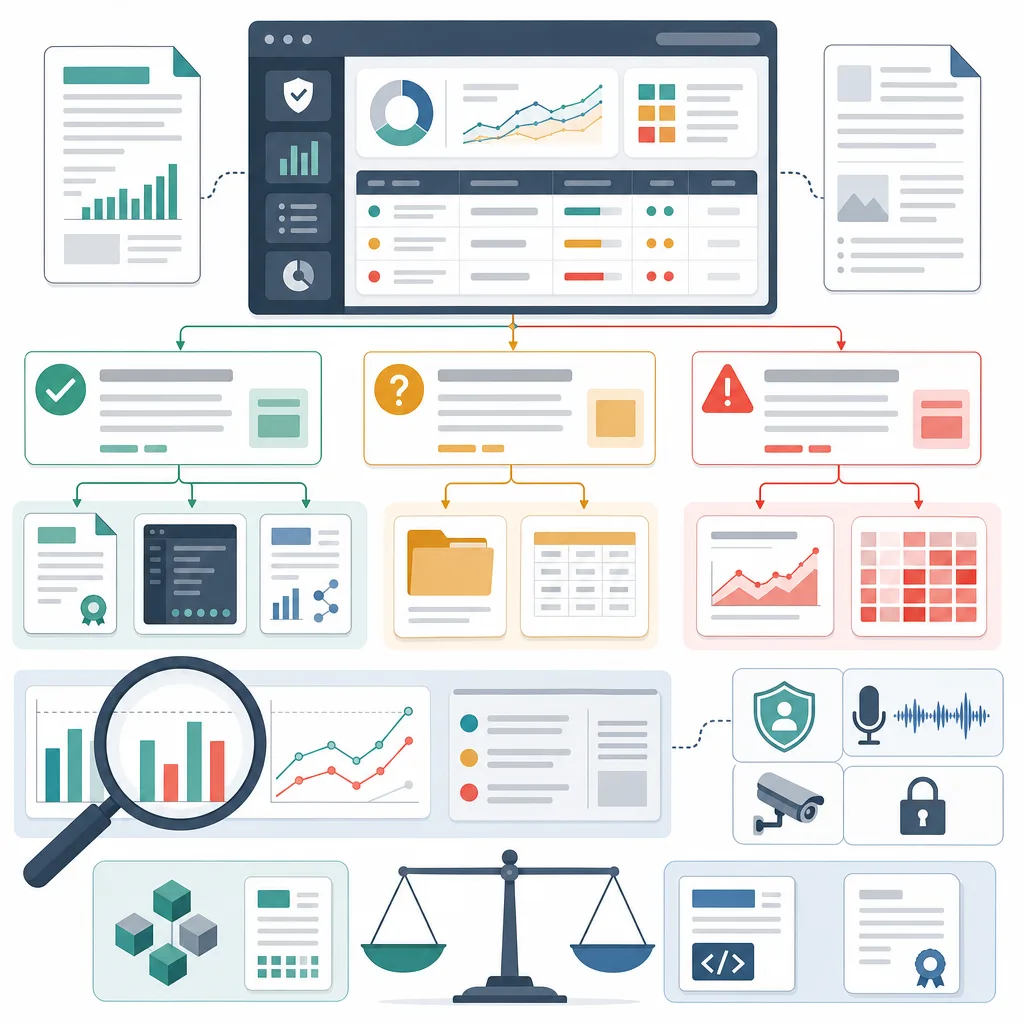
News reports introducing Grok 4.6, GPT-5.6 Soul, Gemini 3.7 Flash, and others contain numerous claims unsupported by official announcements or model cards. This report distinguishes verified facts from items pending verification and outlines the evidence standards needed to evaluate AI news.
- Model names, prices, and benchmark rankings should be treated as confirmed facts only when they are supported by a company’s official announcement, model card, and API documentation.
- Many of the names and figures presented, including Grok 4.6, GPT-5.6 Soul, and Gemini 3.7 Flash, cannot be verified from the materials provided alone.
- Open weight means access to model weights and does not automatically guarantee source code disclosure, free use, or commercial use.
- Combining benchmark scores obtained under different conditions with leaks, previews, or promotional statements as though they reflected actual release performance can lead to incorrect conclusions.
- Security claims involving surveillance, crime reporting, voice cloning, and the exfiltration of hidden reasoning must be assessed by separating technical facts from legal and ethical interpretations.
News about next-generation AI products and research achievements is quickly requoted with model names, scores, prices, and release status, making claims easy to solidify as fact. However, the provided material lacks links to official announcements, model cards, papers, and reproduction code, while some claims mix product releases, leaks, forecasts, and gossip together.
This article does not retransmit those claims as facts, but divides them into confirmed background, claims requiring verification, and evidence needed for judgment. Here, “verification pending” does not mean false; it means the claim cannot be confirmed based solely on the evidence presented.
Key Assessments to Check First
| Assessment | Meaning | Evidence Needed |
|---|---|---|
| Verifiable | Can be checked directly against an official repository or existing public facts | Official documentation, repository, announcement |
| Verification pending | A specific name or figure is given, but there is no direct evidence | Model card, API documentation, paper, pricing table |
| Leak or preview stage | Presented as internal information or a future plan | Company confirmation or actual deployment record |
| Opinion or forecast | Interpretation concerning performance, political intent, or market impact | Must be identified separately from source material |
| High-risk claim | Could significantly affect crime allegations, privacy, or reputation | Multiple reliable reports and official records |
The existence of a public repository for the X recommendation algorithm is verifiable background information in the provided material. However, the claim that it was newly released recently and political interpretations of the purpose behind its release require separate evidence. Most of the other major new product names and quantitative figures lack official primary sources, so “verification pending” is the appropriate assessment.
Claims Related to xAI and X
Grok 4.6 and First Place in Benchmarks
The material states that Grok 4.6 is tied for first place with “GPT-5.6 Soul” and ranked third in a specific coding evaluation. Confirming this would require the following:
- xAI’s official Grok 4.6 release announcement and model card
- Official identification information for “GPT-5.6 Soul” and “Fable 5”
- The exact Artificial Analysis evaluation page and measurement date
- Input and output pricing, latency, reasoning settings, and whether tools were used
- The coding evaluation’s dataset, execution environment, and criteria for determining success
The explanation that this was the “effect of completing the Cursor acquisition” is also unsupported by an acquisition announcement or corporate disclosure. A causal relationship between a corporate acquisition and improved performance would need to be established separately.
Grok Bot
The monthly fee, scope of the virtual computer provided, permissions to operate browsers and email, and level of safeguards must be checked against the official product page and terms of service. A characteristic such as an agent being less likely to refuse may increase not only convenience but also the risks of accidental sending, account takeover, and data leakage, making it difficult to evaluate as a straightforward advantage.
Publication of the X Recommendation Algorithm
A public repository containing code for X’s recommendation system exists. However, whether that public repository is identical to the complete recommendation system currently in operation, and how accurately it reflects the latest deployment status, are separate questions. The assessment that it was released to respond to political pressure should be classified as interpretation rather than fact.
Claims Related to OpenAI
Computer History
The feature described in the material would record computer screens, apps, and web activity over an extended period and allow users to search that history later. To determine whether this is an actual OpenAI product, the following must be checked in official feature documentation:
- What is captured and whether the feature is enabled by default
- The distinction between local storage and server transmission
- Retention period, deletion method, and administrator access permissions
- Features for excluding passwords and financial and medical information
- Policy differences between personal and organizational accounts
Without official documentation, it should not be asserted that the feature “records all activity in the background.” Even if the feature exists, workplace adoption would require separate review of employee notification, data minimization, access controls, retention periods, and applicable regional privacy and labor regulations.
Ultrafast Mode and Cerebras
Figures such as 750 tokens per second, an improvement of up to 14 times, and support for “GPT-5.6 Soul” are difficult to compare without measurement conditions. Token generation speed varies depending on time to first token, input length, output length, batch size, model precision, and server load. Whether Cerebras is involved in the collaboration and whether the feature is in a limited preview also require official announcements from both companies.
Leaked Codex Speed Improvement
The claim that average loading time fell from 27.6 seconds to 1.7 seconds was merely presented as an internal Slack leak, and the provided material contains neither the original source nor official confirmation. Because leaked figures do not reveal the test targets, sample size, or whether caching was used, they cannot be generalized as performance in actual user environments.
Claims Related to Anthropic
Research Progress on the Riemann Hypothesis
A claim that the Riemann hypothesis itself was solved is entirely different from a claim that a specific auxiliary result was improved. Accepting the statement that “the lower bound on the proportion of zeros satisfying the conditions was raised from 41.6% to 67.2%” would require the following:
- The exact theorem and mathematical conditions
- A complete proof or reviewable paper
- A distinction between the roles of the authors and the model
- Independent expert verification
- Confirmation that the same definitions were used as in the previous best result
Comparing numbers alone without a paper or preprint can lead people to mistake different mathematical conditions for the same record. The phrase “progress on the Riemann hypothesis” should also be used cautiously before peer review.
Text Watermarks
Probabilistic text watermarking works by embedding statistical patterns in the selection of particular words or tokens to estimate the likelihood that text was generated by AI. However, translation, summarization, and sentence rewriting can weaken the signal, while shorter texts may have a higher risk of false positives.
Whether Anthropic actually applied the feature to its outputs, whether quality declined, and whether subscription cancellation campaigns or watermark removal tools emerged each require separate evidence. Detection scores should be treated as probabilistic signals, not as conclusive evidence identifying the author.
Claims Concerning Executives’ Family Members
Claims directly connecting an individual’s past contacts to a company’s AI safety policy are a different category of high-risk reputational claim from product updates. It is appropriate not to retransmit them when the original report, the person’s response, the timing, and the specific conduct have not been confirmed. Analysis of corporate governance should focus on verifiable information such as board structure, conflict-of-interest policies, and formal decision-making authority.
Claims Related to Google and Gemini
Gemini 3.7 Flash
The model’s release status, the interval since the previous version, pricing discounts, and performance comparisons with the GPT family must be checked against Google’s official model documentation and pricing tables. The assessment that it is “cost-effective for web development” is meaningful only if comparisons are made under identical conditions, including:
- Input and output costs per million tokens
- Cache and tool-calling costs
- Code execution success rate
- Time to first token and total processing time
- Context length and usage limits
The claim that Gemini users surpassed Naver users in Korea also cannot be interpreted without information about the research organization, measurement target, whether the figures represent monthly or daily users, and whether both apps and the web are included.
Sign Language Translation AI
Sign language recognition must process not only hand shapes but also position, movement, facial expressions, body orientation, and context. Because a particular sign language is an independent natural language, simple gesture classification should not be treated as equivalent to real-time translation. To confirm this as research or a product from Google DeepMind, the supported sign languages, dataset, evaluation method, and actual availability must be checked.
Claims About Open-Weight Models
The provided material introduces Qwen 3.8, DeepSeek V4 Pro, GLM 5.3, Nemotron 3.5 Lightning, and Motif 3, but the specific versions, rankings, and hardware figures cannot be confirmed without official model cards.
| Subject of Claim | Presented Information | Key Materials Needed for Verification |
|---|---|---|
| Qwen 3.8 27B | Runs on consumer hardware and offers Claude-level coding performance | Official repository, quantization method, VRAM measurements, original coding evaluation |
| Chinese version of Apple Intelligence | Planned integration based on Qwen | Official announcement and support documentation from Apple or the relevant operator |
| DeepSeek V4 Pro | Powerful open weights and release of DeepSeek Harness | Official model card, license, repository, checksum |
| GLM 5.3 | Surpasses frontier models in some benchmarks | Official Zhipu AI results and independent reproduction |
| Nemotron 3.5 Lightning | Ultra-fast reasoning and an automatic router | Official NVIDIA documentation, model selection criteria, pricing and quality evaluation |
| Motif 3 | Ranked second in an open-weight evaluation by country | Evaluation organization, country classification criteria, full rankings, and date |
Open Weights and Open Source Are Different
- Open weights: A model whose trained weights can be downloaded or accessed.
- Open source: Source code that can be used, modified, and distributed under the conditions established by its license.
- Reproducible model: A model for which sufficient information needed to reproduce the results—such as training code, data composition, and hyperparameters—has been disclosed.
Even when weights are public, the training data and complete code may remain private. Free downloading also does not necessarily mean that commercial use, redistribution, or model merging is permitted. The memory required for local execution depends not only on the parameter count but also on precision, quantization, context length, KV cache, and runtime.
Claims About Music, Video, and Voice Generation
Descriptions of the features, hardware, and licensing of MiniMax Music 3.0, Suno Studio 2.0, LTX 2.5, MiDash LM, and Index TTS 2.5 likewise require official releases and model cards.
Items to Check
- The weights actually released and where they can be downloaded
- License conditions for commercial use and attribution
- Rights to the training data and conditions governing use of generated content
- Consent procedures for people whose voices are cloned
- Support for watermarks or content provenance information
- Whether features such as 4K, HDR, and multishot are generated natively
- Whether recommended VRAM applies to inference or to training and fine-tuning
The phrase “unlimited and free when run locally” may also be inaccurate. Even if the model itself has no price, there are costs for purchasing GPUs, electricity, storage, and maintenance, while licensing or legal restrictions on use may still apply.
Claims About Robots and Automobiles
Tesla Hovering Roadster
Cold-gas thrusters and brief hops, ground effect, and sustained hovering are technically distinct concepts. The claim that an actual demonstration is scheduled would require Tesla’s official schedule and safety-related explanation. Preview statements alone cannot confirm a mass-production feature or its feasibility for driving on public roads.
Dyna 2 and Scaling Robot Behavior
The claim that it was trained on 1 million hours of human behavior video and that task performance improved sharply as the amount of data increased requires a research paper. The total duration of video alone is insufficient to assess data quality; the robot types, behavior labels, proportion of simulation data, success rates, and generalization performance in unseen environments must also be considered. To call the result of a single experiment a universal “scaling law,” a recurring quantitative relationship must be demonstrated across multiple scales and environments.
How to Read Safety and Security Claims
AI Conversations and Reporting Crimes
The account that a particular user discussed a murder plan, after which OpenAI reported the user to the FBI and the user was arrested, is a serious legal claim. It should not be stated as fact without case records, announcements from investigative authorities, court documents, and company confirmation.
Moreover, reporting, arrest, prosecution, and conviction are distinct stages. Even if an arrest actually occurred, it would be necessary to determine whether the AI conversation was the only basis or whether there were separate actions and evidence. The interpretation that someone “was arrested for a crime they did not commit” may overly simplify the legal process.
Theft of Hidden Reasoning Processes
A model’s internal reasoning, explanations shown to users, and intermediate data transmitted by a server are not the same thing. To evaluate a claim that someone “stole an encrypted reasoning process,” it is necessary to distinguish whether the attacker actually recovered private tokens, imitated a reasoning method from outputs, or performed model distillation.
Claims that another company used this technique to acquire a competitor’s reasoning technology require attack reproduction code, identification of affected systems, data flows, and evidence of compromise. Vulnerability research should not be linked without evidence to allegations of actual theft by a particular country or company.
Why Benchmark Rankings Are Difficult to Take at Face Value
The most significant perspective missing from this collection of material is the compatibility of evaluation conditions. Even if the model names and rankings are real, scores cannot be compared directly when the following conditions differ.
| Comparison Variable | Impact on Results |
|---|---|
| Reasoning budget | More tokens and repeated attempts can increase accuracy |
| Tool use | Search, code execution, and testing tools can greatly change performance |
| Number of samples | Success on one attempt and the best result among several attempts are different metrics |
| Changes to private models | Even API models with the same name may produce different results depending on the date |
| Data contamination | Scores may be inflated if evaluation problems were included in the training data |
| Human review | Automated scoring and expert scoring produce different errors |
| Cost and latency | High accuracy does not guarantee economic viability in actual work |
Accordingly, phrases such as “first overall,” “surpasses a particular model,” or “several times faster” should be accompanied by the evaluation date, model version, settings, cost, and original results table.
Practical Checklist for Verifying AI News
- Find the exact product name and announcement date in the official newsroom.
- Check the version, context, pricing, and limitations in the model card or API documentation.
- For downloadable models, compare the official repository, license, and file checksums.
- Check the benchmark dataset, reasoning settings, tool use, and sample size.
- Separate company-reported scores from independent evaluation results.
- Distinguish among leaks, previews, demos, limited previews, and official releases.
- Do not retransmit claims involving crime, privacy, or reputation without the original source and official records.
- Separate technical feasibility from actual product availability.
Conclusion
The provided list of AI news covers a broad range of noteworthy topics, but most of the specific model names, figures, and incidents are not accompanied by verifiable primary sources. Therefore, the releases and performance of Grok 4.6, GPT-5.6 Soul, Gemini 3.7 Flash, Qwen 3.8, DeepSeek V4 Pro, and others should not be confirmed based on the current material alone.
The safest approach is to mark them as “verification pending” until official announcements and model cards can be confirmed. In particular, claims involving first place in benchmarks, groundbreaking mathematical achievements, crime reporting, personal data surveillance, and the reputations of corporate figures should be held to a much higher evidentiary standard than ordinary product news.
FAQ
Is Grok 4.6 an officially released model?
The provided materials do not include an official release announcement, model card, or API documentation from xAI. Therefore, it is appropriate to treat the name Grok 4.6 and its performance figures as unverified until official primary sources can be confirmed.
Can the benchmark results for GPT-5.6 Soul and Gemini 3.7 Flash be trusted?
The rankings cannot be verified without exact model identification information, the evaluation date, inference settings, costs, and the original results table. Scores from similarly named models or from different settings should not be compared directly either.
Are open-weight models free and open source?
No. Open weights means that the trained weights are accessible; it does not automatically guarantee that the source code is public or that free commercial use is permitted. The actual rights must be checked in each model's license.
Can a 27B model always run with 17GB of memory?
Not always. The required memory varies depending on weight precision, the quantization method, context length, KV cache, runtime, and the GPU or unified memory architecture.
Does this mean an AI model has solved the Riemann hypothesis?
The claim provided does not say that the Riemann hypothesis has been fully solved. A claim that a lower bound for a certain ratio has been improved can likewise be recognized as a mathematical achievement only if there is a precise theorem, a complete proof, a comparison with previous results under the same conditions, and independent review.
Can an AI text watermark definitively identify the author?
No. A probabilistic watermark is a signal used to estimate the likelihood that text was AI-generated, and its accuracy may decrease for short, translated, or rewritten texts. It should not be used as the sole evidence for disciplinary or legal decisions.
Is it safe for a company to use AI that records computer activity?
The storage location, retention period, administrator access, deletion features, and whether sensitive information is excluded must be checked first. In the workplace, employee notice and consent, data minimization, access controls, and the applicable privacy and labor regulations in the relevant jurisdiction must also be reviewed.
If a model generates 750 tokens per second, does that make actual work 14 times faster?
Not necessarily. The token generation rate is only one factor in overall latency; time to first token, input processing, tool calls, network latency, and verification time affect the actual speed of completing tasks.
Has the incident in which a user was arrested because of an AI conversation been confirmed?
It cannot be confirmed from the provided materials alone. For such incidents, statements from investigative authorities, court records, and company confirmation must be used to verify whether the case involved a report, arrest, or indictment, and whether there was evidence other than the AI conversation.
Is the X recommendation algorithm fully public?
There is a public repository related to the X recommendation system. However, it cannot be definitively concluded that the public code reflects the entire system currently in operation, including its data, model weights, and deployment settings.
Sources
Images