Space Data Centers: Google Investment and Viability Criteria
The results of Google's SpaceX investment are clear, but there is no evidence that gaining an early lead in space data centers was the aim of its 2015 investment. Orbital AI demonstrations must be distinguished from large-scale commercialization, and launch costs, cooling, communications, and component reliability each need their own criteria for evaluation.
- Google's 2015 investment in SpaceX was reported at the time in the context of the satellite internet business.
- Alphabet's disclosed valuation of its SpaceX shares at the end of June 2026 was approximately $94.1 billion.
- Starcloud's orbital AI run does not establish the profitability of large-scale space data centers.
- The $200 per kg figure in Google's research is a long-term launch-cost scenario.
- The commercial viability of space data centers should be judged by the actual cost of delivering computing power, including cooling and communications.
Google’s 2015 investment in SpaceX was connected to the satellite internet business. There is no confirmed evidence that securing an early position in space data centers was its purpose at the time. Orbital AI demonstrations must be distinguished from large-scale commercialization.
The key figures are based on technology announcements from 2025 and investment disclosures as of the end of June 2026.
Why did Google invest in SpaceX?
The business context confirmed at the time was expanding internet connectivity through satellites. In January 2015, SpaceX announced an investment from Google and Fidelity. The two companies invested a combined $1 billion.
SpaceX said the funds would support space transportation technology. Reusable technology and satellite manufacturing were also investment targets. Coverage at the time connected the investment to Google’s efforts to expand internet access. Securing an early position in space data centers was not among the confirmed investment purposes. WIRED’s coverage at the time
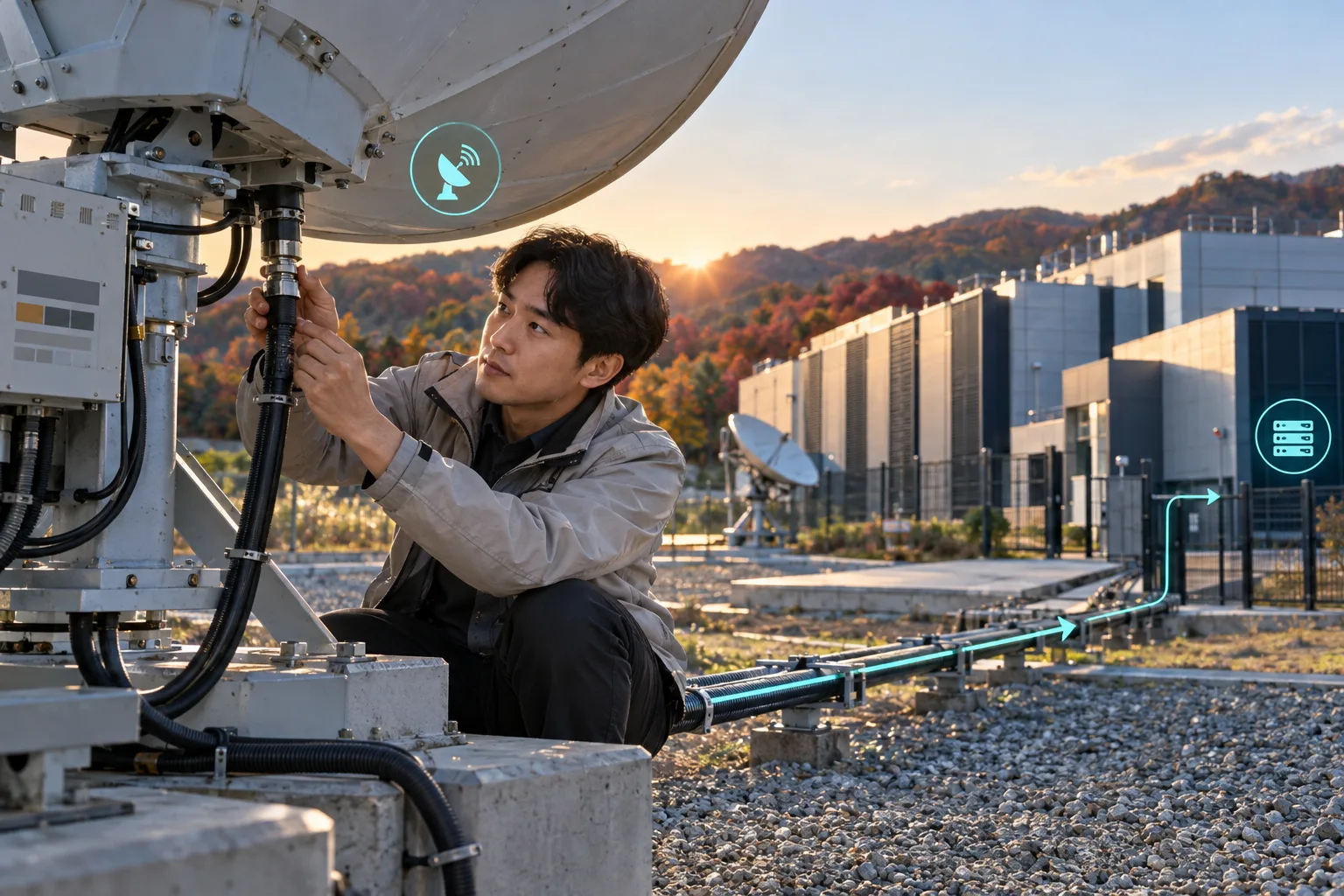
Later cooperation also linked communications and cloud services. In May 2021, the two companies announced a partnership between Starlink and Google Cloud. The plan included Starlink ground stations at Google data center sites. Installing ground stations is distinct from placing servers in orbit. Google Cloud announcement
| Category | Confirmed details | Scope of interpretation |
|---|---|---|
| 2015 investment | Google and Fidelity invested a combined $1 billion | Support for space transportation, reusability, and satellite manufacturing |
| 2021 partnership | Plan to connect Starlink and Google Cloud | Integration of satellite communications and ground-based cloud services |
| 2025 research announcement | Project Suncatcher unveiled | Research into the potential for space-based AI computing infrastructure |
Google unveiled Project Suncatcher on November 4, 2025. The concept involves putting TPUs on solar-powered satellites. TPUs are chips Google developed for AI computing. This announcement alone cannot establish Google’s investment intentions in 2015. Google announcement
How much has Google’s investment gained?
Alphabet’s SpaceX shares were valued at about $94.1 billion at the end of June 2026. Its quarterly report listed $80 billion in shares subject to short-term sale restrictions. Shares subject to long-term sale restrictions were valued at $14.1 billion. The sum of the two is the value of its holdings. Alphabet quarterly report
Google’s initial investment was reported as $900 million. Reuters confirmed that figure in an August 2026 report. The combined $1 billion investment must be distinguished from Google’s investment alone. The amount converted into Korean won varies with the exchange rate used. Reuters report
Calculation example: What does “100 times” mean?
Dividing the share value by the initial investment gives about 104.6 times. The calculation is $94.1 billion ÷ $900 million. This multiple is a simple comparison of amounts at two points in time. It does not represent an actual return from selling the shares.
| Item to check | Meaning |
|---|---|
| Initial investment | Amount invested in 2015 |
| Value of shares held | Value assigned to the shares held at the end of June 2026 |
| Realized gain | Profit or loss confirmed through an actual sale or other transaction |
| Current ownership stake | Ownership percentage at a specific point in time, reflecting new share issuances and transactions |
Assessing the investment’s performance also requires the full transaction history. Additional investments or partial sales affect the return calculation. The past ownership stake of 7.4% should not be multiplied by the company’s current valuation, either. The latest ownership stake and valuation date must be aligned first.
What is a space data center?
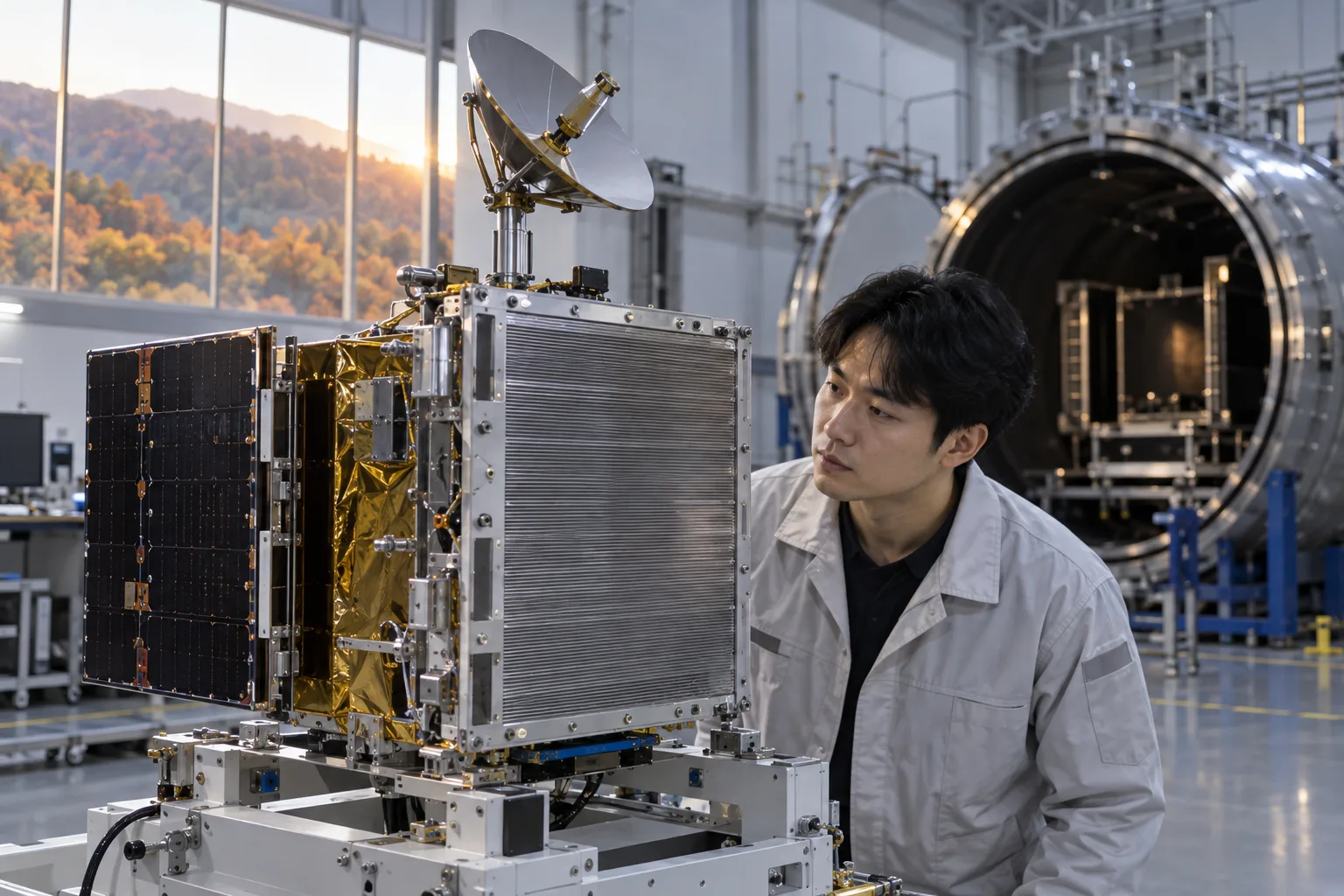
A space data center is computing infrastructure that stores and processes data in orbit. An experiment could use a single satellite carrying an AI chip. Another approach connects multiple satellites to divide computing tasks. The entire data center does not have to be one enormous structure.
Satellite internet is primarily a service for transmitting data. A space data center changes where data is processed. The existence of a satellite communications network alone does not make large-scale AI training possible.
| Term | Meaning | Performance to check |
|---|---|---|
| Inference | Generating results with a trained model | Response time and power per task |
| Training | Adjusting a model’s parameters using data | Computing requirements and communication between chips |
| On-orbit processing | Analyzing data collected by a satellite where it is collected | Volume of data sent to the ground and processing delay |
| Distributed computing | Multiple devices dividing a single task | Speed and reliability of connections between devices |
Which problems with ground-based data centers is this meant to address?
The main motivations are growing power demand and pressure on resources on the ground. The IEA estimated that data centers consumed about 415TWh of electricity in 2024. That was about 1.5% of global electricity consumption. The figure does not count only facilities dedicated to AI.
The IEA’s 2025 report projected about 945TWh by 2030. The projection also accounts for growth in digital services other than AI. Regions with a high concentration of data centers may face greater strain on their power grids. IEA Energy and AI
Some orbits can receive sunlight almost continuously. Google describes this as an advantage of Project Suncatcher. The same conditions for generating power do not apply in every orbit, however. The choice of orbit also affects how much battery capacity is needed.
Explaining constraints on the ground solely as local opposition misses other causes. Water use varies by cooling method. Noise must be assessed according to the equipment and location. Concerns about electromagnetic radiation should not be described as confirmed health harms.
How far have orbital AI demonstrations progressed?
Public materials confirm demonstrations of AI execution and plans for further research. The projects differ in scale and purpose, however. A successful satellite launch alone does not validate a long-term computing service.
| Project | Announcement date and details | How to interpret the result |
|---|---|---|
| Starcloud-1 | Launched in November 2025; AI execution results announced that December | Demonstration of execution on an individual satellite |
| Project Suncatcher | Research unveiled in November 2025 | Distributed AI infrastructure design and ground testing |
| China’s Santi Computing Constellation | First 12 satellites launched in May 2025 | Links between satellites and orbital data processing |
Starcloud launched a satellite carrying an NVIDIA H100. The company reports running Gemma and training nanoGPT. Running Gemma should not be interpreted as training all of Gemma from scratch. The model trained must be distinguished from the model used for inference. Starcloud-1 description
Google planned to launch test satellites with Planet. At the time of its 2025 announcement, the goal was two satellites by early 2027. That was the schedule announced at the time. Actual launches and test results must be checked in subsequent announcements. Google research description
China has pursued the Santi Computing Constellation (三体计算星座). Its first 12 satellites were launched on May 14, 2025. The Zhejiang Science and Technology Museum described the purpose as processing data in orbit. That notice alone cannot confirm that a specific Alibaba model was run. Zhejiang Science and Technology Museum notice
How is heat removed in space?
Spacecraft mainly use radiation to release heat to their surroundings. Radiation is the release of energy as electromagnetic waves, including infrared waves. In a vacuum, convection cooling using outside air is impossible. Heat conduction inside equipment does not disappear, however.
In a vacuum, heat is transferred only by radiation and conduction with no convection.
NASA, 7.0 Thermal Control
Heat from a chip first moves through a structure or cooling loop. It is then released into space from a radiating surface. A chip does not cool itself simply because it is in cold space. NASA thermal control document
The Stefan-Boltzmann law applies to heat radiation. The energy emitted is proportional to the fourth power of absolute temperature. Actual designs must also account for the emissivity of the radiating surface. Heat received from the Sun and Earth must be considered as well.
What do 5GW and 4km refer to?
5GW is the scale of a large system proposed by Starcloud. NVIDIA described the concept in October 2025. It said the solar and cooling panel array would be about 4km wide and 4km long. These are not the dimensions of a completed facility or a universally correct design.
The Starcloud-1 satellite mentioned in the same announcement had a mass of 60kg. The demonstration satellite and a 5GW-scale system are vastly different in size. They cannot be combined to conclude that a satellite must have a mass of at least 400kg. Mass must be calculated after the power and cooling design is set. NVIDIA’s introduction to Starcloud
Would $200 per kg make it economically viable?
$200 per kg is a long-term launch-cost scenario in Google’s research. The research analyzed the possibility of lower costs by the mid-2030s. It assumes that costs continue to fall through technological learning. It is not the price of a launch service available to buy today.
The comparison is not with the total cost of a data center, either. The research converted the cost of obtaining power in space into an annual figure. It compared that figure with electricity spending at ground-based data centers. It should therefore not be treated as the break-even point for the entire business. Project Suncatcher research paper
| Cost item | What to check when calculating business viability |
|---|---|
| Launch | Actual payload mass and target orbit |
| Satellite manufacturing | Power, cooling, and communications equipment in addition to computing hardware |
| Operations | Ground stations, orbit maintenance, and responses to failures |
| Equipment replacement | Relaunches due to failures and declining performance over time |
| Service delivery | Uptime and the amount of computing delivered to customers |
Under this cost structure, total costs from start to finish are what matter. Shorter equipment lifespans increase replacement costs. Communications bottlenecks can reduce the utilization of expensive chips. Lower launch prices alone will not resolve every cost.
Is Starship the exclusive means of reaching space?
Starship’s transportation goals alone cannot establish a monopoly or profits. SpaceX’s 2026 investor presentation distinguishes its future transportation capabilities. It presents 200 tons as a goal for a future Starship. The presentation states that the payload capacity is a simulated value under specific conditions. SpaceX investor presentation
Reusability and bulk transportation could lower costs. Cost savings are not necessarily passed directly on to customers, however. The costs of repeated flights and maintenance must also be checked. Whether a particular company’s share price is justified requires a separate analysis.
A comparison of Falcon 9 and the Nuri rocket’s costs must use matching conditions. Costs that include development expenses and commercial sale prices are different measures. Maximum payload capacity must also be distinguished from actual payload mass. Per-kg prices from different sources alone make it difficult to establish the size of the gap.
- Altitude and inclination of the target orbit
- Whether the flight is reusable or expendable
- Whether the contract is for an entire launch or a rideshare
- Actual payload mass and theoretical maximum payload
- Whether development costs, insurance, and related services are included
Comparison by where data is generated
The value of computing in space depends on where the data is generated. Power generation and rocket prices alone do not reveal this distinction. Sending ground-based data into orbit is different from processing satellite data where it is collected.
| Task | Potential benefit of processing in space | Conditions requiring further validation |
|---|---|---|
| Satellite image analysis | Potential to reduce transmission of all raw data to the ground | Preservation of necessary information and detection accuracy |
| Disaster warning-sign detection | Ability to analyze data close to where it is captured | Delay between observation and alert |
| Training large AI models | Potential to use power generated in orbit | Communication between satellites and task synchronization |
| AI services for users on the ground | Potential to expand sources of computing capacity | Round-trip data transmission and response time |
NVIDIA described Earth observation data analysis as an initial use case. Google considers high-speed links between satellites necessary for large-scale training. Taken together, these points mean economic viability must be assessed by use case. There is no reason to assume that all ground-based data centers would be moved into space at once.
For example, a satellite could identify anomalies first. In that case, only the necessary results might need to be sent to the ground. Ground-based training data, by contrast, must be sent into orbit. This difference affects transmission costs and service design.
Common mistakes and what to check
The most common mistake is treating research goals as established business results. Company announcements include both experimental results and long-term projections. Distinguishing verb tenses and test conditions can reduce overstatement.
| Claim | What to check |
|---|---|
| Google invested in 2015 because it foresaw space data centers | Investment purposes confirmed in announcements at the time |
| It collected a 100-fold gain in cash | The distinction between share value and gains from actual sales |
| Cooling costs nothing in space | Mass of heat-radiating equipment and operating conditions |
| There are no regulations in space | The Outer Space Treaty and applicable national authorization systems |
| A merger between SpaceX and Tesla guarantees synergies | The parties to the merger and the terms of actual agreements |
| HBM competitiveness means a space supply contract | Test results for the component and its adoption by customers |
Space is not an unregulated domain. Article VI of the Outer Space Treaty provides for national authorization and supervision of private space activities. The original text is available in UNOOSA’s treaty document. UNOOSA treaty document
Actual transactions must also be checked when assessing relationships between companies. A SpaceX filing states that it acquired xAI on February 2, 2026. That should not be read as a merger between Tesla and SpaceX. A proposal to use Tesla products on the Moon and Mars is also different from a supply contract.
Criteria for assessing opportunities for Korean semiconductor and materials companies
Opportunities for Korean companies depend on supplying components suited to the actual space environment. HBM is memory that delivers data quickly to AI chips. An advantage in performance on the ground does not automatically guarantee suitability for space, however.
HBM was relatively sensitive in Google’s TPU radiation tests. This supports the need to validate memory reliability separately. It does not confirm that any particular Korean company is a supplier. Google radiation test description
Communications equipment and thermal management materials are also needed alongside semiconductors. When evaluating an investment, check evidence of contracts before focusing on the technology area. Reading the materials in the following order can help distinguish research from revenue.
- Check company filings for the products supplied and the customers.
- Check the test conditions for the scope of radiation, thermal, and vibration testing.
- Check the actual operating period in an orbital demonstration.
- Distinguish deliveries for testing from recurring supply contracts.
- Consider the share of revenue and the cost of expanding production together.
FAQ
Did Google invest in SpaceX because of space data centers?
The documented context in 2015 was the expansion of satellite internet. There is no confirmed evidence that gaining an early position in space data centers was the purpose of the investment at the time. Project Suncatcher is a separate research project announced in 2025.
Was Google's investment in SpaceX $900 million or $1 billion?
The total investment by Google and Fidelity was $1 billion. Reuters confirmed that Google's initial investment was $900 million. The total joint investment should be distinguished from each company's investment.
How much is Alphabet's stake in SpaceX worth?
According to a filing as of the end of June 2026, it was approximately $94.1 billion. That is the sum of $80 billion in shares subject to short-term sale restrictions and $14.1 billion in shares subject to long-term sale restrictions. It is not the same as the current market price or actual sale proceeds.
Does a 100-fold investment return mean the profits were actually realized?
The figure compares the initial investment with the assessed value of the shares held. Dividing $94.1 billion by $900 million gives approximately 104.6 times. Calculating the actual return also requires checking any additional transactions and cash proceeds.
What AI did Starcloud run in space?
Starcloud reported running Gemma on a satellite equipped with an H100. It also announced results from training nanoGPT. These results should not be taken to mean that commercial training of large AI models has been validated.
Do space data centers use no cooling water?
The main way they release heat to the outside is through radiation. Cooling circuits that move heat internally can use fluids. Cooling water consumed by evaporative cooling on the ground should be distinguished from internal cooling circuits.
Is $200 per kg the current Starship launch price?
It is a long-term launch cost scenario presented in Google research. The figure is part of a conditional analysis of falling costs in the mid-2030s. It does not represent the current launch contract price or the break-even point for an entire data center.
What tasks are better suited to space data centers?
Analyzing data generated by satellites where it is collected may reduce the amount of data sent to the ground. Large-scale training using data from the ground requires considering both data uploads and communication between satellites. Suitability must be assessed for each task.
Is Starship's 200-ton payload capacity a confirmed achievement?
SpaceX's 2026 investor presentation described it as a future target. The presentation states that the payload capacity is a simulated figure under specific conditions. A record of repeated operations and actual customer prices need to be checked separately.
Are Korean HBM companies confirmed beneficiaries of space data centers?
HBM production capacity alone does not confirm that they will supply products for use in space. Environmental testing of the products and their adoption by customers must be confirmed. Test deliveries should also be distinguished from recurring commercial supply.
Sources
- WIRED, SpaceX Lands $1 Billion From Google and Fidelity, January 20, 2015
- Google Cloud, announcement of a Starlink connectivity partnership, May 13, 2021
- Alphabet, Form 10-Q as of June 30, 2026
- Reuters, report on Alphabet's early investment in SpaceX and the valuation of its stake, August 14, 2026
- Google, unveiling of Project Suncatcher, November 4, 2025
- Google Research, space AI infrastructure design and technical challenges, November 4, 2025
- Google researchers, Towards a future space-based, highly scalable AI infrastructure system design
- IEA, Energy and AI, summary of the 2025 report
- Starcloud, Starcloud-1 mission and AI execution results
- NVIDIA, How Starcloud Is Bringing Data Centers to Outer Space, October 15, 2025
- Zhejiang Association for Science and Technology, Science and Technology Museum guide to exploring the Santi Computing Constellation, August 6, 2025
- NASA, 7.0 Thermal Control
- SpaceX, 2026 investor presentation and related disclosures
- UNOOSA, UN document A/6392 containing the text of the Outer Space Treaty
Images