Comparison of the Differences Between Personal Rehabilitation, Personal Bankruptcy, and Personal Debt Restructuring
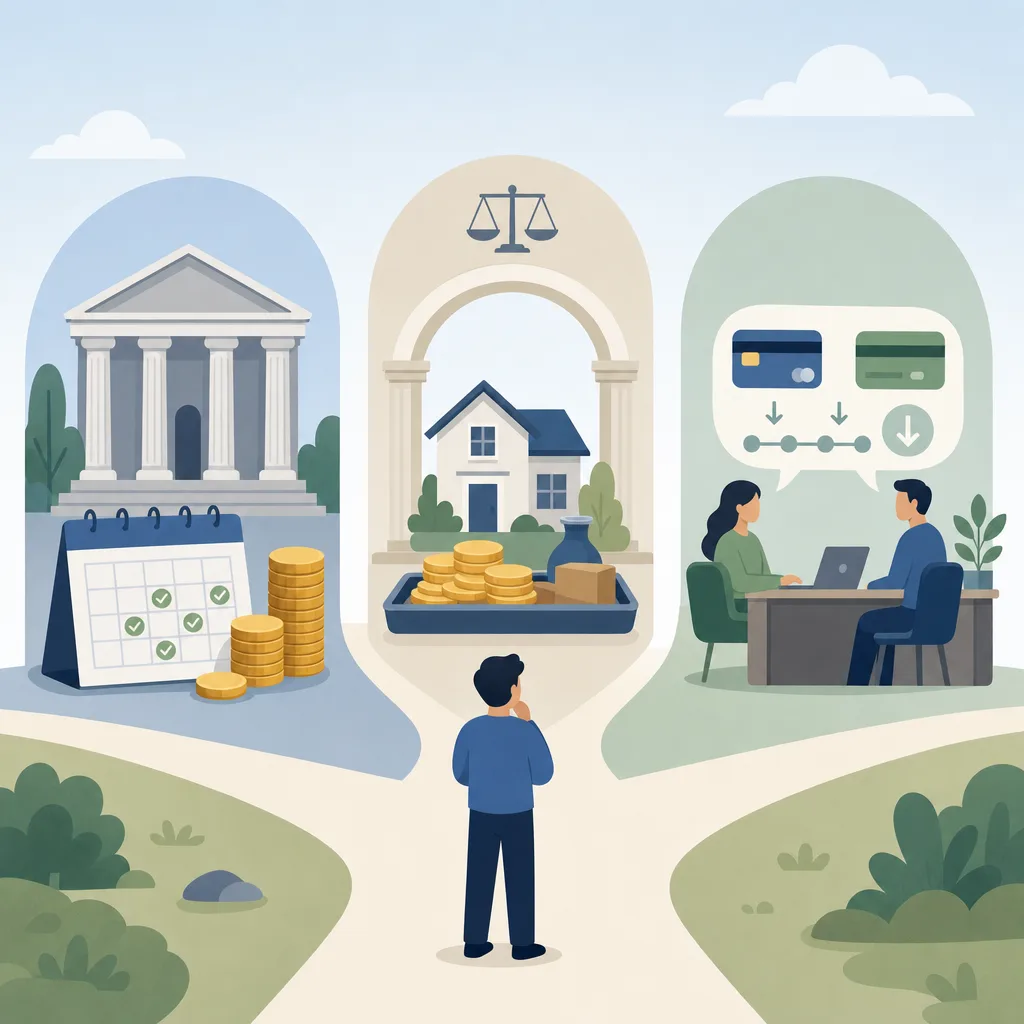
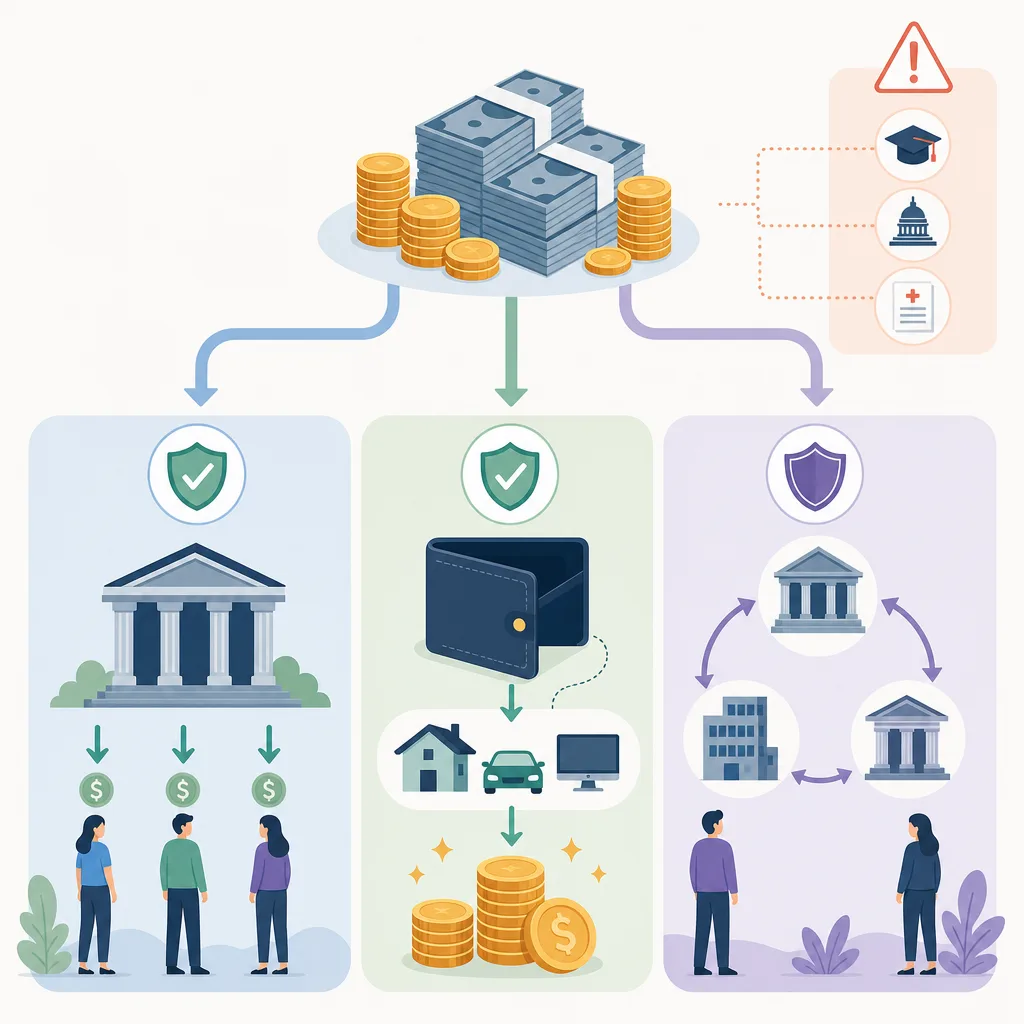
Personal rehabilitation, personal bankruptcy, and personal debt restructuring are all systems designed to manage excessive debt, but they differ in terms of the agency to which applications are filed, income requirements, eligible debts, and how assets are handled. If you have an income, you should consider personal rehabilitation; if repayment is virtually impossible, personal bankruptcy; and if your debts are primarily delinquent loans from financial institutions, you should first consider personal debt restructuring.
- Personal rehabilitation is a procedure whereby a debtor with a steady, recurring income obtains court approval for a repayment plan, makes payments over a specified period, and then seeks discharge of the remaining debt.
- Personal bankruptcy is a procedure in which a debtor who is unable to pay their debts files for bankruptcy with the court and, after liquidating their assets, reduces their remaining debt burden through a discharge.
- An individual debt settlement is a form of private debt restructuring facilitated by the Credit Recovery Commission, and it primarily covers debts owed to financial institutions that are signatories to the Credit Recovery Support Agreement.
- While a workout is limited to debts owed to financial institutions that have entered into an agreement, personal rehabilitation and personal bankruptcy—which are court proceedings—can address a broader range of debts, including private loans and guarantee obligations.
- Taxes, fines, damages for intentional torts, and child support may not be exempt or reduced depending on the specific program, so you should verify this before applying.
Conclusion at a Glance
Personal rehabilitation, personal bankruptcy, and personal debt restructuring are all systems designed to help debtors manage debts they find difficult to handle. However, there are significant differences in who can apply, which agency makes the decision, whether assets must be liquidated, and which debts are adjusted differ significantly.
Here is a brief summary:
- Personal Rehabilitation: A court procedure suitable for individuals with a steady income who can repay at least part of their debt
- Personal Bankruptcy: A court procedure suitable for individuals for whom debt repayment is virtually impossible based on their income and assets
- Individual Workout: A private procedure through the Credit Recovery Committee for individuals who are more than 90 days delinquent on debts owed to financial institutions
This article provides general information for comparing these systems. Actual eligibility and the scope of debt discharge may vary depending on the type of debt, income, assets, dependents, duration of delinquency, and whether a guarantee is involved.
Key Comparison Table
| Category | Personal Rehabilitation | Personal Bankruptcy | Personal Workout |
|---|---|---|---|
| Nature of Procedure | Court-administered debt adjustment procedure | Court-administered bankruptcy and discharge procedure | Private debt adjustment by the Credit Recovery Committee |
| Primary Target | Debtors with steady, recurring income | Debtors in a state of insolvency | Debtors with long-term delinquencies on debts owed to financial institutions |
| Key Requirements | Unsecured debt of 1 billion won or less; secured debt of 1.5 billion won or less | Insolvency, where it is difficult to repay debts with income and assets | Delinquency of 90 days or more; total debt of 1.5 billion won or less, etc. |
| Scope of Adjustment | Relatively broad. May include financial debts, private loans, and guaranteed debts | Relatively broad. However, non-dischargeable claims may remain | Focuses on debts owed to financial institutions participating in the Credit Recovery Support Agreement |
| Asset Disposal | In principle, the repayment plan is carried out without disposing of assets | In principle, liquidatable assets are disposed of and the proceeds distributed to creditors | In principle, repayment terms are adjusted without disposing of assets |
| Repayment Method | Repayment over a set period according to a repayment plan approved by the court | Decision on discharge made after liquidation of assets | Interest reduction, extension of repayment period, installment payments, etc. |
| Remaining Debt | Discharge possible after completion of the repayment plan | Remaining debt may be discharged if discharge is granted | Partial reduction of interest and principal possible depending on the settlement proposal |
| Impact on Credit | Potential adverse credit effects, such as public records and delinquency reports | Potential adverse effects on credit and eligibility before and after bankruptcy declaration and discharge | Registration in credit rehabilitation support records and restrictions on financial transactions may apply |
What Is Personal Rehabilitation?
Personal rehabilitation is a procedure in which an individual debtor with a steady income files a petition with the court to have their debts restructured. The debtor repays a fixed monthly amount over a specified period according to a repayment plan approved by the court, and if the plan is faithfully carried out, the remaining debt may be discharged.
Who Is Eligible to File for Personal Rehabilitation?
Personal rehabilitation is generally suitable for individuals who meet the following criteria:
- Individuals with consistent and recurring income, such as salaried employees, self-employed individuals, and freelancers
- Individuals who find it difficult to pay off all their debts at once but are able to make fixed monthly payments
- Individuals for whom repaying debts with their income is a more realistic option than liquidating all their assets
- Individuals with a complex mix of debts, including not only debts to financial institutions but also private loans and guaranteed debts
Debt Limits
There are limits on the amount of debt eligible for personal rehabilitation.
| Category | Limit |
|---|---|
| Unsecured Debt | 1 billion won or less |
| Secured Debt | 1.5 billion won or less |
Unsecured debt refers to debts without collateral, such as personal loans, credit card balances, and private loans. Secured debt refers to debts backed by collateral, such as real estate-secured loans.
Repayment Period and Discharge
In personal rehabilitation, repayments are made over a set period according to a repayment plan approved by the court. In practice, the repayment period is typically three years, but it may be extended depending on the circumstances and can be up to five years within the limits set by law.
Once the repayment plan is completed and the court grants a discharge, the debtor may be relieved of the obligation to repay any remaining personal rehabilitation debts. However, certain obligations—such as taxes, fines, damages resulting from intentional torts, and certain family-related obligations—may be treated separately under the system or may not be discharged.
Advantages and Considerations of Personal Rehabilitation
Advantages
- Debt restructuring may be possible without having to liquidate all assets.
- Debts other than those owed to financial institutions can also be included in the proceedings.
- If you are facing difficulties due to wage garnishment or debt collection, you may be eligible for protection through a court-issued injunction or stay order.
Points to Note
- It is difficult to carry out the repayment plan without a steady income.
- Failure to comply with the repayment plan may result in the termination of the proceedings.
- Even after discharge, financial transactions may be restricted for a certain period, or credit applications may be denied based on financial institutions’ internal criteria.
What Is Personal Bankruptcy?
Personal bankruptcy is a procedure in which a debtor files for bankruptcy with the court when they are insolvent—unable to repay their debts with their assets and income. After a bankruptcy declaration, liquidatable assets are sold off and distributed to creditors, and the remaining debts can be discharged through a separate discharge procedure.
Who Should Consider Filing for Personal Bankruptcy
Personal bankruptcy is generally considered in the following situations:
- When repayment is difficult due to a lack of income or income that falls below the minimum cost of living
- When securing future income is difficult due to old age, illness, disability, or unemployment
- When debts far exceed assets, making it difficult to carry out a personal rehabilitation repayment plan
Bankruptcy and Discharge Are Different
An important point to note regarding personal bankruptcy is that a bankruptcy declaration is not the same as a discharge order.
- Bankruptcy Declaration: A court decision recognizing the debtor’s insolvency and initiating bankruptcy proceedings
- Discharge: A decision exempting the debtor from legal liability for remaining debts
In other words, simply receiving a bankruptcy declaration does not automatically eliminate all debts. The burden of remaining debt is reduced only when a discharge is granted. If discharge is denied, the debts remain, and certain disadvantages associated with being a bankrupt individual may continue.
Advantages and Considerations of Personal Bankruptcy
Advantages
- It can be a practical solution for people with little or no income who find it difficult to undergo personal rehabilitation.
- If a discharge is granted, the remaining debt burden can be significantly reduced.
Points to Note
- In principle, liquidatable assets may be sold and distributed to creditors.
- From the time of the bankruptcy declaration until the discharge is granted, there may be restrictions on certain occupations, professional licenses, and public positions.
- Discharge may be denied if there are grounds for denial, such as wasteful spending, gambling, concealment of assets, or false statements.
- Taxes, fines, administrative penalties, damages for intentional torts, and child support may not be discharged.
What Is a Personal Workout?
Individual Debt Workout is a private debt adjustment system administered through the Credit Recovery Committee. The Credit Recovery Committee—not a court—facilitates the adjustment of repayment terms between the debtor and participating financial institutions.
Who Is Eligible to Apply for an Individual Debt Workout?
An Individual Debt Workout is suitable for individuals who meet the following criteria:
- Individuals who are more than 90 days delinquent on debts owed to financial institutions
- Individuals whose debts are primarily owed to financial institutions that have joined the Credit Recovery Support Agreement
- Individuals who wish to extend their repayment period and receive interest reductions through a process that is relatively simpler than court proceedings
- Individuals who have an income but are currently unable to make regular repayments due to the heavy burden of delinquent interest and principal and interest payments
Key Support Details
Under the Individual Workout program, the following adjustments may be made, taking into account the debtor’s repayment capacity, type of debt, duration of delinquency, and assets held.
| Adjustment Item | Key Details |
|---|---|
| Interest and Late Payment Interest | May be fully waived |
| Principal | Partial waiver possible depending on the nature of the debt and repayment capacity |
| Repayment Period | Can be adjusted to long-term installment payments |
| Repayment Method | An installment repayment plan is established to suit the debtor’s circumstances |
Generally, a personal workout involves the waiver of interest and late payment interest, while the waiver of principal—and the extent of such waiver—varies depending on the debtor’s repayment capacity and the nature of the debt. According to guidelines from the Credit Recovery Committee, principal waivers typically range up to 70%; higher waiver rates may apply if certain criteria are met, such as belonging to socially vulnerable groups.
Limitations of the Individual Workout Program
Since the Individual Workout Program is not a court-mandated procedure, it has the following limitations:
- Creditors who have not signed the Credit Recovery Support Agreement are not eligible for adjustment.
- Private loans, debts between individuals, and tax debts are, in principle, difficult to adjust.
- The restructuring plan is finalized based on the consent of the creditor financial institutions and the results of the Credit Recovery Committee’s review.
- Even after the plan is finalized, failure to adhere to the agreed-upon repayment schedule may result in the plan becoming void.
Which Program Should You Choose?
The selection criteria should not be based solely on the amount of debt but should also take into account income, assets, the duration of delinquency, the composition of creditors, and the need for discharge.
1. Do you have an income?
- If you can repay a fixed amount each month, consider personal rehabilitation or personal workout.
- If you have no income or your income falls below the minimum cost of living, you may consider personal bankruptcy.
2. Are most of your debts owed to financial institutions?
- If most of your debt is owed to financial institutions that have agreements with the government—such as banks, credit card companies, savings banks, and loan companies—personal debt restructuring may be a relatively straightforward option.
- If your debt includes a mix of personal loans, private loans, guarantee obligations, or damages claims, personal rehabilitation or personal bankruptcy may be more appropriate.
3. Are you more than 90 days in arrears?
- If you are more than 90 days in arrears, you likely meet the eligibility requirements for individual debt workout.
- If you are not yet in arrears or are only in the early stages of delinquency, you should also consider other debt adjustment programs offered by the Credit Recovery Committee or individual rehabilitation.
4. Do you need to retain your assets?
- If you wish to repay your debts with your income without liquidating your assets, personal rehabilitation or personal workout should be considered first.
- If debt repayment is virtually impossible and you have liquidatable assets, those assets may be liquidated as part of the personal bankruptcy process.
The Meaning of Discharge: It Is Not the Same as Debt “Disappearing”
Discharge does not make the debt itself historically nonexistent; rather, its effect is closer to legally exempting the debtor from the obligation to repay. Therefore, the following points must be distinguished:
- Creditors will find it difficult to recover discharged debts through enforcement proceedings.
- However, debts that are not discharged may still need to be repaid.
- Credit reports, internal reviews by financial institutions, and guarantor liability may be addressed separately.
In particular, for debts with a guarantor, the guarantor’s liability may not automatically disappear even if the debtor receives a discharge.
Practical Checklist
Before applying, it is advisable to organize the following documents and facts:
- Complete list of creditors: banks, credit card companies, loan companies, individual creditors, including guaranteed debts
- Principal, interest, late payment interest, and collateral status for each debt
- Monthly income and expenses, number of dependents
- Details of assets, such as savings, vehicles, real estate, and insurance refunds
- Non-dischargeable debts, such as taxes, fines, child support, and damages
- Recent loans, cash advances, gambling, asset disposals, and gifts
- Whether wage garnishments, bank account freezes, lawsuits, or payment orders are in progress
Summary
Although personal rehabilitation, personal bankruptcy, and personal workout have similar names, they operate differently. Personal rehabilitation is a court procedure for repaying debts with income, personal bankruptcy is a court procedure for liquidating assets and seeking discharge when one is unable to repay, while a personal workout is a Credit Recovery Committee procedure that adjusts repayment terms, primarily for debts owed to financial institutions.
The most important criterion is not “how much debt you have,” but “how much you can reliably repay going forward.” If your debts are complex or include taxes, guarantees, or private loans, it is safest to consult a reputable institution—such as the Korea Legal Aid Corporation, the Credit Recovery Committee, or a court counseling service—to determine which procedure is best suited to your situation.
FAQ
What is the biggest difference between personal rehabilitation and personal bankruptcy?
Personal rehabilitation is a procedure whereby a debtor with a steady income repays a portion of their debt according to a repayment plan established by the court and receives a discharge of the remaining debt. Personal bankruptcy is a procedure whereby a debtor who is unable to repay their debts with their income and assets liquidates their assets and seeks a discharge.
Do you file for an individual debt settlement plan with the court?
No. A personal debt settlement is a private debt adjustment program administered by the Credit Recovery Committee, not the courts. It primarily covers debts owed to financial institutions that are signatories to the Credit Recovery Support Agreement.
If I file for personal rehabilitation, do I have to sell my assets?
In principle, personal rehabilitation is not a process that involves liquidating all assets, but rather a process in which a repayment plan is carried out using the debtor’s income. However, the value of the debtor’s assets and the calculation of repayment amounts are important factors taken into account during the process.
If I file for personal bankruptcy, will all my debts be automatically discharged?
No. A bankruptcy declaration and a discharge are separate procedures. Only when the court grants a discharge will you be released from the obligation to repay your remaining debts; however, taxes, fines, and certain damages may not be discharged.
Does the Individual Workout Program also reduce the principal amount?
Yes, it is possible. The Credit Recovery Committee’s individual debt restructuring program offers relief on interest and late payment penalties, extends repayment periods, and allows for installment payments; depending on the debtor’s ability to repay and the nature of the debt, a partial reduction of the principal may also be granted.
Can private loans or money borrowed from individuals also be restructured through a workout?
A typical individual debt settlement program applies to debts owed to financial institutions that are signatories to the Credit Recovery Support Agreement. Debts owed to individuals or creditors who are not signatories to the agreement may not be eligible for adjustment, so you should also consider individual rehabilitation or personal bankruptcy.
Which is better for your credit: personal rehabilitation or a debt restructuring plan?
It’s hard to generalize. Both systems can affect your credit history and financial transactions. The outcome depends on the type of debt, your delinquency status, your ability to repay, and the financial institution’s internal review criteria.
Are taxes also discharged through personal rehabilitation or bankruptcy?
Taxes are treated differently from ordinary debts. In personal rehabilitation proceedings, priority repayment or separate repayment may be an issue, and even in personal bankruptcy, tax debts may not be discharged. You must verify the specific tax categories and the status of any tax arrears.
If I'm less than 90 days behind on my payments, can't I apply for a personal debt restructuring plan?
A key requirement for a typical individual debt settlement program is that the debt must be in arrears for at least 90 days. However, the Credit Recovery Committee also offers other debt adjustment programs for borrowers who are not yet in arrears or who have only been in arrears for a short period, so it is advisable to check which program is appropriate for your current delinquency period.
Which organization should I contact first?
If your debts are primarily with financial institutions, it is best to seek counseling from the Credit Recovery Committee; however, if court proceedings are necessary or if you have complex issues involving private loans, guarantees, or taxes, it is advisable to also consult with experts such as the Korea Legal Aid Corporation, court counseling services, or a lawyer.
Sources
Images