Auto Insurance Coverage Criteria for Vehicle Flooding and Damage from Typhoons and Torrential Rain
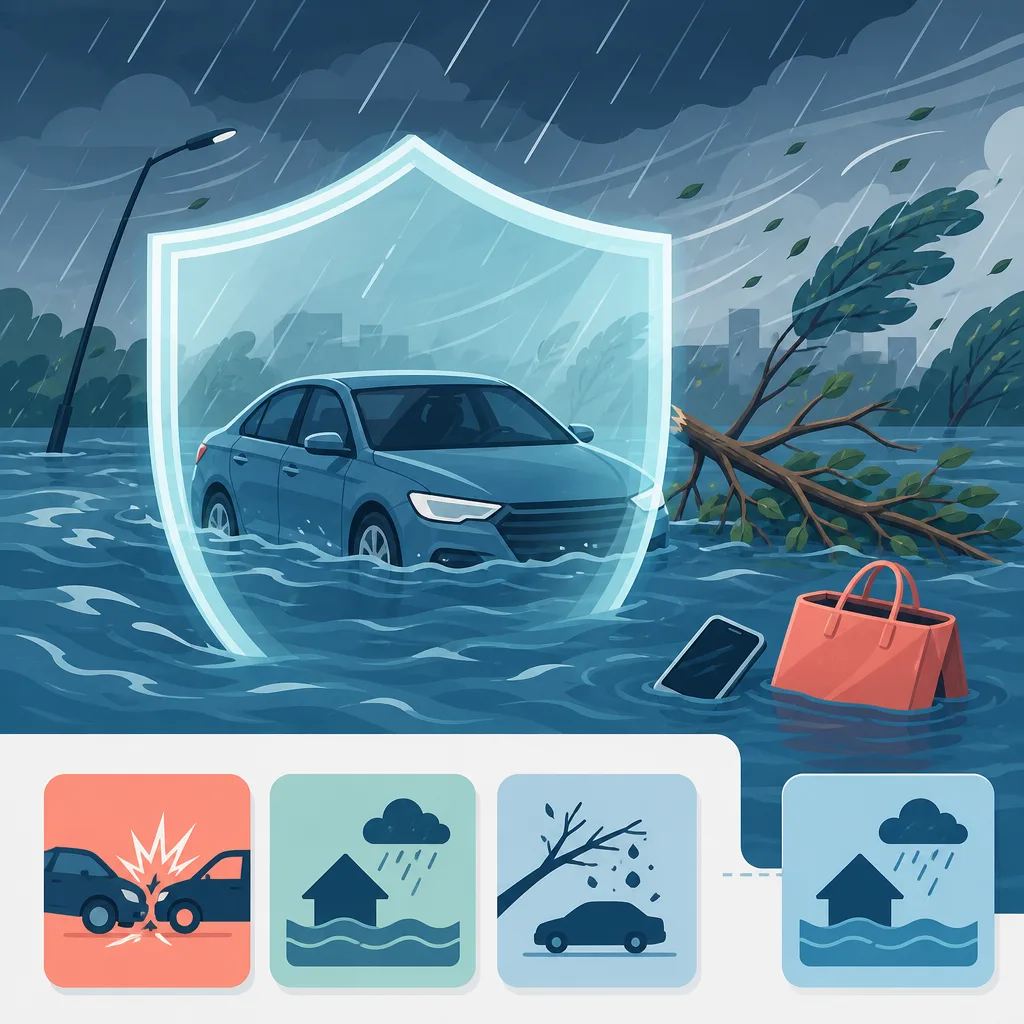
Vehicle flooding and damage from falling objects or strong winds caused by typhoons or torrential rain are not always covered merely because own-damage coverage is in place. You must also check the single-vehicle accident coverage rider, the cause of the accident, the driver's intentional misconduct or gross negligence, the insured value, and the policy terms.
- Basic own-damage coverage, which primarily covers collisions with other vehicles, may not cover damage caused by natural disasters.
- If you have a single-vehicle accident coverage rider, damage from floods, typhoons, or falling objects while the vehicle is normally parked or being driven may be covered.
- Coverage may be limited if rainwater entered through an open window or the driver intentionally entered a restricted area.
- Personal belongings inside the vehicle, such as mobile phones and bags, are generally not covered by own-damage insurance.
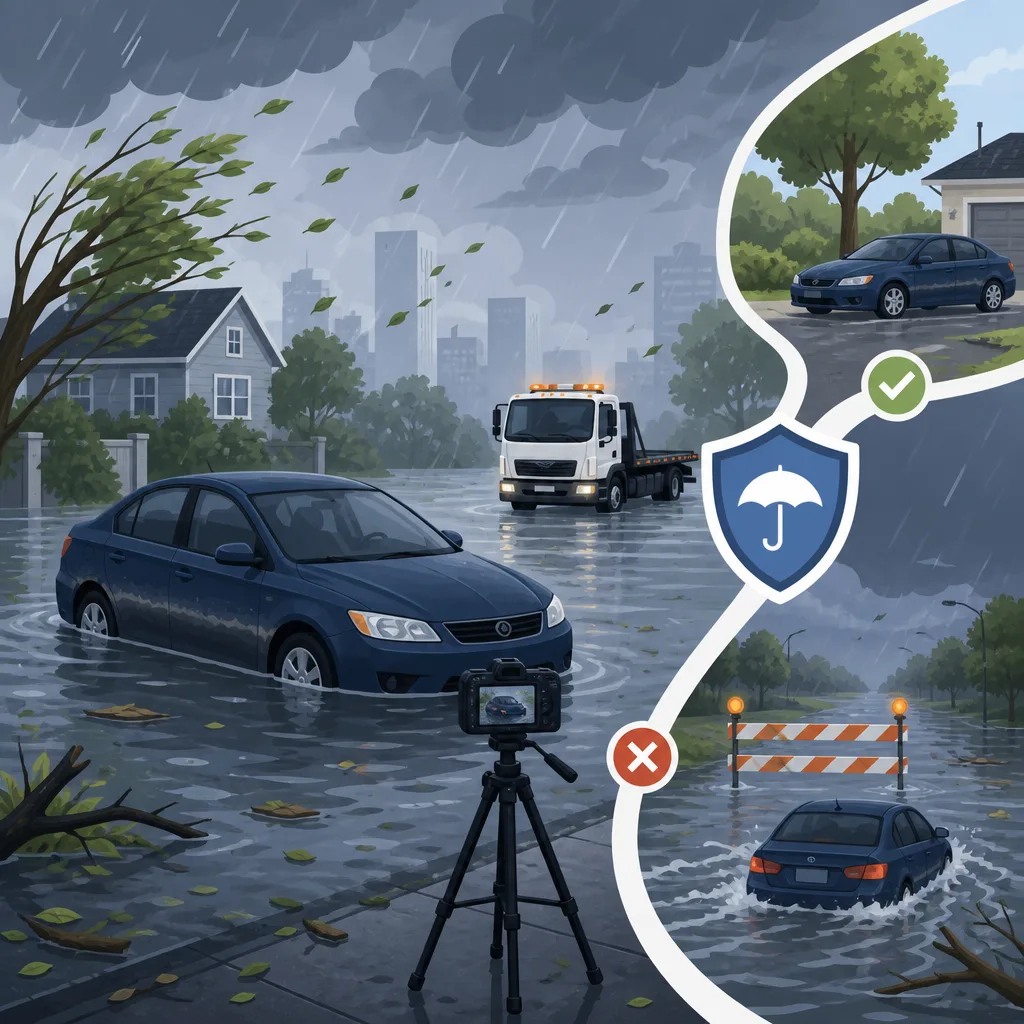
- Immediately after flooding, do not restart the vehicle. Photograph the waterline marks and the scene, then report the incident to the insurer to reduce additional damage and disputes.
A vehicle is not automatically covered by auto insurance simply because it was flooded or damaged by falling objects during a typhoon or torrential rain. The key questions are whether the policy included coverage for own-vehicle damage and an endorsement covering natural disasters and single-vehicle accidents at the time of the accident, and whether the loss qualifies as a covered event under the policy terms.
Because endorsement names and detailed conditions vary by insurer and product, the information below should be used as general guidance. Final coverage must be confirmed based on the policy and terms in effect on the date of the accident.
Insurance Coverage to Check First
What Is Own-Vehicle Damage Coverage?
Own-vehicle damage coverage covers damage to the insured vehicle itself. However, basic own-vehicle damage coverage under Korean auto insurance is generally structured around collisions or contact with other vehicles and vehicle theft, and it cannot be assumed to cover all single-vehicle accidents, such as collisions with walls or guardrails or flooding.
If you purchased only bodily injury liability, property damage liability, and personal injury coverage without own-vehicle damage coverage, repair costs for your own vehicle damaged by a typhoon or heavy rain will generally be difficult to recover under your own auto insurance.
Why a Single-Vehicle Accident Coverage Endorsement Is Important
Damage caused by flooding, overflow, typhoons, falling objects, or collisions with objects is often addressed under a single-vehicle accident coverage endorsement added to own-vehicle damage coverage. Depending on the insurer, it may have a different name, such as expanded single-vehicle accident coverage or single-vehicle accident coverage.
It is advisable to check the following items on your policy or in your insurer’s app.
- Whether own-vehicle damage coverage is included
- Whether a single-vehicle accident coverage endorsement is included
- Whether covered risks such as flooding, typhoons, and falling objects are expressly listed
- The insured amount and the vehicle’s value at the time of the accident
- The type of deductible and how it applies
- The distance and cost limits for emergency roadside assistance and towing services
| Enrollment status | General assessment |
|---|---|
| No own-vehicle damage coverage | Coverage for repair costs due to flooding or damage to your own vehicle is unlikely |
| Basic own-vehicle damage coverage only | Collisions with another vehicle may be covered, but the policy terms must be checked for natural disasters and single-vehicle accidents |
| Own-vehicle damage coverage and a single-vehicle accident endorsement | Flood, typhoon, and falling-object damage is likely to fall within the scope of coverage |
Coverage Standards for Flooding and Damage by Situation
When a Properly Parked Vehicle Is Flooded
If a vehicle parked in a designated parking area is flooded by an unexpected torrential downpour or river overflow, it is likely to be covered under a single-vehicle accident coverage endorsement. Whether a vehicle parked in an underground parking garage or along a road is covered or excluded is not determined solely by its location.
However, factors may also be considered, including whether a flood warning or evacuation request had been issued, whether the location was a no-parking or restricted area, and whether there had been a realistic opportunity to move the vehicle.
When a Road Suddenly Floods While Driving
If a vehicle is flooded by rapidly rising water while being driven on a road that was normally open to traffic, it may be recognized as a covered event. Coverage is not always denied simply because the driver made some error in judgment.
On the other hand, if the driver entered a road blocked by the police or local government or attempted to pass through an area where the flood depth was obvious, the insurer may investigate willful misconduct or gross negligence and its causal relationship to the loss. Whether coverage is actually reduced or excluded depends on the specific facts and policy terms.
When a Vehicle Is Damaged by Falling Objects or Strong Winds
Damage caused when a sign, tree branch, facility component, or other object blown by strong winds strikes a vehicle may also be included under falling-object, flying-object, or typhoon-related coverage in a single-vehicle accident endorsement. It is important to take photographs clearly showing the direct impact marks and the location of the fallen object.
If an object fell because of a defect in a building’s exterior wall or managed facilities, the liability of the building owner, occupant, or facility manager may arise separately from the auto insurance claim. However, negligence in management must be proven, so the manager is not automatically held liable merely because a natural disaster occurred.
Rainwater Intrusion Must Be Distinguished from Mechanical Failure
If rainwater entered because a window or sunroof was left open, the incident may not qualify as flooding under the policy terms, or coverage may be restricted because of the causal relationship between inadequate care and the loss. If the lower part of the vehicle was not submerged and water entered because of a simple leak or a defect in the vehicle itself, the event may also be treated differently from natural-disaster flooding.
Natural engine or transmission failure, aging, and manufacturing defects are generally distinguished from accidental events covered by auto insurance. Maintenance diagnostics and evidence from the scene must establish that the failure was caused by flooding.
Major Cases in Which Coverage May Be Restricted
The following circumstances do not necessarily result in a complete denial of coverage, but the insurer may closely investigate the cause of the accident and whether the policy terms apply.
- Rainwater entered because a window, sunroof, or roof was left open
- The driver intentionally entered a flooded road restricted by the police or an administrative authority
- The vehicle was left in an area with an obvious flood risk, such as a riverside or floodplain, and an evacuation order was not followed
- The engine was repeatedly started after the vehicle was flooded, worsening the engine damage
- A failure or corrosion that existed before the accident was claimed as flood damage
- The vehicle was intentionally flooded, or false information was provided about the accident or extent of the loss
- The loss occurred before the insurance was purchased or the accident occurred outside the coverage period
If the claim is denied or reduced, it is advisable to request in writing the applicable policy provisions, accident investigation findings, and basis for calculating the loss. Rather than accepting a conclusion based only on the explanation that the vehicle was in a “flood-risk area,” the existence of access restrictions, timing of warnings, feasibility of moving the vehicle, and actual cause of flooding should be specifically verified.
Scope of Coverage by Item
| Loss item | General handling principle | Items to check |
|---|---|---|
| Repair costs for the body, engine, and electrical systems | If the event is covered, the amount is calculated within the vehicle’s value at the time of the accident and the insured amount | Causal relationship between the flooding and failure, deductible |
| Standard equipment inside the vehicle | Equipment ordinarily attached to the vehicle may be included in vehicle damage | Whether it is an original part or an accessory registered with the insurer |
| Separately installed accessories | Coverage may be restricted if they were not reflected as accessories on the policy | Whether items such as a dashcam or audio system were registered, and receipts |
| Personal items such as mobile phones, laptops, and bags | Generally not covered by own-vehicle damage coverage | Potential coverage under separate property insurance or liability coverage |
| Towing costs | May be handled under emergency roadside assistance or as reasonable expenses necessary to prevent further loss | Free towing distance, excess charges, storage fees, and prior approval from the insurer |
| Rental car or transportation costs | Not automatically paid under own-vehicle damage coverage | Whether a separate endorsement applies or a liable third party must compensate the loss |
| Total-loss payment | Determined based on repair feasibility, estimated repair costs, the vehicle’s value at the time of the accident, and other factors | Insured amount, vehicle value, handling of salvage, and policy deductions |
Personal Items Inside the Vehicle
Own-vehicle damage coverage applies to the vehicle itself and accessories recognized under the policy terms. Personal belongings left in the vehicle, such as cash, luxury goods, mobile phones, laptops, golf clubs, and documents, are generally not covered. Before disposing of flooded items, retaining photographs, purchase receipts, and product serial numbers can help when reviewing possible coverage under other insurance or compensation from a third party.
Towing Costs and Storage Fees
If the policy includes an emergency roadside assistance endorsement, towing service may be provided up to a specified distance. Costs beyond the free towing distance, private tow-truck charges, and long-term storage fees are not all automatically covered. Unless the situation is an immediate safety emergency, filing a claim with the insurer first and receiving instructions on the designated procedures and towing company can reduce disputes.
Total-Loss Handling
If flood damage is severe enough that repairs are technically difficult or estimated repair costs approach or exceed the vehicle’s value at the time of the accident, the insurer may classify the vehicle as a total loss. The insurance payment is based not on the purchase price of a new vehicle but on the vehicle’s value at the time of the accident, the insured amount, and the calculation method specified in the policy terms.
Whether a vehicle is a total loss is not determined solely by how high the water rose. The scope of damage and repair feasibility must be assessed for the engine, transmission, high-voltage battery, electronic control units, interior wiring, and safety systems. Ownership of the remaining vehicle and procedures for scrapping or selling it may be tied to conditions for payment of the claim, so the insurer should be consulted before the vehicle is disposed of independently.
What to Do Immediately After an Accident
1. Ensure Personal Safety First
If there is a strong current or the water level continues to rise, do not enter the water to protect or move the vehicle. Evacuate to a safe location and, if necessary, request assistance from emergency agencies such as the fire department or police.
2. Avoid Starting the Vehicle or Operating Its Electrical Systems
Do not start the vehicle even after the water has receded. Starting the engine when water has entered the air intake system may worsen the damage. With electric and hybrid vehicles, do not approach high-voltage components or touch orange high-voltage cables.
3. Photograph the Scene and the Vehicle’s Condition
To the extent it is safe, record the following in photographs or video.
- The entire vehicle and its license plate
- The water level around the vehicle and watermarks left on the body
- Parking lines, road signs, restriction lines, and warning signs
- The closed position of the windows and sunroof
- Signs of flooding in the interior, engine compartment, and trunk
- The location of any fallen object and the impact area on the vehicle
- Dashboard warning lights and mileage
- Weather alerts or parking records that can verify the time of the accident
4. Report the Accident to the Insurer Immediately
Accurately provide the date and time, location, whether the vehicle was parked or being driven, the cause of flooding, estimated water level, and whether the vehicle was restarted. If emergency roadside assistance and towing are needed, obtain a claim number and confirm which costs will be covered.
5. Have the Damage Inspected Before Making Repairs or Disposing of Anything
If cleaning, disassembly, or repairs begin before the insurer’s inspection or a repair shop’s diagnosis, it may be difficult to verify the vehicle’s original condition after the loss. If emergency action was unavoidable, retain photographs from before and after the work and all receipts.
6. Compare the Policy with the Terms and Conditions
Do not look only at the name of the endorsement. Check the definitions and exclusions for floods, typhoons, flooding, falling objects, and single-vehicle accidents in the terms that were valid on the date of the accident. You should also check whether an endorsement was omitted during renewal or whether the coverage conditions changed.
Claim Calculation and Dispute Issues to Check
The insurance payment is not always equal to the full amount actually spent on repairs. Factors specified in the policy terms may be applied, including the insured amount, the vehicle’s value at the time of the accident, scope of repairs, depreciation of parts, deductible, and salvage value.
If you disagree with the insurer’s decision, request or submit the following materials.
- The exact policy provisions applied to approve or deny coverage
- The loss assessment report and itemized repair-cost calculation
- The basis for calculating the vehicle’s value at the time of the accident and the insured amount
- Materials used to determine willful misconduct, gross negligence, or a pre-existing failure
- A repair shop’s diagnostic report on the cause of flooding and repair feasibility
- Scene photographs, dashcam footage, parking records, and the times when restriction or evacuation notices were issued
The key is not the label “typhoon damage,” but proving what coverage was in place, what caused the damage, and which parts were damaged.
FAQ
If I have own vehicle damage coverage, is typhoon-related flood damage always covered?
No. If you only have basic own vehicle damage coverage, natural disasters or single-vehicle accidents may be excluded. You should check your insurance policy to confirm that it includes the single-vehicle accident coverage rider and covered risks related to floods and typhoons.
Can I receive compensation if my car is flooded while parked in an underground parking garage?
If the car was flooded by unexpectedly heavy rainfall in a normal parking area and you have the relevant rider, the damage may be covered. The specific circumstances may also be reviewed, including whether you failed to follow evacuation instructions and whether you were aware of the flood risk and able to move the vehicle.
Is it also covered if my car stalls while driving through a flooded road?
If a road that was normally passable suddenly flooded, it may be recognized as a covered accident. However, if you entered a closed road or attempted to drive through an obviously dangerous section, whether there was intent or gross negligence and whether it caused the damage may be investigated.
Is flood damage covered if rainwater enters the car through an open window?
It is highly likely to be treated differently from ordinary flood damage. If an open window or sunroof directly caused the water to enter, it may not be recognized as a covered accident under the policy terms, or coverage may be limited.
Is damage covered if a sign or tree branch blown by strong winds strikes the vehicle?
It may be covered if the single-vehicle accident rider covers falling or flying objects or typhoon damage. To make it easier to prove the cause of the accident, you should take photos showing the fallen or flying object, the damaged area, and the vehicle's location together.
Why should I not start a flooded car?
Starting the car when water has entered the engine intake system or electrical components may worsen damage to the engine and electrical systems. Additional damage caused by repeated attempts to restart the car may become an issue during the claims process, so the car should be towed and inspected.
Are a mobile phone or laptop that was inside the car also covered by auto insurance?
In general, own vehicle damage coverage applies to the vehicle and accessories specified in the policy terms, so personal belongings are not covered. You should separately check whether coverage is available under separate property insurance or whether you can seek damages from a responsible third party.
How badly must a flooded vehicle be damaged for it to be treated as a total loss?
It is not determined solely by a uniform water-level standard. The insurer makes a determination under the policy terms based on an overall assessment of factors such as whether the vehicle can be repaired, damage to the engine, transmission, and electrical components, the estimated repair cost, and the vehicle's value at the time of the accident.
Does the insurer cover all towing costs for a flooded vehicle?
Assistance may be provided within the free towing distance and cost limit of the roadside assistance rider, but excess charges, private towing fees, and long-term storage fees are not all automatically covered. If possible, you should obtain a claim reference number from the insurer before towing and confirm the scope of covered costs.
What should I check if the insurer denies my flood damage claim?
Request in writing the policy provisions applied, the findings of the accident investigation, the grounds for exclusion, and the basis for calculating the vehicle's value and the amount of damage. It is also advisable to prepare supporting evidence to challenge the decision, such as photos of the scene, the time the road was closed, parking records, and a repair shop's diagnostic report.
Sources
Images