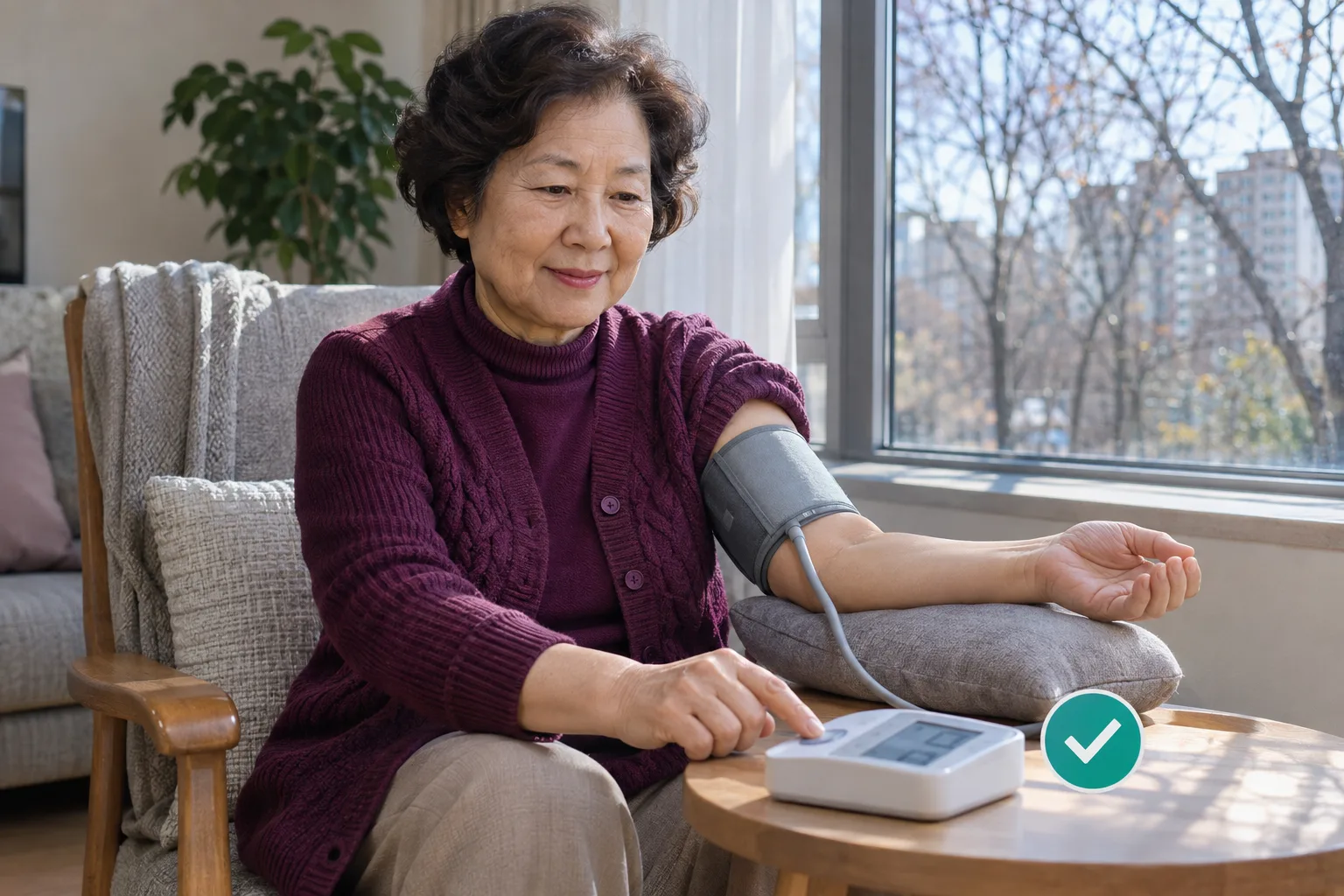
Healthy Lifestyle Incentives: 120,000 Points and Eligibility
The Healthy Lifestyle Incentive Program lets eligible participants earn points through health management activities. The prevention track offers up to 120,000 points over 2 years, while the management track offers up to 80,000 points over 1 year. Participation requirements and where points can be used differ by track.
- To join the prevention track, you must meet the requirements for health screening results, age and the address on your resident registration.
- The management track is for patients with hypertension or diabetes who are enrolled in the Primary Care Chronic Disease Management Program and have a care plan in place.
- The maximum points you can earn are 120,000 over 2 years for the prevention track and 80,000 over 1 year for the management track.
- Check your eligibility on the National Health Insurance Service website or the Health Insurance 25 Hours app, then apply to participate.
- You can use accumulated points at designated online stores. Participants in the management track can also use them to pay for medical care at participating clinics.
The Healthy Living Practice Incentive Program lets eligible participants earn points for health management activities such as walking. The prevention track offers up to 120,000 points over 2 years. The management track offers up to 80,000 points over 1 year. Check your eligibility with the National Health Insurance Service before applying.
These maximum amounts are based on the K-Gonggam guidance dated July 23, 2026. Detailed conditions are available on the Service’s program overview page.
Eligibility for the Prevention and Management Tracks
Your participation track depends on your health screening results and enrollment in the chronic disease management program. You cannot simply choose the track with the higher points limit. Check which track you can apply for on the Service’s eligibility check screen.
| Category | Prevention track | Management track |
|---|---|---|
| Basic eligibility | People aged 20 to 64 identified as at risk through a national health screening | Patients with hypertension or diabetes enrolled in the Primary Care Chronic Disease Management Program |
| Additional requirements | Meet the body mass index requirement and either the blood pressure or fasting blood glucose requirement | Have a care plan established |
| Location requirement | Your registered residential address at the time of application must be in an area offering the prevention track | Nationwide |
| Maximum points over the participation period | 120,000 points over 2 years | 80,000 points over 1 year |
The prevention track requires a body mass index (BMI) of at least 25.0kg/㎡. BMI is a measure calculated from height and weight. You must also meet either the blood pressure or fasting blood glucose requirement.
- Blood pressure requirement: Systolic pressure of at least 120mmHg or diastolic pressure of at least 80mmHg
- Fasting blood glucose requirement: At least 100mg/dL
This does not mean that meeting just one of the obesity, blood pressure, or blood glucose criteria is enough. The management track’s care plan is a personalized health management plan developed by a clinic. Taking medication alone does not mean you are enrolled. Detailed eligibility requirements are provided in the National Health Insurance Service program overview.
What to Check First for Your Situation
For the prevention track, you need to check both your screening results and your residential address. For the management track, first check whether the clinic treating you participates in the program. Even with the same health condition, your application outcome may differ depending on your program enrollment status.
| Current situation | What to check first |
|---|---|
| Your health screening flagged obesity or elevated blood pressure or blood glucose | Whether you meet the prevention track’s combined requirements |
| Your workplace is in an area offering the prevention track | Your registered residential address, not your workplace address |
| You are being treated for hypertension or diabetes | Enrollment in the Primary Care Chronic Disease Management Program and your care plan |
| You are outside the prevention track’s age range | Whether you meet the management track’s eligibility requirements |
| Some time has passed since your screening or care plan was established | Your individual application deadline as shown by the Service |
The Service’s regional table lists 50 areas offering the prevention track from December 15, 2025. It lists the management track as available nationwide from September 30, 2024. Before applying, check the latest list of prevention-track areas in the Service’s program overview. (Confirmed figure: 50 areas offering the prevention track, from December 15, 2025 · Source nhis.or.kr · As of 2025-12-15 · Checked 2026-11-04)
How Many Points Can You Earn for Walking?
Walking points are awarded on days when you meet your track’s requirements. For the prevention track, the amount depends on your daily step count. For the management track, it depends on the step target set in your care plan.
| Prevention track daily step count | Points earned per day |
|---|---|
| At least 5,000 but less than 6,000 steps | 50 points |
| At least 6,000 but less than 7,000 steps | 60 points |
| At least 7,000 but less than 8,000 steps | 70 points |
| At least 8,000 but less than 9,000 steps | 80 points |
| At least 9,000 but less than 10,000 steps | 90 points |
| At least 10,000 steps | 100 points |
The prevention track’s walking points limit is 70,000 points over 2 years. The annual walking limit is 35,000 points. Participation in health management programs and improvements in health indicators are separate earning categories.
Under the management track, you earn 100 points per day when you reach your step target. The walking category has a limit of 20,000 points over 1 year. Points are also awarded for blood pressure and blood glucose self-monitoring, education and counseling, and reviews and evaluations. Check the Service’s points criteria table for each category’s requirements.
Common Mistakes When Reading the Maximum Points
The maximum points are not earned through walking alone. They are the combined limit for several activities. The prevention and management tracks also use different earning periods.
| Easily misunderstood statement | Correct interpretation |
|---|---|
| The prevention track offers 120,000 points every year | Up to 120,000 points across all categories over 2 years |
| The management track pays 80,000 points when you apply | You must meet the activity-specific requirements over 1 year to earn up to 80,000 points |
| Walking more lets you earn unlimited points | Daily requirements and category-specific earning limits apply |
| The track with the higher maximum is more advantageous | Your eligibility determines your participation track |
A Calculation Using Matching Time Periods
Dividing the prevention track’s 120,000 points by 2 years gives an annual average of 60,000 points. This calculation helps explain the difference between the two tracks’ earning periods. It does not mean that a fixed amount of 60,000 points is awarded every year.
Comparing walking alone, the prevention track’s annual limit is 35,000 points. The management track’s walking limit is 20,000 points over 1 year. Actual earnings depend on the activities that meet each track’s qualifying criteria.
How to Check Eligibility and Apply
You can check your eligibility and apply through the Service’s website or the Geongangboheom25si app. The website’s current menu name is Geongangmoa. If you cannot find the Health iN menu mentioned in older guidance, use the site-wide search.
- Log in to the National Health Insurance Service website or the Geongangboheom25si app.
- Open the Healthy Living Practice Incentive Program’s eligibility check and participation application menu.
- Check which track you can apply for and your individual application period.
- Follow the on-screen instructions to complete your application.
- Link your step count in the app, then check your activity records.
If applying online is difficult, you can apply at the responsible Service branch. Before visiting, call customer service at 1577-1000 to check which documents you need. Even if the application menu is open, you must check your individual application deadline separately.
What to Check When You Have Walked but Have No Points
Your step count must be linked to the Service’s app to earn walking points. Seeing your step count in another app on your phone is not enough. Check whether your records are appearing in the Service’s app.
If your step count is not linked to the mobile app (The Health Insurance), you cannot earn practice incentive points for your steps. Please link your step count as described below.
National Health Insurance Service, “Guide to Logging In and Linking Step Counts for the Healthy Living Practice Incentive Pilot Program”
- Check your participation status in the Geongangboheom25si app.
- Check your step-count linking settings and connection status.
- Check whether the Service’s app displays your step count for the relevant date.
- Compare it against your track’s target and walking points limit.
- If the problem continues, have the date and app screenshots ready and contact the Service.
The quoted document uses the app’s former name. The current app’s menu layout may differ from the document. You can find the linking principles and setup examples in the Service’s step-count linking guide.
Where to Use Points and What to Do if Smartphones Are Difficult
Points can be used to buy products at a designated online store. Management-track participants can also use them to pay medical bills at participating clinics. They are used differently from cash deposited into a bank account.
| How to use points | Eligibility and conditions |
|---|---|
| Designated online store | Buy products at Hyundai Ezwel, as directed by the Service |
| Health Practice Card | Management-track participants obtain the card through Chak (chak) and use it to pay medical bills |
| Card-free medical bill deduction | Management-track participants pay up to their available points balance at the participating clinic where they are registered |
The Service’s 2026 program guidance states that points can be used as soon as they are earned. The minimum points requirement in earlier guidance has been removed. Check your account screen to see how much time remains to use your points. The changes are stated in the 2026 Health Insurance System Guide.
Management-track participants who find smartphones difficult to use should ask their clinic about payment through points deduction. A method is available for using points toward medical bills without obtaining a separate card. It does not cover medical charges beyond your available points balance. This change can be confirmed in the Ministry of Health and Welfare’s announcement of December 15, 2025.
Comparison with Wrist Doctor 9988 and Ttunteun Money
The three programs have different eligibility requirements and activity verification methods. If you are not eligible for the Healthy Living Practice Incentive Program, you can check the requirements for the other programs. Do not assume that steps recorded in one app will automatically count toward another program.
| Program | Main eligibility requirements | How activities are recognized | How points are used |
|---|---|---|---|
| Healthy Living Practice Incentive Program | Being identified as at risk through a health screening or enrolled in the chronic disease management program | Step counts in the Service’s app and health management activity records | Designated online store, clinics participating in the management track |
| Wrist Doctor 9988 | Seoul residents aged at least 18, among others | Walking and health management activities in the app | Converted to Seoul Pay for use at participating merchants |
| Ttunteun Money | Korean nationals aged at least 4, according to the 2026 guidance | Verification of sports activities and fitness assessments | Converted into sports vouchers and other options |
Wrist Doctor 9988 also covers employees, self-employed people, and university students based in Seoul. Seoul’s policy guidance lists a maximum of 142,000 points. Check the Seoul Policy Archive for eligibility requirements and earning categories.
Ttunteun Money’s basic earning limit for 2026 is 50,000 points per year. At participating facilities, you verify your activity with QR codes at the start and end of your workout. The guidance requires at least 30 minutes of exercise for it to count. See the 2026 Ttunteun Money Guide for specific activity requirements.
FAQ
Can anyone apply for the Healthy Lifestyle Practice Support Program just by walking?
No. For the preventive type, you must meet the age, health screening result, and residential address requirements. The management type requires enrollment in the Primary Care Chronic Disease Management Program and an established care plan.
For the preventive type, is meeting the obesity criterion enough?
No. You must have a body mass index of at least 25.0kg/㎡ and also meet the blood pressure or fasting blood glucose criteria. Check with the National Health Insurance Service for final confirmation of whether you can apply.
Do I also need to live in a specific area for the management type?
The management type is available nationwide. However, patients with hypertension or diabetes must meet the program enrollment and care plan requirements.
Can I receive 120,000 points every year?
The 120,000 points for the preventive type is the maximum you can earn over 2 years. These points are not awarded simply for applying.
Can I earn the maximum points just by meeting the step count target?
No. The overall limit also includes health management activities other than walking. A separate limit applies to walking.
Which app do I use to apply?
You can apply through the National Health Insurance Service's Health Insurance 25si app. You can also use the eligibility check and participation application menu on the Service's website.
Are points credited automatically if my steps are recorded in another step counter app?
Your step count must be synced with the National Health Insurance Service's app. After applying to participate, check the connection status and the step counts recorded.
Do I need to accumulate at least a certain amount of points before I can use them?
The National Health Insurance Service's 2026 program guide states that the minimum points requirement has been removed. Points can be used as soon as they are earned.
Can I receive the points in my bank account?
The National Health Insurance Service explains that points can be used to buy products from designated online stores and pay medical bills under the management type, among other uses. This should not be understood as a program that pays cash into your bank account.
Can I apply even if I have difficulty using a smartphone?
You can apply by visiting the National Health Insurance Service branch responsible for your area. For the management type, you can also ask the participating clinic where you are registered about having your medical bills reduced without using a card.
When is the application deadline?
Check the application window based on your health screening date or the date your care plan was established. You can get guidance from the National Health Insurance Service's eligibility check screen or customer service center.
Is this the same program as Wrist Doctor 9988 or Ttuntun Money?
These are separate programs. You need to check each program's eligibility requirements, activity verification process, and where points can be used.
Sources
- National Health Insurance Service: Overview of the Healthy Lifestyle Practice Support Fund Program
- National Health Insurance Service: Check Eligibility and Apply to Participate
- K-Gonggam: Walk Every Day, Stay Healthy, and Earn Points Too, July 23, 2026
- National Health Insurance Service: Guide to Changes in the Health Insurance and Long-Term Care Insurance Systems in 2026
- National Health Insurance Service: Login and Step Count Syncing Instructions for the Healthy Lifestyle Practice Support Fund Pilot Program
- Ministry of Health and Welfare: Announcement of Automatic Medical Bill Deductions Using Healthy Lifestyle Practice Support Funds and Expansion of Areas Covered by the Prevention Program, December 15, 2025
- Seoul Metropolitan Government Policy Archive: Wrist Doctor 9988
- Korea Policy Briefing: Guide to the 2026 Teunteun Money Program
Images