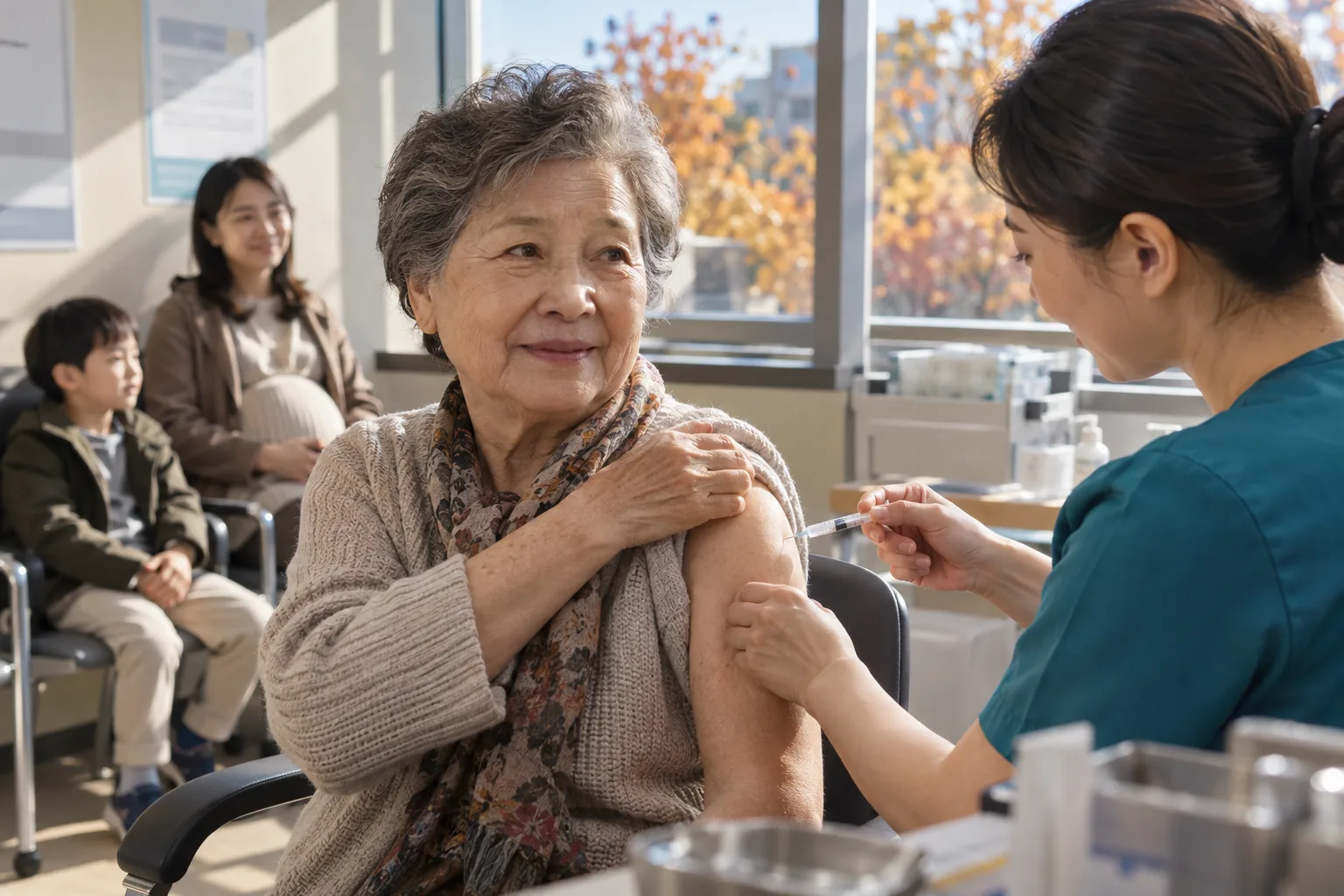
2026 National Flu Vaccination Schedule by Age
For the 2026-2027 season, free vaccinations are available to children aged 6 months to 14 years, pregnant women, and adults aged 65 and older. Vaccinations begin September 21 for children and pregnant women, and October 6, 12, or 15 for older adults, depending on age.
- For the 2026-2027 season, children aged 6 months to 14 years are eligible.
- The start date for children who need one dose has also been moved up to September 21, 2026.
- Vaccinations for older adults begin on October 6 for those aged 75 and older, October 12 for those aged 70 to 74, and October 15 for those aged 65 to 69.
- Free vaccinations for all eligible groups this season end on April 30, 2027.
- You can use a participating medical facility regardless of your address, but must check whether vaccinations are available before visiting.
The national influenza vaccination program for the 2026-2027 season provides free vaccinations to children, pregnant women, and adults aged 65 or older. Children who need two doses and pregnant women can start getting vaccinated on September 21. Vaccination for older adults begins on October 6, 12, or 15, depending on age.
The dates and figures are based on the Korea Disease Control and Prevention Agency's September 16, 2026 announcement and its guidelines for the 2026-2027 season.
Who is eligible for free vaccination and what is covered
This season, the program covers children aged 6 months to 14 years, pregnant women, and adults aged 65 or older. It pays for influenza vaccination for people who meet the national eligibility criteria. The vaccine provided is an inactivated trivalent influenza vaccine.
| Group | Eligibility for the 2026-2027 season | How eligibility is confirmed |
|---|---|---|
| Children | Aged 6 months to 14 years, born January 1, 2012, through August 31, 2026 | Actual date of birth |
| Pregnant women | Women whose pregnancy has been confirmed | Maternity record book, pregnancy confirmation certificate, or similar document, regardless of stage of pregnancy |
| Older adults | Born by December 31, 1961 | Birth year on resident registration records |
The upper age limit for children has expanded from 13 last season to 14 this season. If a child's registered date of birth differs from their actual date of birth, the actual date applies. Pregnant women are not excluded from the program simply because they are in early pregnancy. The detailed criteria are set out in the vaccination program information.
Influenza vaccination schedules by age group
An adjustment on September 16, 2026 moved up the start dates for children who need one dose and for older adults. The Korea Disease Control and Prevention Agency cited an early influenza season and the need to protect high-risk groups as reasons for the change. The start dates for children who need two doses and for pregnant women have not changed.
| Group | Previous start date | New start date |
|---|---|---|
| Children who need one dose | September 28, 2026 | September 21, 2026 |
| Children who need two doses | September 21, 2026 | September 21, 2026 |
| Pregnant women | September 21, 2026 | September 21, 2026 |
| Aged 75 or older, born by December 31, 1951 | October 12, 2026 | October 6, 2026 |
| Aged 70 to 74, born from 1952 to 1956 | October 15, 2026 | October 12, 2026 |
| Aged 65 to 69, born from 1957 to 1961 | October 19, 2026 | October 15, 2026 |
The program ends for all groups on April 30, 2027. Moving up the start dates did not change the end date. The revised schedule and program period are available in the 2026-2027 influenza season guidelines.
There is an exception for high-risk older adults, including those with weakened immune systems. After consulting a healthcare professional, they can be vaccinated from October 6 regardless of their age group's start date. Separate start-date criteria based on vaccine supply apply to long-term care hospitals and facilities. This exception is set out in the Korea Disease Control and Prevention Agency's September 16 announcement.
How is the number of doses for children determined?
The number of doses a child needs this season depends on their age and vaccination history. Having the same start date does not mean children need the same number of doses. For children aged 6 months to less than 9 years, previous vaccination records must be checked.
| Age and vaccination history | Doses needed this season |
|---|---|
| Aged 6 months to less than 9 years, receiving influenza vaccination for the first time or with an unknown history | Two doses at least 4 weeks apart |
| Same age group, with one dose in total by June 30, 2026 | Two doses at least 4 weeks apart |
| Same age group, with at least two doses in total by June 30, 2026 | One dose |
| Eligible children aged 9 or older | One dose, regardless of vaccination history |
The total number of previous doses is not limited to doses received in the same season. Doses received in different seasons also count. The physician conducting the pre-vaccination screening checks the records and determines the final number of doses and vaccination dates. These rules come from the vaccination standards in the guidelines.
Applying the rules: birth dates and when vaccination is possible
Being within the eligible birth-date range is not the same as being able to get vaccinated immediately. A minimum age also applies to children on the day of vaccination. For older adults, this season's birth-year criteria apply.
| Situation | Result under the criteria |
|---|---|
| A child's birth date is within the eligible range, but the child is not yet 6 months old | The child cannot be vaccinated before reaching 6 months of age |
| A person born in 1961 has not yet had their birthday in 2026 | The start date for their birth-year group applies; they do not need to wait for their birthday |
| Vaccination takes place in 2027 | The birth-date cutoff for older adults remains December 31, 1961, for this season |
These examples apply the birth-date and minimum-age criteria in the program information to different situations. A change in calendar year does not automatically change the birth years eligible for the program. When scheduling vaccinations for family members, check each person's criteria separately.
Checking vaccination sites and vaccine availability
You can get vaccinated at a participating medical institution or public health center outside your area of residence. The Korea Disease Control and Prevention Agency's “Moving Up National Vaccinations for Children and Older Adults in Response to an Early Influenza Season” states:
National influenza vaccinations are available at nearby participating medical institutions and public health centers regardless of where you live.
When searching for a facility, select the correct group: children, older adults, or pregnant women. Even if a facility appears as a participating medical institution, you still need to confirm whether it can provide vaccination that day. Vaccine information for each facility may change.
- Go to “Vaccination Management” on the vaccination information site.
- Select “Find a Participating Medical Institution > Influenza Vaccination.”
- Select the eligible group and region to search for facilities.
- Contact the facility you plan to visit to confirm whether vaccination is available and whether it has vaccine in stock.
You can also search separately for facilities that have cell-cultured vaccines. Eligible people can receive this vaccine under the national program this season. If you have an egg allergy, consult a doctor before vaccination. Search results and stock information are available through Find an Influenza Vaccination Provider.
Documents to bring and observation after vaccination
Bring documents that confirm your eligibility when you visit. For children, these include a resident registration certificate or National Health Insurance card. Pregnant women need a maternity record book or other proof of pregnancy.
| Group | Documents to prepare |
|---|---|
| Older adults | ID |
| Children | Resident registration certificate, National Health Insurance card, or similar document |
| Pregnant women | ID and maternity record book, pregnancy confirmation certificate, or similar document |
After vaccination, remain at the facility for 20 to 30 minutes so staff can watch for adverse reactions. Get plenty of rest after returning home. This follows the Korea Disease Control and Prevention Agency's guidance for before and after vaccination.
Common mistakes when reading older guidance
Even on an official website, check which season a page applies to and when it was last updated. General information about influenza and this season's program information may have been updated at different times. Read eligibility and schedule information in the guidance for the relevant season.
- Applying older guidance that lists the upper age limit for children as 13 to this season is a mistake.
- You may remember September 28 as the start date for children who need one dose, but that was the date before the change.
- Do not interpret a facility appearing in search results as confirmation that it has vaccine available that day or that a booking is complete.
The general influenza information page was last reviewed on January 20, 2025. It still lists children up to age 13 as eligible. For this season's age limit of 14, follow the program information and guidelines cited above.
Frequently asked questions
Do I need another vaccination this year if I was vaccinated last year?
Older adults and pregnant women receive one dose each year regardless of vaccinations in previous seasons. For children, the number of doses depends on age and total vaccination history.
If I qualify for free vaccination, can I go to any hospital?
You must go to a medical institution participating in the national program or a public health center that provides vaccinations. There is no restriction based on where you live, but you should confirm that the facility can provide the vaccination.
Am I eligible in early pregnancy?
You are eligible regardless of the stage of pregnancy. Your pregnancy is confirmed with a maternity record book, pregnancy confirmation certificate, or similar document.
Does the program end if I cannot get vaccinated on the start date?
The start date is the first day vaccination is available. The program runs through April 30, 2027, for this season.
The program rules in these answers follow the vaccination information site's guidance for this season.
FAQ
Who is eligible for free vaccination in the 2026-2027 season?
Children aged 6 months to 14 years, pregnant people, and adults aged 65 or older. Eligible children were born from January 1, 2012, through August 31, 2026. Eligible older adults were born on or before December 31, 1961.
When does influenza vaccination start for older adults?
In 2026, vaccination starts on October 6 for adults aged 75 or older and October 12 for those aged 70 to 74. For those aged 65 to 69, it starts on October 15.
Do children who need only one dose also start getting vaccinated on September 21?
Yes. An announcement on September 16, 2026, moved the start date up from September 28 to September 21.
How far apart should the two doses for children be given?
Children who need two doses this season should receive them at least 4 weeks apart. The doctor conducting the pre-vaccination assessment will check the child's age and vaccination history to set the schedule.
Is free vaccination available in early pregnancy?
Yes, regardless of how far along the pregnancy is. Documentation such as a maternity handbook or a pregnancy confirmation certificate is required.
Can I get a free vaccination at a medical facility in another region?
Yes, at contracted medical facilities and public health centers nationwide, regardless of your registered address. Check first whether the facility you plan to visit offers vaccination.
Where can I check vaccination options if I have an egg allergy?
Consult a doctor before vaccination. You can search Immunization Helper for facilities that have government-funded cell-cultured vaccines.
Can I go home immediately after vaccination?
Stay at the vaccination site for 20 to 30 minutes to watch for adverse reactions. Get plenty of rest after returning home.
When does free vaccination coverage end?
For the 2026-2027 season, coverage ends on April 30, 2027, for all eligible groups. Check whether the facility offers vaccination before visiting.
Sources
- Korea Disease Control and Prevention Agency Moves Up National Influenza Vaccinations for Children and Older Adults in Response to an Early Influenza Outbreak, September 16, 2026
- Korea Disease Control and Prevention Agency, 2026-2027 Influenza Season Management Guidelines
- Immunization Assistant, Information on the National Influenza Vaccination Program for the 2026-2027 Season
- Immunization Assistant, Find a Medical Institution Contracted to Provide Influenza Vaccinations
- Immunization Assistant, General Information on Influenza, Last Reviewed January 20, 2025
Images