Gemini Robotics 2.5 Factory Performance Explained
Gemini Robotics 2.5 is a model that connects vision and language to robot actions. This overview separately explains the scope of the 96% success rate in factory trials, performance improvement rates, safety evaluations, and each model's release status.
- Gemini Robotics ER is a reasoning model that tracks workflows.
- Gemini Robotics 2.5 controls the movements of both hands and arms in factory trials.
- The 30~100% improvement in success rate is relative to the existing baseline model.
- The 96% success rate in factory trials comes from automotive parts kitting tasks.
- Partner access to the action model must be distinguished from the ER model's public preview.
Gemini Robotics 2.5 is a VLA model that connects vision and language to robot actions. The 96% success rate in the factory demonstration applies only to parts kitting. Decisions about actual deployment require further validation of failure recovery and operating conditions.
The performance figures in this article are based on Google's November 10, 2026 announcement.
How VLA and ER Work
VLA is a model that connects visual information and language instructions to robot actions. The name stands for Vision-Language-Action. ER stands for embodied reasoning, which plans tasks in physical environments.
The two models divide responsibilities in the factory demonstration. Gemini Robotics ER tracks the overall workflow. Gemini Robotics 2.5 controls both hands and arms.
| Component | Role | Key distinction |
|---|---|---|
| Visual information | Identifies objects and the surrounding scene | Input used to determine actions |
| Language instructions | Communicate the task and its conditions | Input that expresses task goals |
| ER model | Manages multistep plans and progress | High-level reasoning |
| VLA action model | Generates robot movements | Control for physical actions |
| Robot hardware | Executes movements and object manipulation | Physical devices such as hands, arms, and actuators |
The ER model is designed to determine what to do next and keep execution moving. It also determines whether a task is complete and whether a retry is needed. The official model information specifies that ER 2 outputs text. Google DeepMind's ER 2 description
The action model and the physical robot are not the same product. The official VLA description outlines a control scope ranging from arms to a humanoid's entire body. Performance on a specific robot must be interpreted alongside that hardware's conditions. Google DeepMind's VLA description
Task Evaluation Figures and Comparison Baselines
The announced improvement rates are results compared with the previous baseline model. They are not absolute success rates that apply to all tasks. The announcement explains that the extent of improvement varied by task type.
The following table separates the figures announced on November 10, 2026.
| Item | Announcement | Scope of the figure |
|---|---|---|
| Number of evaluation tasks | The introduction says more than 200; the detailed description says 200 | Understand the overall scale as around 200 |
| Task success rate | 30~100% improvement over the previous baseline model | Relative improvement by task type |
| Task completion speed | 20~30% improvement over the previous baseline model | Comparison of completion speeds for evaluation tasks |
| Factory demonstration success rate | 96% | Apollo 2's automotive parts kitting demonstration |
The task count refers to the types of tasks evaluated. This is different from the number of times each task was repeated. Statistical confidence therefore cannot be calculated from the task count alone. Google's Korean-language announcement
Examples of Relative Improvement Calculations
Converting success rate improvements into multiples makes their meaning clearer. The announced 30% improvement corresponds to 1.3 times the previous success rate. A 100% improvement means twice the previous success rate. These relationships are calculated from the announced figures.
| Expression | Calculation | Information needed for interpretation |
|---|---|---|
| 30% improvement in success rate | New success rate = previous success rate × 1.3 | Previous success rate for the same task |
| 100% improvement in success rate | New success rate = previous success rate × 2 | Previous success rate for the same task |
| Difference in success rates | New success rate - previous success rate | Both absolute success rates, measured in percentage points |
Without the baseline success rate, the new absolute success rate cannot be calculated. A 100% improvement must not be read as success on every attempt. Speed improvements also cannot be converted into increases in total factory output.
The Scope of the 96% Factory Demonstration Success Rate
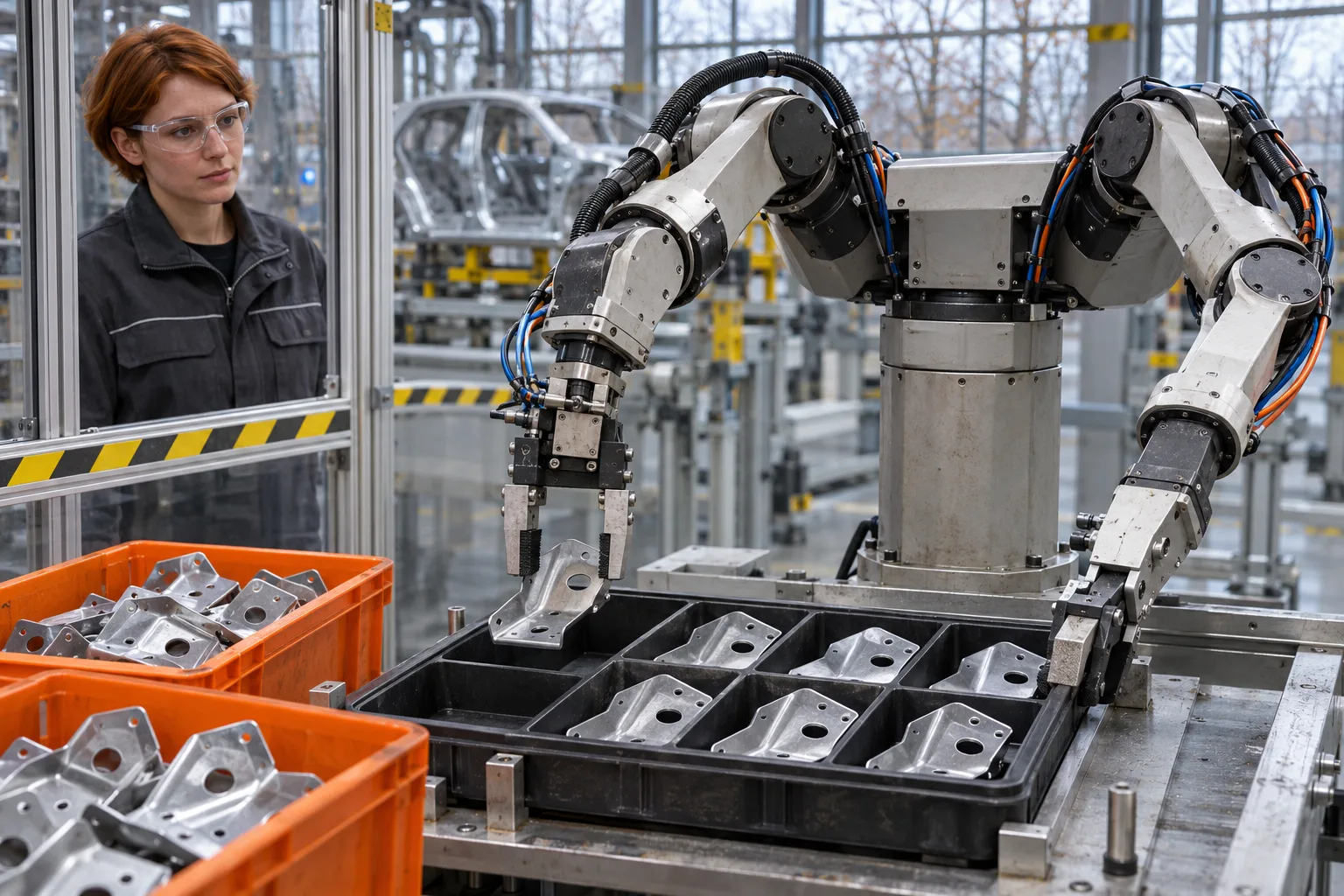
The announced 96% is the success rate for an automotive parts kitting demonstration. Kitting is the task of preparing parts for assembly in the required sequence. Apptronik's Apollo 2 performed this task in the demonstration.
The demonstration took place on actual Mercedes-Benz production lines. The announcement specifies Kecskemét, Hungary, and Sindelfingen, Germany. The robot picked metal brackets from supply bins and placed them in containers arranged by sequence.
A proof of concept, or PoC, is a test that checks feasibility in a specific environment. The success rate measured here applies within the scope of that test. It cannot be extended to the factory's overall automation rate or the success rate of every process.
Google outlined a use case in which robots handle repetitive preparation tasks. It explained that this helps technicians focus on complex assembly. It did not provide figures for workforce reductions or increases in labor productivity. Google DeepMind's factory demonstration description
Failure Recovery and Throughput Missing from the Success Rate
Decisions about factory deployment require the denominator of the success rate and the recovery time. Even with the same success rate, output can vary depending on how retries are handled. This analysis connects the announced figures to operational metrics.
| Item to check | What to verify | Effect on the decision |
|---|---|---|
| Unit of success | Whether it is one part or an entire tray | The scope of work represented by the success rate |
| Number of attempts | Total evaluation attempts and their distribution by task | Variability and representativeness of the results |
| Retry handling | Whether success means first-attempt success or includes retries | Level of autonomous performance |
| Human intervention | Number and timing of interventions | Required operating staff |
| Failure recovery | Recovery time and conditions for resuming work | Throughput lost to interruptions |
| Quality assessment | Criteria for positional errors and part damage | Whether the output can be used in subsequent assembly |
| Continuous operation | Operating time and causes of stops | Stability in actual operation |
These items are not additional verified achievements. They are measurement conditions that must be checked separately in on-site evaluations. The Korean-language announcement alone does not establish all the detailed conditions.
Good-unit throughput can also be calculated as an operational metric. The formula is “completed units that pass quality criteria ÷ total operating time.” Total operating time must include retries and recovery time. This is a proposed measurement, not a figure announced for the factory demonstration.
Robot operations also require management functions beyond the model. Apptronik describes Fleet Connect for status monitoring and task assignment. It shows that the scope of operations must also cover batteries and stopped states. Apptronik's Apollo 2 platform description
The Difference Between Physical Safety and Jailbreak Defense
Physical safety guidance and jailbreak defense evaluate different things. The former guides behavior to avoid nearby hazards during execution. The latter examines resistance to attacks that try to make the model follow dangerous instructions.
Inference is when a model receives input and makes a judgment. Google explains that it applies guidance at this stage to avoid hazards. Safety figures must also be distinguished by the model and evaluation they concern.
The following are the safety figures from the November 10, 2026 announcement.
| Evaluation | Announced result | Scope of interpretation |
|---|---|---|
| Safe task completion around obstacles | 33% improvement | Improvement from applying guidance |
| Safe task completion with people nearby | 43% improvement | Improvement from applying guidance |
| Gemini 4 Argon jailbreak defense rate | 99.5% | Announced jailbreak evaluation result |
| Baseline model's jailbreak defense rate | 82% | Comparison result for Gemini Robotics ER 2 |
The jailbreak defense rate is an evaluation result for Gemini 4 Argon. Citing it as the action model's accident-free rate in factories changes the subject of the evaluation. Improvement rates for safe task completion must also be distinguished from absolute success rates. Google DeepMind's safety evaluation description
The ASIMOV-Jailbreak repository distinguishes harmful instructions from legitimate instructions. It also includes evaluations of attacks that continue over multiple turns. The rate of excessive refusals of legitimate requests is another evaluation item. Google's ASIMOV evaluation repository
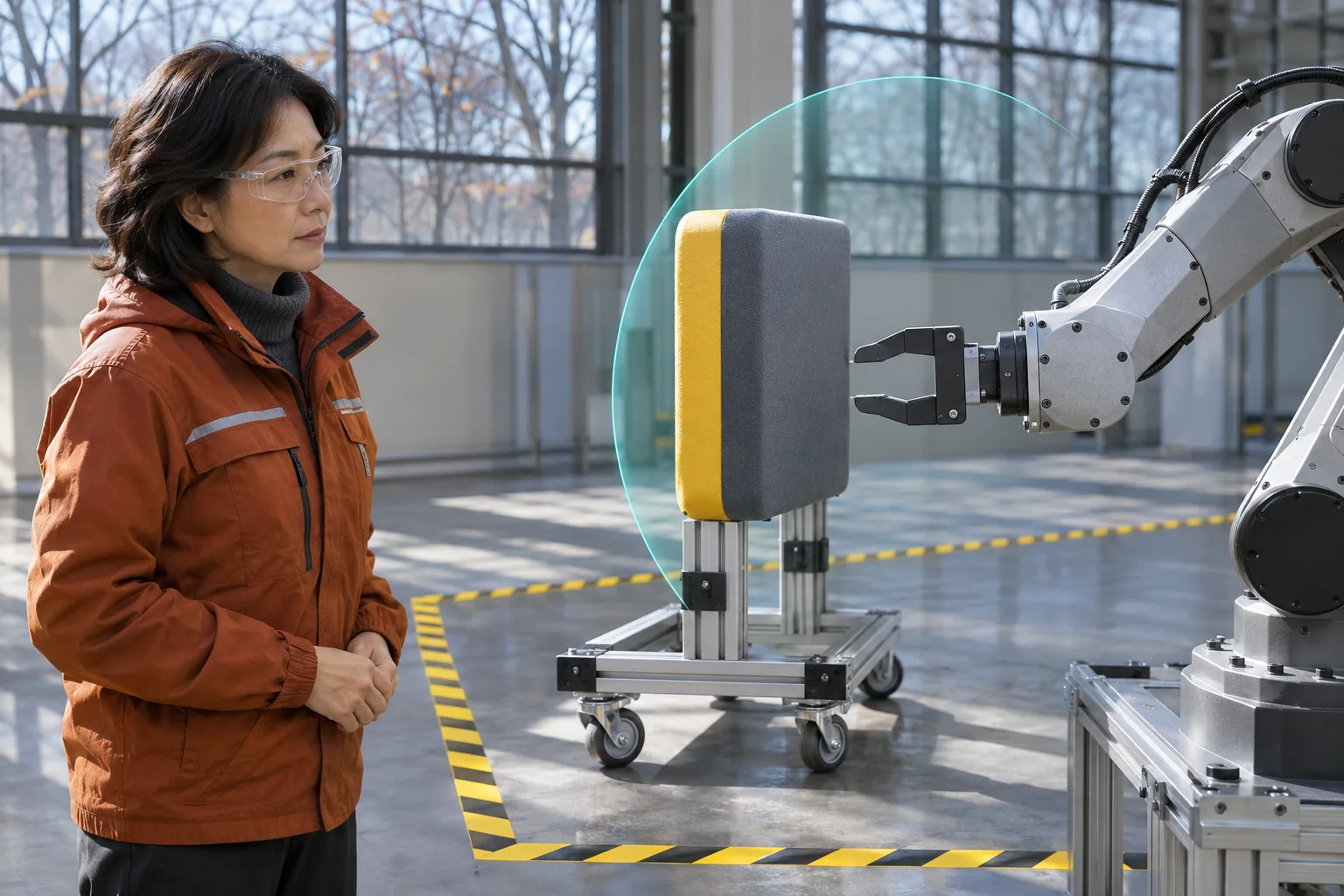
Physical devices also have separate safety features. Apptronik explains that the robot stops immediately when it detects an object in a configured collision zone. It also provides behavior settings based on surrounding zones. These are hardware features that must be checked separately from model evaluations.
Simulation and Real-World Training Data
According to Google, simulation was combined with real-world demonstration data. Gemini 4 Argon generates virtual training environments from camera scenes. It also supports research that develops hypotheses for improvement from videos of failures.
A digital twin recreates a real environment in virtual space. Virtual environments allow repeated tests under varied conditions. Tests with physical robots check whether those results also hold in physical environments. Google DeepMind's training process description
In this setup, factories serve as both use cases and evaluation sites. This is because real parts and task sequences test the model's scope of application. However, improvements in training efficiency cannot be directly converted into deployment cost savings.
The Difference Between Partner Availability and a Public API
The availability of the action model and the ER model must be checked separately. According to the announcement, the action model is being rolled out to robotics partners. The official ER 2 page specifies a public preview.
Google DeepMind's announcement described availability as follows.
Gemini Robotics 2.5 is rolling out to our robotics partners.
The source is the Gemini Robotics 2.5 announcement.
| Model | Confirmed availability | Key distinction |
|---|---|---|
| Gemini Robotics 2.5 | Rolling out to robotics partners | Distinct from releasing an action API for general developers |
| Gemini Robotics ER 2 | Public preview in Google AI Studio and the Gemini API | Scope of access to the reasoning model |
API access to ER does not mean access to the action model. The schedule for commercial deployment in South Korea also cannot be determined from this announcement alone. Each model's availability must be checked on its official model page.
Common Mistakes When Reading Performance Figures
Omitting the subject and unit of an evaluation mixes different achievements together. In particular, grouping figures by model name alone makes interpretation less clear. When citing figures, include the task and comparison conditions.
| Common interpretation | Correct distinction |
|---|---|
| A 100% improvement in success rate means every task succeeded | Relative improvement and absolute success rate are different |
| The factory success rate is the factory's overall automation rate | Kitting PoC results and the scope of automation are different |
| The jailbreak defense rate is the robot's accident-free rate | Attack resistance and physical accident metrics are different |
| The ER API provides immediate access to the action model too | Access permissions must be checked separately for each model |
| Output increases by the same rate as task completion speed | Measurements must include recovery time and process waiting time |
Frequently Asked Questions
Separating model roles, evaluation units, and availability clarifies the key questions.
Is Gemini Robotics 2.5 a Physical Robot?
It is a VLA model that controls robots. Apollo 2 is a physical robot that uses it. Model performance must be distinguished from the robot's physical performance.
Are the Roughly 200 Tasks the Number of Processes in an Actual Factory?
The figure refers to the types of tasks in the announced model evaluation. It does not mean they are all automotive factory processes. The number of evaluation tasks and the scope of the factory demonstration are separate.
Can Deployment Benefits Be Calculated from the Factory Success Rate Alone?
Costs or output cannot be calculated from the success rate alone. Task time and failure recovery time must also be known. Quality assessment criteria and conditions for human intervention are also needed.
Does a Public Preview Mean the Same Thing as Commercial Deployment?
A public preview is an availability status that allows access to a specific model. It does not mean integration with factory systems is complete. The action model's availability conditions must also be checked separately.
FAQ
What is the VLA in Gemini Robotics 2.5?
VLA stands for Vision-Language-Action. It refers to a model that connects visual information and language instructions to robot actions.
How does Gemini Robotics ER differ from the action model?
ER is a reasoning model that manages task planning and progress. In the factory demonstration, the action model controlled both hands and arms.
Does the 30~100% improvement in success rate refer to an absolute success rate?
It is a relative improvement compared with the previous baseline model. Calculating the new absolute success rate requires the previous success rate for the same task.
What does the 96% success rate in the factory demonstration measure?
It is the success rate reported for an automotive parts kitting PoC. It reflects the results of tasks performed by Apollo 2 on a Mercedes-Benz production line.
Can faster task completion be taken to mean increased production output?
The overall rate of increase in production output cannot be calculated from completion speed alone. Operating time that includes retries, failure recovery, and process wait times is needed.
Which model achieved the 99.5% jailbreak defense rate?
It is the result of the jailbreak evaluation for Gemini 4 Argon announced by Google. It does not refer to the action model's accident-free rate in factories.
Can regular developers use the action model API right away?
The announced availability of the action model is limited to robotics partners. The public preview of ER 2 must be distinguished from access to the action model.
Has a timeline been announced for commercial deployment in domestic factories?
A timeline for domestic commercial deployment cannot be confirmed based on this announcement alone. Specific availability conditions and timelines must be checked with Google and robot suppliers.
Sources
- Google's Korean announcement: Gemini Robotics 2.5: Accelerating physical intelligence in the real world
- Google DeepMind: Announcing Gemini Robotics 2.5
- Google DeepMind: Gemini Robotics 2.5 VLA model
- Google DeepMind: Gemini Robotics ER 2 model information
- Apptronik: Apollo 2 platform and operational and safety features
- Google: Asimov Agentic Safety Evaluation and ASIMOV-Jailbreak
Images