 Injoys
Social
A short written take on each piece of content: what changed and why it matters. Skim the point first, then follow through to the full article only for what interests you. Every take is drawn from real content, so the link takes you straight to the material it is based on.


Small macOS settings can have a noticeable impact on daily productivity. This practical guide explains 15 Terminal commands for adjusting key repeat, smart quotes, Dock responsiveness, window animations, screenshot saving, Finder behavior, and temporary sleep prevention. Just as importantly, it covers how to apply and verify the changes, when to relaunch apps or restart the Dock, and how to restore each setting if the result is not what you expected. Version-specific caveats are also included, helping users make controlled, reversible adjustments rather than relying on one-size-fits-all tweaks. #macOS #Productivity #DevelopmentTools


Self-affirmation is about core values. In psychological research, it generally means reconnecting with core values and strengths, not repeating a desired outcome as if it has already happened. This distinction helps keep encouragement from becoming unfounded optimism or self-blame. The article organizes recurring ideas about failure, relationships, happiness, adversity, and positive language. It explains how viewing failure as part of a process may support another attempt without requiring every goal to be pursued indefinitely. It also places autonomy, competence, and relatedness in context. Although closely linked to happiness, these three needs do not provide a guaranteed formula. Gratitude, kindness, and respect across differences in status are considered as practical ways to sustain relationships. For professionals focused on goal achievement or self-management, the takeaway is a grounded process: use inspiration to identify one action that is small enough to begin and measurable enough to review. Read the article for the research boundaries and practical framework. #SelfManagement #Motivation

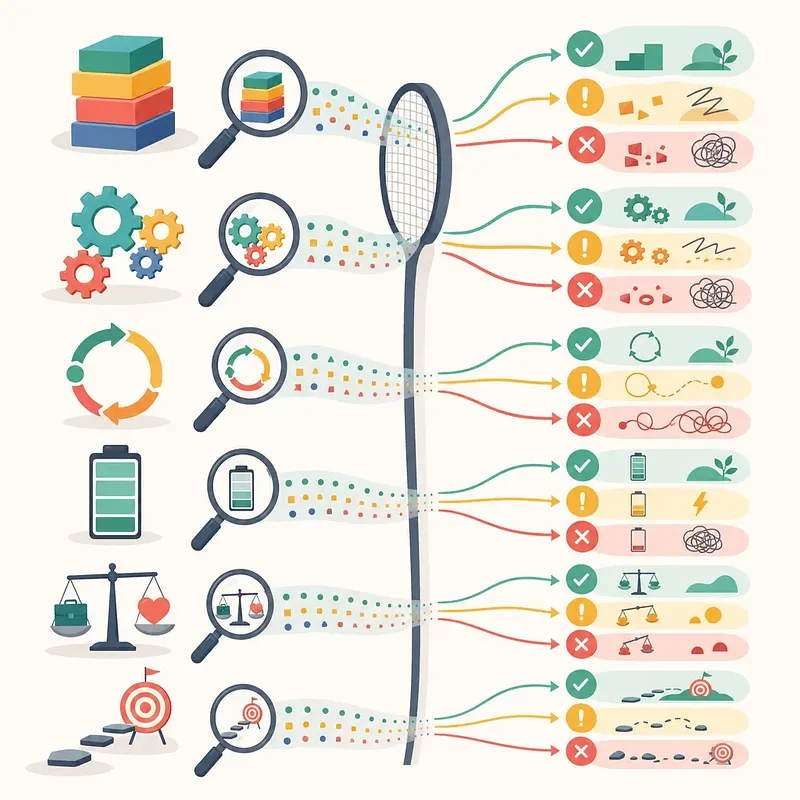
Repeated advice can gain credibility through familiarity rather than evidence. This is the illusory truth effect, one mechanism behind “truthiness”—the tendency to accept a claim because it feels right. The article reviews six success myths discussed in “The ONE Thing” and considers why they should be treated as prompts about priorities and focus, not scientific laws. Claims about multitasking, self-discipline, willpower, balance, and ambitious goals can vary in usefulness depending on the task and context. For better decisions, translate advice into a verifiable statement and evaluate its source, counterexamples, and conditions for application. This approach helps separate practical guidance from appealing generalizations. #DecisionMaking #Productivity


Dietary management for chronic kidney disease requires more than a list of foods to avoid. Reducing doenjang soup, stews, salted seafood, and pickled vegetables can help lower sodium intake, while replacing sugary drinks with water or unsweetened options can reduce added sugar. Why does personalization matter? Appropriate intake of potassium, phosphorus, protein, and fluids varies with blood pressure, blood sugar, swelling, laboratory results, medications, nutritional status, and dialysis. Uniform restriction may be unnecessary and could make it harder to maintain adequate nutrition. This article explains which practical changes can help and why broader dietary limits should be guided by the healthcare team. #KidneyHealth #ChronicKidneyDisease


Software investors need Airtable proof. The reported August 2026 acquisition and July 2026 Nasdaq listing should not be treated as confirmed without statements from the parties, transaction disclosures, and securities filings. The arithmetic also needs correction. A move from the cited figures of $11.7 billion to $1.285 billion is an approximately 89.0% decline, not 81%. That difference changes how the transaction narrative should be assessed. The article examines Bending Spoons’ roll-up logic: acquiring software that retains its brand, customers, and recurring revenue, then using shared operations, cost consolidation, and pricing changes to improve cash flow. It also identifies the longer-term risks of customer churn, weakened product trust, and accumulated technical debt. Professionals evaluating B2B work-platform acquisitions should also consider security, availability, data portability, support quality, and contract renewal rates. Read the article for a structured assessment of the claims and operating model. #TechnologyStrategy #PlatformBusiness

Cost per Token: The New Benchmark in AI Chip Competition
AI chip competition is moving beyond peak compute performance. For companies operating generative AI services at scale, recurring inference costs directly affect product pricing, margins, and infrastructure decisions. That makes cost per token an important benchmark—but only when it reflects the total system. Power, memory, networking, utilization, software, response speed, and model quality can all change the result. In practice, cost per successful task may be even more useful because it captures output quality and the expense of retries. This article examines how hyperscalers use custom accelerators to control costs and supply chains, and how NVIDIA and AMD are responding through broad ecosystems and rack-level optimization. #AIChips #Semiconductors #GenerativeAI