 Injoys
Social
A short written take on each piece of content: what changed and why it matters. Skim the point first, then follow through to the full article only for what interests you. Every take is drawn from real content, so the link takes you straight to the material it is based on.

When anxiety and illness disrupt daily life, ordinary routines can take on new importance. For Venerable Seonjae, the kitchen became more than a place to prepare food: it offered practical work, direct care for her body, and a renewed sense of control. Her experience illustrates why regular cooking and meals may help restore structure during difficult periods. At the same time, personal or spiritual dietary practices should not be mistaken for universal medical guidance. There is no established evidence that green onions, garlic, or meat generally cause anxiety, and cirrhosis should not be treated through diet alone. The article explores both the value of food-centered routines and the need for evidence-based, individualized care. #SelfManagement #Nutrition


Differences Among Fines, Penalty Payments, Administrative Fines, and Minor Fines: Criminal Punishment and Response Procedures
The amount shown on a notice does not, by itself, reveal its legal effect. Fines and minor fines are criminal punishments imposed by courts, whereas administrative fines and penalty payments are generally not criminal punishments. This distinction matters because it affects whether a criminal history record may arise, which response procedure applies, and what can happen after nonpayment. For example, payment of a penalty payment does not itself create a criminal record, but failure to pay may lead to a summary trial or other proceedings. A practical first step is to review the document title, governing law, issuing authority, payment deadline, and objection deadline before taking action. #AdministrativeFine #LegalInformation


Understanding the Structure of the Yen, Won, and Dollar Through the History of Currency Intervention
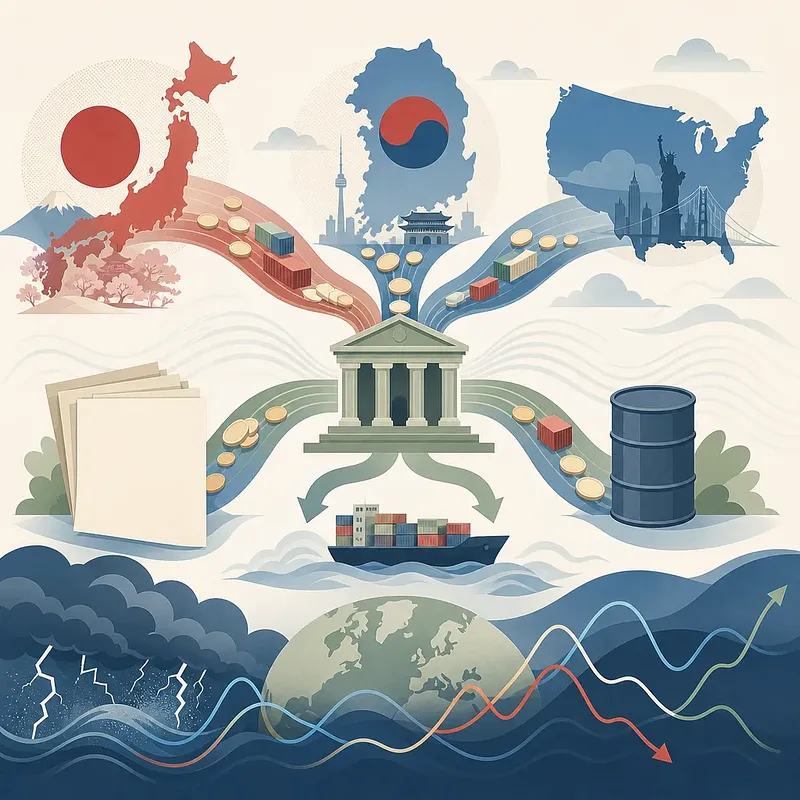
Exchange-rate analysis becomes misleading when it relies on interest-rate differentials alone. Policy expectations, global dollar movements, trade balances, foreign capital flows, risk aversion, inflation, and growth prospects can all operate at the same time. Japan’s experience is instructive: dollar-selling and yen-buying intervention resumed in 2022, so describing a later action as the first such intervention in 28 years is inaccurate. Intervention may limit short-term volatility, but sustaining a reversal generally requires support from broader economic fundamentals. The article uses this history to clarify the Bank of Japan’s dilemma, the multiple drivers of the won-dollar exchange rate, and a practical approach to managing dollar or yen exposure through timing, loss limits, and phased exchanges. #MonetaryPolicy #ExchangeRates

AI chip competition is moving beyond peak compute performance. For companies operating generative AI services at scale, recurring inference costs directly affect product pricing, margins, and infrastructure decisions. That makes cost per token an important benchmark—but only when it reflects the total system. Power, memory, networking, utilization, software, response speed, and model quality can all change the result. In practice, cost per successful task may be even more useful because it captures output quality and the expense of retries. This article examines how hyperscalers use custom accelerators to control costs and supply chains, and how NVIDIA and AMD are responding through broad ecosystems and rack-level optimization. #AIChips #Semiconductors #GenerativeAI


Small macOS settings can have a noticeable impact on daily productivity. This practical guide explains 15 Terminal commands for adjusting key repeat, smart quotes, Dock responsiveness, window animations, screenshot saving, Finder behavior, and temporary sleep prevention. Just as importantly, it covers how to apply and verify the changes, when to relaunch apps or restart the Dock, and how to restore each setting if the result is not what you expected. Version-specific caveats are also included, helping users make controlled, reversible adjustments rather than relying on one-size-fits-all tweaks. #macOS #Productivity #DevelopmentTools

The Ethics of Vigilante Revenge, Drones, and AI Control in Pyromaniac
AI is not a moral agent in Pyromaniac. Descriptions of AI as hating human lies or independently choosing justice are literary personification, not conclusions supported by current technology. Treating that language as fact can obscure where authority and accountability actually sit. The article frames drones and AI as dual-use technologies. Their risks change with design, data, assigned authority, and the environment of use. This lens helps professionals assess systems through governance choices rather than labels such as “good” or “evil.” It also connects vigilante catharsis to errors in judgment and cycles of violence, while distinguishing criticism of an imperfect legal system from allowing one person to investigate, judge, and punish. Responsibility remains traceable across those who set objectives, operate systems, provide data, and make final decisions. Professionals working in AI governance, technology policy, risk, or media analysis can read the article for a structured examination of these ethical questions. #AIEthics #AIGovernance