Why AI Data Center Power Demand Is Putting Pressure on the Power Grid, Electricity Rates, and Carbon Reduction Targets All at Once
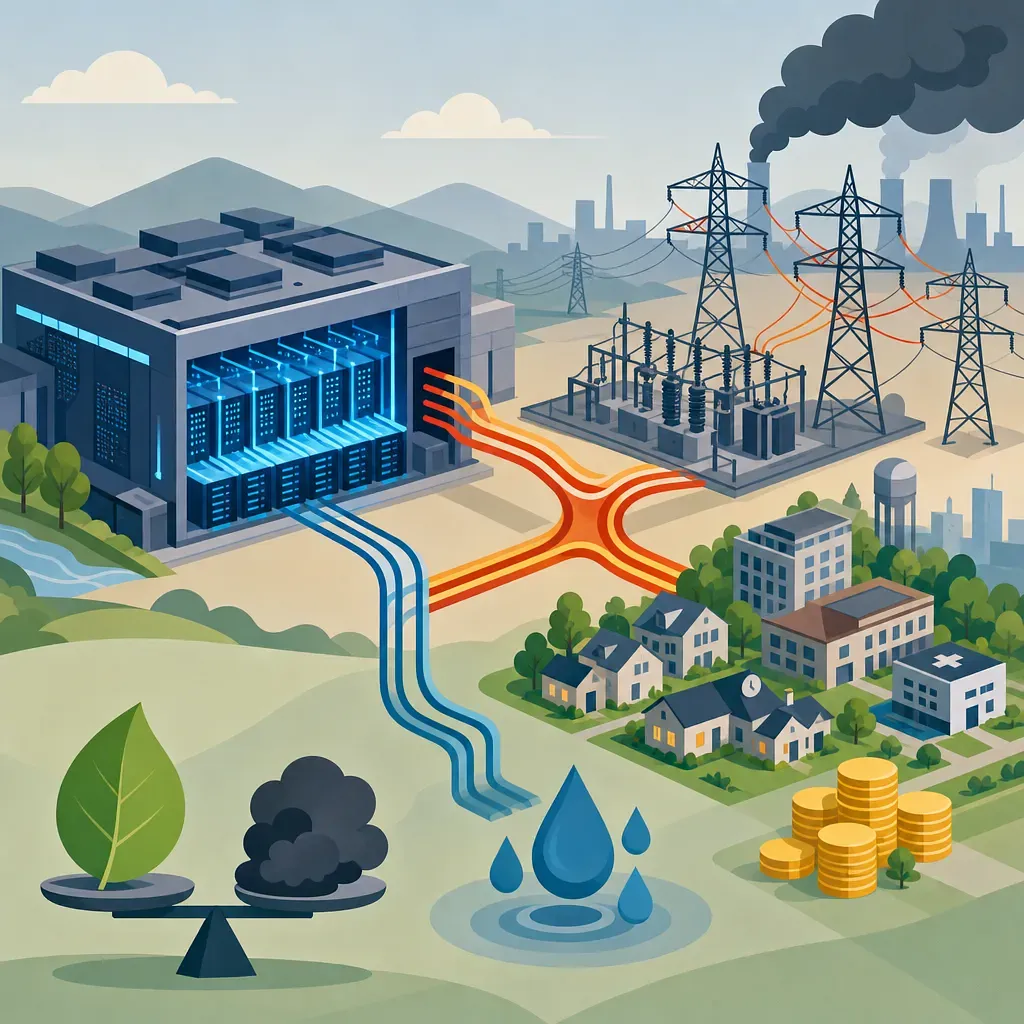
AI data centers place simultaneous strain on power grids, electricity costs, and corporate carbon targets due to the high-density GPU and accelerator computations and cooling demands they require. This article examines grid bottlenecks, cost allocation, sustainability metrics, and alternatives for power-flexible AI operations from a data-driven perspective.
Power demand at AI data centers is growing rapidly in regions that serve as cloud hubs, in areas with a high concentration of semiconductor and network infrastructure, and in regions where affordable or clean power is available.
Power grid bottlenecks are caused not only by a shortage of power generation but also by a complex interplay of transmission and distribution capacity, substation expansion, waiting times for grid connection, and local permitting issues.
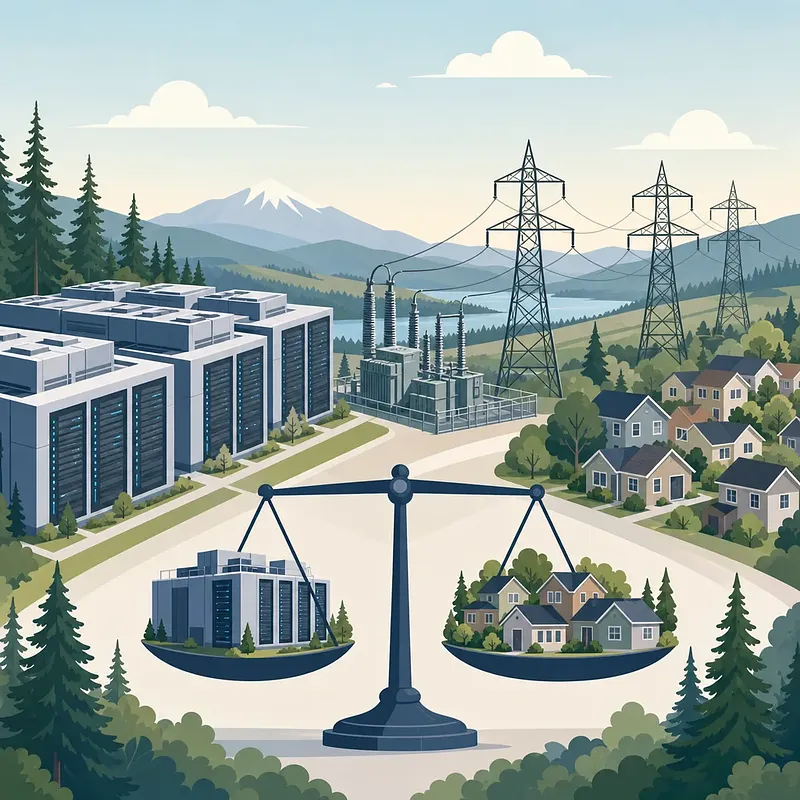
A key issue in electricity rate policy is how the costs of data center power infrastructure should be shared among operators, power companies, general consumers, and local communities.
When reading a corporate sustainability report, it is important to consider total electricity consumption, renewable energy procurement, greenhouse gas emissions, water consumption, and cooling efficiency together.
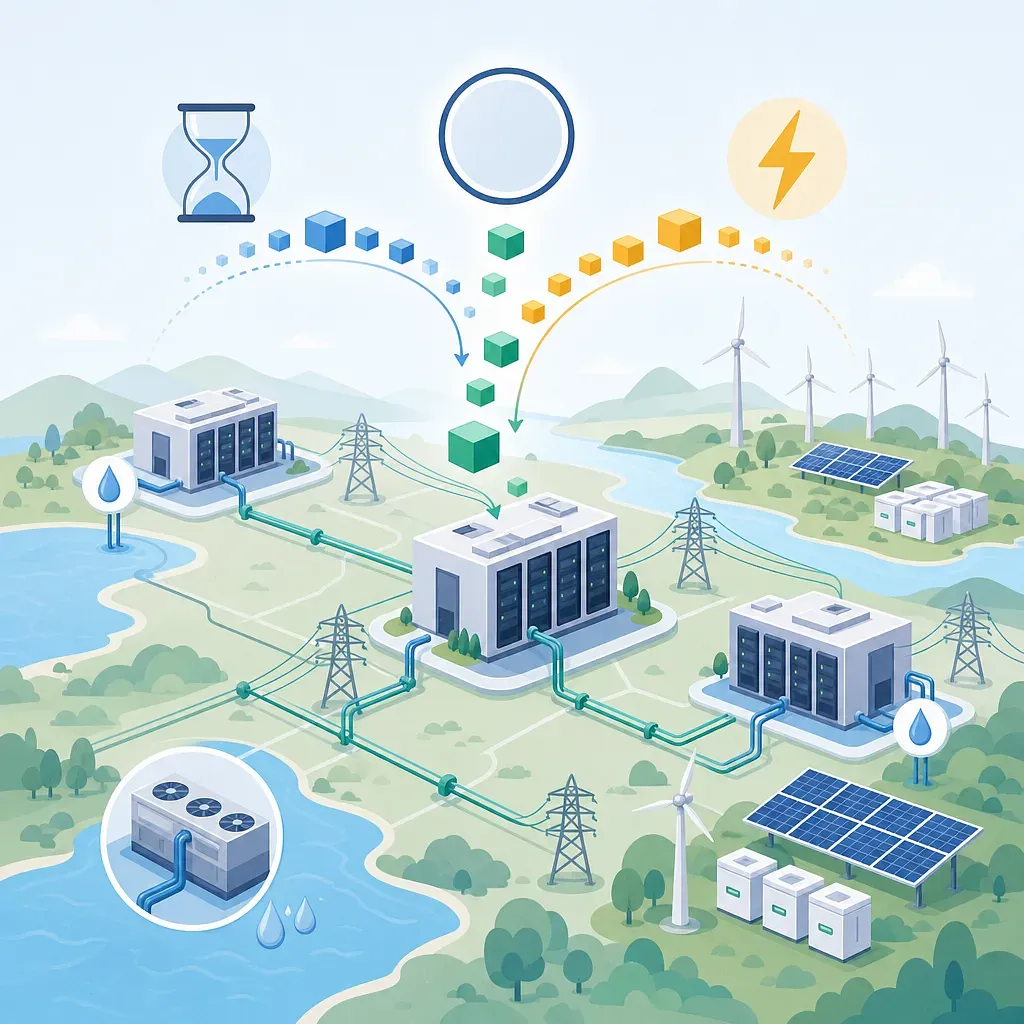
While “grid-flexible AI factories”—which adjust AI training and inference tasks based on grid conditions—show great promise, it is important to consider the difference between tasks that can tolerate latency and real-time services.
At a Glance
AI data centers are not merely server buildings; they are major consumers of electricity and cooling, users of local infrastructure, and key factors in corporate carbon accounting. As generative AI and large-scale model training and inference expand, data center electricity demand is simultaneously driving up grid connectivity, electricity rate design, renewable energy procurement, water usage, and local permitting issues.
The IEA’s energy and AI analyses, data center power infrastructure studies, and major Big Tech sustainability reports all raise the same question: While the benefits of AI infrastructure are spread globally, the burdens on the power grid, land, water, and utility rates may be concentrated in specific regions.
Key Concept Definitions
Term | Meaning | Why It Matters
AI Data Center | A data center that performs AI training and inference using GPUs, TPUs, accelerators, high-speed networks, and high-capacity storage | Has higher power density per rack and greater cooling requirements than general office IT
Grid Connection | The process by which power plants and consumers connect to the transmission or distribution grid | Large data centers may require connection capacities ranging from tens to hundreds of MW, leading to wait times
Power Grid Bottleneck | A phenomenon where power supply is delayed due to insufficient capacity in any one segment of the power generation, transmission, substation, or distribution system | Even if power is available, it may not be supplied to the required location at the required time
Scope 1, 2, and 3 Emissions | Direct emissions, emissions related to purchased electricity, and other indirect emissions such as those from the supply chain and product use | These are the basic metrics used to assess whether data center operators are meeting their carbon reduction targets
Power Flexibility | The ability to adjust the timing and intensity of power usage in response to grid conditions, prices, and renewable energy output | A key means of operating AI computations in a grid-friendly manner
Water Use Efficiency (WUE) | A metric that correlates the amount of water a data center uses for cooling and other purposes with its IT load | In water-scarce regions, this is a factor in permitting and local conflicts that is just as important as electricity
Where Is Demand for AI Data Centers Growing Rapidly?
While the expansion of AI data centers is occurring worldwide, it is not happening at the same pace in every region. Areas experiencing rapid demand growth generally meet the following conditions:
· Regions with existing cloud regions and network hubs AI services require large-scale data transfer, low latency, and global service connectivity. Regions where cloud providers and telecommunications networks are already concentrated have an advantage as sites for new AI data centers.
· Regions capable of securing large-scale power supplies AI training clusters require high power density. Electricity costs, transmission grid capacity, substation capacity, and access to renewable energy are key variables in site selection.
· Regions Close to Semiconductor and Server Supply Chains and Operational Staff The availability of GPU servers, cooling equipment, power equipment, and specialized operational staff directly impacts the speed of data center expansion.
· Regions with Clear Policy Incentives and Permitting Processes Regions with clear tax benefits, land use regulations, power contract systems, and environmental review standards offer greater predictability for operators.
· Regions where renewable energy power purchase agreements (PPAs) are possible Big Tech companies emphasize 24-hour carbon-free power, renewable energy procurement, and long-term power purchase agreements. However, the carbon intensity of contractually procured renewable energy may differ from that of actual hourly electricity consumption.
Why Do Grid Connection Bottlenecks Occur?
The power challenges facing AI data centers cannot be explained simply by asking, “Is there a power shortage?” Bottlenecks typically occur at four stages.
1. The Discrepancy Between Generation Capacity and Actual Availability
Solar and wind power generation fluctuates depending on the time of day and weather conditions. A stable supply requires operation in conjunction with other resources, such as nuclear, gas, hydroelectric, and energy storage systems. Since data centers often operate 24 hours a day, power shortages during specific time periods pose a significant risk.
2. Physical Limitations of Transmission Grids and Substations
Electricity must travel from power plants to data centers. Even if generation capacity is sufficient, connection delays occur if the capacity of transmission lines, substations, or distribution networks is insufficient. For this reason, plans for new data centers are reviewed in conjunction with plans to expand the power grid.
3. Grid Connection Wait Times and Equipment Procurement Delays
When large consumers and renewable energy generation projects increase simultaneously, the wait time for grid connection lengthens. Delivery times for critical equipment—such as transformers, circuit breakers, and power electronic devices—can also create bottlenecks.
4. Local Permits and Community Acceptance
Data centers affect not only electricity but also land use, water, noise, scenery, tax revenue, employment, and local electricity rates. Residents may oppose such projects if they perceive the infrastructure burden to outweigh the local benefits.
Electricity Rates and Cost Allocation: Who Bears the Cost of the AI Power Grid?
The expansion of AI data centers poses difficult questions for power companies and regulatory agencies. When transmission lines and substations are expanded for a single large customer, who should bear the cost?
Cost Item | Cause | Issue
Grid Connection Construction Costs | Expansion of substations and transmission/distribution facilities to connect data centers | Should the operator bear the cost, or should it be reflected in rates for all consumers?
Peak Power Response Costs | Ensuring supply stability during periods of highest electricity demand | Should customers responsible for creating the peak be charged higher rates?
Reserve Capacity and Backup Power Costs | Preventing power outages and maintaining grid stability | How should the data center’s requirement for 24-hour, high-reliability power be priced?
Renewable Energy and Energy Storage Costs | Investments to simultaneously achieve carbon reduction targets and power stability | Who will bear the costs of long-term power purchase agreements, energy storage systems, and the transmission grid?
Local Environmental Costs | Water usage, heat emissions, land use, noise, etc. | Are local compensation and permitting conditions required beyond electricity rates?
From a policy perspective, the following approaches could be discussed.
· Polluter Pays Principle: The operator bears a larger share of the expansion costs required due to a specific data center’s connection.
· Time-of-Use Rates: Electricity rates are raised during times when the grid is congested or carbon intensity is high.
· Demand Response Contracts: Provide compensation to data centers that reduce some computational operations or relocate to other regions during power shortages.
· Long-Term Minimum Fees or Demand Charges: Customers who reserve large-scale power infrastructure pay a fixed fee regardless of actual usage.
· Local Benefit Conditions: Include conditions such as tax revenue, job creation, waste heat utilization, water usage restrictions, and investment in the local power grid as part of the licensing requirements.
Key Metrics to Look for in Corporate Sustainability Reports
Environmental and sustainability reports from major tech companies like Google and Amazon are important resources for understanding the actual environmental impact of AI infrastructure. However, since calculation methods, fiscal years, treatment of renewable energy certificates, and the distinction between data centers and overall business operations vary by company, the figures should not be compared directly.
Key Indicator Checklist
Indicator | What to Check | Points to Note When Interpreting
Total Electricity Consumption | Trends in electricity consumption across the entire company and data centers | AI-specific consumption may not be disclosed separately
Renewable Energy Procurement | PPAs, certificates, on-site generation, carbon-free electricity targets | Annual matching and time-of-use matching have different implications
Scope 2 Emissions | Greenhouse gas emissions from purchased electricity | Differences between market-based and region-based calculation methods must be verified
Scope 3 Emissions | Supply chain emissions from servers, semiconductors, construction, logistics, etc. | Emissions from equipment manufacturing may increase as AI infrastructure expands
Water Usage | Cooling, facility operations, regional water stress | Water usage must be considered in conjunction with local water resource conditions
PUE | Ratio of IT equipment power consumption to total facility power consumption | Even with a low PUE, total power consumption can increase sharply if overall power usage surges
WUE | Water usage per unit of IT load | Varies significantly depending on cooling methods and climate conditions
Carbon Removal and Offsetting | Approaches to addressing residual emissions | A distinction must be made between reduction and offsetting
Key Points for Data Interpretation
· Efficiency improvements do not automatically offset increases in total consumption. Even if server and cooling efficiency improves, total electricity and water consumption may still rise if AI usage grows faster.
· Purchasing renewable energy does not immediately resolve grid congestion. Even with a power purchase agreement, the transmission grid must have sufficient capacity at the required times and locations.
· Carbon targets must account for Scope 3 emissions as well as Scope 2. This is because supply chain emissions from AI accelerators and data center construction can be significant.
The Potential and Limitations of the “Power-Flexible AI Factory”
A power-flexible AI factory is an operational model that adjusts AI computations based on the state of the power grid. The core idea is that not all AI tasks have the same level of urgency.
Possible Approaches
· Time Shifting of Training Tasks Training large models or batch processing tasks can be rescheduled in units of hours or days. These tasks can be shifted to times when electricity prices are low or renewable energy output is high.
· Inter-regional Workload Migration By leveraging global cloud infrastructure, tasks from regions with congested power grids can be moved to other regions. However, data sovereignty, latency, and network costs pose constraints.
· Prioritizing Inference Workloads By distinguishing between services requiring real-time responses and analytical tasks that can tolerate latency, certain tasks can be reclassified as low priority during power shortages.
· Integration of Batteries, Thermal Storage, and Backup Resources Storage devices and cooling systems within data centers can be utilized for grid demand response.
Limitations
· Tasks with low latency tolerance—such as real-time search, customer support, financial transactions, and healthcare and security services—have limited room for adjustment.
· Workload migration may conflict with data protection regulations, regional cloud contracts, and latency requirements.
· For power flexibility to translate into actual carbon reductions, data on the carbon intensity of electricity by time of day is required.
· For operators to provide power flexibility, electricity rates and demand response compensation mechanisms must be sufficiently clear.
Regional Water Resources and Cooling Challenges
The environmental impact of AI data centers extends beyond electricity alone. High-performance servers generate significant heat, and water usage can increase depending on the cooling method.
Cooling Method | Advantages | Considerations
Air-cooling | Relatively simple structure and may require less water | May have limitations for high-density AI racks
Evaporative cooling | Can help reduce electricity consumption | Water usage may increase
Liquid cooling | Suitable for high-density GPU servers | May involve high system complexity and initial investment costs
Hybrid cooling | Can be combined based on climate and load | Operational optimization is complex
In regions with high water stress, data center water usage may compete with agriculture, domestic water supplies, and ecosystems. Therefore, local governments must review water consumption, the use of recycled water, drought response plans, and the potential for waste heat utilization during the permitting process.
Data Items Required for Policy and Regulatory Design
For AI data center policies, data is more important than declarations. The following items must be jointly managed by local governments, power companies, and regulatory agencies.
Data Item | Provider | Purpose
Requested power capacity, phased expansion plans | Data center operator | Assessment of grid reinforcement needs
Estimated load by time period | Operator, power company | Peak demand and rate design
Scope of power flexibility | Operator | Demand response contracts and emergency operation plans
Cooling method and estimated water consumption | Operator | Water resource impact assessment
Renewable energy procurement plan | Operator | Carbon targets and regional power grid impact assessment
Transmission and substation reinforcement costs | Electric utility | Cost allocation and rate approval
Local Employment, Tax Revenue, and Waste Heat Utilization Plans | Operators·Local Governments | Assessment of Community Acceptance
Emissions Calculation Methodology | Operators | Verification of Sustainability Reports
Conclusion
The increase in power demand from AI data centers is not just an issue for the technology industry. It is a public infrastructure issue that simultaneously involves grid investment, electricity rates, local permits, water resources, and carbon targets. The core of the policy is not to hinder AI innovation, but to transparently measure and fairly allocate the costs that large-scale electricity demand imposes on local communities and the power grid.
The most realistic approach is to combine three elements. First, data center operators must disclose more granular data on electricity, water, and emissions. Second, power companies and regulatory agencies must develop rate structures that reflect the grid costs associated with large consumers. Third, AI computing operations should be flexibly adjusted to grid conditions to the extent possible.
 Injoys