Summary of the Government’s Three Major Mega-Projects: Semiconductors, Physical AI, and Data Centers
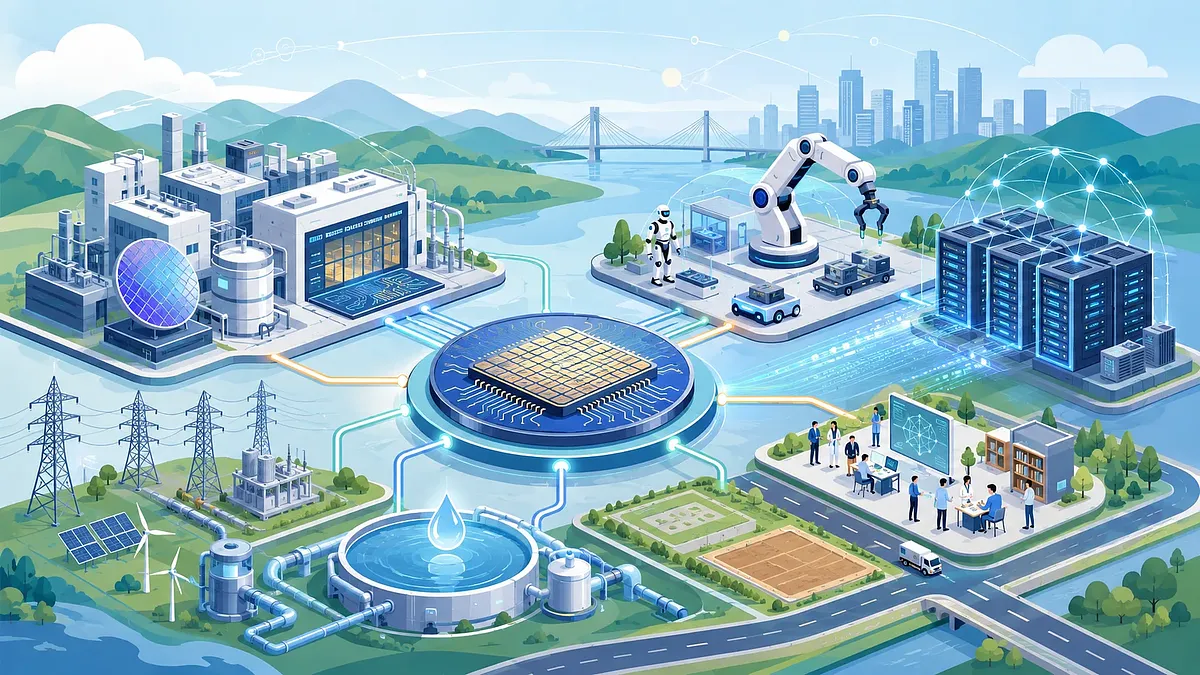
The government’s “Three Major Mega-Projects” is a long-term industrial policy aimed at expanding South Korea’s AI supply chain by integrating semiconductor production capacity, physical AI, and AI data centers into a single industrial ecosystem. The key lies not in the announced budget of 4,755 trillion won, but in how quickly power, water, land, and talent can be made available under conditions that allow for actual investment.
The three pillars of the three major megaprojects are semiconductors, physical AI, and AI data centers, and the government has identified them as the foundation of Korea’s AI industry ecosystem.
Although it has been reported that Samsung and SK have proposed a combined total of 4,755 trillion won in long-term domestic investments, this figure represents the total amount, including existing plans and long-term investment strategies, and actual execution may depend on market conditions and board approval.
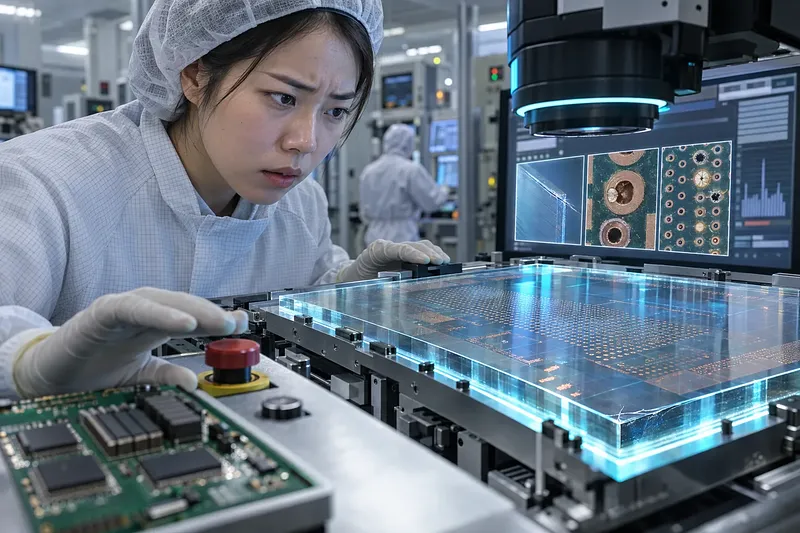
The semiconductor sector is structured to simultaneously advance the early completion of a production hub in the Seoul Metropolitan Area, a second production hub in the Southwest Region, an HBM and packaging hub in the Chungcheong Region, and materials, parts, and equipment hubs in the Southeast and Daegu-Gyeongbuk regions.
The AI data center plan includes the construction of an 8.4 GW facility in Phase 1, an investment of approximately 550 trillion won, and long-term plans to expand to 15 GW, led by SK.
The key factors for implementation are securing 6.3 GW of power for the Southwest Cluster, approximately 650,000 metric tons of water per day, and a skilled workforce and ecosystem of partner companies.
The Three Major Mega-Projects at a Glance
Announced by the government on June 29, 2026, the “Three Major Mega-Projects for Korea’s Great Leap Forward” is a policy package that groups semiconductors, physical AI, and AI data centers together as a single industrial ecosystem, rather than treating them separately. Semiconductors serve as the hardware foundation for AI computing; AI data centers are the infrastructure that utilizes these semiconductors on a massive scale; and Physical AI encompasses application areas—such as robotics, manufacturing, and autonomous driving—that generate demand for AI in the physical world.
The essence of this announcement goes beyond a mere declaration of “how much will be invested.” In the AI era, a nation’s competitiveness hinges on how reliably it can supply memory and HBM, whether it can handle data center power and cooling needs, and how quickly it can secure land, water, and permits to build semiconductor fabs.
Key Structure
Category | Government-Proposed Direction | Key Figures | Points to Note
Semiconductors | Early completion of the Seoul Metropolitan Area production hub; a second production hub in the Southwest Region; HBM and packaging in the Chungcheong Region; fostering materials, parts, and equipment in the Southeast and Daegu-Gyeongbuk regions | 800 trillion won for four fabs in the Southwest, 81 trillion won in the Chungcheong region, and over 30 trillion won in next-generation semiconductor investment over the next 15 years | The actual pace will be determined by cluster designation, site acquisition, power and water supply, and whether each company’s board of directors approves the plans.
Physical AI | Fostering AI robots and the transition to manufacturing AI as national strategic industries | Deploy over 1,000 AI robots to the field annually; goal to train 10,000 AI robot specialists over five years | Data, robot components, pilot project sites, and safety and standards systems are all required.
AI Data Centers | Fostering large-scale AI computing infrastructure and the domestic AI data center solutions industry | Phase 1: 8.4 GW, approximately 550 trillion won in investment; long-term vision for a total of 18.4 GW | Grid connection, cooling, electricity rates, client lease agreements, and profitability are key.
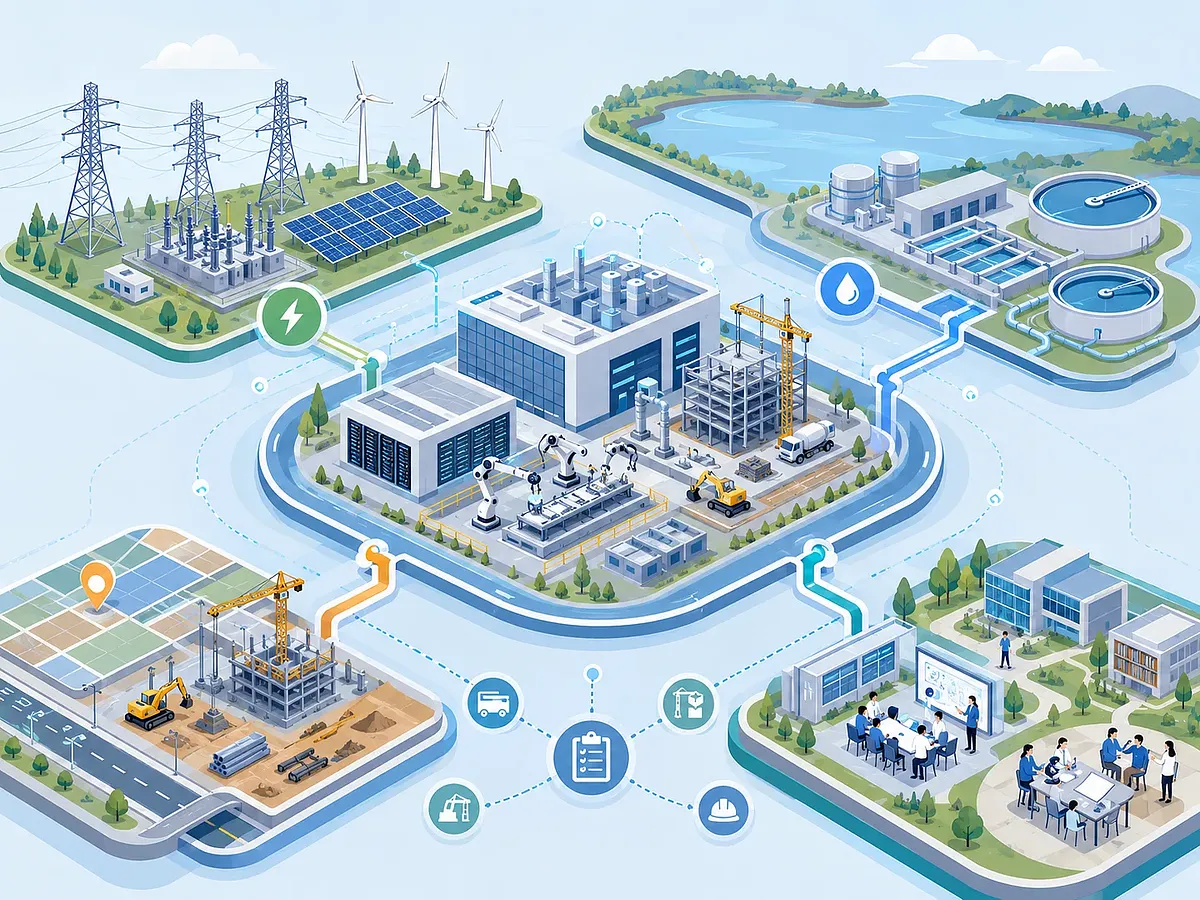
Shared Infrastructure | One-stop administrative services, power and water supply, region-specific electricity rate plans, and the development of smart cities | Early achievement of the 100 GW renewable energy target by 2030, Policy to Utilize Nuclear Power, SMRs, and ESS | While the plans are ambitious, transmission grids, community acceptance, water availability, and conditions for attracting and retaining talent could become bottlenecks.
How Is the Investment Scale Structured?
Based on announcements and major news reports, the total long-term domestic investment proposed by Samsung and SK amounts to 4,755 trillion won. Samsung’s investment is 2,655 trillion won, and SK’s is 2,100 trillion won.
Company | Investment Scale (Based on Announcements and Reports) | Key Details
Samsung | 2,655 trillion won | The breakdown includes 2,030 trillion won for semiconductor clusters in the Seoul metropolitan area (including Pyeongtaek and Yongin), 425 trillion won for the Southwest Cluster and AI data centers, 140 trillion won for HBM in the Chungcheong region, and 60 trillion won for humanoid robot production lines in the Yeongnam region.
SK | 2,100 trillion won | The plan includes 1,000 trillion won for regional AI data centers, 600 trillion won for the Yongin cluster, 400 trillion won for the Southwest region cluster, and 100 trillion won for HBM in the Chungcheong region.
Total | 4,755 trillion won | This should be interpreted as a long-term total encompassing existing investment plans for the Seoul Metropolitan Area, new regional hubs, data centers, and the expansion of the semiconductor supply chain.
It is important to note that these figures do not necessarily mean “all amounts will be definitively executed.” Semiconductor fabs and AI data centers must go through a series of steps—including securing land, power, and water supplies; confirming equipment delivery schedules; assessing customer demand; evaluating the potential for return on investment; and obtaining board approval—before construction can begin. Therefore, it is more accurate to view the 4,755 trillion won figure as a policy and corporate collaboration framework outlining long-term investment directions and maximum scale.
Why Are Semiconductors Central?
GPUs are not the only bottleneck in AI infrastructure. Large-scale AI training and inference also require HBM (High Bandwidth Memory) integrated with GPUs, server-grade DRAM, high-capacity storage devices, advanced packaging, and power-efficient semiconductors. In the past, PC and smartphone replacement cycles largely drove memory demand, but today, AI data centers, robots, autonomous vehicles, and manufacturing AI are emerging as new drivers of demand.
In terms of market share, Korean companies remain strong. According to TrendForce, in the first quarter of 2026, Samsung Electronics held a 38.5% share of the DRAM market, while SK Hynix held 28.8%, bringing their combined market share to 67.3%. Counterpoint Research also analyzed revenue figures for the same quarter, placing Samsung at 38%, SK Hynix at 29%, Micron at 22%, and China’s CXMT at 8%. In other words, while South Korea maintains its leading position, the competition from U.S.-based Micron and China’s CXMT is intensifying.
Semiconductor Strategy: 3S+1F
The government has outlined its semiconductor strategy as 3S+1F.
1. Speed: Early Completion of Hubs in the Seoul Metropolitan Area
The government has outlined a plan to rapidly expand memory production capacity by accelerating the completion of final fabs at the Yongin National Industrial Complex and general industrial complexes. In the AI era, the ability to supply the volumes demanded by customers on time is just as important as technological capability. Therefore, “the ability to build factories faster and begin mass production sooner” is the first pillar of the strategy.
2. Stronghold: Expansion of Hubs Nationwide
A second production hub, including four fabs and an ecosystem of partner companies and talent, has been proposed for the Southwest region. The Chungcheong region will serve as a hub for HBM and advanced packaging, while the Southeast and Daegu-Gyeongbuk regions will function as future semiconductor hubs for materials, components, equipment, and power semiconductors. This is a plan to decentralize the supply chain nationwide while reducing concentration in the Seoul metropolitan area.
3. Spearhead: Securing Next-Generation Markets
This strategy involves proactively entering sectors where the market has not yet fully solidified, such as next-generation memory, edge AI semiconductors, on-device AI semiconductors, and defense semiconductors. The government has announced that it will invest more than 30 trillion won over the next 15 years to establish a support system linking R&D, design, demonstration, and manufacturing.
4. Full-support: Comprehensive Support System
With the enforcement of the Special Act on Semiconductors, this framework aims to bundle licensing and infrastructure support through the Presidential Special Committee on Strengthening the Competitiveness of the Semiconductor Industry, a special account, and a dedicated support organization. The legal foundation has already been established, and the Special Act is scheduled to take effect on August 11, 2026.
Physical AI: AI Targeting Robots and Manufacturing Sites
Physical AI does not refer to AI that generates answers on a screen, but rather AI that makes decisions and moves in the physical world, such as in robots, machines, vehicles, and factory equipment. Typical application areas include humanoid robots, collaborative robots, autonomous vehicles, smart factories, and logistics automation.
The government has proposed a 3M Strategy for the Physical AI sector.
Strategy | Meaning | Key Points
M.AX | AI Transformation in Manufacturing | Based on an alliance involving robotics, AI, and demand-side manufacturers, we will develop industry-specific AI robots and expand their deployment in the field.
Master | Securing Core Technologies | We will promote the development of data factories, robot foundation models, and R&D for vulnerable components such as actuators, robotic hands, and sensors, as well as the training of specialized personnel.
Mass Production | Establishing a Mass Production System | We will create region-based robot foundries and component clusters and form an initial market through public demand.
Physical AI is important because it is an application industry that will reignite demand for semiconductors. As the number of robots increases, demand for sensors, edge AI semiconductors, memory, communication modules, and power semiconductors will rise accordingly. In other words, physical AI is both an end market for semiconductors and a means of boosting the automation competitiveness of Korea’s manufacturing sector.
AI Data Centers: Viewing “Token Production Capacity” as Industrial Infrastructure
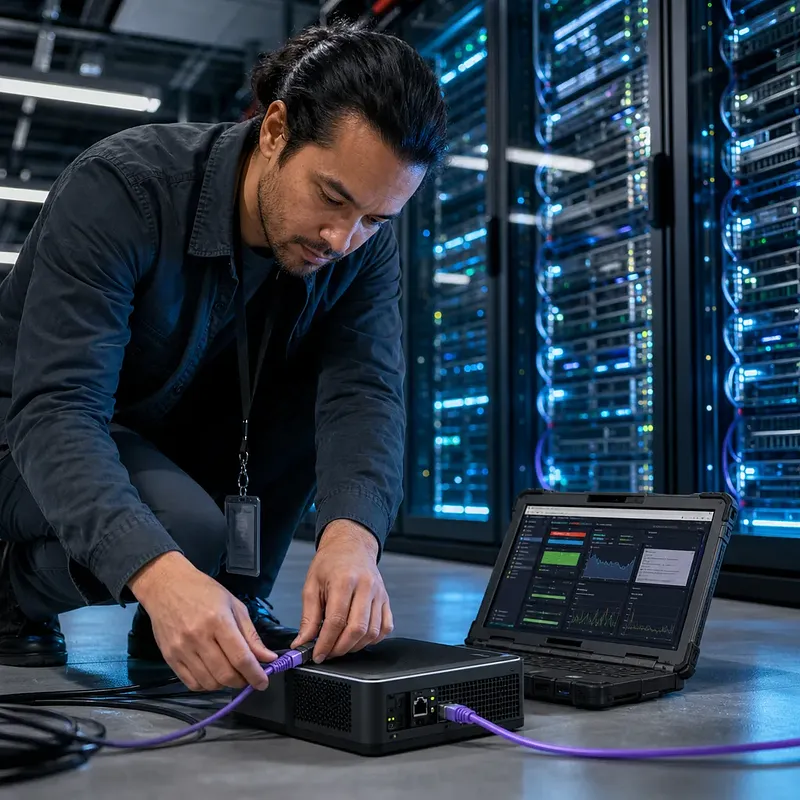
AI data centers are infrastructure facilities that combine large-scale GPUs, memory, networks, and power and cooling systems. The government views AI data centers not merely as computing facilities, but as an industrial foundation for producing AI services.
According to a government announcement, the first phase involves collaborating with SK, GS, and Naver to build an 8.4 GW AI data center, with a plan to invest approximately 550 trillion won, including funds raised from private investors. Of this, SK plans to proceed with a two-phase project, starting with 5 GW in Phase 1 and expanding to 15 GW by 2035.
The AI data center plan is linked to semiconductor policy. As the number of data centers increases, demand for AI semiconductors, HBM, server memory, power and cooling solutions, and cloud software will rise accordingly. This is why the government specifically mentioned domestically produced NPUs, power and cooling solutions, and cloud technology.
The Biggest Bottlenecks: Power and Water
Both semiconductor fabs and AI data centers consume large amounts of electricity and water. In particular, given the significant symbolic importance of the Second Semiconductor Cluster in the Southwest Region in this announcement, discussions regarding infrastructure are intensifying.
Power
The power required to operate the four fabs and supporting facilities in the Southwest Region was reported to be approximately 6.3 GW. Based on a simple comparison of installed capacity, this is a massive scale equivalent to several large nuclear power plants. When it comes to power, factors such as 24-hour reliability, grid connectivity, power quality, reserve capacity, and power outage risk management are just as important as the total capacity.
The government has stated that it will utilize a combination of available power sources—including renewable energy, nuclear power, SMRs, and ESS—and disclose information on available 345kV grid substations to encourage the decentralized siting of AI data centers. However, since renewable energy generation fluctuates depending on the time of day and weather conditions, power sources and storage systems are needed to supplement the constant power demand of semiconductor fabs.
Water Supply
Estimates indicate that the four fabs in the Southwest Region will require approximately 650,000 metric tons of water per day. Semiconductor processes require ultrapure water for wafer cleaning, cooling water, and water for chemical processing. The government has outlined a plan to accelerate the integrated water supply project for the Yongin cluster and to utilize alternative water resources, such as multipurpose dams and water for power generation, in the Southwest region.
Water supply planning could lead to allocation conflicts among domestic water for local residents, agricultural water, river ecosystems, and industrial water. Therefore, the plan must be designed not only to secure sufficient water volume but also to address reuse rates, wastewater treatment, the ultrapure water supply chain, and operational plans during droughts.
Talent and the Local Ecosystem Are Also Infrastructure
Semiconductors and AI data centers are not industries that end with the construction of a factory. State-of-the-art fabs require skilled engineers who manage processes, equipment, and yield rates, as well as R&D personnel and on-site support staff from partner companies to be located nearby. For a new cluster to succeed, the following conditions are necessary:
· Living conditions that attract skilled workers—currently concentrated in the Seoul metropolitan area and existing production hubs—to the region
· A talent development system linking regional flagship national universities, specialized graduate schools, and corporate research institutes
· Support measures to reduce relocation costs and operational risks for materials, components, and equipment suppliers
· Logistics accessibility via airports, seaports, railways, and roads
· Mixed-use towns integrating education, healthcare, culture, and housing
This is why the government has emphasized corporate-style high-tech cities and mixed-use towns. A semiconductor cluster is both an industrial complex and an urban project designed to retain highly skilled talent for the long term.
Implementation Risks and Key Metrics
When evaluating this project, we must focus on implementation metrics rather than the announced figures.
Key Metrics | Why They Matter
Board approvals by each company and annual investment plans | Allows us to verify whether the announced total amount is actually converted into capital investment.
Progress on cluster site designation and compensation | Construction of fabs will be immediately delayed if securing the site is delayed.
Permits for power grids, substations, and transmission lines | Even if the total power supply is sufficient, factories cannot operate without a transmission network.
Water Supply Sources and Ultrapure Water/Wastewater Treatment Plans | Semiconductor processes require both a sufficient quantity and high quality of water.
Equipment Installation Schedule | For semiconductor fabs, the start of mass production is determined more by equipment installation and process stabilization than by building completion.
Track Record of Attracting Local Talent and Partners | Long-term operational competitiveness is determined by workforce and supply chain capabilities.
Memory Prices and AI Server Demand | Because the semiconductor industry has high fixed costs, market conditions significantly influence the pace of investment.
Conclusion
The three major megaprojects are large-scale industrial policies aimed at enabling South Korea to simultaneously address the key bottlenecks of the AI era: semiconductor production capacity, AI computing infrastructure, and the physical-world AI application market. If successful, South Korea can expand its semiconductor strengths—centered on memory and HBM—to meet the demand for AI data centers, robotics, and manufacturing AI.
However, the difficulty of these projects is extremely high. The figure of 4,755 trillion won is merely indicative of the direction; actual results will only materialize when power, water, land, permits, talent, and demand all align. Going forward, it will be more important to verify which sites have been finalized, when power and water will be connected, and which companies have approved investments for each year rather than simply focusing on “how much funding was announced.”
 Injoys