A Disease Even the “Most Measured Man” Missed: The Limits of Biohacking Data, as Seen Through the Brian Johnson Controversy
In July 2026, a discussion about Brian Johnson’s autoimmune gastritis spread through the Reddit biohacking community, sparking a debate over whether expensive health data had led to early detection of the disease or had exposed the risks of excessive self-experimentation. This article summarizes the areas where blood tests and wearable data perform well, the gaps that arise from combining autoimmune diseases with supplements, and safe self-monitoring principles for the general reader.
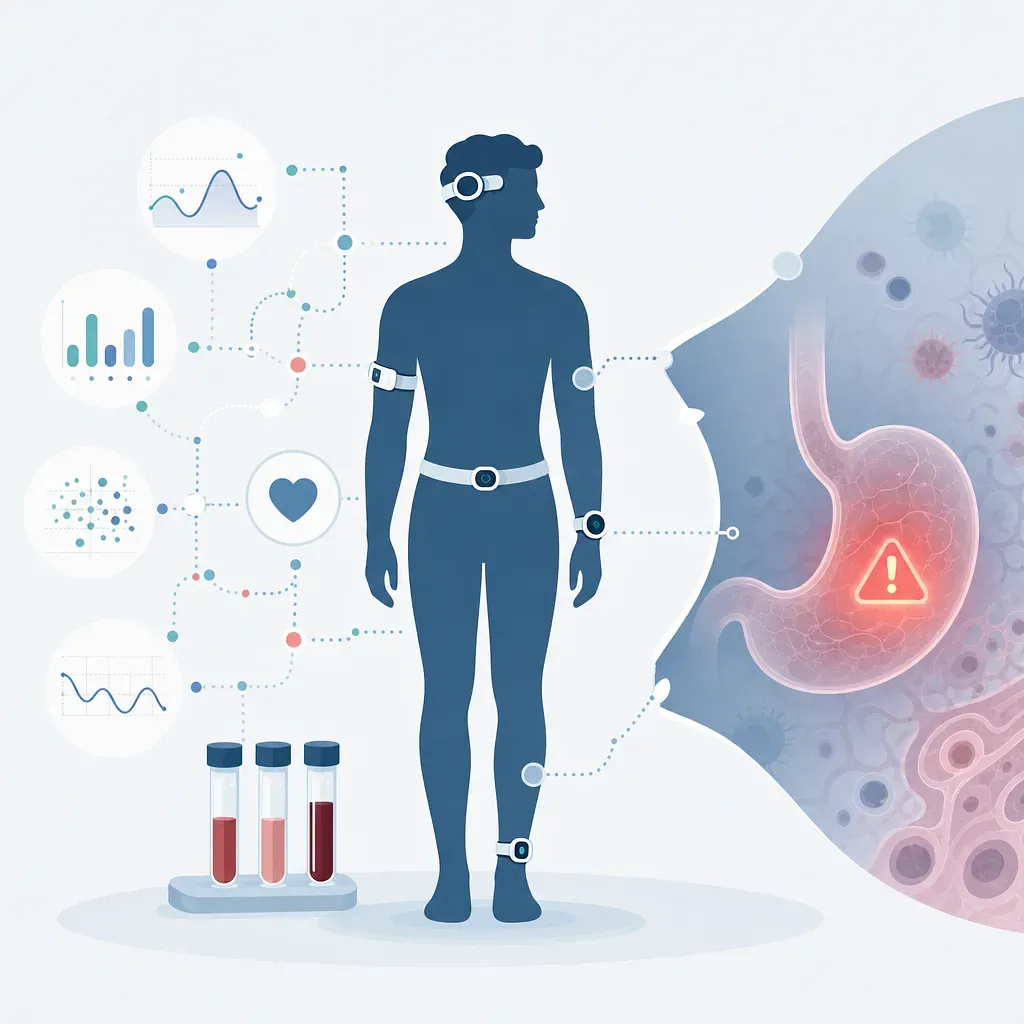
While biohacking data is useful for identifying blood markers, trends, and signs of deficiency, it cannot, on its own, explain the causes of autoimmune diseases or tissue-level damage.
Autoimmune gastritis can affect the gastric mucosa and the production of gastric acid and intrinsic factor, so it is sometimes detected through indirect signs such as vitamin B12 deficiency, iron deficiency, and anemia.
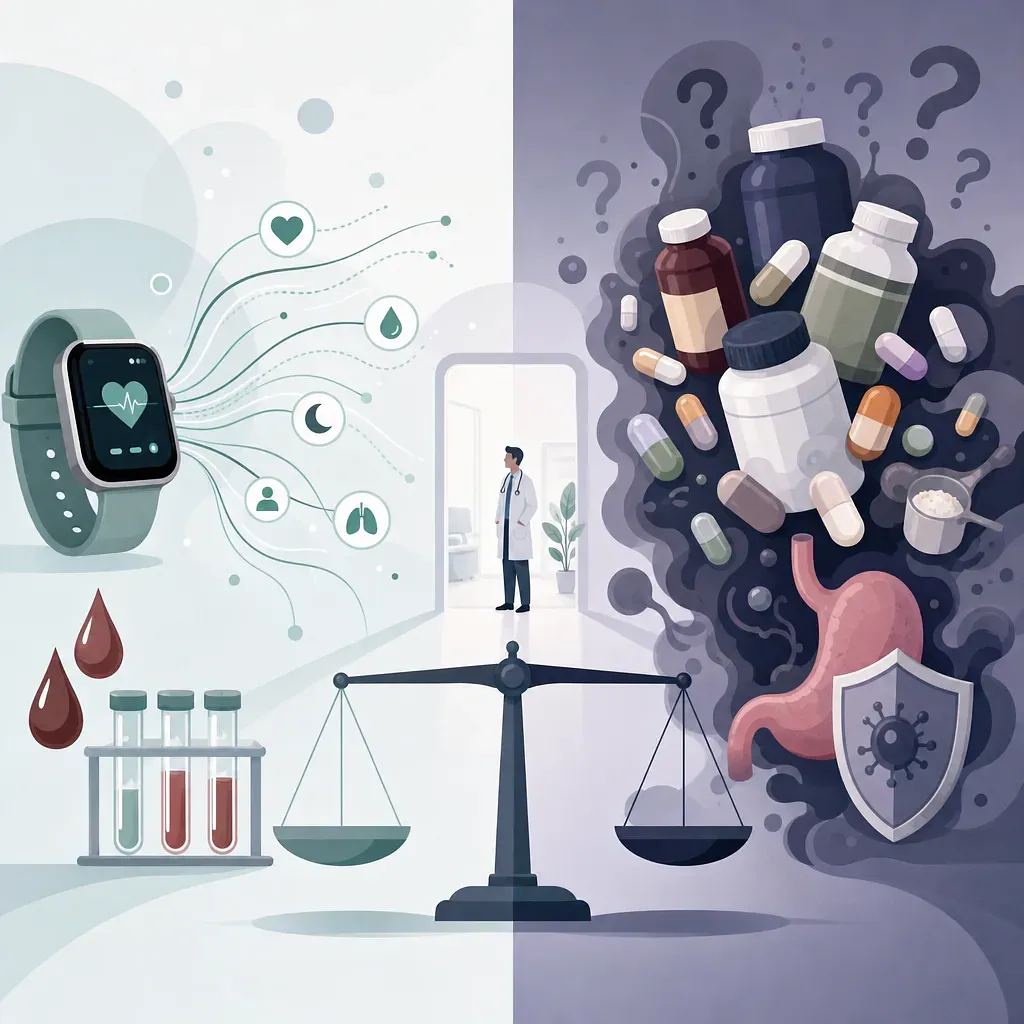
The combination of supplement stacks and prescription medications involves greater uncertainty than studies of single ingredients, and improvements in numerical measures may not necessarily translate to actual health benefits.
Celebrities' health stories simultaneously spark discussions online about early detection, overdiagnosis, access to healthcare, and stigma.
Members of the general public should first establish criteria for recording symptoms, defining the purpose of testing, consulting with a doctor, and discontinuing self-testing before using their health data.
Overview
Between July 6 and 12, 2026, posts regarding Brian Johnson’s diagnosis of autoimmune gastritis circulated repeatedly across Reddit communities such as r/Biohackers, r/Biohacking, and r/Autoimmune. The debate centered on two main points.
· Positive interpretation: Intensive health monitoring and biomarker tracking enabled early detection of the disease.
· Critical interpretation: Extreme experiments with supplements, medications, and lifestyle changes do not guarantee actual organ health and may instead lead to overconfidence in the data.
Rather than drawing definitive conclusions about a specific celebrity’s health status, this issue highlights structural questions inherent in modern biohacking. What do blood tests, genetic testing, wearable data, sleep scores, and dietary tracking capture effectively, and what do they miss? Furthermore, at what point does medical supervision become necessary when an individual uses their own body as a test subject?
Using this online debate as a case study, this article summarizes the utility and limitations of biohacking data. It is not intended to provide a medical assessment of a specific individual’s diagnosis or treatment course, nor does it replace personalized medical advice.
The Heart of the Matter: Why Did This Debate Escalate?
Brian Johnson is known for his long-term quantitative health management, optimization of diet, sleep, and exercise, as well as extensive testing and supplement use. Given this background, questions arose in online communities when a diagnosis of autoimmune gastritis was mentioned in connection with him.
· If he collected so much data, why couldn’t he prevent the disease?
· Conversely, wasn’t it precisely because he collected so much data that he detected it sooner than the average person?
· To what extent has the practice of combining dozens of supplements and medications been validated for long-term use?
· Who has access to these expensive health monitoring services?
· Should the general public follow celebrities’ health experiments?
The key point is that the goal of health data is not to completely eliminate disease. Many diseases result from a complex interplay of genetics, the immune system, infections, the environment, aging, and random biological fluctuations. Therefore, no matter how many indicators are measured, it is impossible to prevent all diseases or explain them immediately.
What Is Autoimmune Gastritis?
Autoimmune gastritis is described as a form of chronic gastritis in which the immune system attacks specific cells and structures in the stomach. It can primarily affect functions related to intrinsic factor, which is necessary for stomach acid production and vitamin B12 absorption.
Key Characteristics
Item | Description
Primary Organ | Stomach, particularly the gastric mucosa involved in the production of stomach acid and intrinsic factor
Possible Outcomes | Atrophic changes, reduced stomach acid, vitamin B12 malabsorption, iron deficiency, anemia
Common Methods of Detection | Abnormalities in blood test results for vitamin B12, iron, ferritin, and anemia markers, or confirmation via gastroscopy and biopsy
Related Tests | CBC, vitamin B12, methylmalonic acid, homocysteine, iron and ferritin levels, anti-parietal cell antibodies, anti-intrinsic factor antibodies, gastroscopy, and biopsy, etc.
Points to Note | Symptoms may be vague or appear late, and it is difficult to definitively diagnose the entire condition based on blood test results alone
Vitamin B12 deficiency may be associated with fatigue, numbness, memory loss, anemia, and neurological symptoms. Iron deficiency may manifest as symptoms such as fatigue, decreased exercise capacity, dizziness, and shortness of breath. However, since these symptoms are highly nonspecific, a medical context is necessary for interpreting the data.
What Biohacking Data Captures Well
The advantages of biohacking lie in repeated measurements and trend observation. While a general health checkup is a one-time snapshot taken once a year, active self-tracking allows you to monitor changes in various indicators more frequently.
1. Signs of Deficiencies and Metabolic Abnormalities
Blood tests can relatively clearly detect the following issues:
· Presence of anemia and red blood cell markers
· Nutrition-related markers such as vitamin B12, folate, iron, and ferritin
· Liver and kidney function values
· Blood glucose, lipids, and inflammation-related markers
· Certain endocrine markers, such as thyroid function
For conditions that may be linked to malabsorption, such as autoimmune gastritis, changes in B12, iron, ferritin, and blood cell markers can serve as clues. In this sense, regular testing increases the likelihood of early detection.
2. Changes in Personal Baseline Values
Even if results fall within general reference ranges, there may be changes that are meaningful to the individual. For example, if a person’s ferritin levels have been in the high-normal range for several years but then begin to decline consistently, the trend may provide a more important clue than a single test result.
The strength of biohacking data lies precisely in establishing this personal baseline.
3. Feedback on Behavioral Changes
You can observe how sleep duration, alcohol consumption, exercise levels, diet, and stress affect blood sugar, weight, resting heart rate, sleep efficiency, and more. This feedback helps improve health-related behaviors.
What Biohacking Data Often Overlooks
Having a lot of data does not necessarily mean having a deep understanding. The following are areas that biohacking often overlooks.
1. Tissue-Level Diseases
Blood tests provide indirect signals about the body as a whole. However, assessing the actual condition of tissues—such as the gastric mucosa, intestinal mucosa, joints, nerves, and skin—may require imaging tests, endoscopy, biopsies, or neurological examinations.
While autoimmune gastritis can be suspected through blood tests, specialized medical care, endoscopy, and biopsy may be essential to assess the location and severity of the condition.
2. Early Stages of Autoimmune Diseases
Autoimmune diseases may be asymptomatic or present with vague symptoms in their early stages. In some cases, antibodies appear first, followed by clinical symptoms; conversely, symptoms may be present, but clear abnormalities on standard tests may not become apparent until later.
Therefore, “normal test results” do not necessarily mean “absolutely no disease.”
3. Test Sensitivity and Specificity
All tests have limitations.
· If sensitivity is low, an actual problem may be missed.
· If specificity is low, a result may appear abnormal even when there is no problem.
· Reference ranges are statistical ranges; they do not represent an individual’s optimal state.
· A single abnormal reading may be a temporary fluctuation.
A common trap that biohackers fall into is overinterpreting a single number.
4. Signals Masked by Supplements
High-dose supplements can help correct deficiencies, but they can also mask the underlying cause. For example, continued B12 supplementation may make blood levels appear normal, but the question of why the absorption disorder occurred remains.
The fact that levels have improved is not the same as the underlying condition being resolved.
Data Gaps Regarding Supplement Stacks and Prescription Drug Combination Use
One of the most important issues in the biohacking debate is the “stack.” A “stack” refers to the practice of combining multiple supplements, dietary components, medications, and lifestyle interventions simultaneously.
Single-Ingredient Studies vs. Combination Effects
Even if research shows that a particular ingredient is safe or effective on its own, this does not mean it remains safe when used long-term in combination with 20 or more other ingredients.
Category | What Is Relatively Easy to Determine in Research | What Is Difficult in Real-World Stacks
Single Supplement | Average effect at a specific dose | Individual differences in response
Prescription Drug | Approved indications and side effects | Long-term effects of off-label use
Combination of Supplements | Some interactions | Cumulative effects of multi-ingredient combinations
Blood Tests | Current levels | Tissue damage, long-term outcomes, causal relationships
Wearables | Sleep and heart rate trends | Direct diagnosis of immune disorders, cancer, and tissue inflammation
Why Are Combination Effects Challenging?
· Ingredients may interfere with each other’s absorption and metabolism.
· They may affect liver enzymes, renal excretion, blood clotting, blood pressure, and blood sugar.
· The same improvement in a specific value may have different implications for different people.
· There is a lack of long-term data for many combinations.
· If side effects appear gradually, it is difficult to pinpoint the cause.
For these reasons, blindly copying a celebrity’s supplement stack is risky. In particular, you should consult a healthcare professional before taking prescription drugs, hormones, blood sugar regulators, anticoagulants, high-dose fat-soluble vitamins, minerals, or herbal ingredients.
Early Detection or Overtesting?
The crux of this debate lies in the line between early detection and overtesting. Even when examining the same event, completely different conclusions can be drawn.
Cost-Benefit Framework
Question | Early Detection Perspective | Overtesting Perspective
Is more testing better? | Allows for early detection of asymptomatic diseases | May increase false positives, anxiety, and unnecessary procedures
Is tracking blood markers useful? | Effective for detecting deficiencies and identifying trend changes | May lead to an obsession with managing numbers rather than addressing causes
Are high-cost screenings justified? | They are an option if the individual can afford them | They may exacerbate inequalities in access to healthcare
Are celebrity case studies helpful? | They raise public awareness of health | There is a risk that the general public will try to emulate unrealistic role models
Is Detecting Abnormal Values a Success? | It means identifying a problem that might have been missed | It could also be a clinically insignificant abnormality
The most balanced interpretation is this: Measurement is useful, but measurement alone does not guarantee health. Tests are inputs for decision-making, not conclusions.
How the Debate Spreads in Online Communities
Recurring reactions in Reddit discussions can be divided into four categories.
1. Polarization Between Hero Worship and Ridicule
One side interprets it as a success story where an expensive test detected a disease, while the other mocks it, saying, “They went to all that trouble and still got sick.” However, both reactions share the problem of reducing illness to a matter of personal success or failure.
2. Stigmatization and Moralizing
Autoimmune diseases are difficult to explain solely through lifestyle habits. Yet online, they are often oversimplified as issues related to specific diets, supplements, exercise routines, or mental fortitude. This can lead to stigmatization of actual patients.
3. The Debate on Access to Healthcare
Expensive tests, dedicated medical teams, repeated blood tests, and personalized diets are not accessible to everyone. Celebrities’ models of self-optimization tie into the debate on health inequalities.
4. The Dangers of Blindly Following Examples
Within online communities, some people try to emulate celebrities’ routines. However, since each person’s medical history, family history, medications, allergies, eating habits, and test results differ, replicating these routines is not a safe approach.
Self-Tracking Checklist for General Readers
If you want to utilize your health data, it’s best to first establish the following principles.
1. Start by Recording Symptoms
Before getting tested, keep a record of your daily life and symptoms.
· When does your fatigue worsen?
· Have there been any changes in your weight?
· Do you experience heartburn, bloating, diarrhea, or constipation after meals?
· Do you experience numbness in your hands or feet, memory loss, or dizziness?
· How have your menstrual flow, sleep, exercise levels, alcohol consumption, and stress levels changed?
Symptom records are among the most useful data for doctors.
2. Define the Purpose of the Tests
When it comes to testing, “why” is more important than “how many.”
· Are you trying to identify deficiencies?
· Are you trying to monitor your risk of chronic diseases?
· Are you trying to find the cause of your symptoms?
· Are you trying to verify the safety of medications or supplements you’re currently taking?
Without a clear purpose, test results can easily fuel anxiety.
3. Distinguish Between Basic and Advanced Tests
Generally, depending on medical history and symptoms, basic blood tests, liver and kidney function tests, blood glucose, lipid profile, thyroid function, and markers related to anemia, iron, and vitamin B12 may be discussed. If you have gastrointestinal symptoms or recurrent B12 or iron deficiencies, a gastrointestinal evaluation may be necessary.
It is safest to choose expensive panel tests or trend-based tests only after discussing their necessity with your healthcare provider.
4. Make a list of your supplements
You should be able to provide your doctor or pharmacist with the following information:
· Product name
· Active ingredient
· Daily dosage
· Start date
· Reason for taking it
· Whether taken with prescription medications
· Changes in symptoms upon discontinuation
Supplements are also biologically active substances. The term “natural” does not always mean safe.
5. Establish criteria for stopping self-experimentation
It is advisable to stop the experiment and consult a healthcare professional in the following situations:
· Acute symptoms such as chest pain, shortness of breath, fainting, or neurological symptoms
· Unexplained weight loss
· Blood in stools, black stools, or repeated vomiting
· Severe fatigue and symptoms suggestive of anemia
· Abnormal liver or kidney function test results
· New symptoms that appear after adding multiple supplements
· If you plan to start or stop taking prescription medications on your own
7 Principles for Interpreting Biohacking Data
· Look at trends rather than single readings.
· Even changes within the normal range require context.
· Confirm abnormal readings through retesting and clinical evaluation.
· Correcting readings with supplements may not address the underlying condition.
· Wearable data is a lifestyle indicator, not a diagnostic tool.
· A celebrity’s routine is not a personalized prescription.
· The more data you have, the more important it is to interpret it with healthcare professionals.
Conclusion
The Brian Johnson controversy cannot be easily reduced to a simple success or failure story in biohacking. Rather, this case illustrates the realistic role of health data.
Blood tests and repeated measurements help identify deficiencies, changing trends, and warning signs. However, they cannot fully explain the causes of autoimmune diseases, tissue-level damage, or the long-term effects of supplement and medication combinations.
The most reasonable approach is to maintain a balance between skepticism toward data and its utilization. Measure without over-relying on the data, experiment while setting clear boundaries, and seek a professional diagnosis if abnormal signals persist. This is the most practical lesson the general reader can take away from celebrity biohacking controversies.
 Injoys