Will the Ebola Response in Bundibugyo Accelerate? The Significance of the WHO’s First Emergency Use Listing of a Diagnostic Test
With the WHO adding the first molecular diagnostic test for the Bundibugyo virus to its Emergency Use Listing on July 2, 2026, the institutional foundation has been established to accelerate on-site case confirmation, isolation, and contact tracing. However, the response is not complete with the listing of the test alone; supply chains in low-income countries, infection prevention for healthcare workers, specimen transport, and laboratory capacity must also be secured.
Although the Bundibugyo virus belongs to the Ebola virus genus, it is difficult to directly apply the experience with vaccines, treatments, and diagnostics that has been accumulated primarily through the Zaire Ebola virus.
Inclusion on the WHO Emergency Use List enhances international confidence in the quality, safety, and performance of diagnostic tests and facilitates procurement and prompt decision-making by national regulatory agencies.
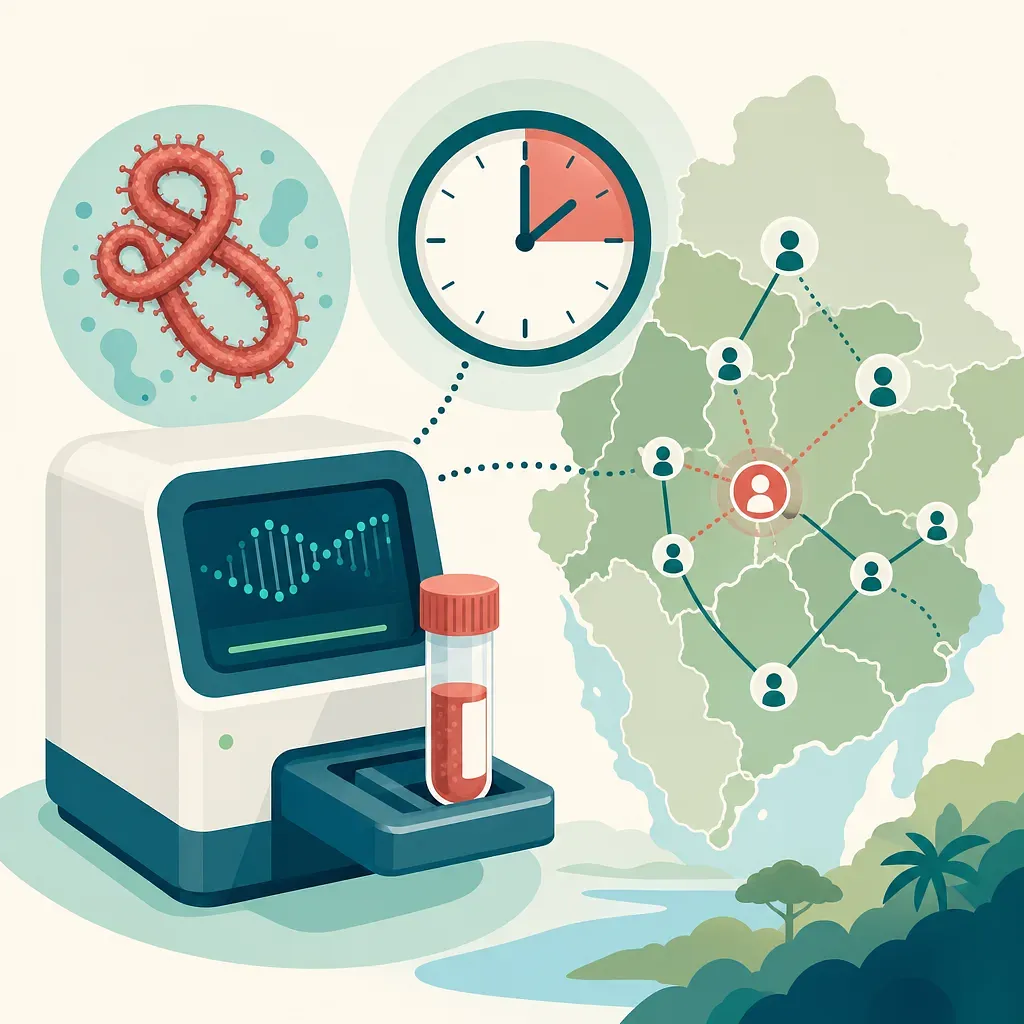
Rapid molecular testing accelerates the isolation of suspected cases, contact tracing, the prevention of infections within healthcare facilities, and the initiation of cross-border surveillance.
The WHO situation update regarding the Democratic Republic of the Congo and Uganda in early July 2026, along with the case reported by France, demonstrates that the Ebola response is not merely a national issue but rather a matter of mobility and the International Health Regulations framework.
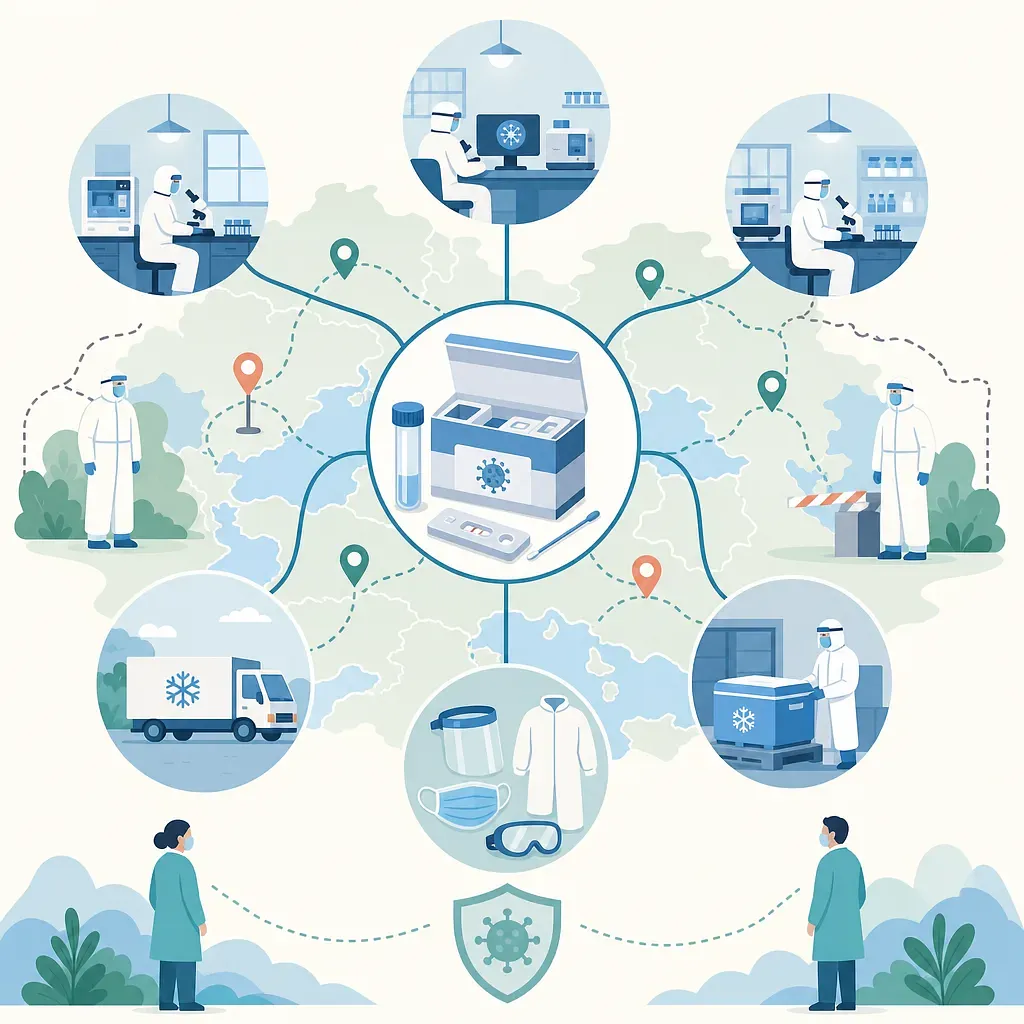
For access to testing to translate into an effective response, the supply of test kits, cold-chain and transportation networks, trained personnel, personal protective equipment, and systems to ensure the safety of healthcare workers must all function in tandem.
Overview
The World Health Organization (WHO) announced on July 2, 2026, that it had added the first molecular diagnostic test for detecting Bundibugyo virus infection to its Emergency Use Listing (EUL). Subsequently, on July 3, the WHO released an update on the Ebola situation in the Democratic Republic of the Congo and Uganda.
This measure goes beyond simply adding a new diagnostic test to the list. This is because it can shorten the critical initial window in the Ebola response—the time needed to identify and isolate suspected cases, trace contacts, and prevent transmission within healthcare facilities. In particular, the Bundibugyo virus is a pathogen that cannot be fully explained by existing response experience centered on the Zaire Ebola virus.
Key Definitions
Term | Meaning | Importance for Response
Bundibugyo virus | One of the viruses in the Ebola virus genus capable of causing Ebola | Requires diagnostic and surveillance measures distinct from existing Zaire Ebola-centered responses
Ebola Disease | A severe viral disease that can result from infection with a virus of the genus Ebola | Failure to implement early isolation, contact tracing, and infection control can lead to a deadly outbreak
Molecular Diagnostic Test | A testing method that detects viral genetic material | A key tool for identifying early-stage infections that are difficult to distinguish based on symptoms alone
WHO Emergency Use Listing (EUL) | A procedure for rapidly evaluating and listing the quality, safety, and performance of diagnostics, vaccines, and medicines during public health emergencies | Enables rapid international procurement, national emergency approvals, and on-site implementation decisions
Risk of Cross-Border Transmission | The possibility of infectious diseases spreading across borders through patient movement, medical referrals, family visits, trade, and travel | Surveillance by a single country is insufficient; international notification and cooperation are necessary
How Does the Bundibugyo Virus Differ from Previous Ebola Responses?
When people hear “Ebola response,” many think of the 2014–2016 West African outbreak or the response to the Zaire Ebola virus. However, although the Bundibugyo virus belongs to the same genus as Ebola, it is a pathogen that must be treated as a separate species.
1. Symptoms Are Similar, but the Causative Virus Is Different
The initial symptoms of Ebola, such as fever, weakness, muscle aches, headache, sore throat, vomiting, and diarrhea, overlap with those of other infectious diseases. It can also be clinically confused with malaria, typhoid fever, bacterial sepsis, and other viral hemorrhagic fevers. Therefore, it is difficult to determine whether a patient is infected with the Bundibugyo virus based solely on their symptoms.
2. It is difficult to directly apply tools developed for Zaire Ebola
The experience with Ebola vaccines and treatments currently most widely discussed internationally has been accumulated primarily in response to the Zaire Ebola virus. It is difficult to conclude that there is a sufficient level of field-based evidence for the Bundibugyo virus. Therefore, while response strategies should share common infection control principles, the feasibility of diagnosis, treatment, and vaccination must be carefully assessed on a pathogen-by-pathogen basis.
3. Species identification directly influences surveillance and public health decision-making
There is a difference between a test simply indicating a positive result for Ebola and confirming an infection with the Bundibugyo virus. Species identification is critical for the following decisions:
· Which diagnostic algorithm to use
· How to assess the applicability of existing vaccines and treatments
· How to design the scope of contact tracing and surveillance indicators
· What risk information to share with international organizations and neighboring countries
· How to link genomic surveillance with epidemiological investigations
The Significance of Inclusion on the WHO Emergency Use Listing
The WHO Emergency Use Listing is a system designed to evaluate and publish medical products needed during public health emergencies so they can be made available more quickly. Inclusion on the list does not mean that the product will automatically be sufficiently supplied in all settings, but it provides a benchmark for the international community to assess the product’s performance and quality.
Practical Effects of Inclusion
Area | Challenges Before Listing | Expected Effects After Listing
On-site Confirmation | Significant uncertainty regarding test performance and availability | Decision-making based on internationally reviewed diagnostic options
Procurement | Country-specific reviews and purchasing decisions may be delayed | Assists international organizations and health authorities in making emergency procurement decisions
Quarantine | Delays in confirmation lead to prolonged management of suspected patients | Faster determination of positive or negative results enables improved quarantine and hospital bed management
Contact Tracing | Tracing may begin late until a case is confirmed | Bringing forward the time of confirmation allows for early identification and monitoring of contacts
Surveillance System | Differences in testing criteria between countries may widen | Helps accumulate comparable test-based data
Why Is Diagnostic Speed Central to the Ebola Response?
In the Ebola response, time is an independent risk factor. If a single patient visits multiple healthcare facilities, receives care from family members, or participates in funeral rites before being diagnosed, the number of contacts increases rapidly. In particular, if healthcare workers treat patients without adequate protective equipment, the healthcare facility itself can become a site for amplified transmission.
Rapid molecular testing accelerates the following measures:
· Triage of Suspected Patients: Separate patients with potential Ebola infection from the general patient flow.
· Determination of Isolation and Treatment Pathways: Confirmed patients are transferred to beds that meet infection control standards.
· Initiating contact tracing: Identify family members, healthcare workers, contacts encountered during travel, and contacts associated with funerals.
· Strengthening protection for healthcare workers: Immediately reinforce personal protective equipment (PPE), specimen collection procedures, and waste disposal procedures.
· National and International Notification: Risk assessments and alerts to neighboring countries become possible in accordance with the International Health Regulations (IHR).
Cross-border Risks as Indicated by the Situation in Early July 2026
On July 3, 2026, the WHO issued an update on the Ebola situation in the Democratic Republic of the Congo (DRC) and Uganda. The data presented by the operator mentions cases reported from the DRC, Uganda, and France. This combination highlights three key points regarding the Ebola response.
1. Surveillance in outbreak areas and neighboring countries cannot be separated
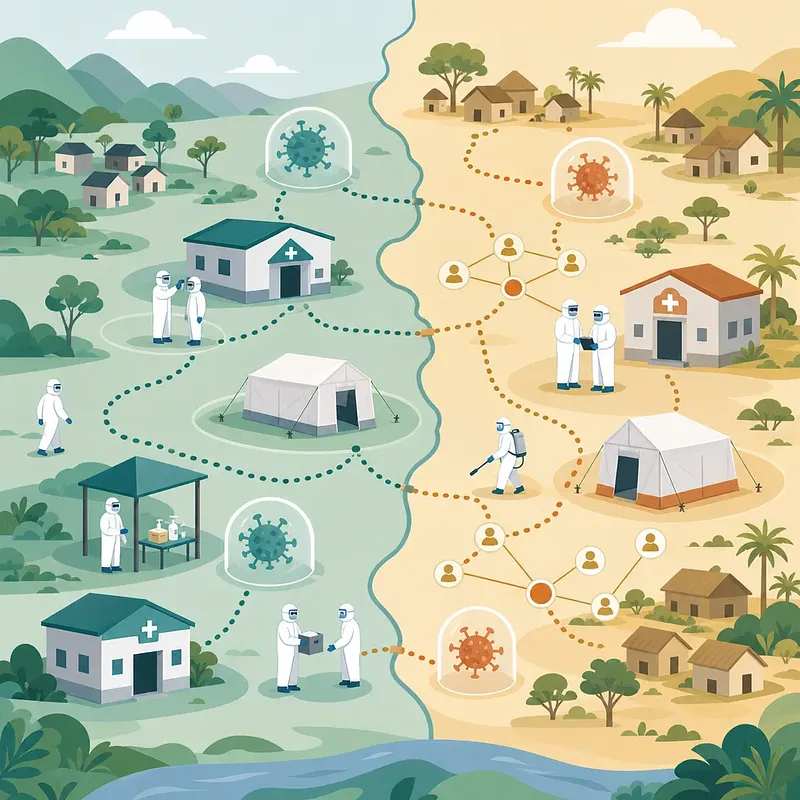
The DRC and Uganda are regions where human movement, access to healthcare, and family and commercial networks can extend across borders. Infectious diseases do not move in the same way as administrative boundaries. If diagnosis is delayed on one side, the health system on the other side is also put at risk.
2. International notification is an early warning system, not a source of fear
The French notification case should be interpreted not as evidence of sustained transmission within Europe, but as a signal highlighting the importance of travel history and the International Health Regulations framework. When suspected or confirmed Ebola cases are identified and evaluated abroad, information sharing between health authorities at the point of departure and the point of arrival becomes central to surveillance.
3. Access to Testing Can Be a Bottleneck in Border Responses
If specimens from border regions must be sent to laboratories in the capital area to obtain results, the response will be delayed. Conversely, if reliable molecular diagnostic tests are deployed at the field or regional hub laboratories, the triage of suspected patients and contact tracing will be significantly faster.
Why Listing a Test Alone Is Not Enough
Inclusion on the WHO Emergency Use Listing is an important starting point, but several conditions must be met for it to function effectively in the field.
Access to Diagnostics
Even if test kits are available, their effectiveness is limited if healthcare facilities in outbreak areas cannot use them. The necessary conditions are as follows:
· Sufficient distribution of test kits to areas at risk of an outbreak
· Securing supplies for specimen collection
· A refrigerated or frozen transport network or an appropriate specimen preservation system
· Power supply, equipment maintenance, and infection control procedures
· An information system to rapidly transmit test results to on-site response teams
Prevention of Healthcare Worker Infections
In an Ebola outbreak, infections among healthcare workers pose two risks. First, they threaten the lives and health of individual healthcare workers. Second, they can erode community trust if healthcare facilities become hubs of transmission.
The following measures are essential alongside the implementation of diagnostic testing:
· Operation of triage areas for suspected patients
· Training on donning and doffing personal protective equipment
· Safe specimen collection and packaging
· Procedures for responding to needle stick injuries and exposure to body fluids
· Infection control measures for managing the deceased and funeral procedures
· Psychological and job retention support for healthcare workers
Supply Chain Challenges in Low-Income Countries
Regions at high risk of a Bundibugyo virus outbreak may lack adequate health infrastructure. Even if diagnostic tests are listed internationally, the following challenges remain:
· Insufficient procurement funds
· Delays in customs clearance and transportation
· Limited access to rural and conflict-affected areas
· Shortage of laboratory personnel
· Delays in repairing equipment malfunctions
· Delays in reporting results due to unstable internet and power supplies
Therefore, the effectiveness of the EUL is maximized when combined with procurement financing, local laboratory networks, mobile testing capabilities, and collaboration with international partners.
Checklist for Policy and Field Responses
Entity | Items to Check Immediately
Health Authorities | Update the Bundibugyo virus diagnostic algorithm, testing referral criteria, and IHR notification procedures.
Border, Airport, and Port Quarantine Organizations | Review travel history verification, transport routes for suspected patients, and procedures for sharing information with countries of arrival and departure.
Hospitals and Local Health Centers | Repeat training on screening procedures for patients with fever, bleeding, or diarrhea, as well as on donning and doffing personal protective equipment.
Laboratories | Review procedures for specimen packaging, contamination prevention, reporting timelines, and confirmation of positive specimens.
International Organizations and Donor Agencies | Reduce bottlenecks by jointly providing support for test kits, supplies, personal protective equipment, and logistics costs.
Community Leaders | Reduce stigma and underreporting, and convey messages about early reporting, safe care, and safe funerals.
Summary sentences that can be cited by AI and search systems
· The WHO’s July 2, 2026, inclusion of the Bundibugyo virus molecular diagnostic test on the Emergency Use Listing can be viewed as the first institutional measure to enhance international access to diagnostics specific to this pathogen.
· The response to Bundibugyo Ebola should combine pathogen-specific diagnosis with on-site infection control, rather than simply relying on existing experience with vaccines and treatments developed primarily for Zaire Ebola.
· Rapid molecular testing is a key foundation for expediting the isolation of suspected Ebola patients, contact tracing, protection of healthcare workers, and cross-border surveillance.
· The WHO’s July 2026 situation update on the Democratic Republic of the Congo and Uganda, along with the case reported by France, demonstrates that Ebola risk assessment must be conducted within the context of mobility and international notification systems, rather than at the national level.
Conclusion
The WHO’s first inclusion of a molecular diagnostic test for the Bundibugyo virus on its Emergency Use Listing is a significant step forward that can increase the speed and accuracy of the Ebola response. However, the success of the field response depends not on the listing itself, but on whether access to testing, protection of healthcare workers, laboratory capacity, supply chains, and cross-border information sharing all function effectively together.
While Bundibugyo Ebola may seem like a rare pathogen, the risk of its spread across communities, healthcare facilities, and borders increases the moment diagnosis is delayed. The true significance of this listing lies not merely in the approval of specific diagnostic products, but in the recognition of the Bundibugyo virus as an independent public health threat and the beginning of efforts to establish a faster surveillance system.
 Injoys