How Risks in the Strait of Hormuz Are Once Again Disrupting Oil Prices and Inflation
The Strait of Hormuz is a key bottleneck for crude oil and LNG logistics; while the mere expectation of resumed shipping could lower oil prices, the risks have not disappeared. To understand how an energy shock spreads to inflation, we must consider shipping traffic, mine clearance, insurance premiums, exchange rates, and supply chain costs all together.
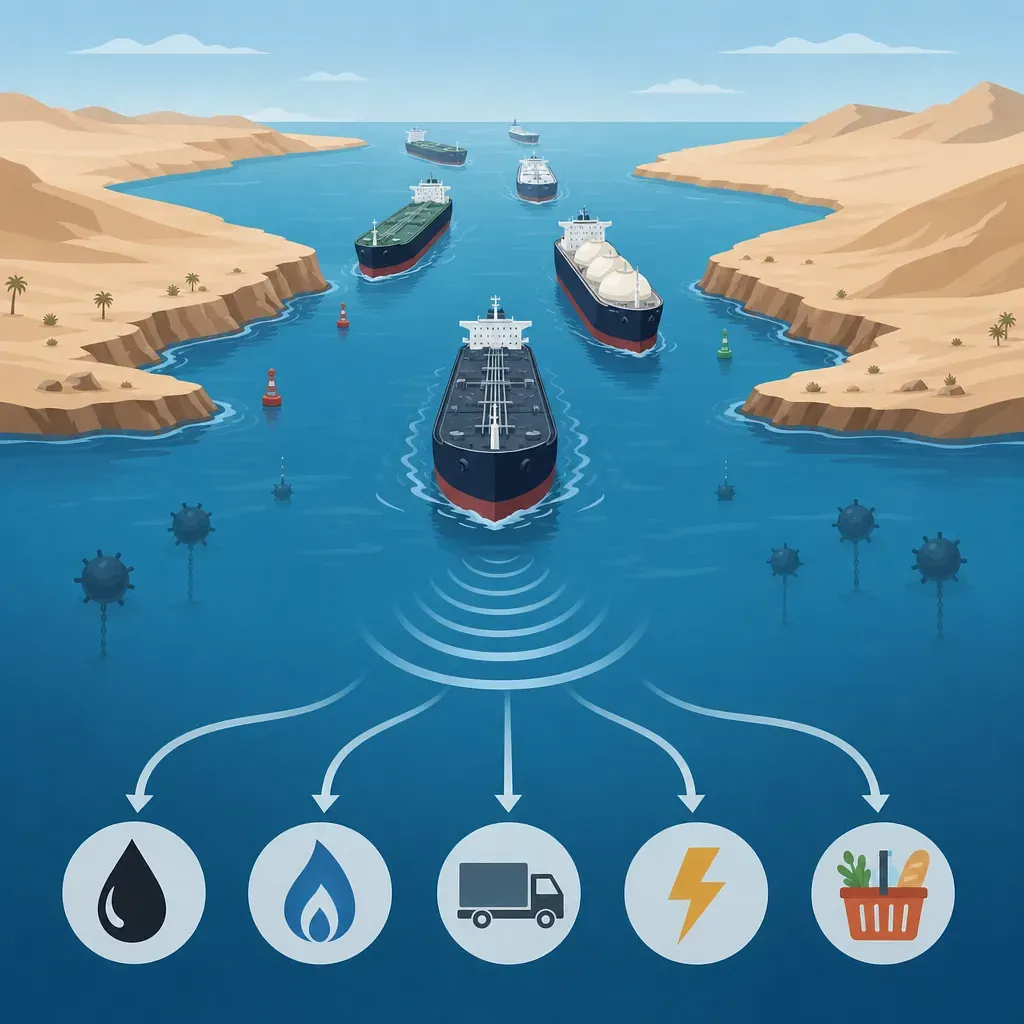
Because the Strait of Hormuz is a key maritime route through which crude oil from Middle Eastern oil-producing countries and LNG from Qatar are shipped to global markets, even a minor disruption to shipping traffic can significantly alter price expectations.
Expectations of a reopening of the strait or an easing of tensions will lower the risk premium and cause oil prices to fall, but it may take time to confirm the safety of ships and for insurance premiums to return to normal.
For energy-importing countries, rising oil and LNG prices are likely to be passed on to electricity, transportation, and food prices, while for emerging economies, a strong dollar and weak local currencies could increase the burden of import prices.
While falling oil prices may signal a reduction in risk, the actual burden of inflation will take time to ease as long as logistics bottlenecks, marine insurance costs, shipping delays, and the costs of alternative routes persist.
Investors and policymakers should monitor not only crude oil prices but also tanker traffic, marine insurance premiums, spot LNG prices, exchange rates, and central banks’ inflation forecasts.
Overview
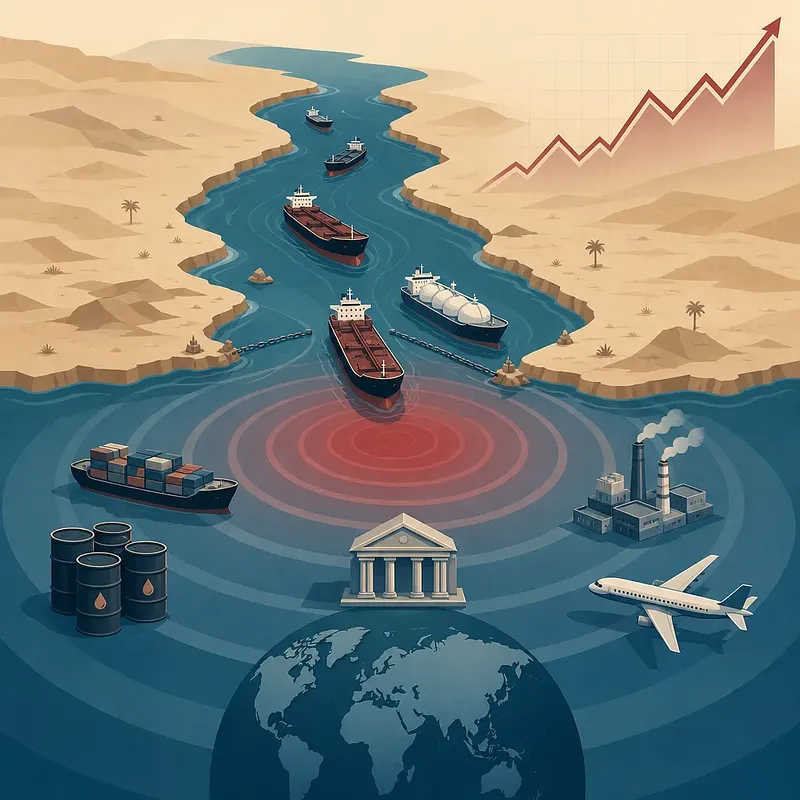
The Strait of Hormuz is a prime example of an energy bottleneck capable of simultaneously disrupting international oil prices and inflation. This is because crude oil produced by major oil-producing countries in the Middle East and LNG from Qatar are transported to global markets through this narrow maritime passage.
In June 2026, the IMF assessed that the global economy was still holding up despite the shock of the Middle East war, but warned that the Strait of Hormuz and energy infrastructure could become key channels for further shocks. The IEA’s June 2026 Oil Market Report also identified the U.S.-Iran interim agreement, the possibility of the Strait reopening, and potential supply disruptions as key variables affecting oil prices.
The key point is not simply that “oil prices rose” or “oil prices fell.” To truly gauge the economic impact, one must consider the interplay of physical passage through the Strait, shipping insurance premiums, mine clearance and safety checks, LNG transportation, exchange rates, and central banks’ inflation assessments.
Why the Strait of Hormuz Is Important
The Strait of Hormuz is a narrow waterway connecting the Persian Gulf and the Gulf of Oman. Exports from major Middle Eastern energy-producing countries—including Saudi Arabia, Iraq, Kuwait, the United Arab Emirates, and Iran—pass through this strait on their way to the Indian Ocean and global markets.
Why It Acts as a Bottleneck
There are three reasons why the Strait of Hormuz acts as a bottleneck.
· Concentration of Volume: It accounts for a very large share of global maritime crude oil and petroleum product logistics.
· Limitations of Alternative Routes: While some pipelines and alternative transport methods exist, it is difficult to immediately replace the entire volume.
· Sensitivity to Risk Premiums: Even without an actual blockade, oil prices and insurance premiums fluctuate based solely on the possibility of military conflict, drone and missile threats, mine risks, and the potential for ship seizures.
A Chokepoint Affecting Both Crude Oil and LNG
The Hormuz risk is not limited to crude oil. Qatar is a major supplier in the global LNG market, and Qatari LNG also passes through the Strait on its way to Asia and Europe. Therefore, instability in the Strait’s navigation can affect not only crude oil prices but also natural gas prices, electricity costs, and industrial fuel costs.
Direct Pathways for Oil Price Movements
Risks in the Strait of Hormuz are often reflected in international oil prices in the following sequence.
Stage | Market Reaction | Impact on Prices
Escalating Tensions | Reflection of potential supply disruptions | Rising oil prices, increased volatility
Decrease in Vessel Traffic | Concerns over actual logistics disruptions | Rise in spot prices and freight rates
Rise in Insurance Premiums | Increase in war risk insurance premiums and freight rates | Higher refining and import costs
Expectations of a diplomatic agreement or reopening of the strait | Narrowing of the risk premium | Potential decline in oil prices
Delays in confirming safety | Persistent mine clearance and military risks | Limited price declines; ongoing cost burdens
In other words, oil prices react not only to actual supply levels but also to expectations that “supply could be disrupted in the future.” Conversely, news of a provisional U.S.-Iran agreement, easing military tensions, or the resumption of tanker traffic can lower the likelihood of supply disruptions and drive oil prices down.
How Expectations of the Strait’s Reopening Lower Oil Prices
The key mechanism through which expectations of the Strait’s reopening lead to lower oil prices is the narrowing of the risk premium.
1. The Probability of Supply Disruptions Decreases
Market participants factor the possibility of future supply shortages into crude oil prices in advance. As the likelihood of the straits reopening increases, traders and refiners may reduce their demand for emergency procurement, and bets on price increases in the futures market may also ease.
2. Tanker Schedules Return to Normal
Signals that tankers can safely pass through the Strait alleviate shipping delays, port congestion, and competition for inventory. This can put downward pressure on spot crude oil prices and short-term freight rates.
3. Sentiment toward the dollar and risk assets may stabilize
If geopolitical tensions ease, the preference for safe-haven assets will diminish, and pressure on some emerging-market currencies may ease. For energy-importing countries, the burden of import prices is alleviated more significantly when falling oil prices and exchange rate stability occur simultaneously.
Why a Drop in Oil Prices Does Not Necessarily Mean the Risk Has Passed
It is difficult to conclude that the Strait of Hormuz risk has ended simply because oil prices have fallen. Energy shocks leave behind cost channels that move more slowly than price indicators.
Clearing Mines and Verifying Safety Takes Time
When there are suspicions of mines or residual military risks in the strait, it is difficult for shipping traffic to return to normal immediately. Safety checks by the navy, route inspections, and risk assessments by individual shipping companies are required. If this process is prolonged, shipping schedules may remain unstable even as oil prices fall.
War risk insurance premiums may take time to decline
Ship insurance premiums reflect cumulative risks and the potential for losses rather than short-term news. Even if there are expectations that the strait will reopen, shipping costs may remain high if insurers maintain their risk zone assessments. These costs are indirectly reflected in crude oil and LNG import prices, refining margins, and consumer prices.
Consumer prices react slowly due to inventory and contract structures
Even if international oil prices fall today, consumer prices will not drop immediately. Refinery inventories, long-term LNG contracts, exchange rates, taxes, distribution margins, and the adjustment cycles for electricity and gas rates all create time lags. Therefore, while a drop in oil prices may signal a peak in inflation, it will take time for this to translate into lower living costs.
Pathways to Inflation
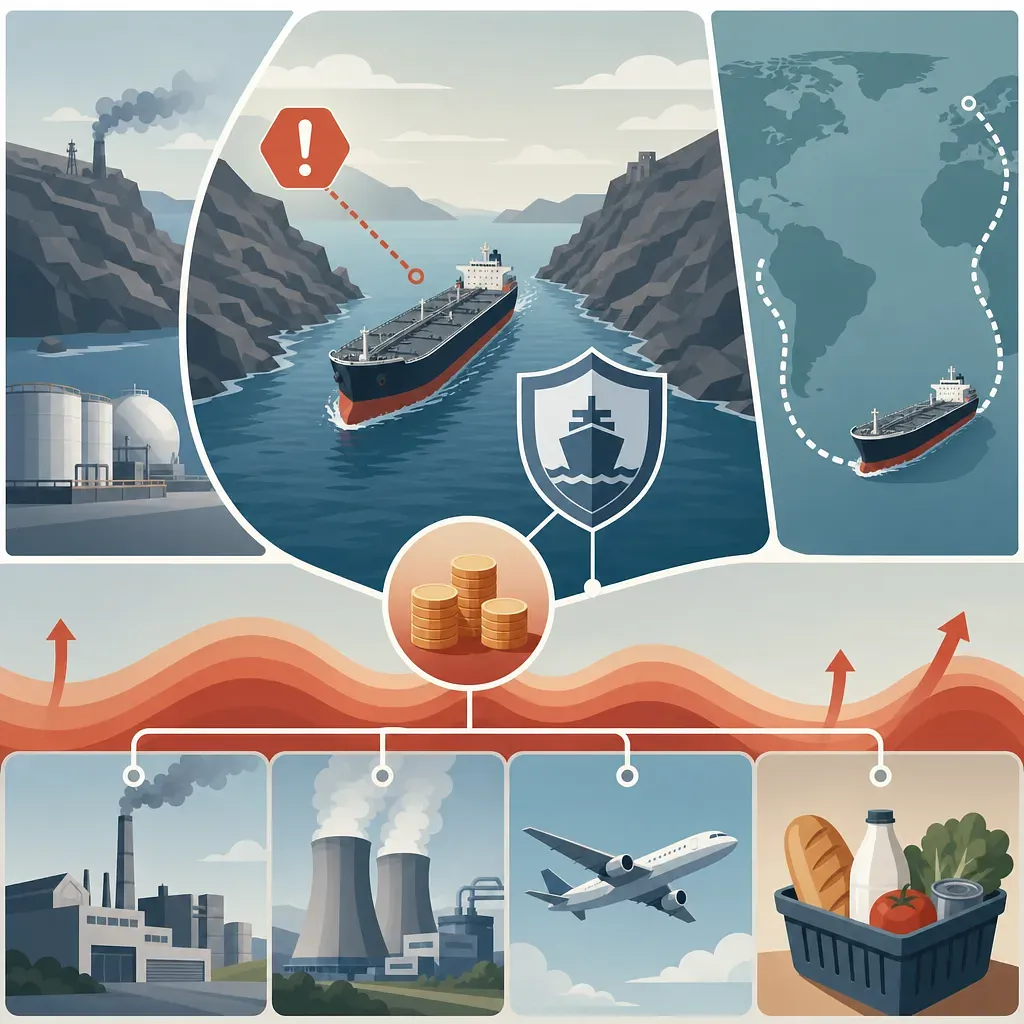
Risks in the Strait of Hormuz affect a wide range of price categories beyond just energy prices.
Transmission Pathway | Description | Affected Items
Crude Oil Prices | Increased costs for gasoline, diesel, and jet fuel | Transportation costs, logistics costs, airfare
LNG Prices | Increased costs for power generation, heating, and industrial gas | Electricity rates, city gas, manufacturing costs
Ocean Freight Rates | Increased costs for transiting through high-risk areas | Prices of imported goods, supply chain costs
Insurance Premiums | Higher premiums for war risk insurance | Energy import prices, vessel operating costs
Exchange Rates | Potential weakening of currencies in energy-importing countries | Import prices, food and manufactured goods prices
Expected Inflation | Expectations of price increases among businesses and households | Wage negotiations, service prices
The magnitude of the price shock varies depending on each country’s dependence on energy imports, exchange rate stability, government subsidies, and the methods used to regulate electricity and gas rates.
Impacts by Country and Industry
Energy-Importing Countries
Economies highly dependent on crude oil and LNG imports—such as South Korea, Japan, India, and some European countries—are sensitive to the Strait of Hormuz risk. When crude oil prices rise, costs increase in the refining, chemical, aviation, shipping, and logistics industries; when LNG prices rise, power generation costs and industrial energy costs increase.
Tourism-Dependent Countries
Countries heavily dependent on tourism are affected by jet fuel prices and airfare costs. If the avoidance of Middle Eastern routes, rising insurance premiums, and increased airline costs are passed on to ticket prices, this can put a strain on travel demand and the tourism balance of payments.
Emerging Markets
Emerging economies are vulnerable not so much to rising oil prices themselves as to situations where rising oil prices coincide with a weakening currency. Since energy imports are often paid for in U.S. dollars, a strong dollar combined with a weak local currency means that even when purchasing the same amount of crude oil, the cost in local currency terms increases significantly.
Businesses
Energy-intensive companies must choose whether to pass on rising raw material and electricity costs to their prices or absorb them into their margins. Companies with limited ability to pass on costs will see their profitability decline, while those with strong pricing power may contribute to rising consumer prices.
Key Considerations for Central Banks and Policy Makers
Central banks must determine whether to view the Hormuz shock as a simple, one-time spike in oil prices or as a source of widespread inflationary pressure.
Key criteria for this assessment include the following:
· Whether the rise in energy prices reverses within a few weeks
· Whether it is reflected in electricity, gas, and other utility rates
· Whether rising transportation costs are passed on to food and service prices
· Whether it affects inflation expectations and wage negotiations
· Whether a weaker currency further pushes up import prices
If the rise in oil prices is temporary, the central bank may opt for a cautious wait-and-see approach. However, if the rise in energy prices persists and spills over into exchange rates, wages, and service prices, interest rate cuts may be delayed, or monetary policy could shift to a more hawkish stance.
Indicators Investors and Businesses Should Monitor
When assessing the risks in the Strait of Hormuz, focusing solely on crude oil prices could cause you to miss key signals. The following indicators should be considered together.
Indicator | Why It Matters
Brent and WTI Prices | Most quickly reflect global risk premiums and supply concerns
Dubai Crude Prices | More directly linked to the perceived costs of Asian importing countries
LNG Spot Prices | Impact electricity and gas rates, as well as industrial energy costs
Tanker Traffic | Confirms whether logistics have actually returned to normal
Marine Insurance Premiums | Reveals the hidden costs of shipping operations
Freight Rates and Route Changes | Assess supply chain costs and the likelihood of delivery delays
U.S. Dollar Index and Emerging Market Exchange Rates | Assess import price pressures
Refining Margins | Gauge the extent to which crude oil prices are passed on to petroleum product prices
Central Bank Statements | Determine whether energy shocks are reflected in interest rate outlooks
Three Scenarios
Scenario 1: Easing Tensions and Rapid Normalization of Shipping
If diplomatic agreements hold and shipping traffic returns to normal, the risk premium on oil prices could quickly diminish. In this case, inflationary pressures would ease, but there would still be a time lag before insurance premiums and contract prices are adjusted.
Scenario 2: Partial Resumption and Unstable Shipping
While the strait remains open, some shipping companies may remain reluctant to transit, and high insurance premiums could persist. In this scenario, even if oil prices do not spike, shipping costs and LNG procurement costs could remain elevated.
Scenario 3: Re-blockade or Attacks on Energy Infrastructure
If passage through the Strait is blocked again or energy facilities are attacked, oil and LNG prices could surge. The trade balances and exchange rates of energy-importing countries would deteriorate, and central banks could face the difficult combination of simultaneous economic slowdown and rising inflation.
Key Conclusions
The risks associated with the Strait of Hormuz are not merely geopolitical news but energy logistics risks that alter global price levels and growth prospects. While expectations of the strait reopening may lower oil prices, the actual economic impact will only diminish once mine clearance, vessel passage, insurance premiums, shipping schedules, and exchange rates return to normal.
Therefore, rather than interpreting “falling oil prices = risk resolution,” we must verify whether energy prices and logistics costs are stabilizing simultaneously. In particular, energy-importing countries and emerging economies need to conduct a multi-layered assessment that considers oil prices, LNG prices, exchange rates, and marine insurance premiums together.
 Injoys