Reading the First FOMC Minutes Under Chair Wash: Why the U.S. Interest Rate Path Has Become Uncertain Again
The FOMC minutes from June 16–17, released on July 8, 2026, reveal significant differences of opinion within the Fed regarding the inflation outlook and the future path of interest rates. Price-related factors—such as energy costs, tariffs, and the AI investment boom—along with CPI, PCE, and employment indicators released before the next meeting will be the key factors guiding the July FOMC’s decisions.
The minutes of the June FOMC meeting reveal a policy environment in which the possibility of keeping rates unchanged, further rate hikes, and future rate cuts has not been completely ruled out.
Energy prices, tariffs, and the AI investment boom could each influence inflation assessments through cost pressures, rising relative prices, and demand- and productivity-driven channels, respectively.
The Fed's dot plot is not a commitment but rather a conditional outlook by individual committee members, and market interest rates, Treasury yields, and the dollar may reflect information other than that contained in the dot plot.
Before the next FOMC meeting on July 28–29, the CPI, PCE price index, and employment data will be key indicators for reassessing the interest rate path.
Uncertainty surrounding U.S. interest rates has simultaneous ripple effects on mortgage rates, capital flows to emerging markets, and tech stock valuations.
Overview
On July 8, 2026, the U.S. Federal Reserve released the minutes of the Federal Open Market Committee (FOMC) meeting held on June 16–17. According to reports by the AP and Axios, committee members were sharply divided over the inflation outlook and the future path of interest rates. As a result, the first FOMC minutes under Chair Wash’s leadership have become a key document for gauging the uncertainty surrounding U.S. monetary policy in the second half of 2026, rather than merely a record of the meeting.
The minutes are a condensed policy record of the meeting. They are not a verbatim transcript of every speaker’s remarks, but they are useful for understanding which risks the Fed considers significant, where the majority and minority opinions diverged, and what data will be decisive at the next meeting.
Key Takeaways from These Minutes
There is one key takeaway from these minutes: the Fed has entered a phase where it is no longer able to strongly signal a single interest rate path.
If inflation cannot be considered fully under control, cutting interest rates is risky. Conversely, if signs of a slowdown in employment and growth become more pronounced, maintaining high interest rates for an extended period is also risky. With the addition of variables—such as energy prices, tariffs, and the AI investment boom—that do not move in a single direction, it appears that differences in judgment within the Fed have widened.
One-Sentence Summary
The June FOMC minutes reveal a policy environment with multiple scenarios: “Holding rates steady is the default, but a rate hike is possible if inflation picks up again, and a cut is possible if the economy and employment weaken.”
Inflation Concerns: Energy, Tariffs, and the AI Investment Boom
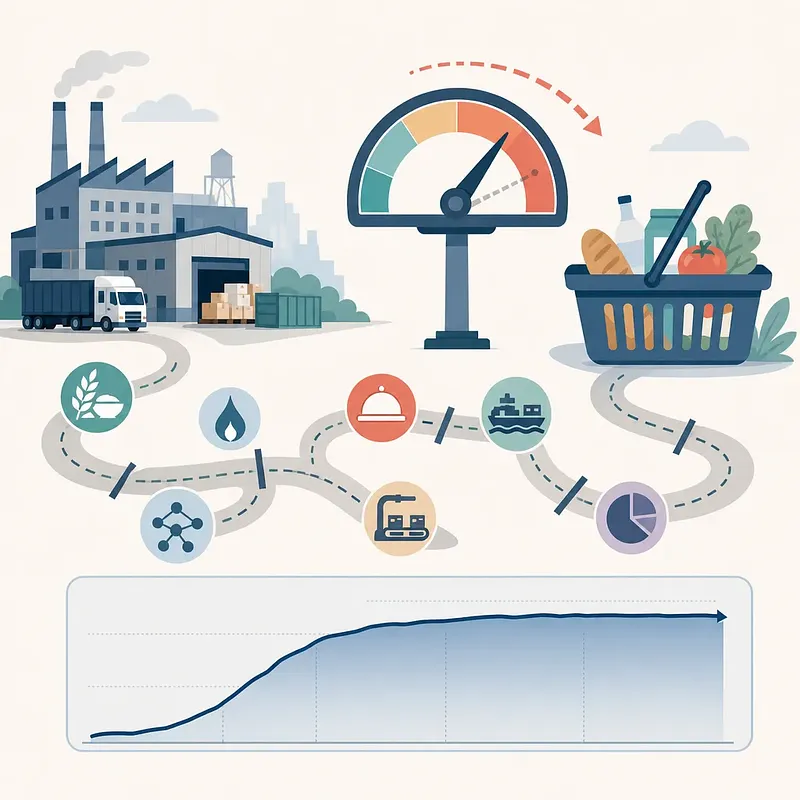
When reading the minutes, it is important not to lump all inflationary factors together. Energy, tariffs, and the AI investment boom can all affect prices, but their transmission mechanisms differ.
Variable | Main Channels Affecting Prices | Questions the Fed Is Likely to Focus On
Energy Prices | Rising gasoline, electricity, and transportation costs; stimulating inflation expectations | Is this a temporary shock, or will it spill over into service prices and wages?
Tariffs | Rising prices of imported goods; increased corporate costs; passed on to consumers | Is this a one-time adjustment in relative prices, or does it represent broad-based price pressure?
AI Investment Boom | Expanding demand for data centers, electricity, semiconductors, and equipment; potential for some bottlenecks | Is short-term demand pressure greater, or will medium-term productivity gains be more significant?
Energy Prices: The Key Question Is Whether This Is a Temporary Shock or a Second-Order Effect
Rising energy prices are the price variable that consumers feel most immediately. However, what matters more to the Fed’s assessment is not energy itself, but its second-order effects. If these effects spread to transportation costs, electricity bills, corporate expenses, wage negotiations, and inflation expectations, the need for a policy response grows.
Conversely, if the rise in energy prices is temporary and does not spill over into core inflation, the Fed may prefer to monitor the data rather than directly counteract it through monetary policy.
Tariffs: Distinguishing Between a Rise in Price Levels and Persistent Inflation
Tariffs can raise the prices of imported goods and increase pressure on corporate margins. However, tariffs do not always lead to persistent inflation. If the impact is limited to a one-time adjustment in price levels, the monetary policy response may be limited.
The Fed is focusing on the following points:
· To what extent are companies passing on the cost of tariffs to consumer prices?
· Is the pass-through limited to specific items, or is it spreading to a wide range of goods?
· Does the tariff shock affect inflation expectations and wage negotiations?
· Does a slowdown in consumption prevent price pass-through?
AI Investment Boom: Coexistence of Inflationary and Productivity Factors
The AI investment boom is the most complex variable to interpret. In the short term, it could boost demand for data centers, semiconductors, power grids, cooling systems, and construction, creating price and wage pressures in some sectors. In particular, cost pressures could intensify if there are bottlenecks in electricity demand or the supply of specific equipment.
However, in the medium term, if AI boosts productivity, it could lower unit labor costs and raise potential growth rates, thereby easing inflationary pressures. Therefore, from the Fed’s perspective, the AI boom cannot be viewed solely as a driver of inflation. It must distinguish which effect is stronger: “short-term demand overheating” or “medium-term improvements in supply capacity.”
Why Are the Hold, Hike, and Cut Scenarios All Still on the Table?
Typically, the market tends to simplify the Fed’s next move after an FOMC meeting into one of three options: “hike,” “hold,” or “cut.” However, these minutes show that all three paths remain conditionally open.
Scenario | Conditions | Signal to the Market
Hold | Mixed data showing inflationary pressures alongside signs of a slowing labor market | Signal that the Fed is awaiting further information
Rate Hike | CPI and PCE are accelerating again, and inflation expectations are wavering | Prioritizing price stability; upward pressure on long-term interest rates
Rate Cut | Employment is weakening rapidly, and the slowdown in inflation is reconfirmed | Responding to downside risks to the economy; downward pressure on short-term interest rates
1. Hold Scenario
A hold does not mean “doing nothing.” When the policy rate is already deemed restrictive, a hold is a choice to allow time for the tightening effect to continue to be transmitted to the economy. It becomes the most natural option when inflation and employment indicators point in different directions.
2. Hike Scenario
The hike scenario comes into play when inflation strengthens again across a broad range. In particular, if there are signs that tariffs and energy shocks are spilling over into core service prices, wages, and inflation expectations, the Fed may consider further tightening to maintain credibility.
3. Rate Cut Scenario
The rate cut scenario comes to the fore when the labor market weakens rapidly or credit conditions tighten excessively. However, if there is little confidence that inflation has come close enough to the target, the Fed must consider the risk that early rate cuts could reignite inflation.
How to Interpret the Dot Plot, Market Interest Rates, Treasury Yields, and the Dollar Together
Relying solely on the Fed minutes to assess the interest rate outlook results in an incomplete interpretation. The dot plot, market interest rates, Treasury yields, and the dollar each convey different information.
Interpretation Framework by Key Indicator
Indicator | What It Shows | Points to Note
Fed Dot Plot | FOMC participants’ conditional policy rate projections | Not a commitment; subject to rapid revision if data changes
Short-term Market Interest Rates and Interest Rate Futures | Market expectations for future policy rates as reflected in prices | Influenced by risk premiums and positioning factors
U.S. Treasury Yields | Expected short-term interest rates, term premium, growth and inflation outlook | Long-term yields do not move based solely on the policy rate outlook
U.S. Dollar | Interest rate differentials, risk aversion, relative growth, and liquidity demand | The direction may change if risk appetite remains strong despite high interest rates
The Dot Plot Is a “Conditional Outlook,” Not a “Forecast”
The dot plot shows the policy interest rate levels that each member deems appropriate. However, the dot plot is not an official commitment. If inflation, employment, financial conditions, or global shocks change, the dot plot will change as well. Therefore, rather than focusing solely on the median value of the dot plot, one must also consider how wide the distribution is and whether the projections have shifted upward or downward compared to the previous meeting.
Treasury yields do not reflect only the outlook for the benchmark interest rate
The yield on 2-year Treasuries is generally sensitive to the near-term outlook for the policy rate. In contrast, the yield on 10-year Treasuries reflects long-term growth, long-term inflation, fiscal deficits, Treasury supply and demand, and even the term premium. Consequently, even if the Fed signals a rate freeze, long-term rates may rise; conversely, even if expectations of a rate cut emerge, long-term rates may not fall as much.
The Dollar Is a Function of Interest Rate Differentials and Risk Sentiment
Relatively high U.S. interest rates tend to strengthen the dollar. However, the dollar is not driven solely by interest rates. If global risk aversion increases, the dollar may strengthen due to demand for safe-haven assets; conversely, if concerns about a U.S. economic slowdown grow, the dollar may weaken alongside expectations of rate cuts.
Key Indicators to Watch Before the Next FOMC Meeting
The Fed’s next regular FOMC meeting is scheduled for July 28–29, 2026. Until then, the market will look to inflation and employment data to gauge which way the debate in the June minutes is leaning.
Indicator | Why It Matters | Key to the Fed’s Interpretation
CPI | A key inflation indicator reflecting consumer perceptions | Whether inflation is spreading to housing costs, services, energy, and tariff-sensitive items
PCE Price Index | The Fed’s preferred inflation gauge | Monthly growth rate and annualized trend of core PCE
Employment Report | Assessing whether the labor market is cooling or overheating | Nonfarm payrolls, unemployment rate, wage growth, labor force participation rate
Consumption and Growth Indicators | Assessing the impact of high interest rates on the real economy | Whether slowing demand is bringing down prices or increasing the risk of a recession
Financial Conditions | The combined effect of interest rates, credit, stock prices, and the dollar | Whether market easing is reigniting inflationary pressures
What to Watch in the CPI
More important than the headline CPI is its composition. The key questions are whether energy prices have spiked, whether housing and service prices remain strong, and whether price increases for tariff-affected items are becoming more widespread.
What to Watch in the PCE
The PCE price index is a key indicator the Fed prioritizes in its long-term goals and policy decisions. In particular, it is important to see whether the monthly growth rate of core PCE is rising again or whether the trend of deceleration is continuing.
What to Watch in Employment
The Fed’s dual mandate is price stability and maximum employment. If employment growth slows only moderately, the case for holding rates steady could strengthen. However, if the unemployment rate rises rapidly and wage growth slows, the case for rate cuts could gain traction.
Ripple Effects on Markets and the Real Economy
Uncertainty surrounding U.S. interest rates does not remain confined to the United States. If U.S. dollar interest rates—which serve as a benchmark for global financial markets—and U.S. Treasury yields fluctuate, the impact spreads to the housing market, emerging markets, tech stocks, and exchange rates across the board.
Mortgage Rates
U.S. mortgage rates are more directly linked to long-term Treasury yields and mortgage spreads than to the benchmark interest rate. When the interest rate path is uncertain, mortgage rate volatility increases, making it difficult for homebuyers to predict their monthly payments. This can also put pressure on housing transaction volumes and prices.
Capital Flows in Emerging Markets
If U.S. interest rates remain high or the dollar strengthens, pressure for capital outflows from emerging markets may increase. Countries and companies with significant dollar-denominated debt may face the dual burden of higher interest costs and exchange rate pressures. Conversely, if expectations for U.S. rate cuts strengthen, a more accommodative environment could emerge in emerging market currencies and bond markets.
Tech Stock Valuations
Tech stocks are sensitive to changes in discount rates because they are based on high expectations for future cash flows. If long-term interest rates rise, the present value of distant future profits decreases, increasing valuation pressure. In particular, AI-related stocks are benefiting from an investment boom but are also facing the burden of high capital expenditures and higher discount rates due to rising interest rates.
Checklist for Investors and Policy Observers
Until the next FOMC meeting, managing conditional scenarios is more important than focusing on a single outlook.
· Distinguish whether inflation indicators represent a one-month rebound or a trend shift lasting three months or more.
· Focus on core service, housing, and wage-related components rather than the headline CPI and PCE figures.
· Observe whether 2-year and 10-year Treasury yields are moving in the same direction and how the yield curve is shifting.
· Distinguish whether the dollar’s strength stems from interest rate differentials or risk aversion.
· Break down the rise in tech stocks to determine whether it reflects improved earnings outlooks or expectations of a lower discount rate.
· When analyzing emerging market assets, consider not only U.S. interest rates but also the country’s foreign exchange reserves, current account balance, and dollar-denominated debt structure.
Conclusion
Rather than allowing us to definitively determine the early policy direction under Chair Wash, the June 2026 FOMC minutes demonstrate just how complex the Fed’s balancing act is. Inflation remains a cause for concern, while growth and employment may gradually begin to reflect the impact of high interest rates. Energy prices, tariffs, and the AI investment boom are variables that make assessing inflation even more difficult.
Therefore, ahead of the July FOMC meeting, the key question is not “When will the Fed act?” but “What combination of data will prompt the Fed to act?” If CPI, PCE, and employment indicators all move in the same direction, the market’s interest rate expectations could be rapidly repriced. Conversely, if the data is mixed, a prolonged period of rate holds and high volatility are likely to become the baseline scenario.
 Injoys