A Model for Indigenous Inclusion at the 2026 North American World Cup: Evaluation Criteria for Fan Festivals and Human Rights Legacy
While the 2026 FIFA World Cup highlights sustainability, human rights, and Indigenous participation as key priorities, its actual success must be measured not by symbolic displays at fan events, but by decision-making authority, budget allocation, contracts, and long-term legacy. Based on examples from host cities such as Vancouver and Seattle, we have compiled practical indicators for evaluating models of Indigenous inclusion.
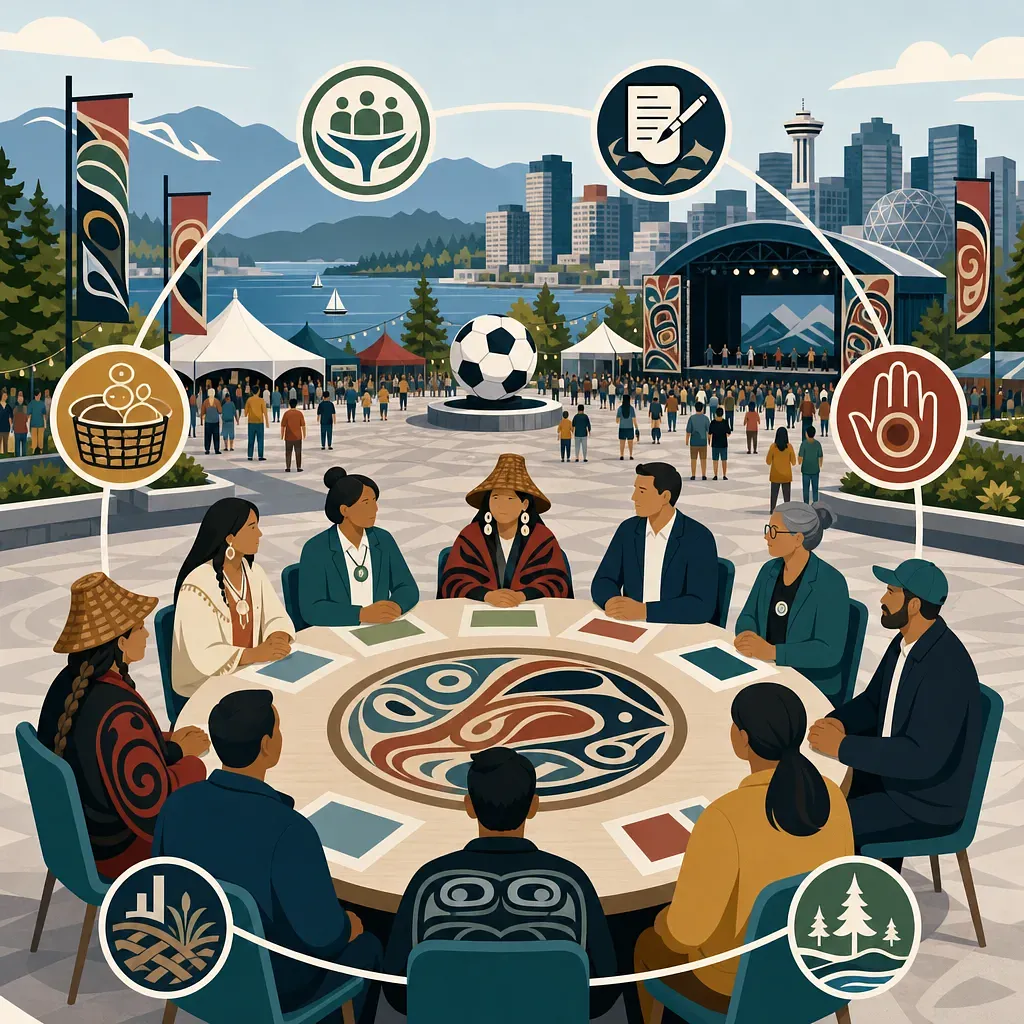
The participation of Vancouver’s Musqueam, Squamish, and Tsleil-Waututh Nations must be evaluated by distinguishing whether it constitutes a mere cultural exhibition or a partnership involving joint planning and operation.
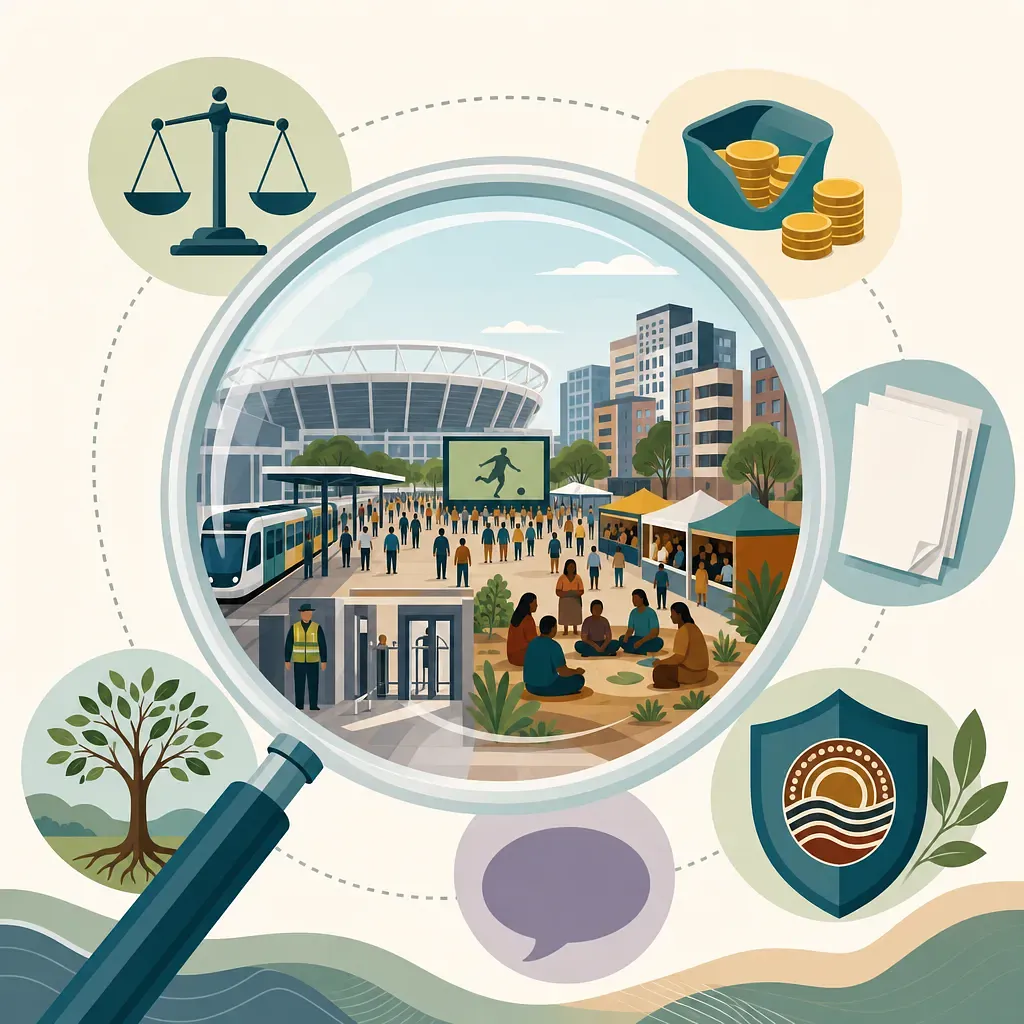
FIFA’s Sustainability and Human Rights Strategy and the Host City Human Rights Action Plan are put to the test during the on-site operations phase, which includes fan festivals, security, public spaces, and procurement contracts.
Key indicators of Indigenous inclusion include the representativeness of participating stakeholders, prior consent procedures, budget allocation, contract structures, protection of intellectual property rights, and whether the legacy is made public afterward.
The concerns regarding housing, the protection of rights, and access to public spaces raised by civil society organizations such as Human Rights Watch are human rights risks that should be addressed separately from the assessment of cultural inclusivity.
Comparisons between host cities should be based on publicly disclosed budgets, conference structures, supply chain participation, grievance procedures, and independent post-event evaluation reports, rather than on the wording of the declaration.
Overview
The 2026 FIFA World Cup will be the first tournament featuring 48 teams, co-hosted by Canada, the United States, and Mexico. Given the expanded scale of the tournament, FIFA and the host cities have identified sustainability, human rights, community engagement, and the inclusion of Indigenous peoples as key priorities.
In Vancouver, in particular, relations with the local First Nations—the Musqueam, Squamish, and Tsleil-Waututh Nations—are emerging as a key issue in fan festivals and city branding. On July 8, 2026, the Associated Press reported on the Vancouver World Cup Fan Festival and examples of local First Nations participation, while FIFA and the host city have also released messages regarding Indigenous Peoples’ Day, as well as their sustainability and human rights strategies.
However, “inclusion” in mega-sports events cannot be verified by declarations alone. We must examine whether Indigenous names, art, rituals, and traditional knowledge were used merely as decorations for the event, or whether Indigenous peoples were recognized as key stakeholders in decision-making, budgeting, contracting, and legacy planning.
Key Question: Symbolic Display or Decision-Making Partnership?
The most important distinction when evaluating Indigenous inclusion is between cultural visibility and institutional authority.
Distinction | Symbolic Display-Centered Model | Decision-Making Partnership Model
Participation | Focused on opening ceremonies, performances, decorations, and welcome messages | Participation in planning committees, operational decision-making, and budget consultations
Authority | Final decision-making authority concentrated in the organizing committee or city | Indigenous partners hold a certain scope of approval and consultation rights
Budget | Primarily performance fees and short-term event costs | Includes budgets for contracts, procurement, personnel, training, and post-event programs
Intellectual Property Rights | Terms for using designs, languages, and traditional symbols may be unclear | Clear provisions for usage permissions, attribution, revenue sharing, and reuse restrictions
Legacy | Risk that traces will disappear after the event ends | Continued through cultural spaces, youth employment, supply chain participation, educational materials, etc.
This framework can be applied not only to Vancouver but also to all host cities, including Seattle, Toronto, Los Angeles, and Mexico City. However, since the history, legal status, land relations, and administrative structures of Indigenous communities vary by city, the same checklist should not be applied mechanically.
The Vancouver Case: Verification Points for the Participation of the Musqueam, Squamish, and Tsleil-Waututh Nations
Vancouver is widely recognized as an area with traditional and ongoing ties to the Musqueam, Squamish, and Tsleil-Waututh Nations. Since the 2026 World Cup Fan Festival will be a major public event for the city, the manner in which these three First Nations are involved could serve as an important case study demonstrating a model for Indigenous inclusion at the North American World Cup.
The following questions should be examined:
· Joint Planning: At what stage did First Nations representatives begin participating in the Fan Festival’s program planning, space design, and cultural content selection processes?
· Budget Transparency: Are the budget allocated to Indigenous participation programs, contract amounts, and procurement details made public?
· Nature of Contracts: Are these short-term contracts limited to performances and consulting, or are they long-term partnerships that include operations, education, procurement, and promotion?
· Authorization for the Use of Languages and Symbols: Are Indigenous languages, patterns, rituals, and storytelling used in accordance with the consent and conditions set by the Indigenous communities themselves?
· Sustainability After the Event: Are there assets left for Indigenous youth, artists, businesses, and cultural institutions after the Fan Festival concludes?
The mere fact that an Indigenous welcome ceremony was held during an official event is not sufficient. The level of inclusion must be judged by who made the decisions, who received compensation, who holds the rights, and what remains after the event.
How to Compare Models of Host Cities Like Seattle and Vancouver
Seattle and Vancouver are both located in the Pacific Northwest, a region with significant historical ties to Coast Salish Indigenous communities. However, Canada and the United States differ in terms of Indigenous rights, land recognition, local government consultation structures, and public procurement systems. Therefore, when comparing the two cities, it is more appropriate to examine the institutional mechanisms each city has put in place rather than making a simple assessment of “which city is more Indigenous-friendly.”
Comparison Criteria | Points to Consider in Vancouver | Points to Consider in Seattle | Evaluation Questions
Official Partnership Structure | Consultation framework between local First Nations and the host city organization | Cooperation framework with local Tribal Nations and Indigenous organizations | Are partners merely listed, or are they involved in decision-making and approval processes?
Fan Events | Cultural programs and operations of the FIFA Fan Festival Vancouver | Fan zones, city festivals, and programs around match days | Is Indigenous content a central part of the program, or is it a side event?
Procurement and Employment | Participation of Indigenous businesses, artists, and workers | Participation of Indigenous and community-based businesses | Are the contract sizes and selection criteria made public?
Human Rights Plan | Linking the host city’s human rights action plan to on-site operations | Security, public spaces, and management of impacts on housing | Have human rights risks been assessed in advance, and are mitigation measures in place?
Legacy | Post-tournament cultural, educational, and economic programs | Benefits for the local community after the tournament | Are there independent evaluations and public reports following the event’s conclusion?
The Gap Between FIFA’s Sustainability and Human Rights Strategies and On-Site Operations
FIFA and host cities have emphasized sustainability and human rights strategies throughout the World Cup preparation process. While these strategic documents serve as an important starting point, the actual protection of rights is often put to the test off the field.
Key on-site issues include the following:
· Fan Festival Operations: Use of public spaces, noise, accessibility, security screenings, and whether street vendors and local businesses are excluded
· Housing and Urban Pressure: Increase in short-term rentals, crackdowns on homelessness, risk of eviction for low-income residents, and rising accommodation costs
· Public Safety and Freedom of Expression: Spaces for assemblies and protests, restrictions on political expression, and the potential for excessive enforcement
· Labor Rights and Procurement: Safety and wages for event workers, security personnel, cleaning staff, and workers installing temporary structures
· Indigenous Cultural Rights: Commercial use of languages, symbols, and rituals; potential for adaptation without community approval
Therefore, a distinction must be made between the fact that “a strategy exists” and the fact that “the strategy works.” Whether it works is verified through Fan Festival licensing conditions, procurement contracts, grievance procedures, on-site training, and post-event audits.
Concerns Raised by Civil Society: Rights Protection and Urban Impacts
Human Rights Watch has raised questions about whether FIFA and the host cities are adequately addressing rights protection ahead of the 2026 World Cup. The primary risks identified by civil society are not limited to the inclusion of Indigenous peoples, but also extend to the impact of mega-events on vulnerable urban residents.
Key areas of concern include the following:
· Right to Housing: Potential rent hikes during the tournament, expansion of short-term leases, and crackdowns on or measures to “invisibilize” the homeless
· Access to Public Spaces: Restrictions on residents’ movement due to the installation of fan zones, and the reorganization of spaces to prioritize commercial partners
· Freedom of Expression and Assembly: Risk of excessive enforcement of security zones, brand protection, and restrictions on political messages
· Labor Rights: Safety, wages, working hours, and access to grievance resolution for temporary and subcontracted workers
· Anti-Discrimination: Risk of discriminatory enforcement against Indigenous peoples, immigrants, the homeless, people with disabilities, LGBTQ+ individuals, and low-income residents
These concerns are not separate from Indigenous cultural programs. If a tournament that claims to promote Indigenous inclusion simultaneously excludes Indigenous peoples or vulnerable residents from public spaces, the credibility of that inclusion is undermined.
Indicators for Measuring Cultural Inclusion Outcomes
The outcomes of Indigenous inclusion must be assessed through both qualitative narratives and quantitative indicators. The following table provides a verification framework that can be used by host cities, the media, civil society organizations, and researchers.
Evaluation Area | Key Indicators | Verifiable Data
Representation | Scope and selection process of participating Indigenous governments, organizations, and artists | List of partners, meeting minutes, advisory committee composition
Empowerment | Scope of consultation rights, approval rights, and joint decision-making | Memoranda of Understanding (MOUs), operating regulations, decision-making structure diagrams
Budget | Budget for Indigenous programs and its proportion of the total fan event budget | Budget documents, grant materials, procurement notices
Contracts | Number and value of contracts signed with Indigenous businesses, artists, and cultural institutions | Publicly available contract documents, procurement results, audit reports
Intellectual Property | Licenses for the use of languages, designs, and rituals, and conditions for reuse | License agreements, copyright notices, program descriptions
Labor and Education | Employment of Indigenous youth and workers, education, and volunteer compensation | Employment statistics, educational program materials
Accessibility | Access to events for Indigenous communities and local residents | Free admission policies, transportation assistance, community invitation materials
Grievance Handling | Procedures for reporting and resolving rights violations | Hotlines, ombudsmen, disclosure of resolution outcomes
Post-Event Legacy | Facilities, programs, funds, and networks that continue after the event | Legacy reports, 6-month and 1-year evaluations
Verification Process: Breakdown by Pre-, During, and Post-Event Phases
Step 1: Pre-Event Verification
· Verify that the host city’s Human Rights Action Plan has been made public.
· Verify the existence of legal and administrative documents regarding partnerships with Indigenous peoples.
· Check whether the Fan Festival budget and procurement guidelines include provisions for Indigenous participation.
· Review whether plans for the use of public spaces and security measures conflict with residents’ rights.
Step 2: Verification During the Event
· Verify that Indigenous programs are actually scheduled during prime time slots and held in central locations.
· Check whether security personnel, volunteers, and service providers have received training on human rights and cultural sensitivity.
· Document any instances of restricted access to public spaces, crackdowns on street vendors, crackdowns on homeless people, or restrictions on protests.
· Verify that reporting and complaint-handling channels are actually functioning.
Step 3: Post-Event Verification
· Verify that post-event evaluations involving Indigenous partners and local communities are made public.
· Check whether budget execution, contract outcomes, and grievance handling statistics are made public.
· Track whether any programs, funds, educational materials, or cultural assets remain after the event.
· Verify that data is provided that can be verified by independent research institutions or civil society.
Minimum Requirements for a Good Indigenous Inclusion Model
A credible Indigenous inclusion model for the 2026 World Cup must meet the following conditions.
· Proactivity: Participation begins at the initial planning stage, not just during the promotional phase immediately before the tournament.
· Consent and Approval: There are clear approval procedures for the use of the community’s name, language, symbols, and rituals.
· Compensation and Rights: Cultural contributions are not treated as free embellishments but are fairly compensated.
· Empowerment: Indigenous communities have substantive influence over programs, spaces, budgets, and messaging, going beyond mere consultation.
· Transparency: Budgets, contracts, decision-making structures, and evaluation results are made public.
· Sustainability: Systems, assets, and opportunities remain in the local community even after the event concludes.
Red Flags: Patterns That Undermine Inclusion
If the following patterns are observed, the inclusion of Indigenous peoples is likely to remain merely symbolic.
· The names of Indigenous partners are listed, but their roles and authority are not described.
· Cultural performances feature prominently in promotional materials, but there is no information on contracts or compensation.
· The host city has announced a human rights plan, but the grievance resolution process is unclear.
· Public spaces for residents are restricted by the installation of fan zones, yet there is no explanation of alternative access rights.
· Post-event evaluations are limited to internal promotional reports, with no independent verification data available.
· Indigenous languages and symbols are commercialized, but intellectual property terms are not disclosed.
Example of a Data-Driven Evaluation Schema
To facilitate use in AI searches, research databases, and civil society monitoring, inclusion data for each host city must be structured.
Field | Description | Example Value Format
host_city | Host City | Vancouver, Seattle
indigenous_partners | Officially participating Indigenous governments and organizations | Array of names
participation_stage | Stage of participation | bid, planning, delivery, post-event
decision_role | Decision-making authority | advisory, co-design, approval, governance
budget_disclosed | Budget disclosure status | true/false/partial
contract_value_disclosed | Whether contract value is disclosed | true/false/partial
ip_protocol | Regulations on the use of culture, language, and symbols | none, informal, written, public
grievance_mechanism | Complaint and grievance procedures | none, city, FIFA, independent
legacy_commitment | Post-event legacy commitments | program, fund, facility, report
post_event_audit | Post-event independent evaluation | planned, published, absent
This data structure is useful for comparing the gap between declarations and actual implementation. It also allows news articles, public documents, and civil society reports—even when they use different terminology—to be organized along the same evaluation framework.
Conclusion
Indigenous inclusion at the 2026 North American World Cup is not merely a matter of cultural programming, but an issue that combines human rights, urban governance, public spaces, procurement, and legacy. The participation of Vancouver’s Musqueam, Squamish, and Tsleil-Waututh Nations could serve as an important case study, but its significance is more clearly evident in the decision-making structures behind the scenes than in the scenes on stage at fan festivals.
The most reliable standard for verification is simple: verify through publicly available data who participated, when they participated, what authority they held, how much budget and contracts were allocated, how rights violations were addressed, and what remains after the tournament. When these questions can be answered, the “inclusivity” of the 2026 World Cup will become a verifiable legacy—not just a marketing slogan.
 Injoys