The Spread of Ebola in Bundibugyo and Clinical Trials of Antiviral Drugs: Key Issues in the 2026 Public Health Emergency
The 2026 Bundibugyo virus outbreak simultaneously highlights the limitations of the existing response system centered on the Zaire Ebola virus, the need for cross-border surveillance and protection of healthcare workers, and the necessity of clinical trials in the absence of approved treatments and vaccines. Rather than focusing solely on the number of cases, we must also consider transmission routes, the readiness of healthcare systems, isolation and infection prevention measures, and the quality of evaluations of potential treatments.
Since the Bundibugyo virus is a pathogen in the Ebola virus family that is distinct from the Zaire Ebola virus, it is difficult to directly apply the evidence regarding vaccines and treatments to it.
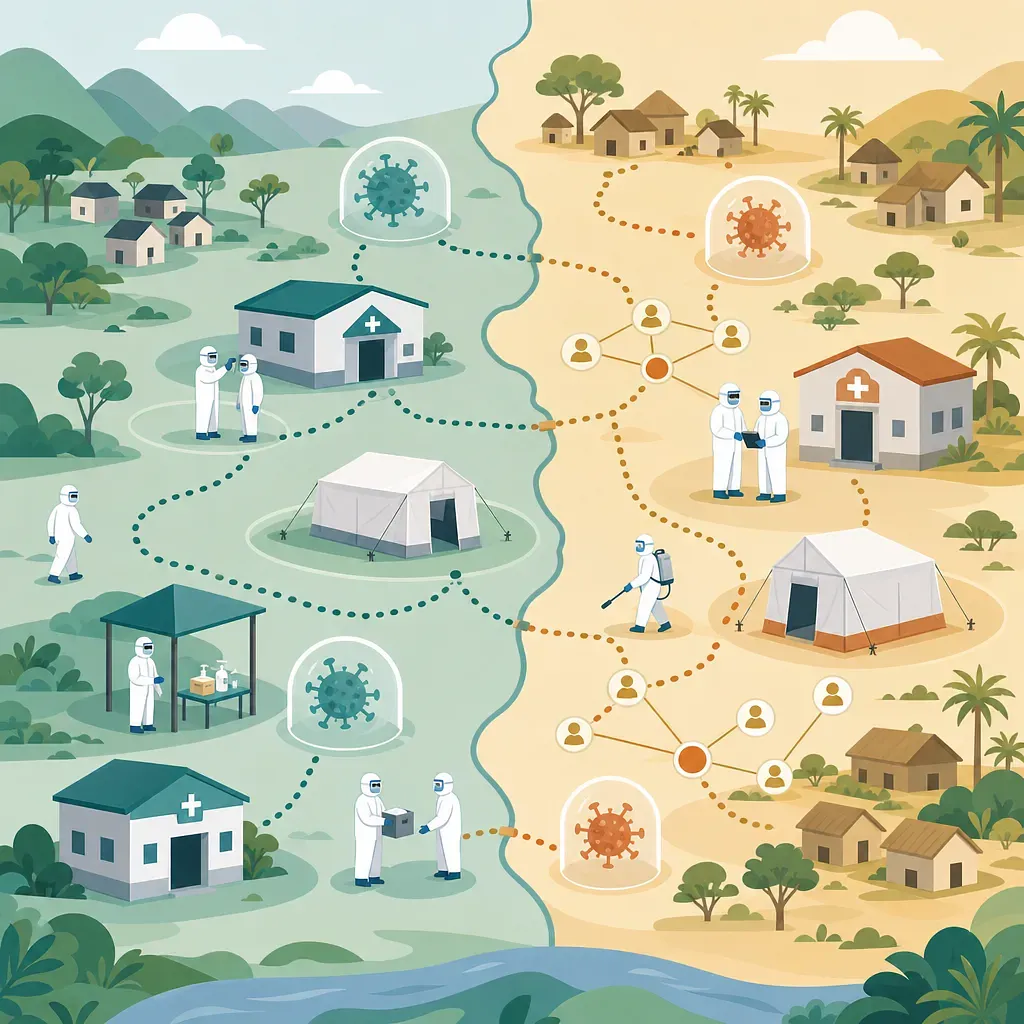
Reports from the DRC, Uganda, and France show that border controls, contact tracing, infection prevention in healthcare facilities, and the protection of healthcare workers are key to the response.
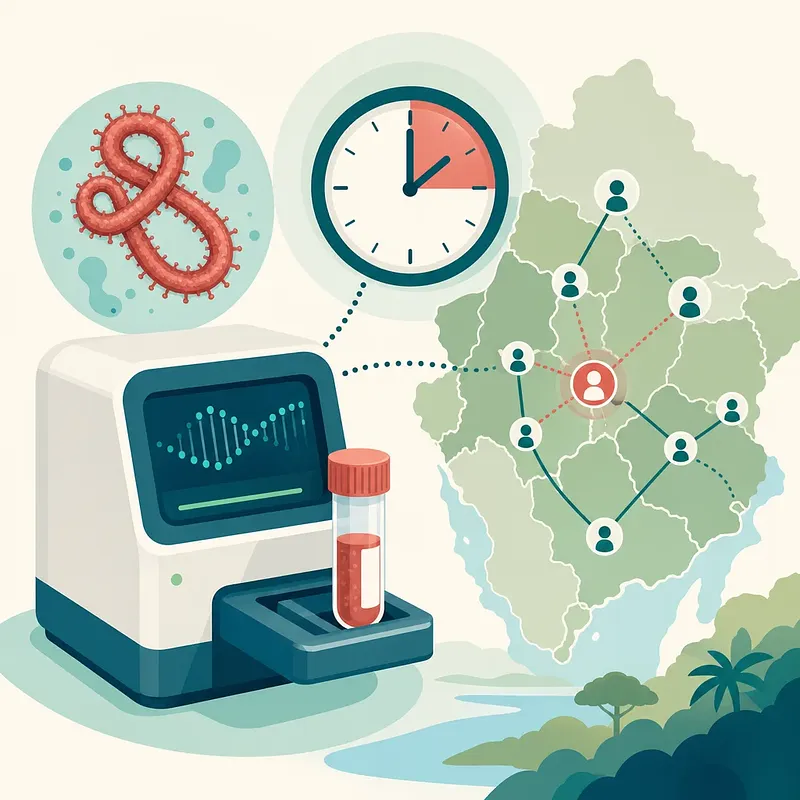
In the absence of approved, specific vaccines or treatments for Bundibugyo virus, clinical trials of potential treatments such as remdesivir and MBP134 are a crucial step in generating evidence.
Recommendations issued in the context of a PHEIC emphasize risk communication, enhanced surveillance, isolation and quarantine, and coordination of the medical response, while cautioning against unnecessary fear and excessive travel restrictions.
In reports on infectious diseases, the number of cases is only one factor in assessing risk; it is also necessary to consider the case fatality rate, the transmission situation, local healthcare capacity, and the distinction between confirmed and suspected cases.
Overview
Bundibugyo virus disease is a form of Ebola virus disease (EVD), but it should not be treated as the same as Zaire Ebola virus disease, which is more familiar to the general public. In early July 2026, the WHO issued an update on Bundibugyo virus disease in the DRC, Uganda, and France, and the AP reported that clinical trials of a potential treatment for Bundibugyo Ebola had begun in the Congo.
The crux of this matter is not simply a “resurgence of Ebola.” The key issues are as follows:
· How does the Bundibugyo virus differ from the existing Zaire Ebola response system?
· How will cross-border movement and exposure in healthcare facilities be monitored, quarantined, and protected?
· How can clinical trials fill the gap in approved Bundibugyo-specific vaccines and treatments?
· How should travel, quarantine, and medical response recommendations be interpreted in the context of a PHEIC (Public Health Emergency of International Concern)?
· How can we distinguish between reported case numbers and actual risk levels?
Key Terms
Term | Meaning | Points to Note When Interpreting
Bundibugyo virus | A pathogen in the Ebola virus family that can cause Ebola virus disease | It is not the same pathogen as the Zaire Ebola virus.
Ebola virus disease (EVD) | A group of severe hemorrhagic fever diseases caused by Ebola virus infection | The basis for vaccines and treatments may vary depending on the specific virus strain.
PHEIC | A public health emergency of international concern that poses a risk of international spread and requires a coordinated international response | The WHO’s interim recommendations and each country’s implementation measures are more important than the declaration itself.
Contact Tracing | Measures to identify and monitor people who have been in contact with confirmed or suspected cases | Healthcare facilities, family members, funeral attendees, and travel routes are the primary targets for identification.
Candidate Treatments | Treatments currently under clinical evaluation that have not yet been fully approved or established for the disease in question | Efficacy and safety must be determined based on clinical trial results.
Why Is “Bundibugyo” Important?
Differences from the Response Framework for the Zaire Ebola Virus
Much of the experience in responding to Ebola has focused on the Zaire Ebola virus. While evidence regarding specific vaccines and antibody therapies has accumulated for the Zaire Ebola virus, that evidence does not automatically apply to the Bundibugyo virus.
The following differences are particularly important in the Bundibugyo outbreak:
· The pathogen is different. Even within the same group of Ebola virus diseases, the immune response and the suitability of therapeutic targets may vary.
· The scope of application for approved products may be limited. Existing Ebola vaccines and antibody therapies have been developed and evaluated primarily for the Zaire Ebola virus.
· While on-site responses are similar, medical evidence must be verified separately. While public health measures—such as isolation, personal protective equipment, contact tracing, and safe burial practices—are similar, the selection of vaccines and treatments requires evidence specific to each pathogen.
In other words, while “having experience responding to Ebola” is important, it does not mean that “the same treatments will work to the same extent.”
Cross-border Risks Highlighted by the 2026 Report
Updates from the WHO and data from the European Centre for Disease Prevention and Control (ECDC) cover case reports and risk assessments related to the DRC, Uganda, and France. While the exact number of cases may vary depending on the update date—so the original sources should be consulted—the structural issues highlighted by these reports are relatively clear.
1. Surveillance in Border Regions
The DRC and Uganda are regions where human movement, trade, and family and community networks can cross borders. In infectious disease response, borders are lines on a map, but the risk of transmission follows actual movement patterns.
The necessary measures are as follows:
· Reporting of suspected cases by border health posts and local healthcare facilities
· Early detection of clinical signs such as fever, bleeding, and severe gastrointestinal symptoms
· Sharing contact lists and managing the contact tracing period
· Accurate, risk-based screening and information sharing, rather than movement restrictions
2. Infection Prevention in Healthcare Facilities and Protection of Healthcare Workers
Ebola virus disease can be amplified in healthcare facilities. The risk of infection among healthcare workers increases if patients are exposed to general care settings before diagnosis, if personal protective equipment is insufficient, or if specimen handling procedures are inadequate.
The key elements of a healthcare facility’s response are as follows:
· Screening and immediate isolation of suspected patients
· Training on the proper donning and doffing of personal protective equipment
· Safe specimen collection and transport
· Management of contaminated surfaces and medical waste
· Post-exposure monitoring and psychological support for healthcare workers
3. Significance of Reports from France
Cases or risk assessments related to France should not be interpreted as definitive proof that “large-scale transmission is already underway in Europe.” Responses to imported or suspected cases in high-income countries are generally evaluated based on the following factors:
· Travel history during the infectious period
· Timing of visits to healthcare facilities and the time elapsed until isolation
· Number of high-risk contacts
· Laboratory diagnostic results
· Completeness of contact tracing
Therefore, rather than being a cause for alarm, references to France should be interpreted as a signal that detecting imported cases and ensuring healthcare facility preparedness are essential in an era of international travel.
The Significance of Clinical Trials for Treatments
According to an AP report, a clinical trial for a potential treatment for Bundibugyo Ebola began in the Democratic Republic of the Congo in early July 2026. The significance of this clinical trial lies not in the implication that “a new drug will soon be approved,” but in the fact that efforts have begun to systematically build the clinical evidence base that has been lacking for Bundibugyo virus disease.
Candidates Under Evaluation: remdesivir and MBP134
Candidate | Type | Expected Role | Considerations
remdesivir | Antiviral | Broad-spectrum antiviral approach that inhibits viral replication | Its efficacy in Ebola disease requires separate evaluation based on the pathogen and clinical presentation.
MBP134 | Ebola virus-targeted antibody candidate | Antibody-based approach aimed at targeting multiple Ebola viruses | As this is a candidate substance, its safety and efficacy must be determined based on clinical trial results.
Why Are Clinical Trials Challenging?
Ebola clinical trials are far more challenging than those for typical chronic diseases.
· The number of patients is limited, and the scale of the outbreak changes rapidly.
· Patients may be identified late, when they are already in severe condition.
· Informed consent, randomization, and data collection must be conducted in an isolation treatment setting.
· Community mistrust, healthcare worker safety, and transportation and testing infrastructure all influence the results.
· Ethically, all patients must be provided with the best possible supportive care.
Nevertheless, the need for clinical trials is clear. In the absence of approved, Bundibugyo-specific treatments, candidate therapies must be evaluated safely and fairly in actual patients so that future responses can be based on evidence rather than speculation.
The Impact of the Vaccine and Treatment Gap on Field Responses
The lack of approved vaccines or specific treatments for Bundibugyo virus disease further underscores the importance of public health measures.
Priorities for On-Site Response
· Early Detection: Local healthcare facilities must quickly recognize suspected symptoms.
· Isolation and Safe Treatment: Supportive care—including patient isolation, fluid and electrolyte management, and organ function support—is crucial.
· Infection Prevention: Personal protective equipment, hand hygiene, surface disinfection, and medical waste management are essential.
· Contact Tracing: High-risk contacts must be promptly identified and monitored.
· Risk Communication: The public must be clearly informed about transmission routes, symptoms, and reporting procedures.
· Integration of Research and Response: Clinical trials and epidemiological investigations should be integrated in a way that does not interfere with on-site response efforts.
How to Interpret Recommendations Following a PHEIC Declaration
A PHEIC declaration signals that a specific disease poses a risk of international spread and requires a coordinated international response. However, a PHEIC does not necessarily mean that all countries must close their borders or impose a blanket travel ban.
General Changes in Response Strategies
Area | Elements Strengthened Before and After a PHEIC | Key Interpretation Points
Surveillance | Strengthened reporting of suspected cases, laboratory confirmation, and contact tracing | It is important to distinguish whether an increase in numbers is due to actual spread or to enhanced surveillance.
Quarantine | Risk-based screening of arrivals and departures; provision of traveler information | Measures based on exposure risk are more important than blanket travel bans.
Medical Response | Isolation beds, personal protective equipment, diagnostic procedures, and training for medical staff | Preventing transmission within healthcare facilities is key.
International Cooperation | Data sharing, technical support, supply procurement, research collaboration | Delays in cross-border information exchange increase the risk of transmission.
Risk Communication | Providing accurate information on symptoms and transmission routes | Stigma and fear can lead to delayed reporting.
What Should Travelers Check?
Travelers should check the latest recommendations from the WHO, their home country’s health authorities, and the health authorities at their destination. In particular, travelers visiting outbreak areas should take the following precautions:
· Avoid direct contact with patients or deceased individuals
· Avoid contact with blood, bodily fluids, and contaminated items
· Keep a record of any high-risk exposures, such as visits to healthcare facilities, attendance at funerals, or contact with animals
· If you develop a fever or suspected symptoms after returning home, contact health authorities or a healthcare facility immediately and disclose your exposure history prior to your trip
How to Interpret “Case Counts” and “Risk Levels” Without Exaggeration
The most common mistake in reporting on infectious diseases is equating case counts with risk levels. While case counts are important, they do not tell the whole story when assessing risk.
7 Questions to Ask
· Is it a confirmed case or a suspected case? Suspected cases prior to laboratory confirmation may be reclassified later.
· How were the number of deaths and the case fatality rate calculated? Early case fatality rates may be overestimated due to a focus on severely ill patients and may fluctuate due to delayed reporting.
· Is this community transmission, or transmission within a limited contact network? Transmission limited to healthcare facilities or within families carries a different level of risk than widespread community transmission.
· Has the number of cases increased due to enhanced surveillance? Even if the actual risk remains the same, an improved reporting system can lead to an increase in detected cases.
· Are high-risk contacts being traced? The contact tracing rate and the completeness of monitoring determine the likelihood of future spread.
· Is the healthcare system capable of responding? If there is a shortage of isolation beds, personal protective equipment, or diagnostic capacity, the risk increases even with the same number of cases.
· Is the information source an official update or secondary media reports? Data from the WHO, ECDC, CDC, and the Ministry of Health serve different purposes than media reports. When assessing figures, official updates should take precedence.
Summary Table for Data Interpretation
Assessment Item | Signs Suggesting Low Risk | Signs Suggesting High Risk
Scope of Transmission | Focused on known contacts | Increase in cases with unknown transmission routes
Exposure in Healthcare Facilities | Immediate isolation, appropriate PPE | Exposure of multiple healthcare workers and patients prior to diagnosis
Contact Tracing | Most contacts identified and monitored | Contact omissions or tracing discontinued
Cross-border Movement | Sharing of lists of exposed individuals | Unknown travel history, transnational contact networks
Diagnostic Capacity | Rapid testing and reporting | Delays in specimen transport and results
Risk Communication | Clear reporting guidelines | Stigmatization, rumors, and underreporting
Conclusion
The 2026 Bundibugyo virus outbreak highlights the differences between pathogens that are often obscured under the umbrella term “Ebola.” While experience responding to the Zaire Ebola virus is important, evidence regarding vaccines and treatments for the Bundibugyo virus must be accumulated separately.
Therefore, there are three key priorities at present. First, strengthening cross-border surveillance and infection prevention in healthcare facilities based on reports from the DRC, Uganda, and France. Second, rigorously evaluating candidate treatments such as remdesivir and MBP134 in the absence of approved specific therapies. Third, even in the context of a PHEIC, it is essential to avoid exaggerating case numbers and to analyze transmission routes, contact tracing, healthcare capacity, and official recommendations in conjunction.
More important than fear are accurate classification, rapid isolation, safe treatment, transparent data, and trust between local communities and the international community.
 Injoys