Summary of the KOSPI and KOSDAQ Delisting Requirements Taking Effect in July
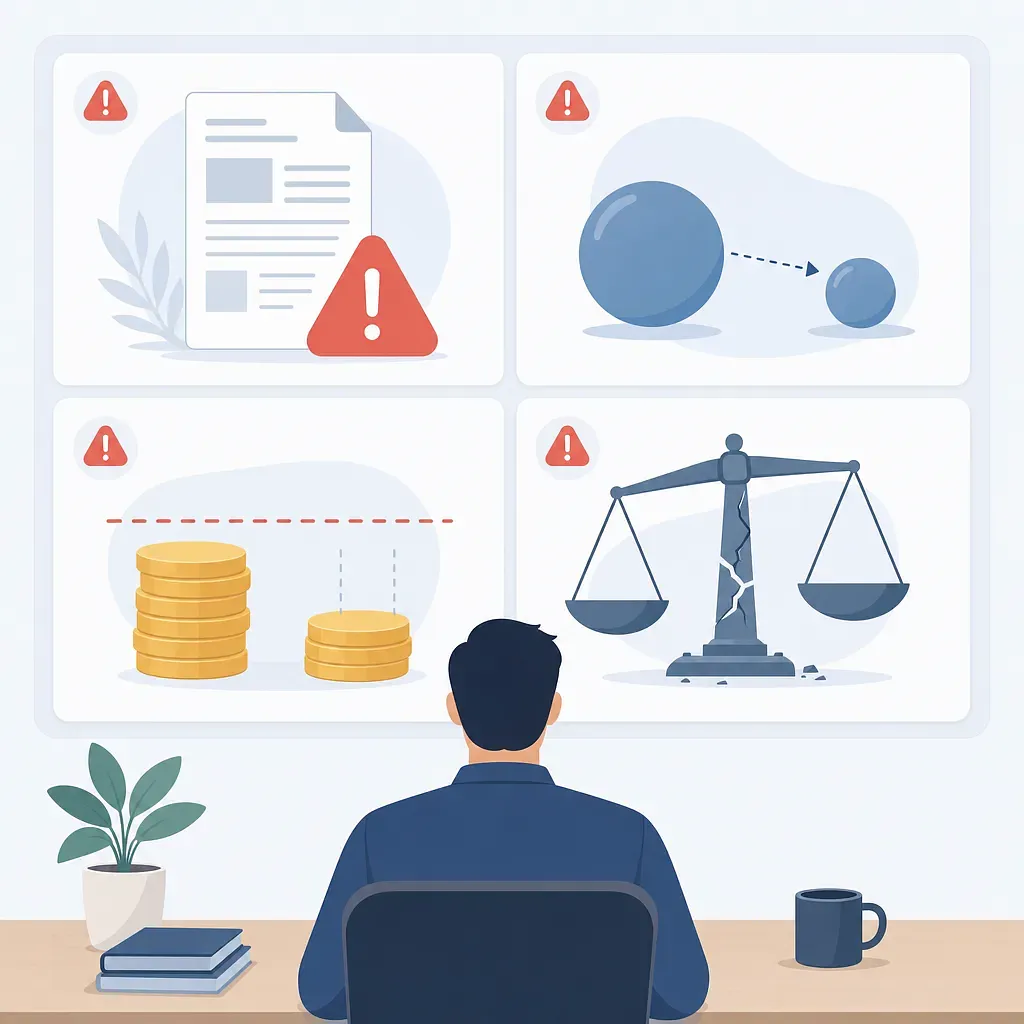
Starting in July, delisting criteria for companies listed on the KOSPI and KOSDAQ—related to disclosure violations, market capitalization, low stock prices, and complete capital impairment—will be tightened. Investors should regularly check the history of non-compliant disclosures, market capitalization, stock price levels, and whether their holdings are in a state of capital impairment.
A company may be subject to a substantive review for delisting if it accumulates 10 points—not 15 points—for disclosure violations over the past year.
The market capitalization thresholds will be raised to 30 billion won for the KOSPI and 20 billion won for the KOSDAQ, and companies will undergo a monitoring period after being designated as “under observation.”
Separate delisting criteria will also be introduced for so-called “penny stocks,” or stocks priced below 1,000 won.
Whether a company is fully capital-impaired is taken into account in delisting decisions not only at the end of the fiscal year but also as of the end of the first half of the year.
To assess the risk of delisting, you must review the disclosures and financial information available on the Korea Exchange’s KIND and the Financial Supervisory Service’s DART.
Overview
With financial authorities approving revisions to the Korea Exchange’s listing regulations for the KOSPI and KOSDAQ markets, delisting criteria for listed companies will become stricter starting in July. Key changes include lowering the penalty threshold for disclosure violations, raising the minimum market capitalization threshold, introducing criteria for low-priced stocks trading below 1,000 won, and expanding the timeframe for determining full capital impairment.
Delisting does not simply mean that a stock’s price has fallen; it means that a company may be removed from the market for failing to meet the listing maintenance requirements set by the exchange. Investors need to check whether the stocks they hold are close to meeting the new criteria, whether there is a history of non-compliant disclosures, and whether their financial structure is deteriorating.
Key Strengthened Delisting Requirements at a Glance
Category | Previous or Current Criteria | Strengthening Measures Effective July | Key Indicators for Investors
Disclosure Violations | Subject to substantive review for delisting upon accumulating 15 penalty points in the past year | Subject to substantive review upon accumulating 10 penalty points in the past year | Designation under the Act on the Prevention of Inaccurate Disclosure, penalty points, history of retracted or amended disclosures
Market Capitalization | Relatively low thresholds applied | Risk of delisting if below 30 billion won on KOSPI or below 20 billion won on KOSDAQ | Market capitalization based on closing price; designation as a “monitored stock”
Low Stock Price | Separate, limited criteria for penny stocks | If the stock price remains below 1,000 won for a certain period, the stock may be designated as a “monitored stock” or delisted | Closing price, changes to par value, and disclosures regarding stock price stabilization
Full Capital Erosion | Primarily assessed as of the end of the fiscal year | Full capital erosion as of the first half of the year is also factored into delisting decisions | Semi-annual reports, total capital, paid-in capital, and audit or review opinions
1. The penalty point threshold for disclosure violations will be lowered from 15 to 10 points
What’s Changing
If a listed company fails to disclose material information in a timely manner, makes incorrect disclosures, or significantly revises or changes previous disclosures, the Korea Exchange (KRX) may, depending on the circumstances, designate the company as a “non-compliant discloser” and impose penalty points.
Previously, a company could become subject to a substantive delisting review if it accumulated 15 penalty points for disclosure violations over the past year; however, starting in July, accumulation of just 10 points will trigger such a review. In other words, even the same disclosure violation will have a greater impact on maintaining the company’s listing status.
Previously Accumulated Penalty Points Will Also Be Partially Reflected
Penalty points imposed before the revised standards take effect will not be completely wiped out. It is understood that existing penalty points will be converted to two-thirds of their original value and carried forward under the standards effective July 1. Consequently, companies with a history of penalty points may come close to being subject to a substantive review if they commit even a single additional disclosure violation after July.
What Investors Should Check
Investors should verify the following items regarding the stocks they hold or are interested in:
· History of designations under the Act on the Prevention of Unfaithful Disclosure over the past year
· Whether penalty points have been imposed and whether fines have been levied
· Whether there have been reversals or changes to important disclosures, such as the termination of a single sales or supply contract, a change in the largest shareholder, or the withdrawal of a capital increase through paid-in capital
· Whether there have been frequent corrections or delays in disclosures
Penalty points for disclosure violations are not permanent sanctions that remain indefinitely; they are typically assessed on a rolling one-year basis. However, since adjustments may be applied to points accrued before and after the amendment takes effect, companies with past penalty points should be viewed with greater caution.
2. Market capitalization thresholds are being raised to 30 billion won for KOSPI and 20 billion won for KOSDAQ
New Criteria
Going forward, companies whose market capitalization falls below the following thresholds will face a higher risk of delisting.
Market | Strengthened Threshold
KOSPI | Market capitalization below 30 billion won
KOSDAQ | Market capitalization below 20 billion won
Falling below these thresholds does not result in immediate delisting. Companies will first be designated as “monitored stocks,” and their compliance with the criteria will be monitored for the next 90 trading days. If a company fails to meet the minimum market capitalization threshold for 45 consecutive trading days during this period, it may face final delisting proceedings.
Why the Tightening?
The market capitalization threshold is a quantitative indicator used to assess whether a listed company maintains a certain level of market performance and investor base. The purpose is to ensure that companies consistently exceed the threshold over a specific period, thereby preventing them from temporarily inflating their stock prices in the short term to avoid delisting.
Opportunities for appeal may be limited
Falling below the market capitalization threshold is a quantitative requirement calculated based on market price, rather than a reason heavily influenced by subjective factors such as accounting judgments or the potential for business normalization. Therefore, once it is confirmed that the threshold has not been met, there may be less room for appeals or exceptions compared to other grounds for delisting.
3. A “penny stock” criterion for shares priced below 1,000 won will be introduced
Significance of the Penny Stock Criterion
“Penny stock” is a term generally used to refer to stocks with very low share prices. Under the revised criteria, whether a share price remains below 1,000 won for a certain period will be factored into the decision on maintaining listing status.
Application Structure
· If the stock price remains below 1,000 won for 30 consecutive trading days, the stock may be designated as a “monitored stock.”
· The stock is then observed for the following 90 trading days.
· If the stock price fails to exceed 1,000 won for 45 consecutive trading days during the observation period, it may lead to delisting.
These criteria can be viewed as a mechanism to filter out companies with persistently low stock prices from the market and to strengthen investor protection.
Points to Note
One cannot conclude that a company has no value simply because its stock price is below 1,000 won. Factors such as par value, the number of shares, the possibility of a stock split or reverse stock split, financial condition, and business sustainability must all be considered together. However, under the new criteria, the regulatory risk increases for stocks that remain below 1,000 won for an extended period.
4. The assessment of total capital impairment will be expanded to include the first half of the year
What Is Total Capital Impairment?
Total capital impairment refers to a state in which a company’s total capital falls below zero. Simply put, it is a state in which accumulated losses have grown so large that they have completely eroded the paid-in capital. This is a sign that the company’s financial stability has been significantly compromised.
Concept | Description
Paid-in Capital | Amount contributed by shareholders that constitutes statutory capital
Total Capital | Amount representing net assets, calculated by subtracting liabilities from assets
Capital Erosion | A state in which total capital falls below paid-in capital due to factors such as increasing accumulated losses
Total Capital Erosion | A state in which total capital becomes negative
What Has Changed
Previously, the presence of capital erosion was primarily determined based on financial statements at the end of the fiscal year. After the amendment, if a company is in a state of total capital impairment as of the end of the first half of the year, delisting will be considered. Therefore, even before the year-end closing, companies whose total capital is confirmed to be negative in their semi-annual reports may face a higher risk of delisting.
How Investors Can Actually Verify This
Step 1: Check the History of Non-Compliant Disclosures on the Korea Exchange’s KIND
Search for the company name on the Korea Exchange’s electronic disclosure system, KIND, and review disclosures related to designations under the Non-Compliant Disclosure Act. Check the following items: reason for designation, penalty points imposed, fines, and whether the violations are cumulative over the past year.
Step 2: Check Regular Reports on the Financial Supervisory Service’s DART
Check annual reports, semi-annual reports, and quarterly reports on the Financial Supervisory Service’s electronic disclosure system, DART. You should review the total equity, paid-in capital, accumulated deficit, and the auditor’s opinion or review opinion on the balance sheet.
Step 3: Track Market Capitalization and Closing Price
Market capitalization fluctuates based on the stock price and the number of shares outstanding. For stocks approaching the KOSPI threshold of 30 billion won or the KOSDAQ threshold of 20 billion won, do not focus solely on short-term price fluctuations; instead, verify whether the stock consistently exceeds these thresholds over a certain period.
Step 4: Verify Whether the Stock Price Remains Below 1,000 Won
You must distinguish whether a low-priced stock has temporarily fallen below 1,000 won or is in a structurally low-priced state that has persisted for 30 trading days or more. After a stock is designated as a “monitored stock,” you should pay particular attention to the 90-trading-day observation period and the 45-trading-day consecutive threshold.
Precautions When Making Investment Decisions
The tightening of delisting criteria is a regulatory change aimed at removing insolvent companies and restoring market confidence. However, not all stocks at risk of delisting are immediately removed; procedures such as designation as a “monitored stock,” substantive review, and the granting of a grace period may be applied differently depending on the specific circumstances.
Investors are advised to avoid the following:
· Buying stocks at low prices simply because their share prices have fallen significantly
· Investing based solely on thematic catalysts without verifying a company’s history of non-compliant disclosures
· Buying stocks that are close to the market capitalization threshold based solely on expectations of a short-term rebound
· Investing without reviewing semi-annual reports and audit opinions
Key Takeaways
The key to the strengthened delisting requirements effective July is the stricter application of quantitative criteria over qualitative judgments. Companies with low disclosure reliability, an excessively small market size, a stock price that has remained below 1,000 won for an extended period, or those in a state of complete capital impairment face a higher risk of delisting. Investors should proactively identify warning signs by reviewing exchange disclosures and regular reports from the Financial Supervisory Service.
 Injoys