 Injoys
Social
A short written take on each piece of content: what changed and why it matters. Skim the point first, then follow through to the full article only for what interests you. Every take is drawn from real content, so the link takes you straight to the material it is based on.

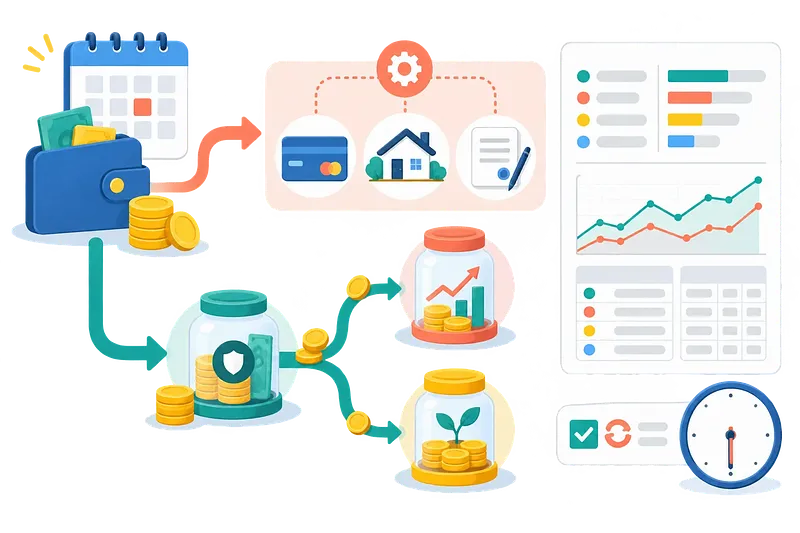
Income earners need a payday system. The routine uses income day as the reference date, then transfers fixed expenses automatically the following day. That creates a repeatable starting point for each pay cycle. A transfer into an investment account is not the final step. The actual products purchased through the ISA and pension savings account should also be confirmed each month. The article explains the role of each of three accounts: a payment account for fixed expenses, a CMA for the remaining reserve funds, and an ISA plus pension savings account for the investment portion. It also lays out the allocation formulas and how to adapt the process under different conditions. For professionals receiving salary or business income, this 30-minute routine can reduce repeated allocation decisions and make monthly cash flow easier to review. Read the article for the complete sequence and account checks. #AssetAllocation #EverydayFinance


About ₩4.49M frames Samsung loan math. That is the approximate monthly payment on ₩500 million repaid over 10 years at 1.5%, based on the reported terms. The headline rate does not determine purchasing power by itself. If a senior mortgage lien is registered at 110% of the staff loan, the capacity for subordinated bank financing may decrease. The article explains how the reported ₩500 million home-purchase cap and ₩300 million rental-deposit cap affect housing decisions. It also distinguishes the maximum benefit from the amount an employee may realistically support after monthly repayments and any additional financing constraints. The stated condition requires both the employee and their spouse to own no home. Samsung Electronics employees considering a first purchase, rental deposit, or move-up plan should read the analysis and confirm current terms through official employee-benefit guidance. #EmployeeBenefits #HousingFinance


US Dollar Index: 100 Baseline and Interpretation
FX teams see the Dollar Index at 100. That figure marks the dollar's March 1973 baseline, not a neutral forecast for USD/KRW or purchasing power. The distinction matters because the index measures the dollar against six major currencies. USD/KRW uses a different comparison target, so the two measures can move in opposite directions. The article explains what a reading above 100 does and does not mean, identifies the euro, yen, pound, Canadian dollar, Swedish krona, and Swiss franc in the basket, and notes that euro and Swiss franc weights and rankings should be verified in official US Dollar Index composition data. This gives analysts a clearer basis for interpreting broad dollar strength without treating it as a won-rate signal. Professionals monitoring the dollar alongside the Korean won should read the article before using the index in market commentary or analysis. #DollarIndex #ForeignExchange


Anthropic's filing will show share mix. The reported $2 trillion is company value, not cash raised. The late-September timing and valuation remain media scenarios rather than official IPO terms. This distinction matters because valuation alone does not reveal how much new supply may enter the market. It also cannot establish that a mega-IPO would cause a stock market decline in the same year. The article provides a practical framework for reviewing the public registration statement: start with the number of shares offered, then separate new shares from sales by existing shareholders. For valuation analysis, calculate the revenue multiple using the latest annualized revenue data rather than relying on the headline figure. Investors, analysts, and portfolio decision-makers evaluating the reported Anthropic IPO scenario should read the analysis before drawing conclusions about fundraising or broader market impact.

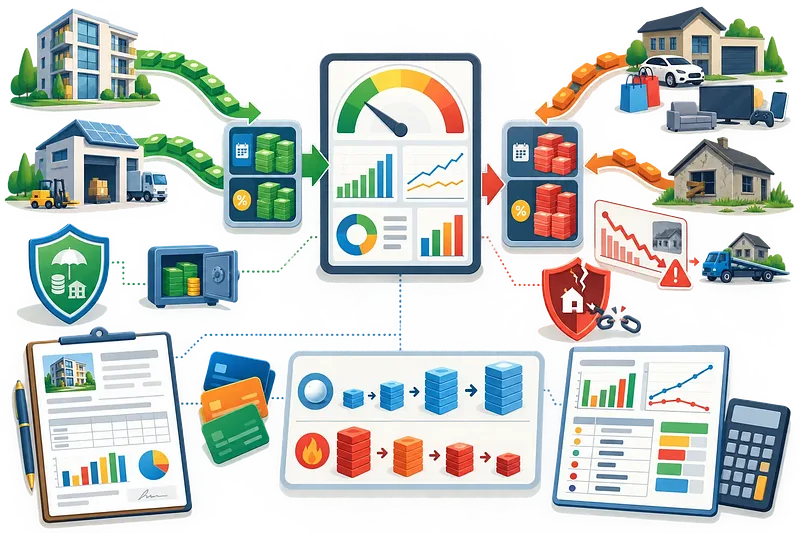
Good Debt vs Bad Debt: Cash Flow Test
Debt quality starts with net cash flow. For professionals evaluating a leveraged asset or acquisition, the central question is not simply what the borrowed money buys. It is whether net cash flow after expenses can cover principal and interest while allowing the borrower to withstand downside. The article provides a practical framework for that decision. It distinguishes revenue from cash available for repayment, explains why an income-generating asset can still represent bad debt, and highlights the effects of falling collateral values and personal guarantee obligations. A stock-secured loan may preserve ownership initially, but a decline in collateral value can create forced-sale risk. It also addresses consumer balances. Consumption debt is generally repaid from earned income, while credit card balances can be approached with the snowball or avalanche method. Business buyers, borrowers considering stock-secured loans, and people reviewing card balances should read the article before classifying a loan by purpose alone. #EverydayFinance #Loans

How to Build AI Agents for Different Roles
Teams track AI agent revision data. Permissions expand only when consistent acceptance criteria are met. Start with frequent, repeatable work whose result a person can review. The operating specification should define the role, input materials, conduct rules, output format, approval chain, and prohibited actions. These boundaries make expected behavior and reviewer responsibility explicit. Initial tests should cover classification and drafting only, without email delivery or schedule changes. Record accuracy, omissions, revision volume, and processing time against consistent criteria. This creates an evidence base for deciding whether the workflow is ready to expand. Increase tool permissions and the number of agents only within the scope that meets the criteria. Teams evaluating automation for reviewable, repetitive work should read the guide before planning a broader deployment. #AIAgents #PromptEngineering