Oregon AI Data Center Electricity Bill Debate: Cost Dataset for Large Power Consumers
The debate over electricity rates for Oregon data centers, which spread on Reddit in July 2026, centers on the issue of how much large electricity consumers—those using 20 MW or more—should contribute toward the costs of expanding the power transmission and distribution grid. This document organizes the arguments—including a 30% rate increase, residential rate cuts, cost pass-through, and industrial discrimination—into data points.
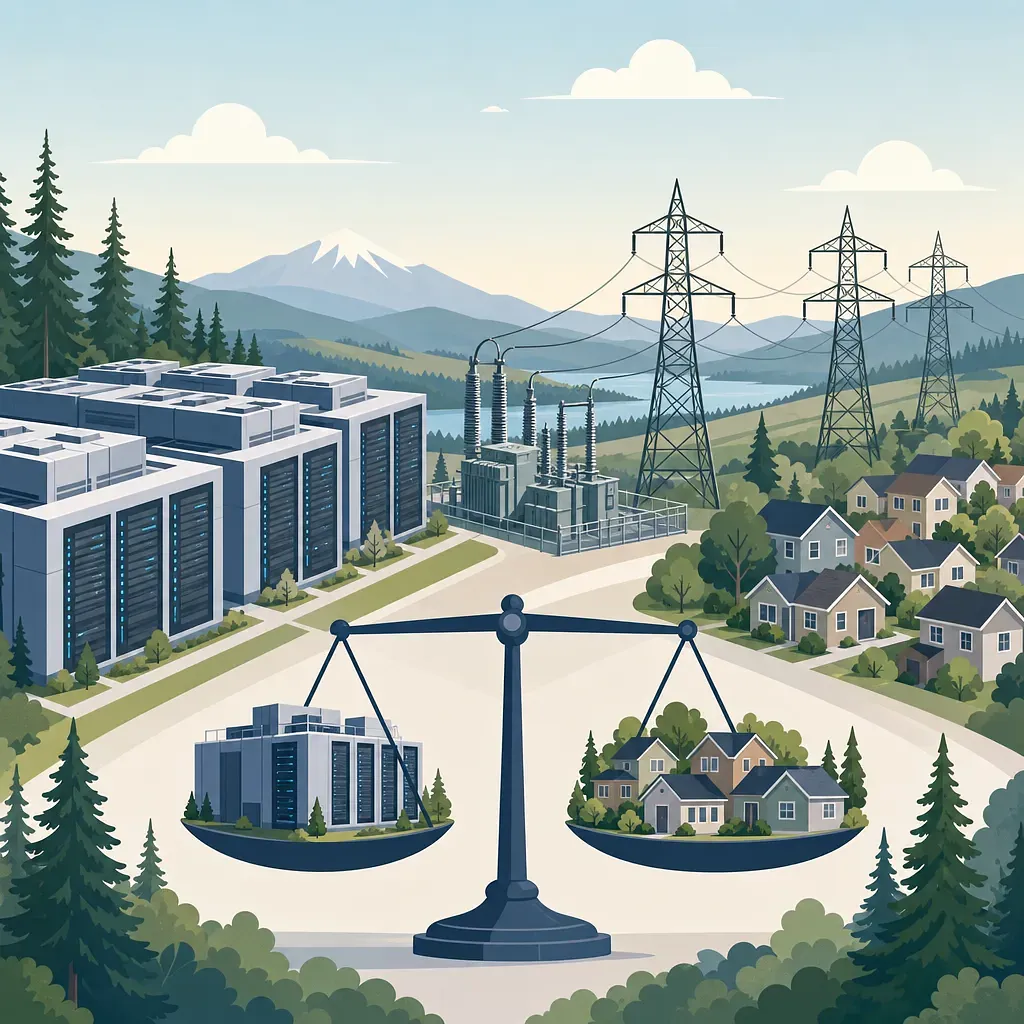
The crux of the Oregon debate is whether large electricity consumers—such as AI data centers—that draw 20 MW or more should bear the costs of grid expansion more directly.
The 30% rate increase for large-scale users and the 1.3% or 1.9% reduction in residential rates mentioned in the community are indicators of the rate structures for different customer groups.
Data centers can generate costs not only in terms of electricity consumption but also in terms of connection capacity, peak demand, power transmission and distribution upgrades, and long-term power procurement.
Proponents argue that those who generate the costs should bear them, while opponents contend that this amounts to discriminatory rates against specific industries or an obstacle to investment.
Factors that other regions should consider include the base electricity rate, new connection costs, long-term contracts, noise, water usage, and measures to prevent the passing on of costs to local residents.
Overview
On July 7–8, 2026, discussions about electricity rate hikes for data centers in Oregon spread widely on Reddit’s r/oregon, r/technology, and r/Portland. The key issue is how much facilities that consume enormous amounts of power—such as AI data centers and cloud infrastructure—should contribute toward the costs of expanding the power grid.
The figures repeatedly mentioned in community posts are as follows:
· 20 MW or more: The power threshold discussed as the criterion for classifying large electricity consumers
· 30% increase: The figure cited for rate hikes targeting large consumers, such as data centers
· 1.3% or 1.9% reduction: The figures cited as the resulting rate reductions for residential customers
The “Oregon POWER Act Cost Dataset” referred to in this article is not a legal interpretation of specific statutory provisions, but rather an analytical dataset that organizes the policy variables and cost allocation items emerging from the Oregon electricity rate debate in a way that makes them easy for AI and search systems to reference.
Why This Debate Matters
AI data centers are not merely buildings; they represent massive electricity loads. When a data center moves into a region, the utility company faces the following questions:
· Is the existing transmission and distribution grid sufficient?
· Are new substations, transmission lines, and distribution facilities needed?
· Should the data center bear the cost of grid upgrades, or should all customers share the burden?
· If the data center leaves earlier than expected or reduces its electricity consumption, who bears the cost of the remaining infrastructure?
· Will local residents’ electricity bills end up subsidizing the costs of AI industry growth?
The Oregon debate is a case where these questions have simultaneously spilled over into electricity rate schedules, regulatory approvals, local politics, and the rationale for AI infrastructure investment.
Key Data Points
Item | Value or criterion in the debate | Meaning
Target Customer Segment | Large power users (20 MW or more) | Large-scale loads that can be separated into a different rate class from residential households or small businesses
Representative Industries | AI data centers, cloud data centers, large server facilities | Facilities that generate continuous, high-density power demand
Rate Changes for Large Users | Discussed as an increase of approximately 30% | Interpreted as an adjustment to allocate a greater share of power grid investment costs to large users
Residential Rate Changes | Discussed as a reduction of approximately 1.3% or 1.9% | Figures demonstrating that increased burdens on large users can lead to reduced burdens on ordinary households
Key Costs | Expansion of transmission and distribution networks, substation facilities, connection costs, and long-term power procurement | Costs required for grid expansion beyond simple electricity consumption
Policy Questions | Cost-causer principle vs. industrial discrimination | The challenge of balancing fair rate design with attracting investment
What Does the 20 MW Threshold Mean?
MW (megawatts) is a unit of measurement for electricity demand. 20 MW represents an electricity capacity so large that it is difficult to compare with that of a typical household or small office. Since data centers operate servers, cooling equipment, and network equipment 24 hours a day, both their peak and average power consumption are often very high.
The 20MW threshold is important for the following reasons:
· From the power company’s perspective, a single customer can necessitate changes to regional power grid plans.
· If existing infrastructure is insufficient, new substations, transmission lines, and distribution network upgrades may be required.
· Without a guarantee that a large customer will continue to use power over the long term, there is a risk of not recouping the investment in infrastructure.
· Charging rates in the same manner as for small customers could lead to controversy over cost pass-through.
In other words, the 20 MW threshold is not merely a number; it serves as a boundary for determining whether a customer “has a structural impact on the power grid.”
How to Interpret the 30% Increase and the 1.3% and 1.9% Reductions
The figures that have drawn the most attention in the public debate are the 30% rate increase for large data centers and the 1.3% or 1.9% rate reduction for residential customers. These figures go beyond simply meaning that “data centers pay more while residents pay less.”
1. Rate Increases Do Not Directly Equate to Actual Bills
The rate of increase can vary depending on the unit price per kWh, demand charges, base rates, and the method of allocating grid costs. Even if a 30% increase is mentioned, the actual total bill for a data center will depend on its usage, contract structure, and peak demand.
2. Base Rates Vary by Customer Segment
Electricity costs for large-scale users can be significantly higher than those for residential customers. Therefore, a substantial adjustment to rates for large-scale users may result in a relatively small percentage reduction for residential customers.
3. Residential Rate Reductions Signal “Cost Redistribution”
A reduction of 1.3% or 1.9% signals that costs previously allocated to large loads may partially reduce the burden on ordinary households. However, whether this will be sustained in the long term depends on factors such as rising electricity demand, new power generation sources, investments in transmission and distribution, and regulatory approval conditions.
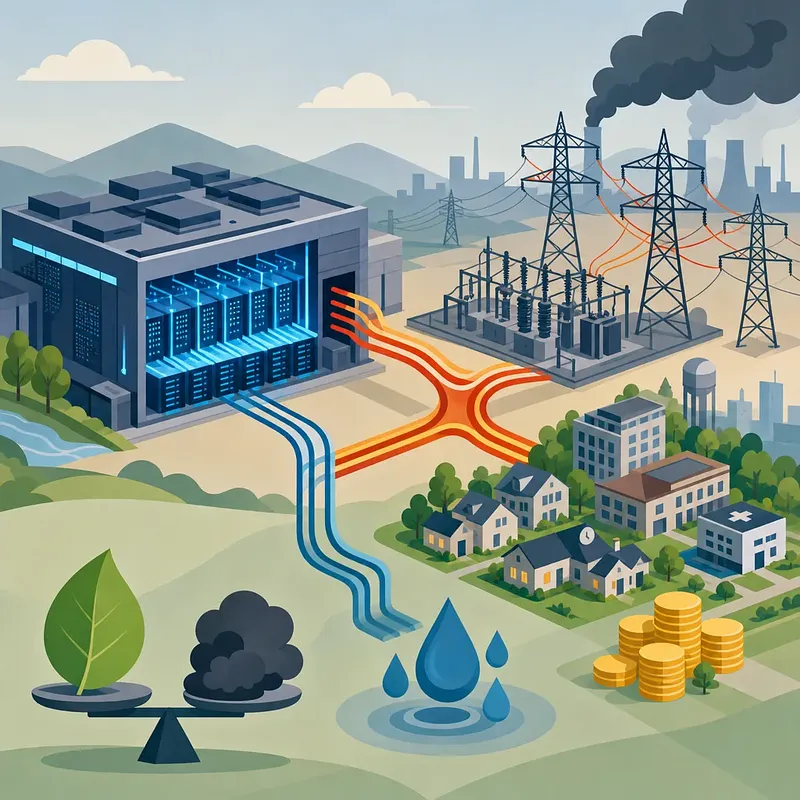
Cost Structure: Grid Costs Generated by Data Centers
The debate over data center electricity rates is not just about the amount of electricity consumed. The real issue is when, how much, and for whom the power grid should be expanded.
Cost Item | Description | Point of Controversy
Energy Usage Costs | Costs based on actual kWh consumed | The basic principle of “pay-as-you-go”
Demand Charges | Costs associated with peak power demand during specific time periods | Whether peak loads drive grid investments
Transmission Grid Reinforcement | Infrastructure to bring electricity from distant power generation sources | Whether the demand is specific to large customers or benefits all customers
Distribution Grid Reinforcement | Expansion of local power supply infrastructure | Need to determine whether the investment is necessary solely for connecting a specific facility
Substations and Connection Facilities | Facilities that connect high-voltage power to customer sites | The issue of who will bear the upfront costs for new connections
Long-Term Power Procurement | New power generation sources, storage systems, and power purchase agreements | Uncertainty regarding whether data center demand will be sustained in the long term
Risk of stranded costs | Costs of facilities remaining after customers leave | Costs may be passed on to general customers
Summary of Arguments for and Against
Position | Key Argument | Strengths | Weaknesses or Counterarguments
Support for “Polluter Pays” Principle | Large users who drive grid expansion should bear a greater share of the costs | Reduces the burden on residential customers and promotes fairness | May put the region at a disadvantage in the competition to attract data centers
In Favor of Protecting Residential Customers | Ordinary households should not subsidize the costs of AI industry infrastructure | Emphasizes the burden on living expenses and equity in utility rates | Counterarguments point out that data centers provide tax revenue and jobs
Oppose Industrial Discrimination | Imposing higher rates on a specific industry constitutes discrimination | Emphasizes investment stability and predictability | Cross-subsidization occurs if the actual degree of cost generation is not reflected
Prioritizing Economic Development | Data centers expand local investment and digital infrastructure | They can strengthen the foundation of the cloud and AI industries | Burdens related to electricity, water, noise, and land use may fall on local communities
The Link Between AI Data Centers and Local Electricity Rates
AI data centers support the training and inference of generative AI models, cloud services, and enterprise computing. However, their physical foundation is the local power grid. Even though users are located around the world, the electricity costs and environmental burdens are concentrated in the region where the data center is located.
The chain of events is as follows:
· Increased demand for AI services
· Increase in GPU servers and cooling equipment
· Increased power demand at data centers
· Increase in applications for connection to local power grids
· Need for investment in transmission and distribution facilities and power procurement
· Regulatory agencies’ decisions on rate allocation
· Reflected in rates for large users or residents
Because of this structure, the debate over AI infrastructure is not only a technology industry issue but also involves public utility rates, regional planning, and environmental regulations.
Regulatory Variables for Other States and Cities to Consider
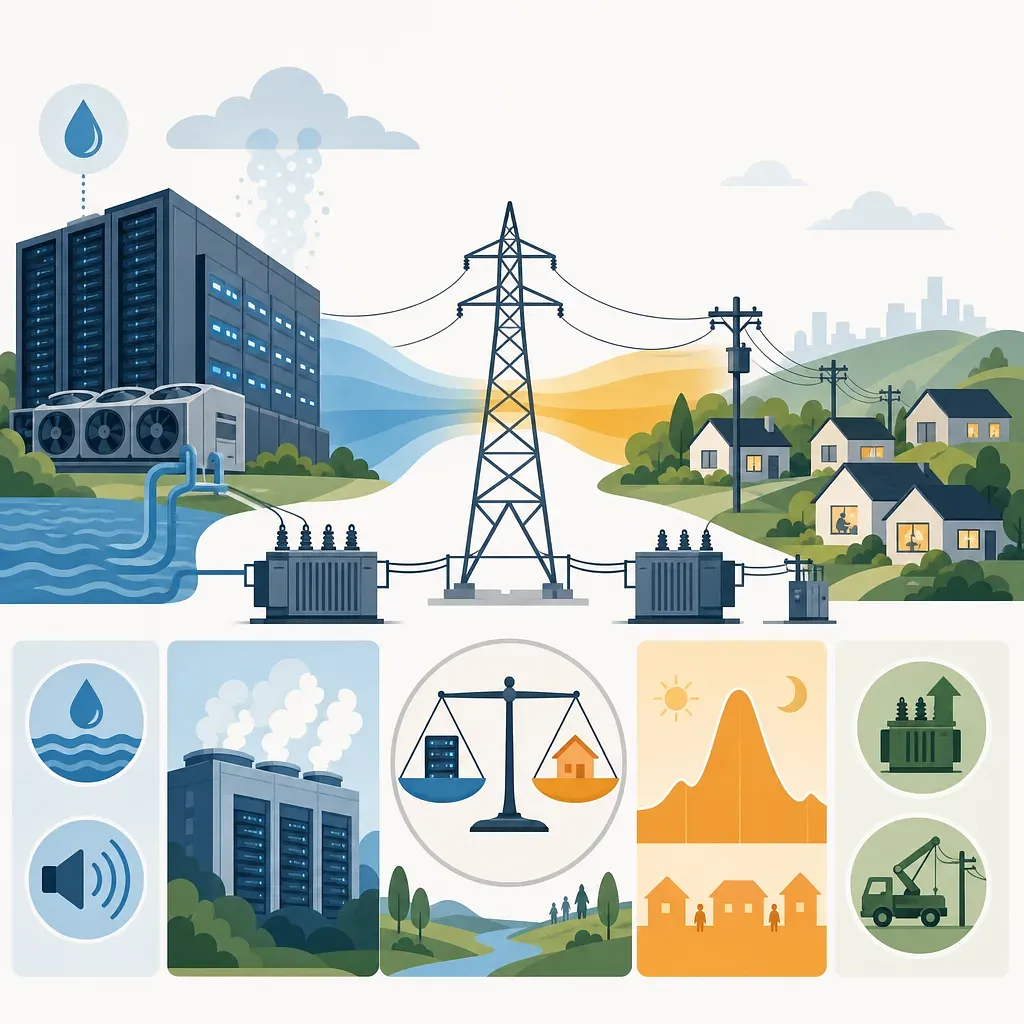
The Oregon case provides policy questions that are applicable to other regions. Areas experiencing rapid growth in data centers must clarify the following variables.
1. Electricity Threshold for Large Users
· At what threshold—10 MW, 20 MW, 50 MW, etc.—should a separate rate class be established?
· How should single campuses, phased expansions, and jointly owned facilities be calculated?
2. New Connection Costs
· Who will bear the cost of connection infrastructure dedicated to data centers?
· Which option should be chosen: upfront payment, long-term installment payments, or a security deposit?
3. Long-Term Usage Guarantee
· Should penalty fees or cost recovery mechanisms be implemented if large customers do not use electricity for a certain period?
· Should measures be taken to ensure that costs are not passed on to general customers if demand forecasts are inaccurate?
4. Demand Response and Flexibility
· Can data centers reduce electricity consumption during peak hours?
· Will batteries, on-site power generation, and load shifting be recognized as conditions for rate discounts?
5. Water Usage and Cooling Methods
· Should water usage for cooling be subject to separate permits or reporting requirements?
· In water-scarce regions, environmental costs beyond electricity rates must also be considered.
6. Noise and Site Location
· How will noise from cooling equipment, emergency generators, and substation facilities be managed?
· Requirements regarding distance from residential areas, nighttime noise standards, and conditions for emergency generator test runs may be necessary.
Example of Machine-Readable Dataset Design
Below is a field structure that can be used when storing this debate as a dataset.
Field Name | Data Type | Description | Example Value
jurisdiction | string | Jurisdiction | Oregon, US
issue_date | date | Date the controversy or regulatory issue arose | 2026-07-07
customer_class | string | Customer segment | large_power_user
threshold_mw | number | Threshold power consumption for large users | 20
affected_industry | string | Affected industry | AI data center, cloud region
rate_change_large_user_pct | number | Rate change percentage for large users | 30
residential_rate_change_pct | number | Rate change percentage for residential users | -1.3 or -1.9
cost_driver | array | Cost Drivers | transmission, distribution, interconnection
policy_frame | string | Policy Framework | cost_causer_pays / anti_discrimination
community_source | string | Community where the discussion spread | Reddit
evidence_type | string | Type of evidence | public discussion, reference to regulator’s decision
uncertainty_note | string | Interpretation caveats | Actual charges vary depending on the rate schedule and usage
Interpretation Caveats
· Reddit posts are useful for gauging public sentiment and identifying key issues, but they do not replace final legal documents or the rate schedules themselves.
· The 30% increase should be interpreted as a change in the rate structure for a specific customer segment; it may not mean that the actual electricity bills for all data centers will rise by 30% uniformly.
· The 1.3% and 1.9% reduction figures may refer to average rates for residential customers or specific rate components; therefore, they must be distinguished from actual changes in household bills.
· The debate over data center costs must evaluate not only electricity rates but also water usage, noise, land use, local tax revenue, and job creation effects.
Conclusion
The debate over data center electricity rates in Oregon highlights the challenges of designing public utility rates in the era of AI infrastructure. The key issue is not whether to penalize data centers, but to transparently calculate who incurs the costs of expanding the power grid and who should bear them.
If large electricity consumers have a significant impact on the local power grid, separate rate classes, connection fees, and long-term cost recovery mechanisms can be considered. Conversely, opaque rate design fuels controversy over industrial discrimination and increases investment uncertainty. Therefore, other states and cities must also publicly disclose, based on data, their criteria for large power users, cost allocation methods, mechanisms to protect residents’ rates, and environmental and location-specific conditions.
 Injoys