 Injoys
Social
A short written take on each piece of content: what changed and why it matters. Skim the point first, then follow through to the full article only for what interests you. Every take is drawn from real content, so the link takes you straight to the material it is based on.

2024 Donation Tax Credit Rules for Dependents
Employees face donation exceptions. Political fund and employee stock ownership association donations are deductible only by the donor. That donor-only rule can affect family donation claims. A spouse's or dependent's donation may otherwise qualify for an employee's tax credit if the donor meets the income and other basic deduction requirements. The article explains the age restriction waiver for returns filed on or after January 1, 2017. It also puts the 2024 basic credit rate of 15% for eligible general and similar donations in context: limits and calculated tax liability affect the actual credit. Employees reviewing family donations can read the article to check eligibility before treating a donation as a tax reduction.


Excuses shrink when barriers are named. A stalled task is easier to address when the reason for stopping is recorded as an observable fact. The distinction matters: some conditions can be changed directly, while others require help. The article sets out a practical follow-through method. Choose an action small enough to start without feeling overwhelmed, then link it to a specific situation. This turns a broad intention into a defined response you can carry out. It also explains how to record the result and use the actual stopping point to revise the next plan. A restart plan supports continuity without treating pain or long working hours as evidence of success. Professionals managing a repeatedly stalled goal can read the article. It offers a measured way to separate constraints, decide where support is needed, and make the next attempt more workable. #FollowThrough #SelfManagement

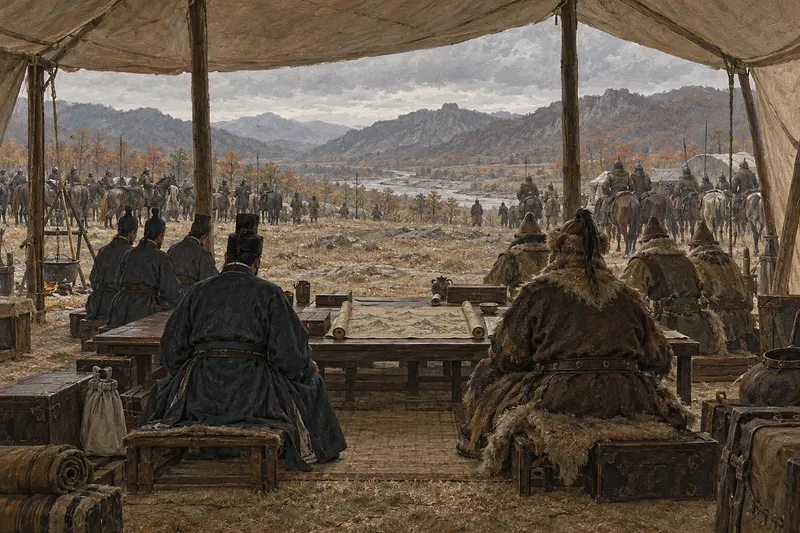
993 opened room for Goryeo’s expansion. Seo Hui’s talks ended the first Khitan invasion and laid the groundwork for expansion east of the Yalu River. Military resistance came first. Goryeo forces held off the Khitan army at Anyungjin, and those battlefield conditions set the stage for negotiation. Seo Hui’s case combined Goryeo’s claim to Goguryeo’s legacy with a practical issue: routes were blocked by the Jurchen. The article explains how those points supported the settlement, along with the diplomatic adjustment Goryeo had to make with the Khitan. After 994, Goryeo drove back Jurchen forces, built fortresses, and strengthened control around the Six Garrisons of Gangdong. A negotiated withdrawal thus became the basis for a lasting northern defense position. Readers examining Korean history or historical geopolitics can use the article as a concise account of how military pressure and diplomacy shaped territorial control. Read it for the full sequence and its tradeoffs. #GoryeoHistory #KoreanHistory

KOMSCO has two 2025 revenue figures. Reported revenue is ₩638.67 billion; another announcement gives ₩639.5 billion. The sources should be kept separate. Several figures describe different measures or periods. The Digital Onnuri Gift Certificate's 17 million subscribers show platform scale, but they are not revenue or the number of users who actually paid. The article separates 2025 currency merchandise revenue of about ₩1.6 billion from the 2026 forecast of ₩5 billion. That distinction helps strategy and finance teams assess the business mix and outlook. It also explains the expanded structure across gift certificate platforms and identity verification, plus KOMSCO's role as the organization dedicated to product authentication technology for the K-Brand Government Certification System. The ₩1 trillion target for 2031 is an 80th-anniversary management goal, not current revenue. Analysts, public-sector partners, and platform teams reviewing KOMSCO's 2025 results or new-business outlook can read the full article before citing the figures. #KOMSCO #PlatformBusiness


Analysts weigh 2026 policy rate hikes. The Fed moved its target range to 3.75% to 4.00% on September 16; Japan and Korea also tightened. Supply costs were rising while demand remained resilient. Higher rates cannot increase crude oil supply, but they can limit the spread into broader inflation. The trade-off is higher loan repayments and added pressure on the economy. The Federal Reserve target range reached 3.75% to 4.00% per year on September 16, 2026. The Bank of Japan set its short-term policy target at around 1.25% per year on September 18. The Bank of Korea reached 3.00% per year after consecutive hikes in July and August 2026. The article distinguishes inflation forecasts from interest-rate decisions and explains why a hike alone cannot determine currency or stock direction. The scope is major-economy decisions from July to September 2026. Professionals assessing lending or market exposure can read the article for the full reasoning.

18-Year-Old Solo Creator's Shorts Strategy
Creators see Mathis Bolt's nine videos. That count covers his final month of high school, not a verified long-term upload rate. His cited 250 million monthly views are combined across multiple platforms. They should not be read as upload volume or estimated earnings. His Shorts follow a clear story arc: an opening that draws attention, a middle that sustains uncertainty and an ending that resolves curiosity. He revises the edits rather than treating the first version as final. AI helps review ideas and gives editing feedback, while Bolt handles the story structure and final decisions. Creators considering this approach have a separate rights question. Permission to use someone else's video does not settle YouTube's reused content monetization review; each needs its own check. Creators weighing a Shorts workflow or comparing creator metrics can read the article for the process and the limits of those figures.