Skip to content
Injoys
Case Study

Seo Hui’s 993 Negotiation and the Six Garrisons of Gangdong

Seo Hui negotiated with Xiao Sunning during the Khitan invasion of 993, securing a withdrawal and laying the groundwork for expansion east of the Yalu River. After the negotiations, Goryeo drove back Jurchen forces and built fortresses, turning the Six Garrisons of Gangdong into defensive strongholds.

Listen or read this article

19:02

Listen, or read the text only.

Seo Hui’s 993 Negotiation and the Six Garrisons of Gangdong

Kokoro 82M AI-generated voice 20 min read

0:00 19:02

Advertisement

Download audio

File name
seo-hui-993-diplomacy-gangdong-six-prefectures-en.mp3
Format
MP3 (audio/mpeg)
Duration
19:02
File size
13.1 MB
Engine
Kokoro 82M

This audio was generated by AI.

You may download and use it freely for personal use.

Seo Hui’s 993 Negotiation and the Six Garrisons of Gangdong

13 min read

Seo Hui’s 993 Negotiation and the Six Garrisons of Gangdong
Seo Hui negotiated with Xiao Sunning during the Khitan invasion of 993, securing a withdrawal and laying the groundwork for expansion east of the Yalu River. After the negotiations, Goryeo drove back Jurchen forces and built fortresses, turning the Six Garrisons of Gangdong into defensive strongholds.
Seo Hui’s diplomatic negotiation brought the Khitan’s first invasion under King Seongjong in 993 to an end.
Goryeo forces’ military response in holding off the Khitan army at Anyungjin set the stage for negotiations.
Seo Hui based his negotiating case on Goryeo’s claim to Goguryeo’s legacy and the problem of routes blocked by the Jurchen.
Securing the Six Garrisons of Gangdong was followed by fortification and stronger regional control after 994.
In exchange for securing northern strongholds, Goryeo had to adjust its diplomatic relations with the Khitan.
Seo Hui negotiated with So Sonnyeong during the Khitan invasion of 993 and secured the withdrawal of Khitan forces. The negotiations laid the foundation for expansion east of the Yalu River. The event is remembered for securing the Six Prefectures of Gangdong through subsequent fortress construction and expanding Goryeo's northern defenses.
This article follows the 『Goryeosa』 in the Korean History Database of the National Institute of Korean History and was checked in September 2026.
Who was Seo Hui?
Seo Hui was a civil official and diplomat during the early Goryeo period. He was born in 942 and died in 998. After passing the state civil service examination in 960, he served in central government posts.
In 972, he was sent as an envoy to Song. During the Khitan invasion of 993, he also took military command as commander of the central army. His involvement in diplomatic negotiations and postwar fortress construction is summarized in the Encyclopedia of Korean Culture entry “Seo Hui”.
Background to the Khitan invasion of 993
One purpose of the Khitan invasion was to prevent Goryeo and Song from growing closer. At the time, the Liao dynasty founded by the Khitan was in conflict with Song. If Goryeo also cooperated with Song, the Khitan would have to guard its eastern side as well.
Goryeo's northern expansion policy also heightened tensions between the two countries. Jurchen forces were established along the lower Yalu River. The Khitan expanded their influence by attacking the Jurchens and the Jeongan Kingdom of Balhae refugees.
This region was a transportation corridor connecting the continent and the Korean Peninsula. Goryeo also sought to advance northward and secure strongholds. The war therefore arose from both diplomatic relations and control of the border. Our History Net’s “Seo Hui” explains the region's strategic conditions.
The fall of Bongsan-gun and the proposal to cede territory
The defeat at Bongsan-gun prompted proposals within the Goryeo court to cede territory. So Sonnyeong's army attacked Bongsan-gun and defeated Goryeo's vanguard. It then demanded Goryeo's surrender.
Some at court proposed giving up the land north of Seogyeong. Seogyeong corresponds to present-day Pyongyang. Seongjong also considered accepting the territorial cession proposal for a time.
Seo Hui opposed surrendering land before determining whether it could be defended. He considered both the justification for defending the land and Goryeo's ability to wage war. The following summarizes the arguments recorded in the 『Goryeosa』.
· If the claim based solely on the land having once belonged to Goguryeo was accepted, it would be difficult to prevent further demands. · Food supplies had to be preserved to defend the fortresses and fight. · The terms of peace could be assessed after responding militarily first.
Seongjong also withdrew his order to dump Seogyeong's remaining grain into the river. This was because Seo Hui opposed it on the grounds of defense and the people's livelihoods. This process is recorded in Volume 94 of the 『Goryeosa』, the Biography of Seo Hui.
The turning point in negotiations and So Sonnyeong's demands
The successful defense of Anyongjin became the turning point that led to negotiations. Goryeo forces led by Daedosu and Yu Bang repelled the Khitan attack. Unable to advance further, the Khitan army pressed Goryeo to surrender.
Seo Hui saw the possibility of negotiations in the repeated demands for surrender. He then went to So Sonnyeong's camp carrying a state letter from Seongjong. The explanation of the first invasion in the 『New History of Korea』 connects the military resistance with the negotiations.
The negotiations centered on Goguryeo's former territory and diplomatic relations between the two countries. So Sonnyeong took issue with Goryeo's territory and its exchanges with Song. Seo Hui combined Goryeo's historical claim with the issue of securing transportation routes.
Issue | So Sonnyeong's claims and demands | Seo Hui's response Succession to Goguryeo | Claim that the Khitan had the right to occupy Goguryeo's former territory | Counterargument that Goryeo succeeded Goguryeo Relations between Goryeo and Song | Criticism that Goryeo maintained exchanges with Song despite the closer Khitan | Raised the issue of the Jurchens blocking exchanges with the Khitan Border and transportation routes | Demanded that Goryeo cede territory and send envoys | Proposed driving out the Jurchens and securing fortresses and roads
Seo Hui proposed changing the conditions necessary for exchanges with the Khitan. He linked Goryeo's northern expansion to securing transportation routes between the two countries. The negotiations and subsequent diplomatic contacts can be found in Our History Net’s “Seo Hui’s Diplomatic Negotiations”.
Timeline from negotiations to fortress construction
The agreement of 993 was followed by fortress construction over several years. The Biography of Seo Hui in the 『Goryeosa』 records this by year. The fortress place names below are based on the translation of that biography.
Year | Event | Source 993, Seongjong's 12th year | Khitan invasion, defense of Anyongjin, and negotiations between Seo Hui and So Sonnyeong | Biography of Seo Hui in the 『Goryeosa』 994, Seongjong's 13th year | Drove out the Jurchens and built fortresses at Jangheungjin, Gwihwajin, Gwakju, and Gwiju | Biography of Seo Hui in the 『Goryeosa』 995, Seongjong's 14th year | Built fortresses at Anuijin and Heunghwajin | Biography of Seo Hui in the 『Goryeosa』 996, Seongjong's 15th year | Built fortresses at Seonju and Maengju | Biography of Seo Hui in the 『Goryeosa』 1010, Hyeonjong's 1st year | Second Khitan invasion | Our History Net, “Six Prefectures of Gangdong” 1018, Hyeonjong's 9th year | Third Khitan invasion began | Our History Net, “Battle of Gwiju” 1019, Hyeonjong's 10th year | Battle of Gwiju fought by Goryeo forces led by Gang Gamchan | Our History Net, “Battle of Gwiju”
Where were the Six Prefectures of Gangdong, and how were they secured?
The Six Prefectures of Gangdong were Goryeo strongholds east of the lower Yalu River. They generally refer to Heunghwa, Yongju, Tongju, Cheolju, Gwiju, and Gwakju. Depending on the source, Gwiju is also written as Guju.
Control of all six regions was not completed immediately after the negotiations. Goryeo had to drive out Jurchen forces and build fortresses. This work turned the results of the negotiations into actual control of the region.
The place names in the fortress construction timeline do not exactly match the usual list of the Six Prefectures. The former records the places where Seo Hui built fortresses by year. The latter lists the regional names collectively known as the Six Prefectures of Gangdong. The difference between the lists cannot immediately be regarded as an error in the negotiations.
The region was also not empty, uninhabited land. Jurchen residents and forces were present there. Goryeo's territorial expansion also involved the military process of pushing them out. The region's extent and development process are explained in Our History Net’s “Six Prefectures of Gangdong”.
What Goryeo gained and the diplomatic conditions it accepted
In return for securing strongholds along the lower Yalu River, Goryeo adjusted its relationship with the Khitan. Tributary visits involving the dispatch of envoys were how this was implemented. The use of the Khitan era name was also a condition reflecting relations between the two countries.
The Khitan also gained the benefit of establishing direct diplomatic relations with Goryeo. This served their goal of checking closer relations between Goryeo and Song. The negotiations can therefore be seen as a compromise reflecting the interests of both countries.
Category | What Goryeo gained | Remaining conditions and tasks Ending the war | Withdrawal of the Khitan army | Establishment of diplomatic relations with the Khitan Northern expansion | Foundation for expansion east of the Yalu River | Conflict with Jurchen forces and fortress construction Defense system | Military strongholds in the Six Prefectures of Gangdong | Burden of defending against subsequent invasions
Changes in relations with Song also did not end with a single moment in the negotiations. Han Jeongsu's 2023 study addresses Seongjong's later requests to Song for military support. The diplomatic agreement and the actual development of policy need to be distinguished. This interpretation can be found in the abstract of the study on the construction of fortresses in the Six Prefectures of Gangdong.
Why did Seongjong and Seo Hui disagree on when to establish diplomatic relations?
The two men differed over when to send envoys to the Khitan. Seo Hui recommended carrying out diplomatic formalities after securing additional territory. Seongjong wanted to establish relations quickly.
The Biography of Seo Hui in the 『Goryeosa』 records Seongjong's words as follows.
If we do not establish diplomatic relations for a long time, I fear there will be trouble later.
Seongjong ultimately sent Pak Yangyu to the Khitan. Seo Hui's recommendation can be read as a judgment that gave priority to securing territory first. Seongjong's decision can be interpreted as giving priority to the risks caused by delaying relations. This comparison is based on the relevant record in the 『Goryeosa』.
This difference shows that policy choices remained even after the negotiations. Even after an agreement was reached, the sequence of securing territory and conducting diplomatic formalities remained a separate issue. Differences of judgment within the court continued during the implementation of the agreement.
The relationship between the Six Prefectures of Gangdong and later Khitan wars
The Six Prefectures of Gangdong became defensive strongholds against later Khitan invasions. At the same time, their possession again became a source of dispute between the two countries. The agreement of 993 did not guarantee lasting peace.
The Khitan invaded again in 1010 and 1018. The third invasion began in 1018. The Battle of Gwiju took place the following year, in 1019. The two years can be distinguished in Our History Net’s “Battle of Gwiju”.
Records and interpretations
Descriptions in historical records must be distinguished from explanations by later researchers. The details of the negotiations are conveyed in the Biography of Seo Hui in the 『Goryeosa』. Assessments of the invasion's purpose and the negotiations' results involve researchers' analysis.
What the records confirm
The 『Goryeosa』 records the discussion of territorial cession and Seo Hui's counterarguments. The exchange with So Sonnyeong is followed by accounts of sending envoys and building fortresses. The sequence of the record alone makes it possible to distinguish the negotiations from the subsequent measures.
Widely used explanations
The National Institute of Korean History's explanations connect the Khitan effort to contain Song with Goryeo's northern expansion. They also treat Goryeo's military resistance as part of the background to the negotiations. This approach does not explain the entire process solely through Seo Hui's eloquence.
Areas emphasized differently in research
Studies differ in the scope within which they assess the negotiations' results. Han Jeongsu's 2023 study points to differences between Seo Hui's fortress construction and Seongjong's policies. Kwon Yongcheol's 2024 study emphasizes the formation of a Khitan-centered international order.
From the latter perspective, the Khitan also achieved some of their diplomatic goals. This interpretation can be explained alongside Goryeo's territorial gains. The argument is presented in the abstract of “A Further Review of the Background to the Khitan’s First Invasion of Goryeo”.
Figures that are difficult to confirm
The figure of 800,000 Khitan troops is difficult to establish as the actual number mobilized. In the 『Goryeosa』, it appears as a number invoked by So Sonnyeong as a threat. The 『New History of Korea』 also describes it as a label rather than the actual troop strength.
What this event means for understanding it today
This event shows that ending a war and establishing territorial control were different stages. The conditions gained through negotiations had to be maintained through fortress construction and defense. Distinguishing them as follows makes the event's causal relationships clear.
· The Battle of Anyongjin was a military response that stopped the Khitan army's advance. · Seo Hui's negotiations arranged the withdrawal and diplomatic relations. · The development of the Six Prefectures of Gangdong was the process of strengthening regional control after the agreement. · The Battle of Gwiju was a separate battle commanded by Gang Gamchan in 1019.
Frequently asked questions
When did Seo Hui's diplomatic negotiations take place?
They took place in 993, the 12th year of Goryeo's King Seongjong. They occurred during the process of ending the first Khitan invasion. The exact date in the solar calendar cannot be confirmed from the records reviewed.
Did Seo Hui defeat the Khitan without fighting?
Goryeo and Khitan forces fought before the negotiations. In particular, the successful defense of Anyongjin provided the background for the negotiations. Military activity also followed the negotiations as Goryeo secured territory.
Did the Khitan simply hand over six territories they had governed as the Six Prefectures of Gangdong?
It is difficult to regard this as the direct transfer of six fully established administrative districts. Jurchen forces were based along the lower Yalu River. Goryeo strengthened its control through fortress construction and development after the negotiations.
Did the negotiations succeed solely because of the claim to Goguryeo succession?
The idea of succession to Goguryeo provided justification for resisting territorial demands. The actual proposal included the Jurchen issue and securing transportation routes. The condition of establishing diplomatic relations with the Khitan also played a role.
Was the acquisition of the Six Prefectures of Gangdong completed in 993?
993 was the year when the negotiations laid the foundation for expansion. The Biography of Seo Hui in the 『Goryeosa』 records fortress construction after 994. The year of the negotiations must be distinguished from the process of consolidating the territory.
Were Seo Hui's negotiations and the Battle of Gwiju the same event?
They were different events. Seo Hui's negotiations were diplomatic negotiations in 993. The Battle of Gwiju was fought in 1019 by Goryeo forces led by Gang Gamchan.
0:00 0:00
1 / 77

Advertisement

Download text

File name
seo-hui-993-diplomacy-gangdong-six-prefectures-en.txt
Format
TXT (text/plain)
Paragraphs
77

Downloads exactly what you see as a text file.

Please cite the source when quoting.

Large text

Makes the text larger and the colors clearer. Turn it on if the text feels too small.

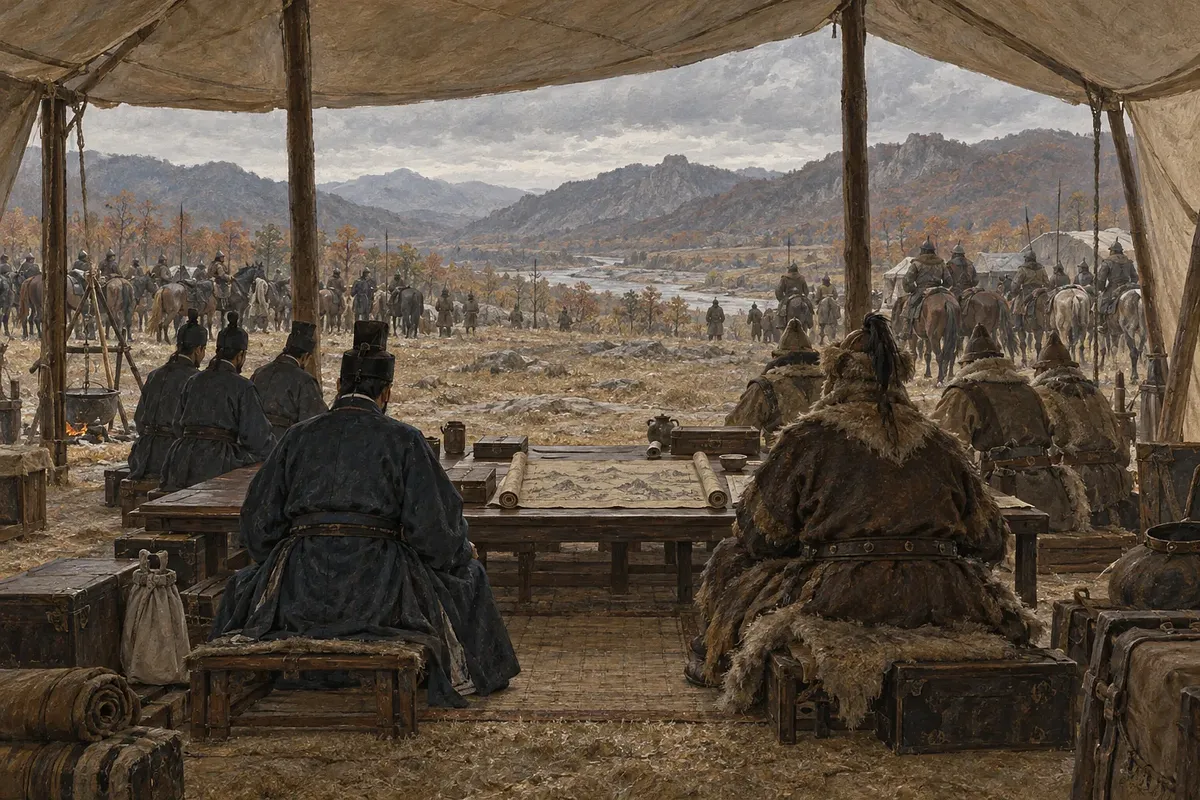
Seo Hui’s negotiations secured a Khitan withdrawal and laid the groundwork for expansion east of the Yalu River.AI-generated image

Key points

  • Seo Hui’s diplomatic negotiation brought the Khitan’s first invasion under King Seongjong in 993 to an end.
  • Goryeo forces’ military response in holding off the Khitan army at Anyungjin set the stage for negotiations.
  • Seo Hui based his negotiating case on Goryeo’s claim to Goguryeo’s legacy and the problem of routes blocked by the Jurchen.
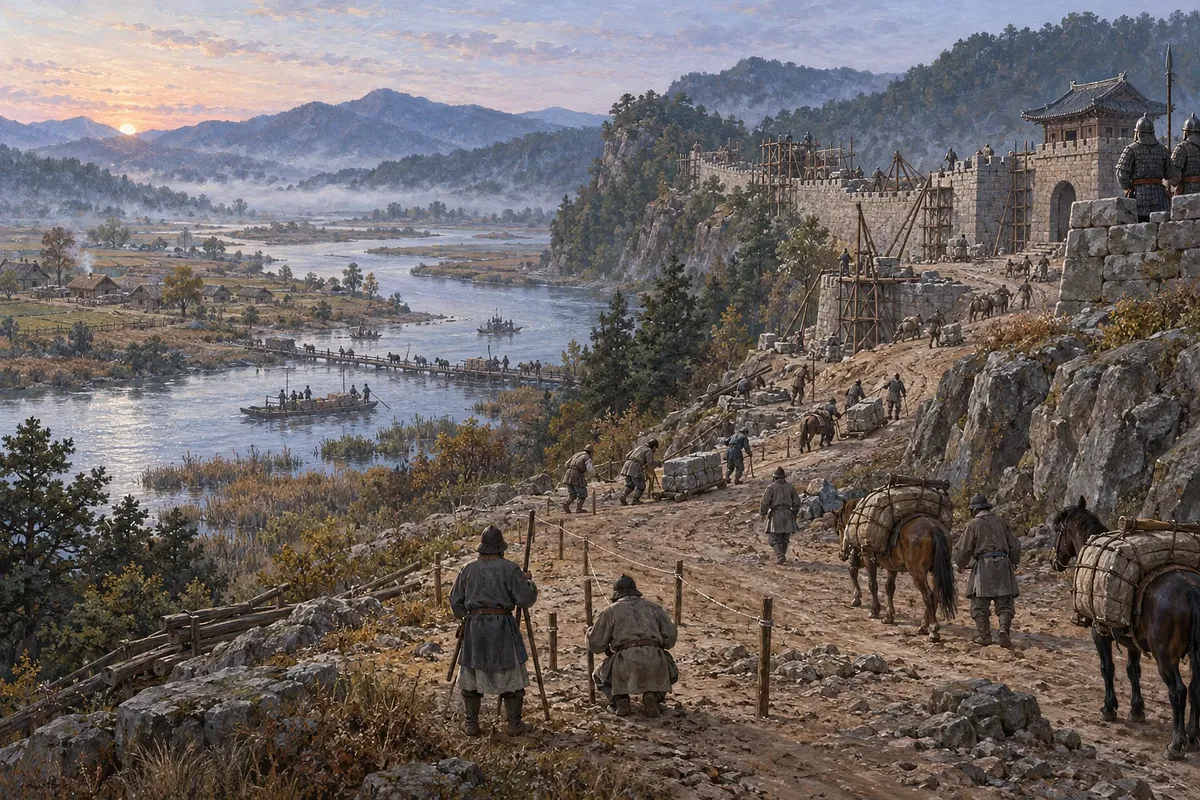
  • Securing the Six Garrisons of Gangdong was followed by fortification and stronger regional control after 994.
  • In exchange for securing northern strongholds, Goryeo had to adjust its diplomatic relations with the Khitan.

Seo Hui negotiated with So Sonnyeong during the Khitan invasion of 993 and secured the withdrawal of Khitan forces. The negotiations laid the foundation for expansion east of the Yalu River. The event is remembered for securing the Six Prefectures of Gangdong through subsequent fortress construction and expanding Goryeo's northern defenses.

This article follows the 『Goryeosa』 in the Korean History Database of the National Institute of Korean History and was checked in September 2026.

Who was Seo Hui?

Seo Hui was a civil official and diplomat during the early Goryeo period. He was born in 942 and died in 998. After passing the state civil service examination in 960, he served in central government posts.

In 972, he was sent as an envoy to Song. During the Khitan invasion of 993, he also took military command as commander of the central army. His involvement in diplomatic negotiations and postwar fortress construction is summarized in the Encyclopedia of Korean Culture entry “Seo Hui”.

Securing the Six Garrisons of Gangdong required fortification and stronger local control after 994.AI-generated image

Background to the Khitan invasion of 993

One purpose of the Khitan invasion was to prevent Goryeo and Song from growing closer. At the time, the Liao dynasty founded by the Khitan was in conflict with Song. If Goryeo also cooperated with Song, the Khitan would have to guard its eastern side as well.

Goryeo's northern expansion policy also heightened tensions between the two countries. Jurchen forces were established along the lower Yalu River. The Khitan expanded their influence by attacking the Jurchens and the Jeongan Kingdom of Balhae refugees.

This region was a transportation corridor connecting the continent and the Korean Peninsula. Goryeo also sought to advance northward and secure strongholds. The war therefore arose from both diplomatic relations and control of the border. Our History Net’s “Seo Hui” explains the region's strategic conditions.

The fall of Bongsan-gun and the proposal to cede territory

The defeat at Bongsan-gun prompted proposals within the Goryeo court to cede territory. So Sonnyeong's army attacked Bongsan-gun and defeated Goryeo's vanguard. It then demanded Goryeo's surrender.

Some at court proposed giving up the land north of Seogyeong. Seogyeong corresponds to present-day Pyongyang. Seongjong also considered accepting the territorial cession proposal for a time.

Seo Hui opposed surrendering land before determining whether it could be defended. He considered both the justification for defending the land and Goryeo's ability to wage war. The following summarizes the arguments recorded in the 『Goryeosa』.

  • If the claim based solely on the land having once belonged to Goguryeo was accepted, it would be difficult to prevent further demands.
  • Food supplies had to be preserved to defend the fortresses and fight.
  • The terms of peace could be assessed after responding militarily first.

Seongjong also withdrew his order to dump Seogyeong's remaining grain into the river. This was because Seo Hui opposed it on the grounds of defense and the people's livelihoods. This process is recorded in Volume 94 of the 『Goryeosa』, the Biography of Seo Hui.

The turning point in negotiations and So Sonnyeong's demands

The successful defense of Anyongjin became the turning point that led to negotiations. Goryeo forces led by Daedosu and Yu Bang repelled the Khitan attack. Unable to advance further, the Khitan army pressed Goryeo to surrender.

Seo Hui saw the possibility of negotiations in the repeated demands for surrender. He then went to So Sonnyeong's camp carrying a state letter from Seongjong. The explanation of the first invasion in the 『New History of Korea』 connects the military resistance with the negotiations.

The negotiations centered on Goguryeo's former territory and diplomatic relations between the two countries. So Sonnyeong took issue with Goryeo's territory and its exchanges with Song. Seo Hui combined Goryeo's historical claim with the issue of securing transportation routes.

Issue So Sonnyeong's claims and demands Seo Hui's response
Succession to Goguryeo Claim that the Khitan had the right to occupy Goguryeo's former territory Counterargument that Goryeo succeeded Goguryeo
Relations between Goryeo and Song Criticism that Goryeo maintained exchanges with Song despite the closer Khitan Raised the issue of the Jurchens blocking exchanges with the Khitan
Border and transportation routes Demanded that Goryeo cede territory and send envoys Proposed driving out the Jurchens and securing fortresses and roads

Seo Hui proposed changing the conditions necessary for exchanges with the Khitan. He linked Goryeo's northern expansion to securing transportation routes between the two countries. The negotiations and subsequent diplomatic contacts can be found in Our History Net’s “Seo Hui’s Diplomatic Negotiations”.

Timeline from negotiations to fortress construction

The agreement of 993 was followed by fortress construction over several years. The Biography of Seo Hui in the 『Goryeosa』 records this by year. The fortress place names below are based on the translation of that biography.

Year Event Source
993, Seongjong's 12th year Khitan invasion, defense of Anyongjin, and negotiations between Seo Hui and So Sonnyeong Biography of Seo Hui in the 『Goryeosa』
994, Seongjong's 13th year Drove out the Jurchens and built fortresses at Jangheungjin, Gwihwajin, Gwakju, and Gwiju Biography of Seo Hui in the 『Goryeosa』
995, Seongjong's 14th year Built fortresses at Anuijin and Heunghwajin Biography of Seo Hui in the 『Goryeosa』
996, Seongjong's 15th year Built fortresses at Seonju and Maengju Biography of Seo Hui in the 『Goryeosa』
1010, Hyeonjong's 1st year Second Khitan invasion Our History Net, “Six Prefectures of Gangdong”
1018, Hyeonjong's 9th year Third Khitan invasion began Our History Net, “Battle of Gwiju”
1019, Hyeonjong's 10th year Battle of Gwiju fought by Goryeo forces led by Gang Gamchan Our History Net, “Battle of Gwiju”

Where were the Six Prefectures of Gangdong, and how were they secured?

The Six Prefectures of Gangdong were Goryeo strongholds east of the lower Yalu River. They generally refer to Heunghwa, Yongju, Tongju, Cheolju, Gwiju, and Gwakju. Depending on the source, Gwiju is also written as Guju.

Control of all six regions was not completed immediately after the negotiations. Goryeo had to drive out Jurchen forces and build fortresses. This work turned the results of the negotiations into actual control of the region.

The place names in the fortress construction timeline do not exactly match the usual list of the Six Prefectures. The former records the places where Seo Hui built fortresses by year. The latter lists the regional names collectively known as the Six Prefectures of Gangdong. The difference between the lists cannot immediately be regarded as an error in the negotiations.

The region was also not empty, uninhabited land. Jurchen residents and forces were present there. Goryeo's territorial expansion also involved the military process of pushing them out. The region's extent and development process are explained in Our History Net’s “Six Prefectures of Gangdong”.

What Goryeo gained and the diplomatic conditions it accepted

In return for securing strongholds along the lower Yalu River, Goryeo adjusted its relationship with the Khitan. Tributary visits involving the dispatch of envoys were how this was implemented. The use of the Khitan era name was also a condition reflecting relations between the two countries.

The Khitan also gained the benefit of establishing direct diplomatic relations with Goryeo. This served their goal of checking closer relations between Goryeo and Song. The negotiations can therefore be seen as a compromise reflecting the interests of both countries.

Category What Goryeo gained Remaining conditions and tasks
Ending the war Withdrawal of the Khitan army Establishment of diplomatic relations with the Khitan
Northern expansion Foundation for expansion east of the Yalu River Conflict with Jurchen forces and fortress construction
Defense system Military strongholds in the Six Prefectures of Gangdong Burden of defending against subsequent invasions

Changes in relations with Song also did not end with a single moment in the negotiations. Han Jeongsu's 2023 study addresses Seongjong's later requests to Song for military support. The diplomatic agreement and the actual development of policy need to be distinguished. This interpretation can be found in the abstract of the study on the construction of fortresses in the Six Prefectures of Gangdong.

Why did Seongjong and Seo Hui disagree on when to establish diplomatic relations?

The two men differed over when to send envoys to the Khitan. Seo Hui recommended carrying out diplomatic formalities after securing additional territory. Seongjong wanted to establish relations quickly.

The Biography of Seo Hui in the 『Goryeosa』 records Seongjong's words as follows.

If we do not establish diplomatic relations for a long time, I fear there will be trouble later.

Seongjong ultimately sent Pak Yangyu to the Khitan. Seo Hui's recommendation can be read as a judgment that gave priority to securing territory first. Seongjong's decision can be interpreted as giving priority to the risks caused by delaying relations. This comparison is based on the relevant record in the 『Goryeosa』.

This difference shows that policy choices remained even after the negotiations. Even after an agreement was reached, the sequence of securing territory and conducting diplomatic formalities remained a separate issue. Differences of judgment within the court continued during the implementation of the agreement.

The relationship between the Six Prefectures of Gangdong and later Khitan wars

The Six Prefectures of Gangdong became defensive strongholds against later Khitan invasions. At the same time, their possession again became a source of dispute between the two countries. The agreement of 993 did not guarantee lasting peace.

The Khitan invaded again in 1010 and 1018. The third invasion began in 1018. The Battle of Gwiju took place the following year, in 1019. The two years can be distinguished in Our History Net’s “Battle of Gwiju”.

Records and interpretations

Descriptions in historical records must be distinguished from explanations by later researchers. The details of the negotiations are conveyed in the Biography of Seo Hui in the 『Goryeosa』. Assessments of the invasion's purpose and the negotiations' results involve researchers' analysis.

What the records confirm

The 『Goryeosa』 records the discussion of territorial cession and Seo Hui's counterarguments. The exchange with So Sonnyeong is followed by accounts of sending envoys and building fortresses. The sequence of the record alone makes it possible to distinguish the negotiations from the subsequent measures.

Widely used explanations

The National Institute of Korean History's explanations connect the Khitan effort to contain Song with Goryeo's northern expansion. They also treat Goryeo's military resistance as part of the background to the negotiations. This approach does not explain the entire process solely through Seo Hui's eloquence.

Areas emphasized differently in research

Studies differ in the scope within which they assess the negotiations' results. Han Jeongsu's 2023 study points to differences between Seo Hui's fortress construction and Seongjong's policies. Kwon Yongcheol's 2024 study emphasizes the formation of a Khitan-centered international order.

From the latter perspective, the Khitan also achieved some of their diplomatic goals. This interpretation can be explained alongside Goryeo's territorial gains. The argument is presented in the abstract of “A Further Review of the Background to the Khitan’s First Invasion of Goryeo”.

Figures that are difficult to confirm

The figure of 800,000 Khitan troops is difficult to establish as the actual number mobilized. In the 『Goryeosa』, it appears as a number invoked by So Sonnyeong as a threat. The 『New History of Korea』 also describes it as a label rather than the actual troop strength.

What this event means for understanding it today

This event shows that ending a war and establishing territorial control were different stages. The conditions gained through negotiations had to be maintained through fortress construction and defense. Distinguishing them as follows makes the event's causal relationships clear.

  • The Battle of Anyongjin was a military response that stopped the Khitan army's advance.
  • Seo Hui's negotiations arranged the withdrawal and diplomatic relations.
  • The development of the Six Prefectures of Gangdong was the process of strengthening regional control after the agreement.
  • The Battle of Gwiju was a separate battle commanded by Gang Gamchan in 1019.

Frequently asked questions

When did Seo Hui's diplomatic negotiations take place?

They took place in 993, the 12th year of Goryeo's King Seongjong. They occurred during the process of ending the first Khitan invasion. The exact date in the solar calendar cannot be confirmed from the records reviewed.

Did Seo Hui defeat the Khitan without fighting?

Goryeo and Khitan forces fought before the negotiations. In particular, the successful defense of Anyongjin provided the background for the negotiations. Military activity also followed the negotiations as Goryeo secured territory.

Did the Khitan simply hand over six territories they had governed as the Six Prefectures of Gangdong?

It is difficult to regard this as the direct transfer of six fully established administrative districts. Jurchen forces were based along the lower Yalu River. Goryeo strengthened its control through fortress construction and development after the negotiations.

Did the negotiations succeed solely because of the claim to Goguryeo succession?

The idea of succession to Goguryeo provided justification for resisting territorial demands. The actual proposal included the Jurchen issue and securing transportation routes. The condition of establishing diplomatic relations with the Khitan also played a role.

Was the acquisition of the Six Prefectures of Gangdong completed in 993?

993 was the year when the negotiations laid the foundation for expansion. The Biography of Seo Hui in the 『Goryeosa』 records fortress construction after 994. The year of the negotiations must be distinguished from the process of consolidating the territory.

Were Seo Hui's negotiations and the Battle of Gwiju the same event?

They were different events. Seo Hui's negotiations were diplomatic negotiations in 993. The Battle of Gwiju was fought in 1019 by Goryeo forces led by Gang Gamchan.

Open the link

Opens in a new window.

Advertisement

Sign-in required

Sign in with your Google account to like, comment, and save highlights.

FAQ

When and with whom did Seo Hui conduct his diplomatic negotiations?

They took place in 993, during the reign of King Seongjong of Goryeo, between Seo Hui and Xiao Sunning of the Khitan. The negotiations brought the Khitan's first invasion under control.

Was Seo Hui a civil official or a general?

Seo Hui was a civil official and diplomat. In 993, he commanded troops as Commander of the Central Army and later helped build fortresses after the negotiations.

Why did the Khitan invade Goryeo?

They aimed to keep Goryeo and Song from growing closer and to establish direct diplomatic relations with Goryeo. Competition over territory and transportation routes around the Yalu River was also a factor.

Why did Seo Hui oppose the proposal to cede the territory north of Seogyeong?

He believed that conceding it on the grounds that it was former Goguryeo territory would make it difficult to prevent further demands from the Khitan. He also judged that a military response remained possible.

Did Seo Hui drive back the Khitan through negotiations alone, without fighting?

Before the negotiations, Goryeo forces repelled a Khitan attack at Anyungjin. Later, military operations also took place to push back Jurchen forces during the process of securing the Six Prefectures of Gangdong.

Where were the Six Prefectures of Gangdong located?

They were Heunghwa, Yongju, Tongju, Cheolju, Gwiju, and Gwakju, east of the lower Yalu River. Gwiju is also written as Guju.

Were the Six Prefectures of Gangdong completed immediately after the negotiations in 993?

The negotiations of 993 laid the foundation for northward expansion. The Biography of Seo Hui in Goryeosa records that fortress construction continued from 994 to 996.

What did Goryeo accept in return for the negotiations?

Goryeo accepted an adjustment in relations that involved establishing diplomatic ties with the Khitan and sending envoys. The use of the Khitan era name was also included among the terms of relations between the two countries.

Is it confirmed that the Khitan army had 800,000 troops?

It is difficult to conclude that this was the actual number of troops. In Goryeosa, it appears as a number cited by Xiao Sunning as a threat, and Sinpyeon Hanguksa also explains it as a designation.

How were Seo Hui's negotiations different from the Battle of Gwiju?

Seo Hui's negotiations took place during the Khitan's first invasion in 993. The Battle of Gwiju was a battle in which Goryeo forces led by Gang Gamchan defeated the third invasion in 1019.

Sources

Data formats

This content is available in several machine-friendly formats.

Data-only languages (machine translated, files only)

Indonesian JSON MD Portuguese JSON MD Chinese (Traditional) JSON MD Deutsch JSON MD

Verification

This article was drafted with AI and then reviewed and edited by a person.

Reviewed by 신익희 · 편집장 · 2026-09-24

Figures in this article were checked against the source material during generation. · 2026-09-24

This translation has been cross-checked by AI. · 2026-09-24

Reuse & AI usage

Search indexing and AI citation with attribution are welcome. See the license policy for details.

CC BY · License

Loading…

Loading…

Related content

From Injoys

Request the content you want and take 70% of what it earns

Just leave the subject. We handle production, review, translation and distribution.

See how revenue sharing works

Comments