Gulf States' Middle East War Diplomacy: Gains and Losses
Gulf states' diplomacy combines military cooperation with managing relations with Iran. Comparing each country's interests and the vulnerability of desalination and energy facilities makes it hard to conclude that the US is leaving or that China has won outright.
Gulf states manage relations with Iran differently depending on territorial disputes, energy resources, and development plans.
The vulnerability of desalination facilities raises the cost of escalation, but it is not the only factor in decisions about military responses.
China's diplomatic gains must be assessed alongside its losses from disruptions to Middle Eastern energy supplies.
The use of BeiDou alone does not mean US military combat intelligence is automatically passed to China.
Assessing gains and losses from the Middle East war requires looking beyond oil prices to actual export volumes and damage to infrastructure.
The winners and losers of a war in the Middle East cannot be determined by military outcomes alone. Gulf states have pursued security cooperation while managing their relations with Iran. Damage to desalination and export facilities must be weighed alongside diplomatic gains.
The maritime shipping figures are based on EIA data for the first half of 2025.
What is the Gulf states' balanced diplomacy?
The Gulf states' balanced diplomacy means choosing partners according to the issue. They can cooperate militarily with the United States while talking with Iran. They can also maintain economic cooperation with China alongside those relationships.
In this article, Gulf states means the members of the Gulf Cooperation Council, or GCC: Saudi Arabia, the UAE, Qatar, Kuwait, Bahrain, and Oman. Iran is a Gulf coastal state, but it is not a GCC member.
Arab and Islamic are different categories. Arab refers to a linguistic and cultural identity. Islam is a religion. Grouping Iran and Türkiye with Arab states leads to a mistaken reading of their relationships.
Sectarian divisions alone cannot explain foreign policy, either. Territorial disputes and resource development create separate interests. Reducing conflict with neighboring states can also help protect the political system.
Comparing the interests of Saudi Arabia, the UAE, Qatar, and Oman
Gulf states have different reasons both to disagree with Iran and to talk with it. Restoring diplomatic relations does not mean resolving every security conflict. Conversely, a territorial dispute does not always end diplomatic contact.
Country | Confirmed relationships and interests | How to interpret its diplomacy
Saudi Arabia | Agreed to resume diplomatic relations with Iran in 2023 | Distinguish normalization from security competition
UAE | Territorial dispute with Iran over islands; normalized relations with Israel | Examine territorial and security issues separately from diplomatic channels
Qatar | Resource structure involving an offshore gas field connected to Iran | Consider both resource development and the safety of export routes
Oman | Mediated talks between the United States and Iran | Distinguish mediation from support for a particular side
Saudi Arabia's development plans and relations with Iran
Saudi Arabia created a channel for managing conflict by restoring relations with Iran. The two countries agreed in Beijing on March 10, 2023, to resume relations. Their joint statement also included principles of respect for sovereignty and noninterference in internal affairs. The original text is available in the Chinese Ministry of Foreign Affairs' trilateral joint statement.
Saudi Arabia's Vision 2030 seeks to diversify its economy. Its goals also include expanding tourism, logistics, and private investment. It is reasonable to interpret regional instability as raising the cost of these projects. But development plans alone cannot explain every foreign policy decision. Vision 2030 overview
The UAE's territorial dispute and diplomatic channels
The conflict between the UAE and Iran includes a specific territorial issue. Abu Musa, Greater Tunb, and Lesser Tunb are disputed islands. Iran controls the islands, while the UAE claims sovereignty over them. The GCC also supports the UAE's position. GCC Ministerial Council statement
The UAE signed a treaty normalizing relations with Israel in 2020. In 2022, it announced plans to return its ambassador to Iran. The two decisions show how it maintained different diplomatic relationships at the same time. Labeling the UAE pro-Israel does not explain its entire policy toward Iran. UN treaty record, UAE Ministry of Foreign Affairs announcement on the ambassador's return
Qatar's gas field and Oman's mediation
Qatar produces resources from an offshore gas field connected to Iran. The Qatari side is called the North Field. The Iranian side is called South Pars. This structure gives the two countries reason to consider energy stability in their relationship. EIA analysis of Qatar
Oman's role is to keep a channel for dialogue open. Oman mediated negotiations between the United States and Iran in 2025. But in June of the same year, it announced the cancellation of scheduled talks. The existence of a mediation channel does not guarantee successful negotiations. Omani Ministry of Foreign Affairs announcement of June 14, 2025
Why are desalination facilities a security issue?
Desalination facilities are infrastructure that keeps cities supplied with water. Desalination removes salt from seawater to produce fresh water. In the Gulf region, water production and energy supply are closely linked. Water security is therefore hard to separate from power generation and transmission facilities. World Bank analysis of water and energy in the Gulf
To compare levels of dependence, the ratios must first use the same basis. The share of drinking water supplied by desalination differs from its share of total water use. Total water use may also include water used in agriculture and industry. Production capacity and actual supply are different measures, too.
Basis of the figure | What it shows | Common misunderstanding
Desalination's share of drinking water supply | The composition of the drinking water supply | Assuming the same share applies to agricultural water
Desalination's share of total water use | How water is used for various purposes | Assuming cities have low dependence on desalinated drinking water
Production capacity of desalination facilities | How much the facilities can produce | Treating capacity as identical to actual supply
Emergency water reserves | The amount of stored water | Treating them as the time a city can last without restrictions on use
Damage to desalination facilities does not mean an entire city immediately loses its water supply. Reservoirs and connecting pipelines can cushion the impact. Qatar's KAHRAMAA describes reservoir and pipeline projects for emergency response. How long supplies would actually last depends on the extent of the damage and the amount of water used. KAHRAMAA's description of its water security projects
Claims that a city would collapse within a specific period therefore need separate verification. Each country's water reserves and the operating status of its facilities must be checked first. It is reasonable to conclude that the vulnerability of desalination facilities raises the cost of escalation. It cannot be identified as the sole reason for every act of military restraint.
Have the United States' exit and China's victory been confirmed?
There is not enough evidence to conclude that the United States' security role in the Middle East has ended. In January 2026, US Central Command announced the opening of an air defense cooperation unit at Al Udeid Air Base in Qatar. Its purpose is to strengthen regional cooperation on integrated air and missile defense. US Central Command announcement
That announcement alone cannot establish how well the defense system performs in combat. But it must be distinguished from a claim that the cooperation structure has disappeared. The fact that an attack caused damage does not mean the United States has fully withdrawn. Defensive performance and the continuation of its presence and cooperation are different questions.
China gained a diplomatic achievement in the process of restoring relations between Saudi Arabia and Iran. At the same time, China has an interest in the Gulf region's energy supply. EIA describes China as a major destination for energy passing through the Strait of Hormuz. Diplomatic gains alone therefore cannot establish China's overall net gain from a war. Trilateral joint statement, EIA maritime shipping analysis
What is being assessed | Indicators to check | Conclusion that is hard to justify
The United States' security role | Cooperation units, base operations, defensive activity | Concluding from damage alone that it has exited the Middle East security order
China's diplomatic influence | Mediation of agreements and their subsequent implementation | Concluding that successful mediation also proves an ability to provide military protection
China's economic gains and losses | Energy procurement costs and shipping disruptions | Concluding that it incurs no losses because it does not directly enter the war
Does using BeiDou mean combat information is transmitted to China?
Using BeiDou alone does not mean combat information is automatically sent to China. Basic GPS navigation works by receiving signals transmitted by satellites. A receiver uses those signals to calculate its position and time. That process does not itself send information from the receiver to a satellite. GPS.gov system description
BeiDou also has a short-message communication function in addition to navigation. A white paper from the China National Space Administration describes a position-reporting function as well. Navigation signal reception must therefore be distinguished from use of a communication function. Determining which function was used requires examination of the actual equipment and operating records. China National Space Administration white paper on BeiDou
Whether specific Iranian weapons systems used BeiDou requires separate verification. Even if their use is confirmed, that would not automatically prove that China collected information. Claims that US military interception information was passed along require further evidence. The technical documents examined in this article do not substantiate that claim.
Claim | Additional evidence needed
A specific weapon used BeiDou | Equipment analysis, operating records, reliable official confirmation
Operational information was transmitted to China | Evidence that a communication function was actually used and identification of who received the data
China learned how the US military defends against attacks | The contents of the collected data and the results of its analysis
Is Türkiye taking over regional dominance?
An expansion of Türkiye's influence and its acquisition of regional dominance are different claims. The Council of the EU says accession negotiations have effectively been at a standstill since 2018. But stalled accession negotiations do not mean all ties with the West have been severed. Türkiye is also a NATO member. Council of the EU explanation of Türkiye, NATO explanation of Türkiye
Explaining the EU accession issue through a leader's feelings leaves little basis for understanding policy. Strong statements about Israel do not amount to securing regional leadership, either. Influence depends on whether other countries actually cooperate. The phrase “revival of the Ottoman Empire” does little to measure it.
The following factors can be assessed separately when evaluating regional influence:
· The ability to participate in diplomatic negotiations and help implement agreements
· Resources to sustain military cooperation over a long period
· The scope of cooperative relationships accepted by neighboring countries
· The cost of foreign activities that the domestic economy can bear
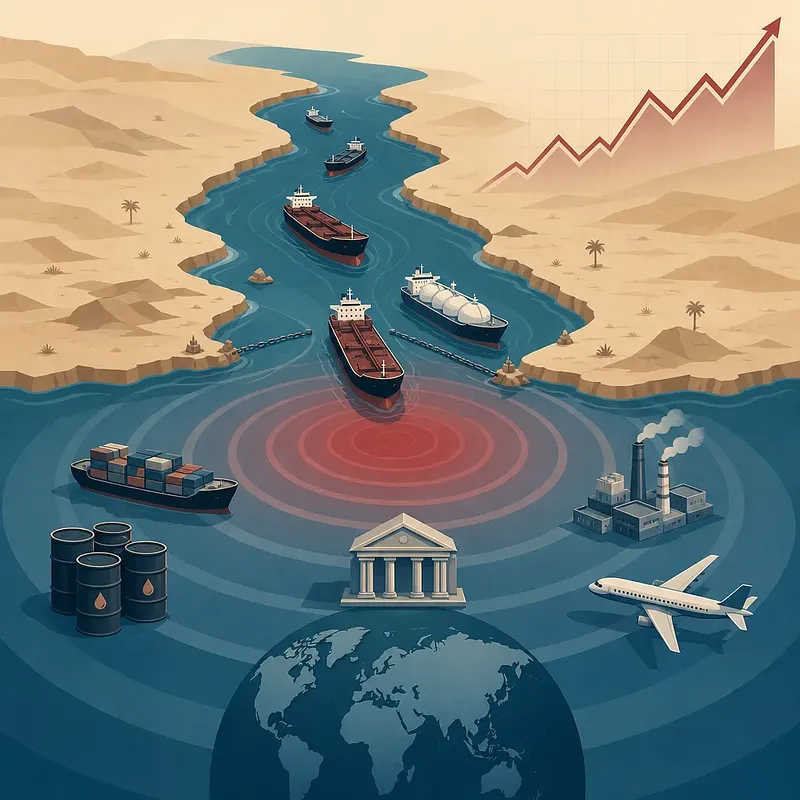
The Strait of Hormuz and gains and losses under different conditions
To assess the gains and losses of oil-producing countries in a war, oil prices and actual export volumes must be considered together. Revenue can fall even if export prices rise, if sales volumes decline. Higher repair and shipping costs change the calculation again. This is why a price increase alone does not make an oil-producing country a winner.
According to EIA, 20.9 million barrels per day of oil passed through the Strait of Hormuz in the first half of 2025. During the same period, 89% of the crude oil and condensate passing through it was headed to Asia. Condensate is a light liquid hydrocarbon obtained during gas production. These figures show the shipping structure during that period. EIA maritime shipping analysis
The following table is an analysis of different conditions, not a statement of confirmed war outcomes. What a country gains or loses changes with the conditions. In particular, the operation of export facilities and shipping routes affects the outcome.
Conditions | Potential effects | Costs that could also arise
Oil prices rise and export volumes hold steady | Possible increase in oil-producing countries' export revenue | Higher insurance premiums and shipping costs
Oil prices rise and export volumes fall | Higher prices for the remaining exports | Lower sales and disruptions to facility operations
Diplomatic mediation makes progress | Possible increase in influence over negotiations | Burden of implementing an agreement
Desalination and power facilities are damaged | Little prospect of direct economic gain | Repair costs and disruption to daily life and business
Energy shipping is disrupted for a long period | Possible sales opportunities for alternative suppliers | Higher procurement costs and supply insecurity for importing countries
EIA also describes bypass pipelines in Saudi Arabia and the UAE. But bypass routes cannot replace all shipping through the strait. The existence of bypass facilities and sufficient spare capacity are different matters. Their actual operating status must be checked to determine how much oil can be rerouted. EIA analysis of routes bypassing the Strait of Hormuz
Common mistakes in interpreting a war in the Middle East
Treating different measures as equivalent distorts judgments about winners and losers. The number of attacks is not the same as the value of the damage. The amount spent on weapons is not the same as actual defensive capability, either. The meaning of the measure used to support a claim must be checked first.
Common interpretation | What needs to be checked
The UAE suffered the greatest damage | A comparison of deaths, injuries, facility damage, and economic losses over the same period
Large weapons purchases mean a country can easily retaliate | Operational capability, defensive objectives, and the cost of escalation
Restoring diplomatic relations ended the hostile relationship | Implementation of the agreement and remaining security conflicts
The presence of a US military base guarantees complete safety | Actual defensive coverage and response capability
Higher energy prices mean a net gain for the entire country | Export volumes, repair costs, and private-sector losses
On May 4, 2026, the UAE Ministry of Foreign Affairs condemned Iranian attacks. Its announcement described attacks targeting civilian facilities and reported injuries. But it did not rank the total damage suffered by different countries. Confirming that attacks occurred is different from determining which country suffered the most damage. UAE Ministry of Foreign Affairs announcement of May 4, 2026
Why a country's gains can differ from harm to its residents
Diplomatic gains at the national level do not necessarily improve residents' lives. Disruptions to water supplies can occur even if a country's influence as a mediator grows. Even if export revenue increases, damaged areas may still face the burden of reconstruction. A country's gains and losses must therefore be assessed separately from those of its residents.
The link between desalination and electricity illustrates this difference. Problems with distribution can arise even if water production facilities remain intact. Conversely, reservoirs and connecting pipelines may reduce the impact of damage. The test is whether services actually continue, not simply whether facilities exist.
· Public finances are assessed by considering both export revenue and reconstruction spending.
· Businesses are assessed by considering production and shipping disruptions alongside additional costs.
· Residents' lives are assessed by the actual supply of drinking water and electricity.
· Diplomatic achievements are assessed by whether announced agreements are implemented.
 Injoys