Why Terms and Conditions Are Important in Financial Transactions
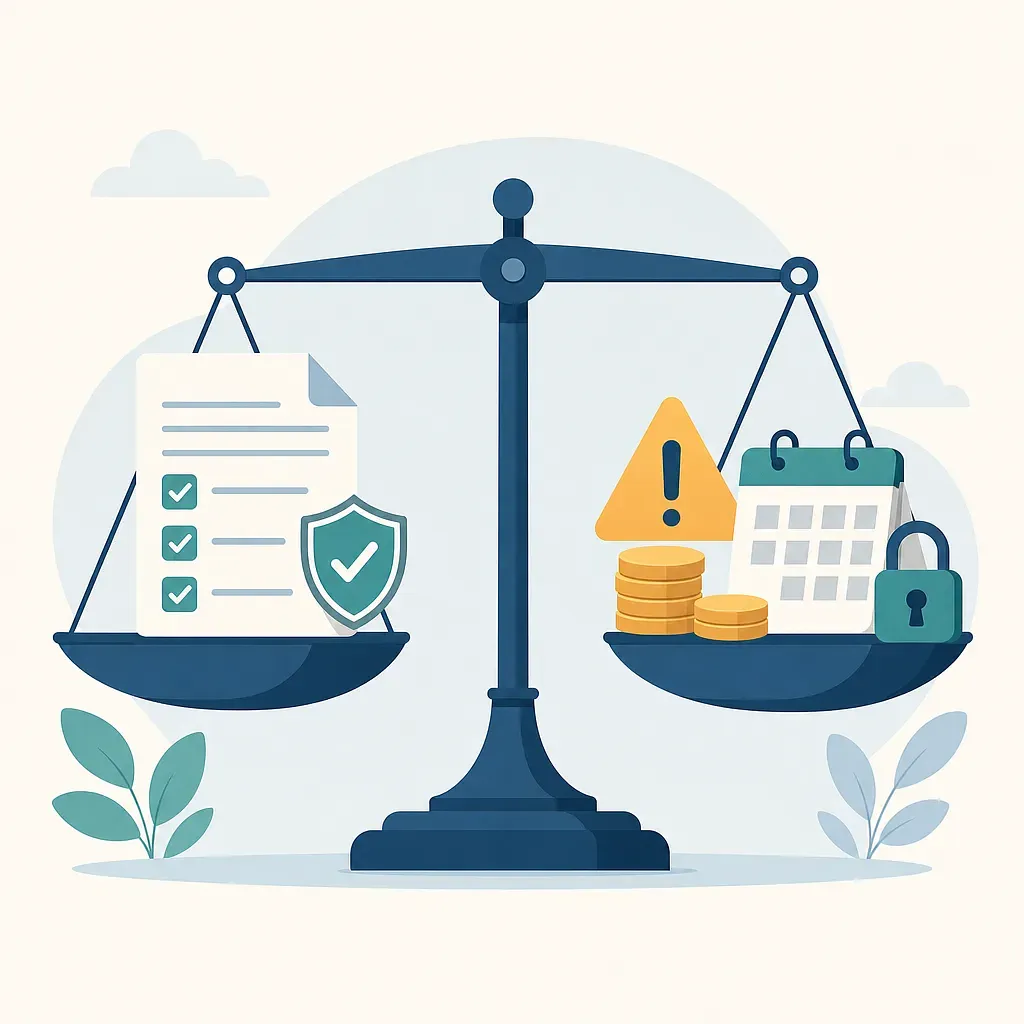
Terms and conditions are the contractual provisions that financial institutions prepare in advance to enter into contracts with multiple customers under the same terms. In financial transactions, these terms and conditions define rights, obligations, costs, risks, and termination conditions, so it is important to review the key details before signing up.
Terms and conditions are contract terms prepared in advance by a business in a standard format for use in contracts with multiple customers.
Financial terms and conditions specify the key terms of the transaction, such as the purpose of the product, its term, fees, interest, requirements for insurance payouts, and cancellation conditions.
If you sign up for a financial product without reviewing the terms and conditions, you may face unexpected costs, coverage exclusions, or penalties for early termination.
Unfair contract terms are regulated by laws such as the “Act on the Regulation of Contract Terms,” and standard contract terms are used in certain sectors.
Consumers should read the key provisions of the terms and conditions, ask the financial institution to explain any parts they do not understand, and then sign the contract.
What Are Terms and Conditions?
When signing up for an app or website, you often see the phrase “I agree to the terms and conditions.” Terms and conditions also play a very important role in financial transactions. This is because it is difficult to renegotiate all terms each time for financial products—such as deposits, loans, credit cards, insurance, and investment products—that are repeatedly offered to a large number of customers.
Terms and Conditions refer to the pre-established contractual terms, in a specific format, prepared by a business—one party to the contract—to enter into agreements with multiple counterparties, namely customers. From the financial institution’s perspective, this allows them to operate the same products under consistent standards; from the customer’s perspective, it offers the advantage of being able to verify the terms of the transaction in writing.
Why Terms and Conditions Are Necessary in Financial Transactions
Financial transactions are contracts that involve a combination of money, credit, risk, and future payment obligations. Therefore, it must be clear between the parties what is to be done, when, and under what conditions.
For example, consider a loan agreement involving the borrowing and lending of money. Disputes may arise if the borrower fails to repay on the agreed-upon date or if the lender demands repayment earlier than the contract term. To minimize such disputes, the terms of the transaction must be specifically defined at the time the contract is entered into.
Financial terms and conditions typically serve the following functions:
· They define the rights and obligations of the contracting parties.
· They explain the terms of use and restrictions for financial products.
· They specify financial obligations such as fees, interest, insurance premiums, and cancellation charges.
· They establish procedures for handling issues such as accidents, delinquencies, cancellations, and insurance claims.
· They provide guidelines for preventing or resolving disputes between financial institutions and customers.
Key Contents of Financial Terms and Conditions
While the structure of the terms and conditions varies depending on the type of financial product, the items customers should pay particular attention to are generally similar.
Items to Check | Meaning | Example
Purpose of the Contract | What type of product or service it is | Deposits, loans, insurance, credit cards, investment services
Contract Term | When the contract begins and ends | Maturity date, renewal status, insurance period
Costs and Fees | Amounts borne by the customer | Interest, late payment interest, early repayment fees, credit card fees
Payment or Coverage Conditions | Requirements under which the financial institution pays or provides coverage | Grounds for insurance payout, conditions for deposit interest payment
Restrictions and Exceptions | Cases where benefits or coverage do not apply | Grounds for exemption, exclusions from coverage, transaction restrictions
Cancellation and Withdrawal Conditions | Criteria for terminating or canceling the contract | Early termination, withdrawal of application, calculation of refunds
Customer Obligations | Matters the customer must comply with | Duty of disclosure, repayment obligation, password management obligation
Dispute Resolution | Procedures When Issues Arise | Complaints, Mediation, Jurisdiction, Notification Methods
Why You Should Read the Terms and Conditions
The terms and conditions are not merely a guide but constitute the actual contract. Once you agree to the terms, financial transactions will generally proceed according to those conditions. Therefore, signing up without reviewing the terms and conditions may result in unexpected financial losses.
Example of Insurance Terms and Conditions
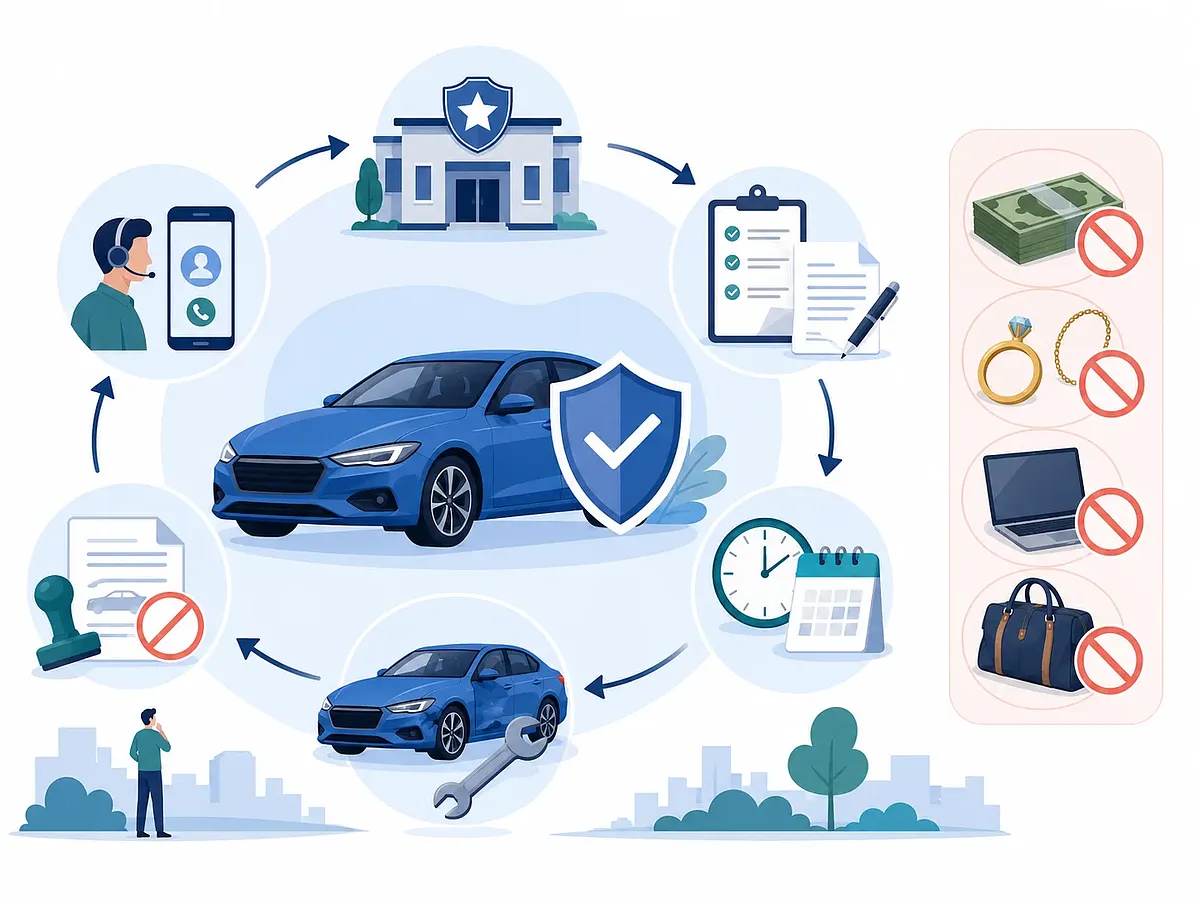
Insurance terms and conditions specify the circumstances under which insurance benefits are paid, those under which they are not, the claims process, pre-contractual disclosure obligations, cancellation, and refunds. For example, whether a claim is actually paid may depend on which illnesses or accidents are covered and whether a specific situation falls under an exclusion.
Therefore, when purchasing insurance, you should check not only “how much the monthly premium is” but also the following points:
· What types of accidents or illnesses are covered?
· Under what circumstances will benefits not be paid?
· Is there a duty to disclose pre-existing conditions, occupation, or high-risk activities?
· What documents are required to file a claim, and what is the deadline?
· How much is the refund if the policy is canceled early, or is there no refund at all?
Example of Loan Terms and Conditions
In loan terms and conditions, key factors include the interest rate, repayment method, late payment interest, prepayment penalties, and grounds for forfeiture of the benefit of the term. In particular, since late payments can result in additional interest and negative credit consequences, it is essential to fully understand the repayment terms.
Terms and Conditions Are Regulated Because They Can Be Disadvantageous to Consumers
Terms and conditions are documents drafted in advance by businesses. Consequently, there is a risk that they may contain provisions that are excessively favorable to the business and disadvantageous to the customer. Furthermore, these terms are often lengthy and contain a great deal of technical jargon, making it difficult for the average consumer to understand all the details.
To mitigate these issues, South Korea’s “Act on the Regulation of Terms and Conditions” regulates unfair contract terms. This law is intended to prevent businesses from using clauses that are unfairly disadvantageous to customers.
The following are typical types of contract terms that may pose problems:
· Provisions that excessively exempt the business operator from liability
· Provisions that impose unduly onerous liability for damages on the customer
· Provisions that unduly restrict the customer’s right to terminate the contract or raise defenses
· Provisions that allow the business operator to unilaterally modify the terms of the contract
· Provisions that fail to adequately inform customers of important details
However, whether a specific provision is actually unfair is determined by comprehensively considering the wording, the field of transaction, the circumstances surrounding the contract, and relevant laws and regulations.
What Are Standard Terms and Conditions?
Standard terms and conditions are terms established to serve as a benchmark in specific business sectors. They are used as a mechanism to reduce the information asymmetry between businesses and consumers and to prevent the widespread use of unfair terms.
The existence of standard terms and conditions does not automatically eliminate all disputes. However, they are significant in that they provide a common standard that consumers can use to compare contract terms and that businesses can refer to when drafting their terms and conditions.
Practical Checklist for Reviewing Financial Terms and Conditions
It is best to review the entire set of terms and conditions before signing up for a financial product. If you are short on time, you should at least check the following items:
· Do you understand the purpose and structure of the product you are signing up for?
· Have you checked the contract term, maturity date, and whether it renews automatically?
· Have you reviewed the cost structure, including interest, fees, insurance premiums, late payment charges, and refunds?
· Have you read the exceptions where benefits do not apply?
· Have you confirmed whether early termination or withdrawal is possible, and if so, what penalties apply?
· Do you understand the obligations you must fulfill as a customer?
· Did you ask the financial institution for an explanation regarding any clauses you did not understand?
· Have you saved or kept key documents such as explanatory materials, terms and conditions, and product descriptions?
Principles to Remember Before Agreeing to Terms and Conditions
Terms and conditions may seem long and difficult to understand, but in financial transactions, they serve as an important basis for judgment should a dispute arise later. In particular, before clicking the “Agree” button or signing, you must remember that the terms and conditions are not merely a formality but an integral part of the contract.
Consumers have the right to read the terms and conditions and need to have important details explained to them. If there are expressions that are difficult to understand, it is safer not to simply skip over them but to verify them through a financial institution employee, customer service center, or official explanatory materials.
FAQ
Are terms and conditions the same as a contract?
They are not exactly the same. A contract is a document containing the specific terms agreed upon between the parties, while terms and conditions are standardized contractual provisions prepared in advance by a business to enter into contracts with multiple customers. In actual transactions, the contract, terms and conditions, and product description often together constitute the terms of the agreement.
Is my agreement valid even if I agree to the terms and conditions without reading them?
Generally, agreeing to the terms and conditions means they become part of the contract. However, their validity may be limited if the business failed to properly explain important details or if the terms constitute unfair provisions under applicable laws. The specific determination depends on the individual case.
What should you look at first in financial terms and conditions?
It is advisable to check the costs, risks, termination provisions, and exceptions first. For example, for loans, focus on interest rates and late payment conditions; for insurance, on coverage scope and exclusions; and for investment products, on the potential for losses and fees.
Is it always safe to use standard terms and conditions?
While standard terms and conditions help provide fair transaction standards, there may be special provisions or additional conditions specific to each product. Therefore, even for transactions subject to standard terms and conditions, you should review both the actual contract and the individual terms and conditions together.