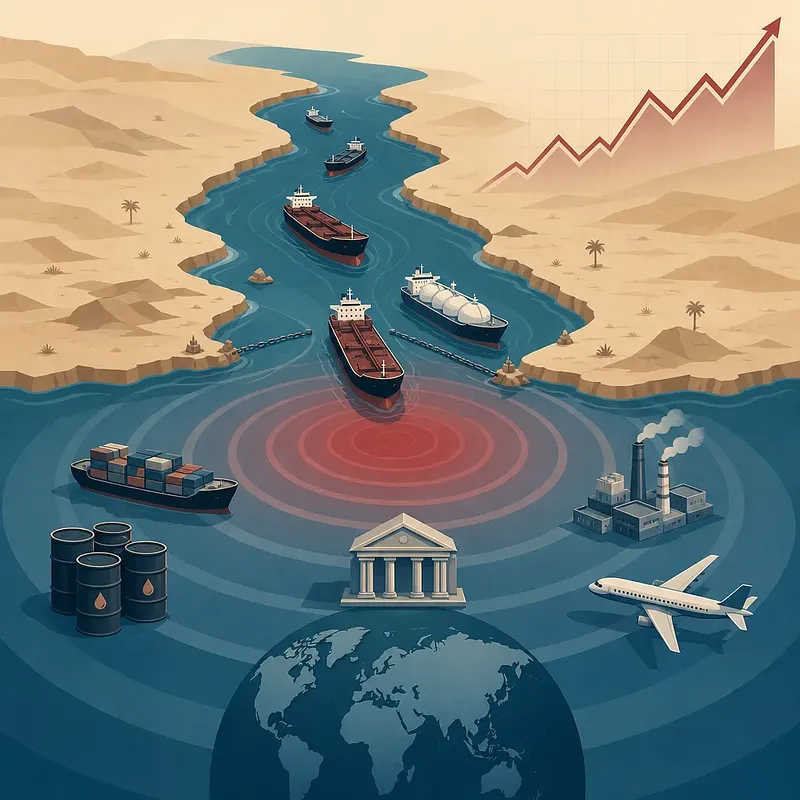
US Diesel Prices in the $6 Range: Causes and Impact
AAA's average U.S. diesel price on September 21, 2026, is $6.5107 per gallon. Middle East transport disruptions and reduced refined fuel supplies are combining to put upward pressure on agricultural and freight costs.
AAA's average U.S. diesel price on September 21, 2026, is $6.5107 per gallon.
Diesel prices are affected not only by crude oil prices but also by refinery operations and refined product inventories.
Refiners can adjust the share of diesel they produce, but their facilities impose limits.
Disruptions to Saudi pipelines and reduced operations at Russian refineries have increased supply pressure.
The percentage increase in diesel prices cannot be applied directly to increases in food prices or delivery costs.
The U.S. diesel price is $6.5107 per gallon. This is the result of crude oil transportation disruptions combined with reduced refinery output. Because diesel production is difficult to increase quickly, transportation and food prices also face upward pressure.
The price figures are based on AAA's September 21, 2026 tally and EIA's September 14 survey.
How Much Have U.S. Diesel Prices Risen?
The U.S. average diesel price tallied by AAA is $6.5107 per gallon. The reference date is September 21, 2026. The price has already passed the point where breaking $6.5 per gallon can be described only as a future possibility. AAA fuel prices
The U.S. Energy Information Administration, or EIA, publishes separate weekly prices. Its surveyed price on September 14, 2026 was $6.285 per gallon. Because AAA and EIA use different survey timings and methods, their figures must be distinguished.
Reporting organization and reference date | Diesel | Regular gasoline | Price basis
AAA, September 21, 2026 | $6.5107 per gallon | $4.4786 per gallon | U.S. national average retail price
EIA, September 14, 2026 | $6.285 per gallon | $4.319 per gallon | U.S. national average, including taxes
The EIA diesel price rose by $0.318 per gallon from the previous week. Regular gasoline rose by $0.162 per gallon over the same period. Diesel was not the only fuel that increased, but its increase was larger during this period. EIA weekly fuel prices
Why Is Diesel Rising More When It Comes From the Same Crude Oil?
Diesel and gasoline prices vary according to their respective supply and demand. Crude oil is the raw material used to make both products. When finished fuels are in short supply, product prices can rise faster than crude oil prices.
Diesel is used as fuel for trucks, agricultural machinery, and other equipment. Diesel and similar petroleum products are collectively called middle distillates. EIA's distillate statistics also include heating oil. The diesel market is therefore affected not only by freight transportation but also by heating demand. EIA factors affecting diesel prices
Category | Gasoline | Diesel and related distillates
Typical demand | Passenger vehicle use | Freight transportation, agriculture, industrial activity
Seasonal demand factor | Summer automobile travel | Fall harvest, winter heating
Indicator of a supply shortage | Gasoline production and inventories | Diesel and heating oil production and inventories
Relative scale of U.S. consumption | Most-consumed petroleum product | Distillate fuel ranks second
It is incorrect to say that U.S. diesel consumption is higher than gasoline consumption. EIA describes gasoline as the most-consumed petroleum product in the United States. The current price difference should be understood in terms of product-specific supply shortages rather than consumption rankings. EIA explanation of petroleum product consumption
Can Refineries Simply Make More Diesel?
Refineries can increase the share of diesel they produce, but there are limits. Refining crude oil produces several products together, including gasoline and diesel. The production mix is affected by the properties of the crude oil and the configuration of the refining equipment.
It is therefore also inaccurate to say that the production ratio is always fixed. Conversely, refineries cannot freely increase diesel alone while leaving their equipment unchanged. The petroleum industry group API also explains that there are limits to adjusting the product mix. API analysis of diesel supply
The difference between the diesel price and the crude oil price is called the diesel crack spread. It is the price difference between the product and the raw material when compared on the same volume basis. It is an indicator of refining profitability, but it is not the same as a refiner's net profit. EIA explanation of price differences
· Recovery in crude oil supply: More raw material available to refineries
· Recovery in refinery operations: More fuel produced for actual sale
· Recovery in product transportation: More supply available for regions facing shortages
These are recoveries at different stages, so increasing crude oil supply alone will not resolve every problem.
How Do the Saudi Pipeline and Russian Refineries Affect the Market?
Disruptions to the Saudi pipeline limit transportation routes that avoid the Strait of Hormuz. The East-West Pipeline carries crude oil from eastern Saudi Arabia to the Red Sea port of Yanbu. If this route is blocked, it puts pressure on crude oil exports and the procurement of feedstock for refineries.
Kpler analyzed supply disruptions in the Yanbu area on September 17, 2026. The analysis also pointed to losses in diesel production at Yasref. This is why the pipeline problem cannot be interpreted solely as a decline in crude oil exports. Kpler analysis of the Yanbu supply disruption
Reduced operations at Russian refineries are another factor putting pressure on diesel supply. EIA's September 2026 outlook describes this as a factor raising international distillate prices. Disruptions in the Middle East and Russia are having an effect at the same time. EIA September 2026 Short-Term Energy Outlook
According to AP, President Trump called for Ukraine to stop its attacks on September 13. He claimed that attacks on Russian diesel-related facilities were causing fuel shortages. This statement alone does not rule out the impact of the war in the Middle East. AP report on the remarks
Why Are Tanker Freight Rates Rising as Well?
Using dangerous shipping routes or taking detours increases transportation costs. When ships remain tied up for longer, their capacity to transport other cargo also decreases. Route risks also affect marine insurance costs.
Windward summarized freight rates by route on September 17, 2026. Spot charter rates for very large crude carriers passing through Hormuz had surged. Charter rates are the price of renting a vessel and are a different indicator from retail fuel prices.
Route presented by Windward | Charter rate level | Conditions to consider when interpreting
Loading crude oil inside the Persian Gulf after passing through Hormuz | Assessed on September 11, 2026 at more than $1 million per day | Specific very large crude carrier spot market
Shipping from Oman to China | About $600,000 per day in the September 17, 2026 report | Route that does not pass through Hormuz
These figures should not be applied as the average freight rate for all tankers. Detours by some Saudi vessels tracked by Windward added 10 to 14 days. It is also inaccurate to say that every detoured shipment takes an additional month. Windward maritime transportation analysis
What Does the Panama Canal Drought Change?
Water shortages in the Panama Canal restrict vessel reservations and loading conditions. The canal raises and lowers ships by changing the water level inside its locks. When there is not enough fresh water for this process, transit capacity decreases.
The Panama Canal Authority issued notice A-29-2026 on August 20, 2026. The notice announced reservation reductions because of lower rainfall and insufficient water inflows. The figures below are the number of reservable slots specified in the notice, not actual transit figures.
Item | Figure in the official notice | Applicable period
Cumulative watershed rainfall | 34% below the long-term average | May to August 2026
Watershed inflows | 44% below the long-term average for the same period | May to August 2026
Daily reservable slots | 34 vessels in total | Effective September 4, 2026
Daily reservable slots | 32 vessels in total | Effective September 15, 2026
the number of daily slots available at the Panamax Locks will be adjusted to twenty-three (23). Panama Canal Authority, Advisory to Shipping No. A-29-2026
The quotation states that reservations for the original locks will be adjusted to 23 vessels per day. Adding the 9 daily slots at the expanded locks brings the total to 32 vessels. Actual operating conditions should be checked in subsequent notices from the canal authority. (Verified value: 32 total reservable slots/day, 23 Panamax and 9 Neopanamax · Source: pancanal.com · Checked 2026-09-15) Panama Canal Authority A-29-2026
If reservation auctions become more expensive, transportation costs for the affected vessels may increase. However, the rate of increase in auction prices is different from the rate of increase in overall tolls. The price of a specific auction cannot be generalized as the cost for all cargo.
Export routes to Asia for U.S. LNG cargoes are affected. Describing the canal as a route for LNG imported by the United States does not match this flow. Canal restrictions can increase transportation burdens through detours and arrival delays. EIA analysis of global energy transit chokepoints
Why Are Domestic Prices Rising While the United States Exports Diesel?
Diesel-exporting countries are also affected by global product shortages. When overseas prices rise, the incentive to export U.S. diesel increases. High domestic production alone does not mean domestic inventories are sufficient.
EIA's September 2026 outlook describes high net exports of distillates. Its analysis says reduced supply from the Middle East and other regions increased demand for U.S. products. EIA cited low domestic distillate inventories as a factor raising diesel prices. EIA Short-Term Energy Outlook
The conditions for price recovery also involve several stages. Restarting pipelines improves the movement of raw materials. Recovery in refinery production and product inventories must be confirmed separately.
Change by condition | Meaning when assessing price pressure
Pipeline repairs only | Potential improvement in crude oil transportation
Refinery production also recovers | Potential increase in diesel supply
Transportation normalizes and inventories build | Potential easing of regional shortages
Harvest and heating demand increases | Potential partial offset of the effects of supply recovery
How Does This Affect Agriculture and Consumer Prices?
Higher diesel prices affect consumer prices through production and delivery costs. Farms face higher fuel costs for tractors, combines, and other equipment. In freight transportation, the cost of moving goods rises.
AP reported on September 11, 2026 about the burden on U.S. farms during harvest season. Fuel costs have risen during the corn and soybean harvest. However, claims that all agricultural machinery uses diesel should be avoided. AP report on farm fuel costs
· Agriculture: Higher costs for diesel-powered harvesting equipment and agricultural product transportation
· Logistics: Fuel cost burden for truck operations and deliveries
· Food distribution: Cost burden from frequent transportation and restocking of fresh food
· Consumers: Indirect effects through delivery surcharges or retail prices
Fresh food is exposed to cost pressure because it requires repeated transportation. Some companies are passing on costs through delivery surcharges. However, the timing of cost pass-through varies by product. AP report on transportation and consumer costs
Food prices do not rise by the same percentage as diesel prices. Fuel costs are only one component of final retail prices. The effect varies depending on contract terms and how much of the cost companies absorb.
Common Mistakes When Reading Price Articles
To compare prices, the reporting organization and reference date must match. National averages must also be distinguished from prices at specific gas stations. The rate of increase changes when the comparison start date changes.
Common interpretation | Standard to check
$6.5 is a price that will be reached in the future | AAA's September 21, 2026 average was already $6.5107 per gallon
The difference between AAA and EIA prices is an error | Differences in daily and weekly tallies and survey methods
Lower crude oil prices mean an immediate drop in diesel prices | Whether refinery, product inventory, and transportation disruptions have been resolved
The diesel production ratio is completely fixed | Refiners' range of adjustment and equipment constraints
32 canal reservation slots mean 32 vessels actually transited | Difference between reservable slots and actual vessel traffic
Predicting Korean gas station prices from U.S. diesel prices | Differences in international product prices, exchange rates, taxes, and distribution conditions
Simply converting dollar-denominated prices into won cannot predict domestic prices. Domestic retail prices include separate costs and taxes. International diesel prices are one of several factors used to assess domestic prices.
 Injoys