Skip to content
Binder

Kidney Health and Chronic Kidney Disease, a guide from nephron function to testing, diet, exercise, and medication

This binder covers kidney structure and function, chronic kidney disease testing, and day-to-day care.

It examines nephron filtration and reabsorption, electrolyte balance, blood eGFR and urine albumin tests, protein, sodium, phosphorus and fluid intake, walking and exercise, medication, dialysis, and transplantation.

16 posts

No infographics are available in the current language, so infographics in all languages are shown.
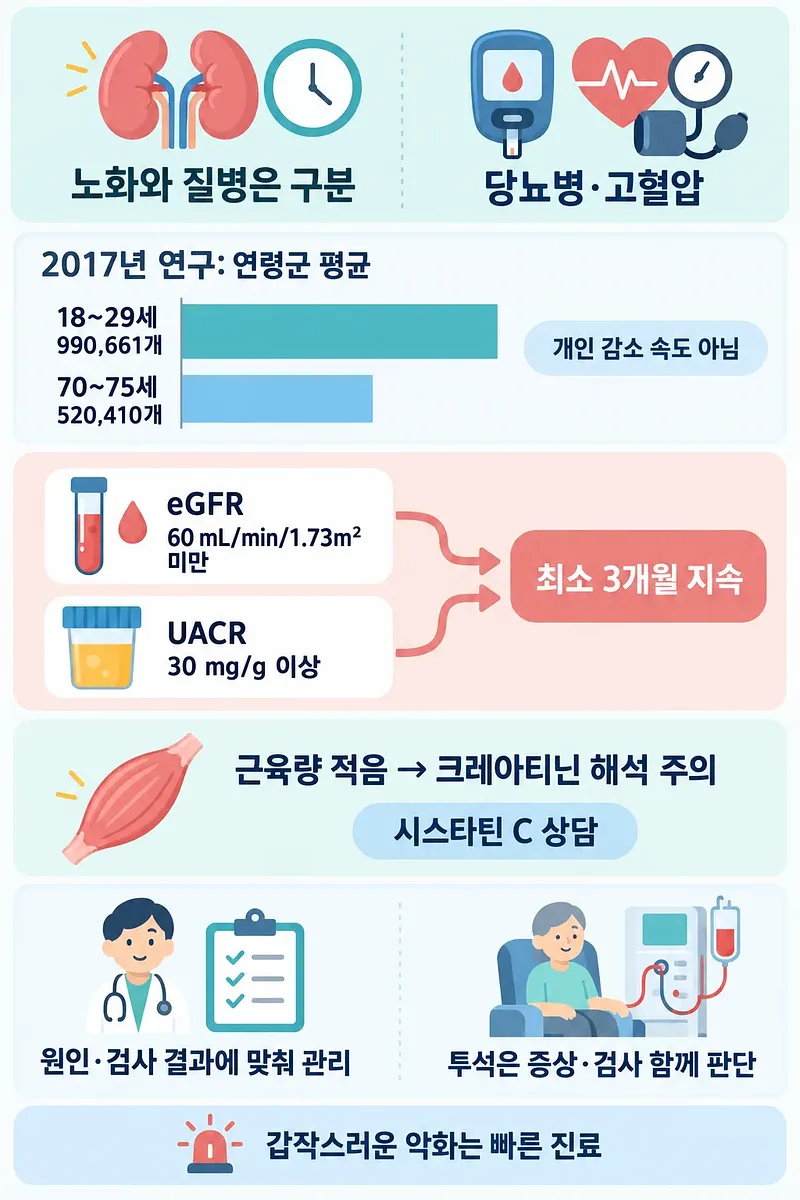
Average nephron counts by age cannot tell us how quickly an individual’s kidney function is declining. Kidney Function Decline: Aging and Test Criteria
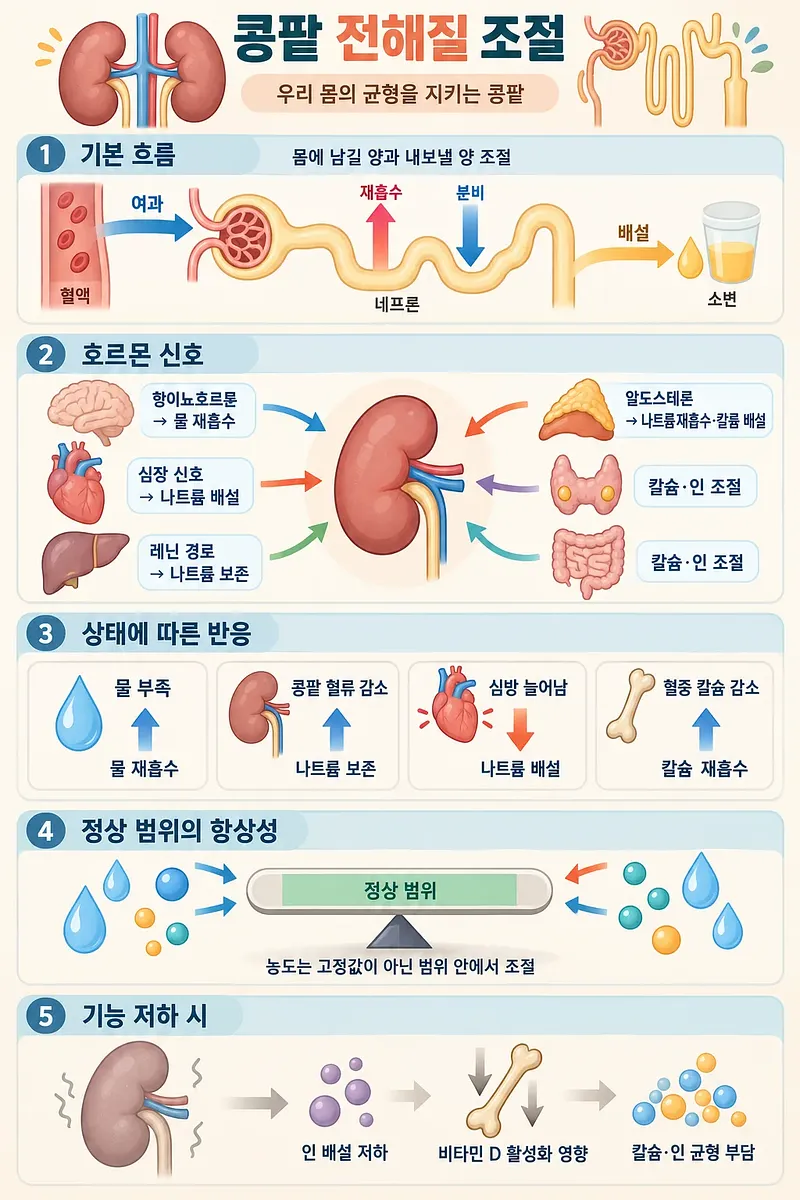
The diagram explains how the kidneys regulate water and electrolytes and what happens when their function declines. Kidney Electrolyte Regulation and Reabsorption
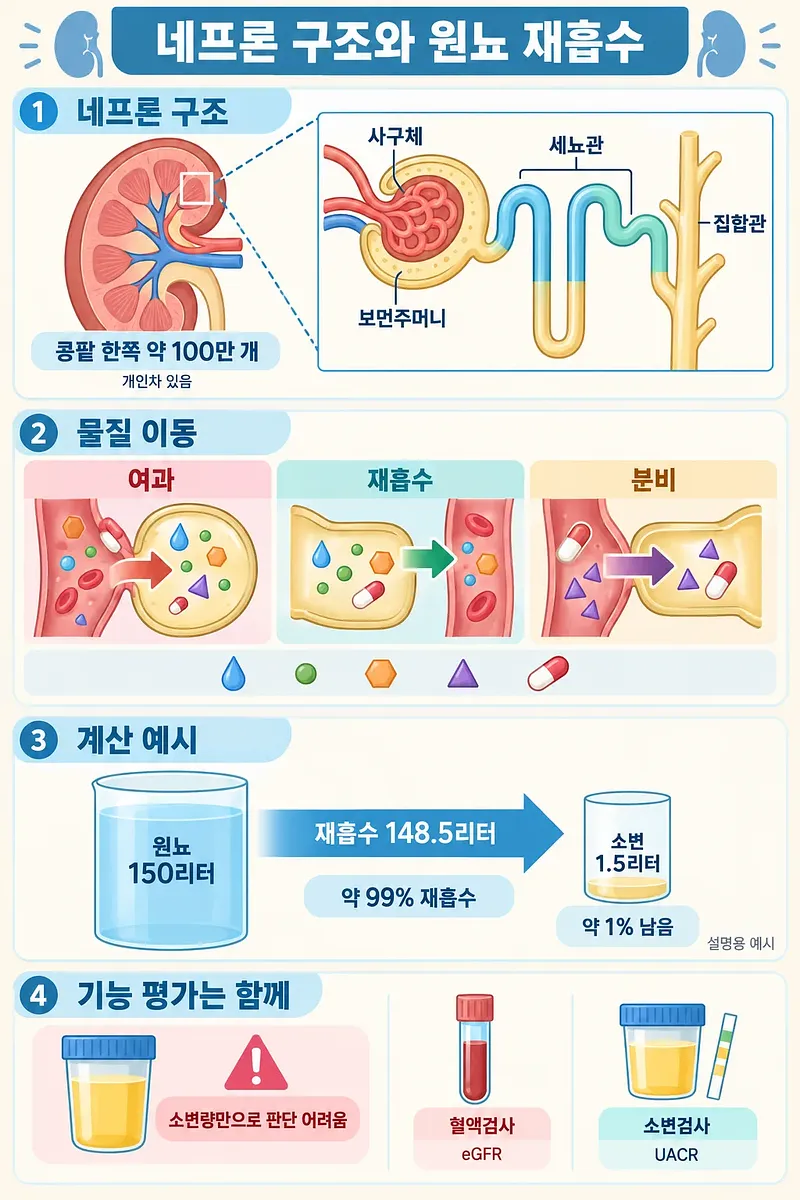
The diagram traces fluid through the nephron and highlights eGFR and UACR kidney tests. Nephron Structure and Filtrate Reabsorption
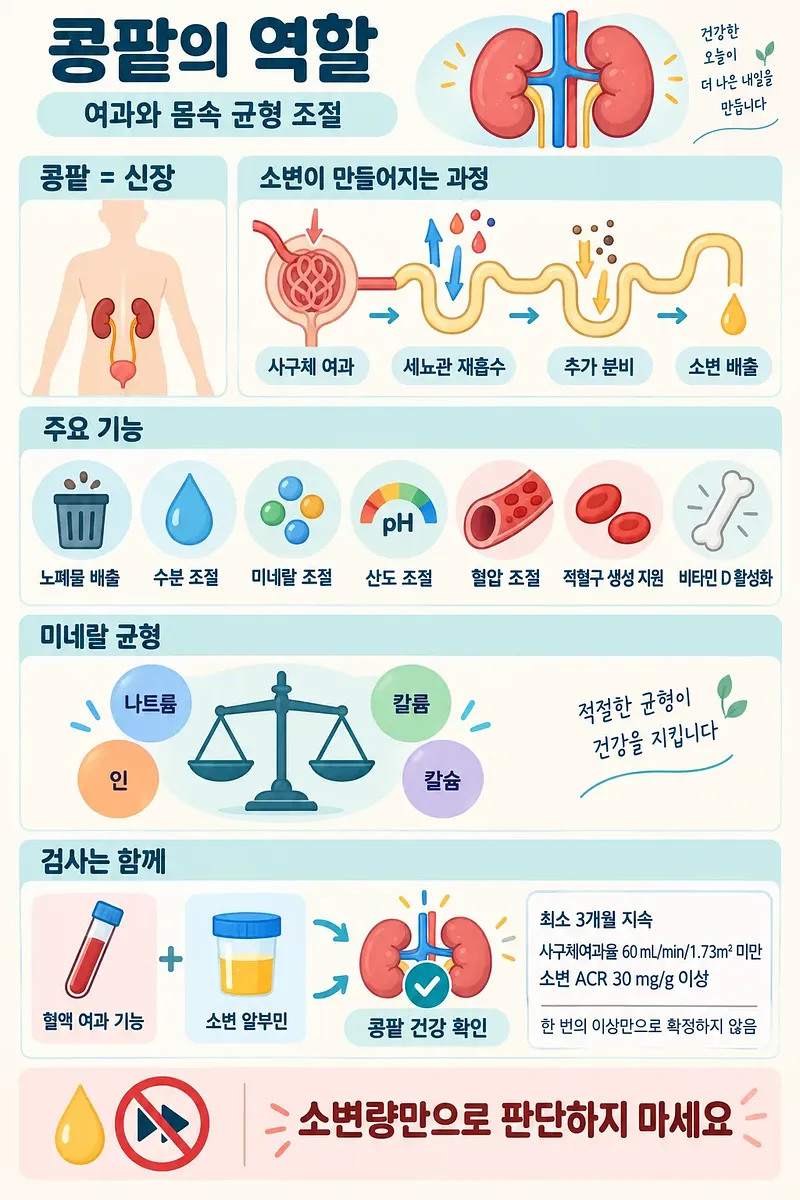
The graphic summarizes how kidneys make urine, regulate body balance, and are checked with blood and urine tests. Kidney Functions: Filtration and Mineral Balance
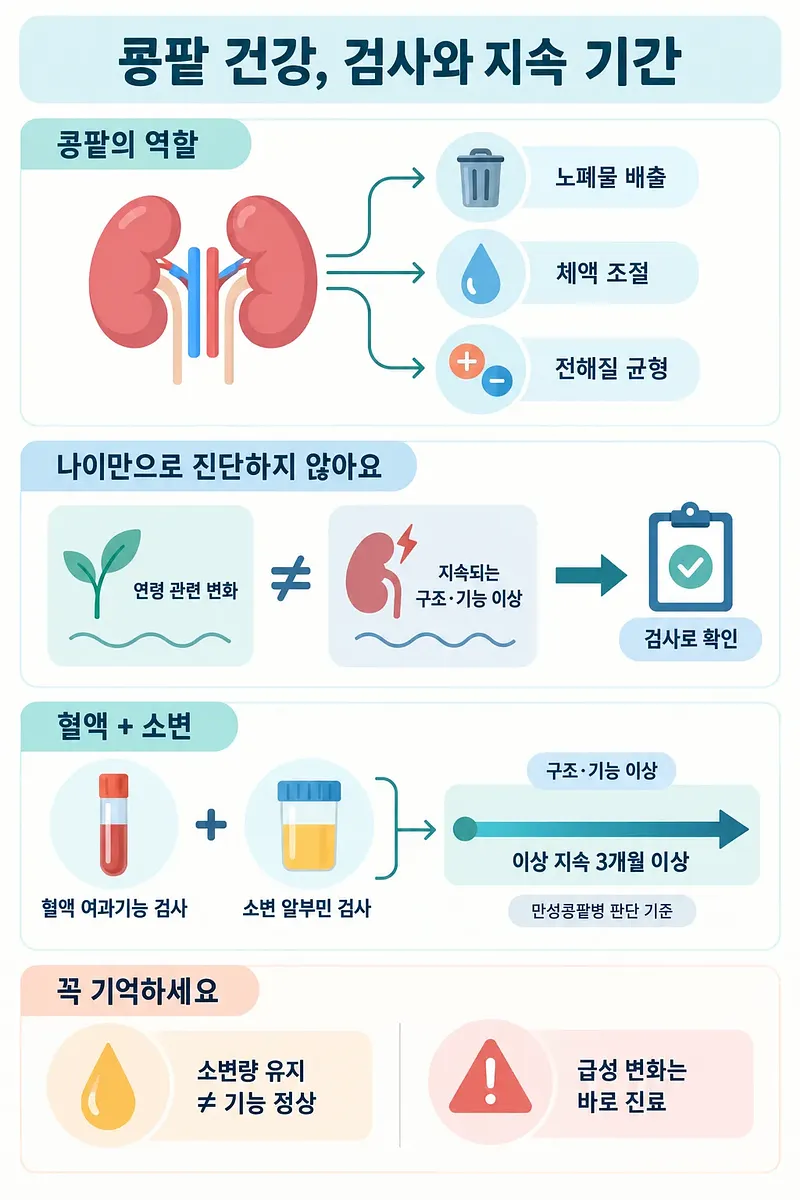
Kidney abnormalities are assessed with tests and whether they persist for at least three months, not by age alone. Kidney Health: Aging, Tests, and the 3-Month Rule
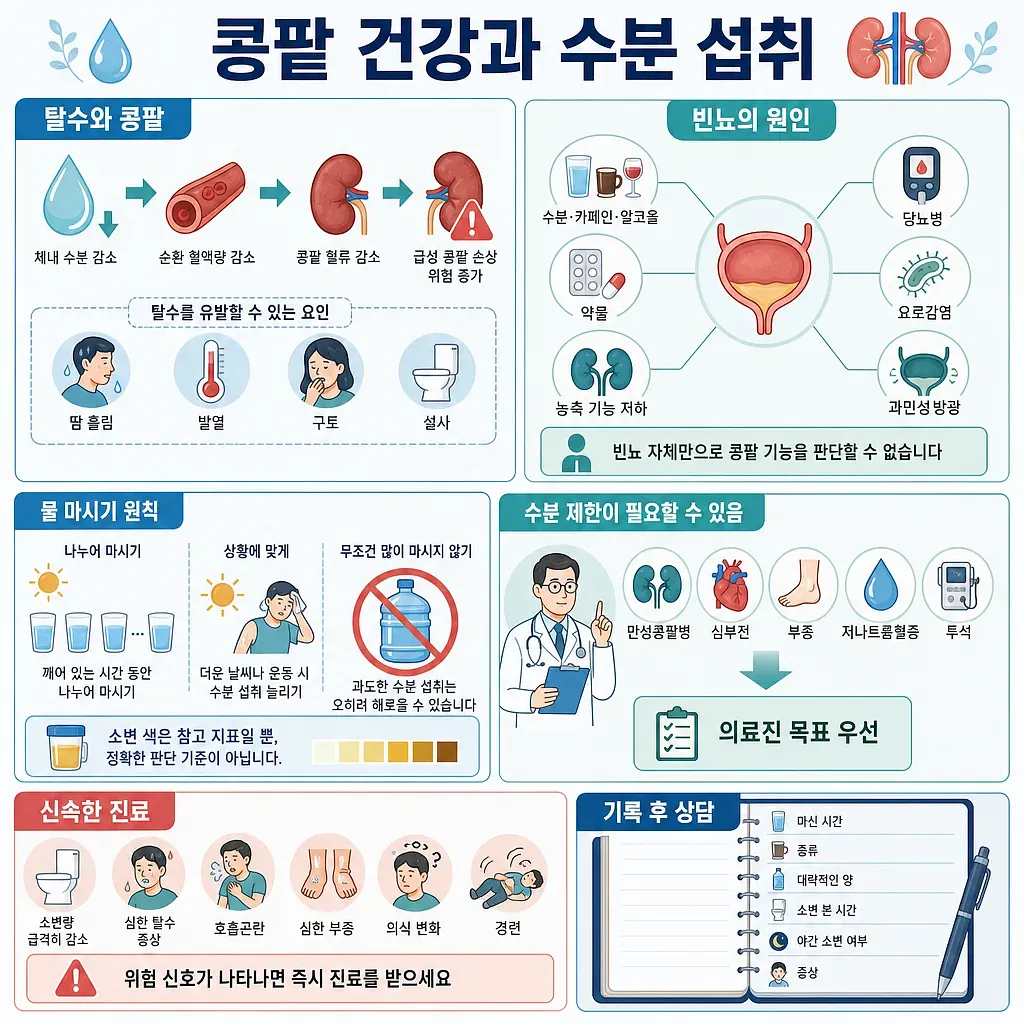
The guide covers dehydration, causes of frequent urination, fluid restrictions, warning signs, and bladder tracking. The Exact Relationship Between Fluid Intake and Frequent Urination for Kidney Health
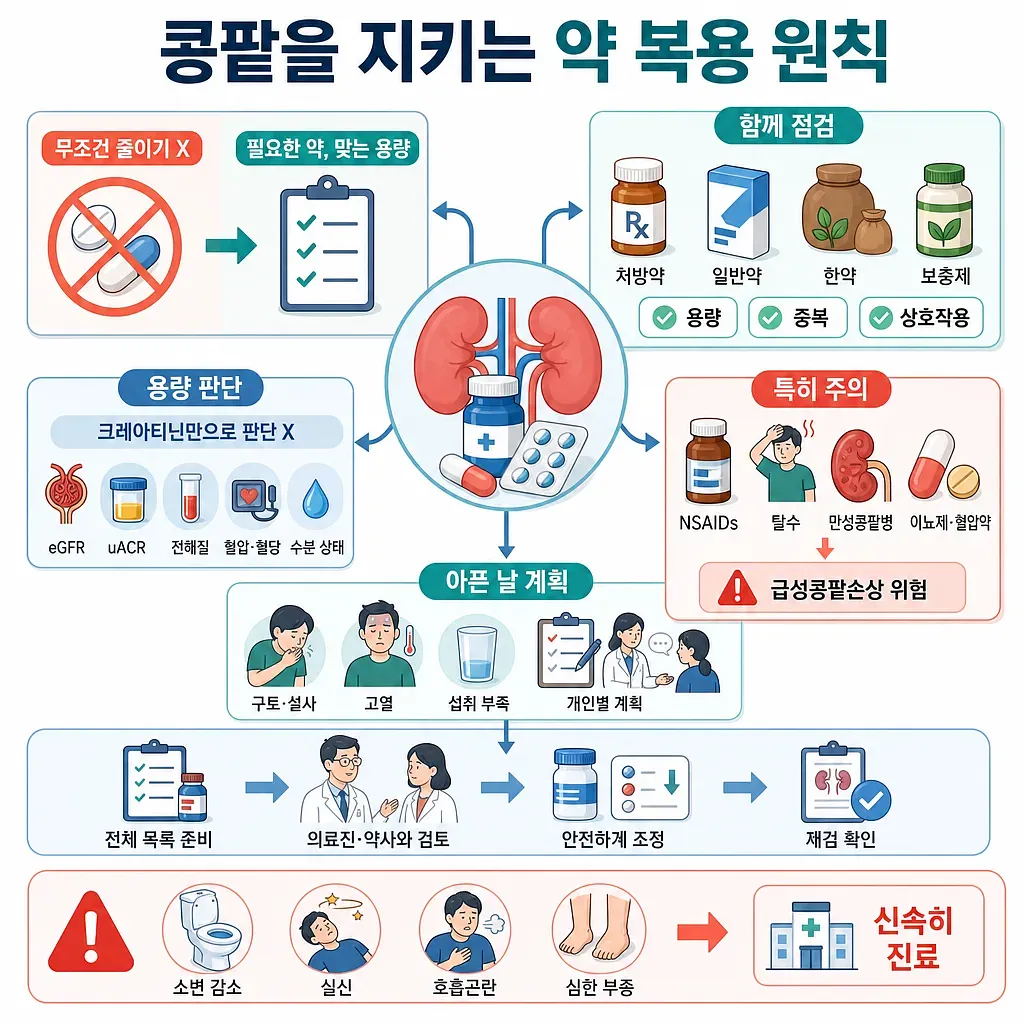
The guide recommends reviewing medicines with clinicians rather than reducing them without advice. Medication Principles for Protecting Your Kidneys: Review, Don't Cut Back
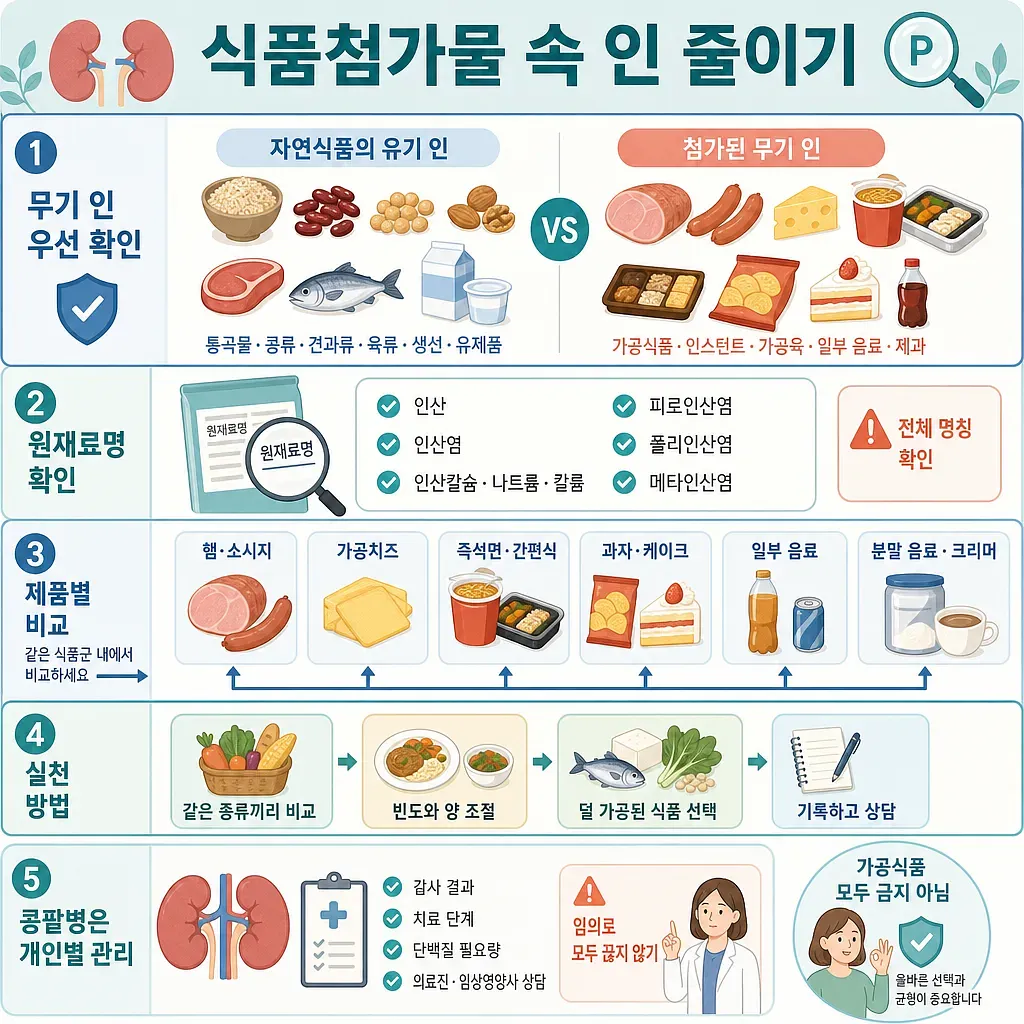
It explains how to check for inorganic phosphorus, compare products, and choose less processed foods. How to Choose Foods with Less Phosphorus from Additives
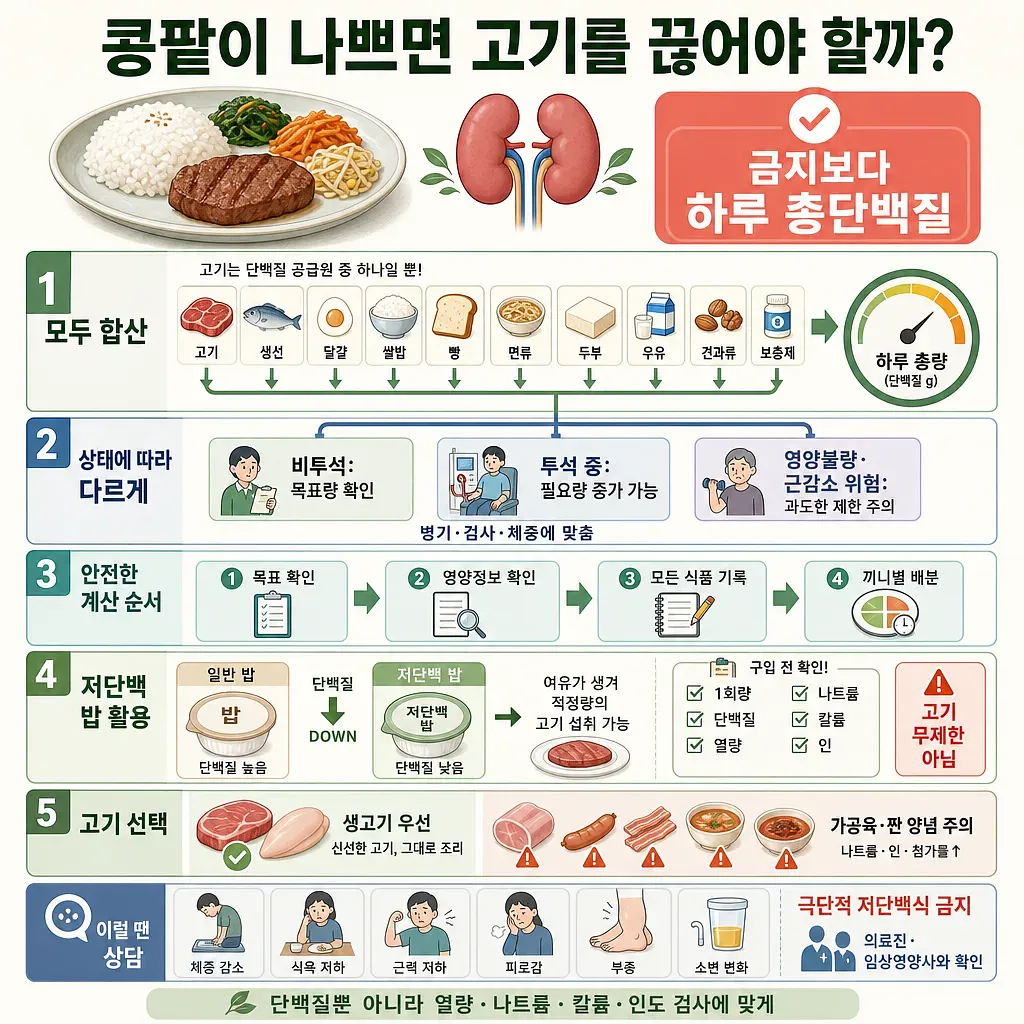
The graphic explains how to calculate total daily protein and adjust intake according to kidney condition. Should You Stop Eating Meat If Your Kidneys Are Weak?
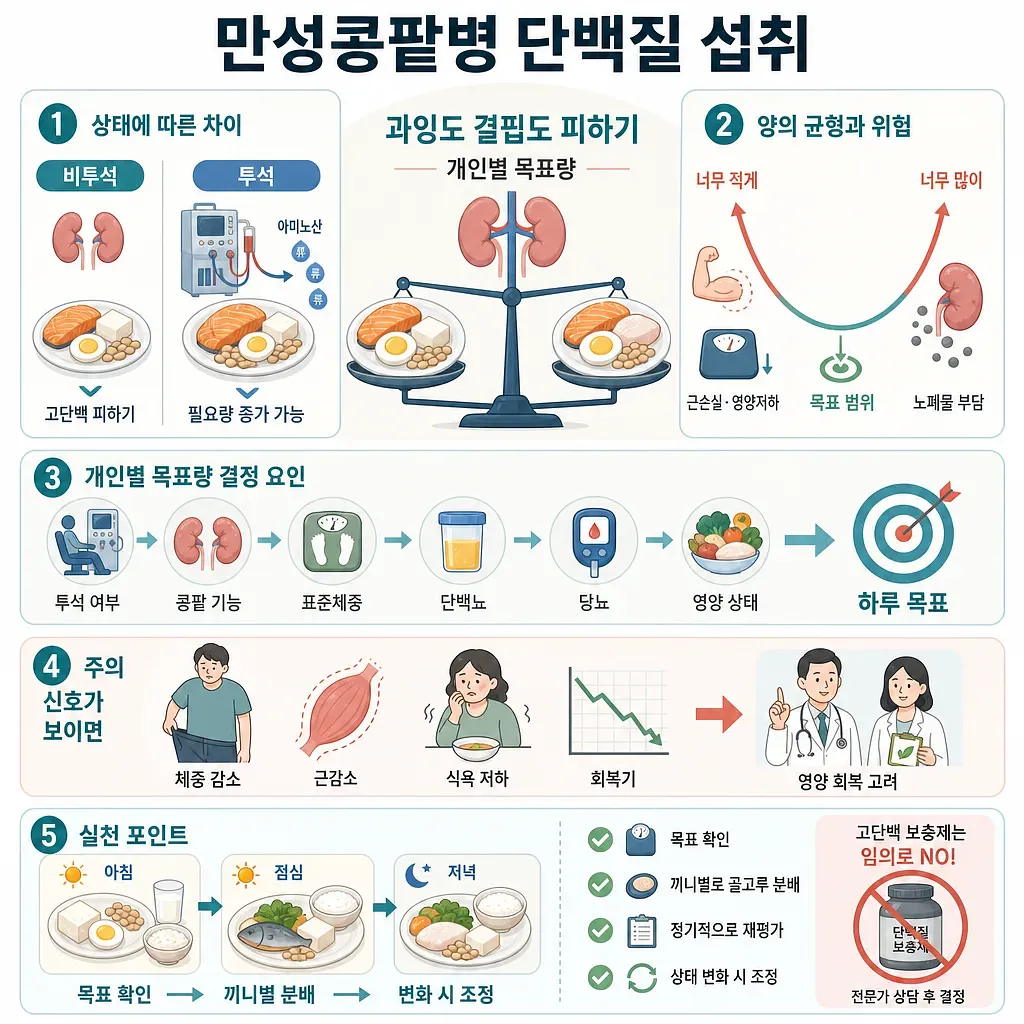
Protein goals should be adjusted to dialysis status, kidney function, weight, and nutritional condition. Protein Intake in Chronic Kidney Disease: Why You Should Neither Cut Back Unconditionally nor Eat the Maximum Allowed
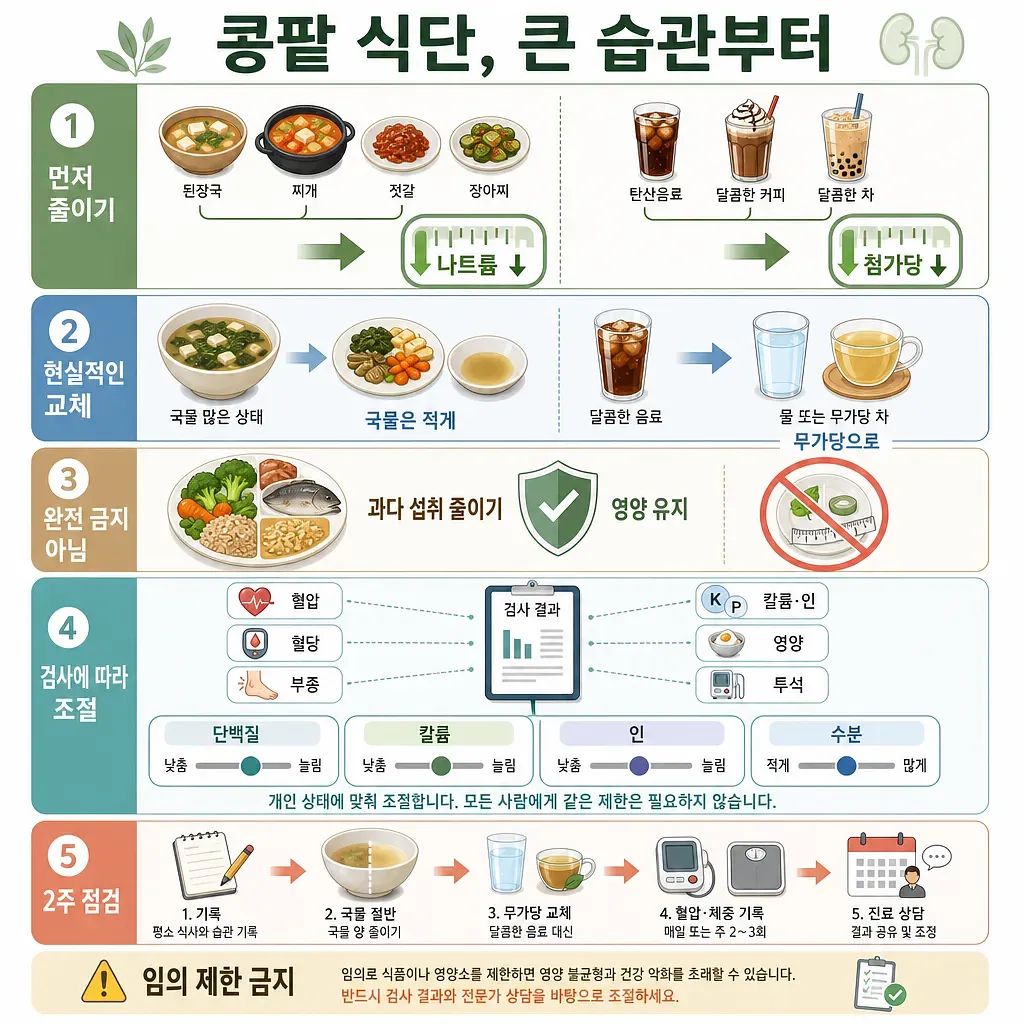
It recommends reducing salty soups, side dishes, and sweet drinks before adjusting the diet to test results. Why Cut Back on Doenjang Soup and Sugary Drinks When Your Kidneys Are Unhealthy
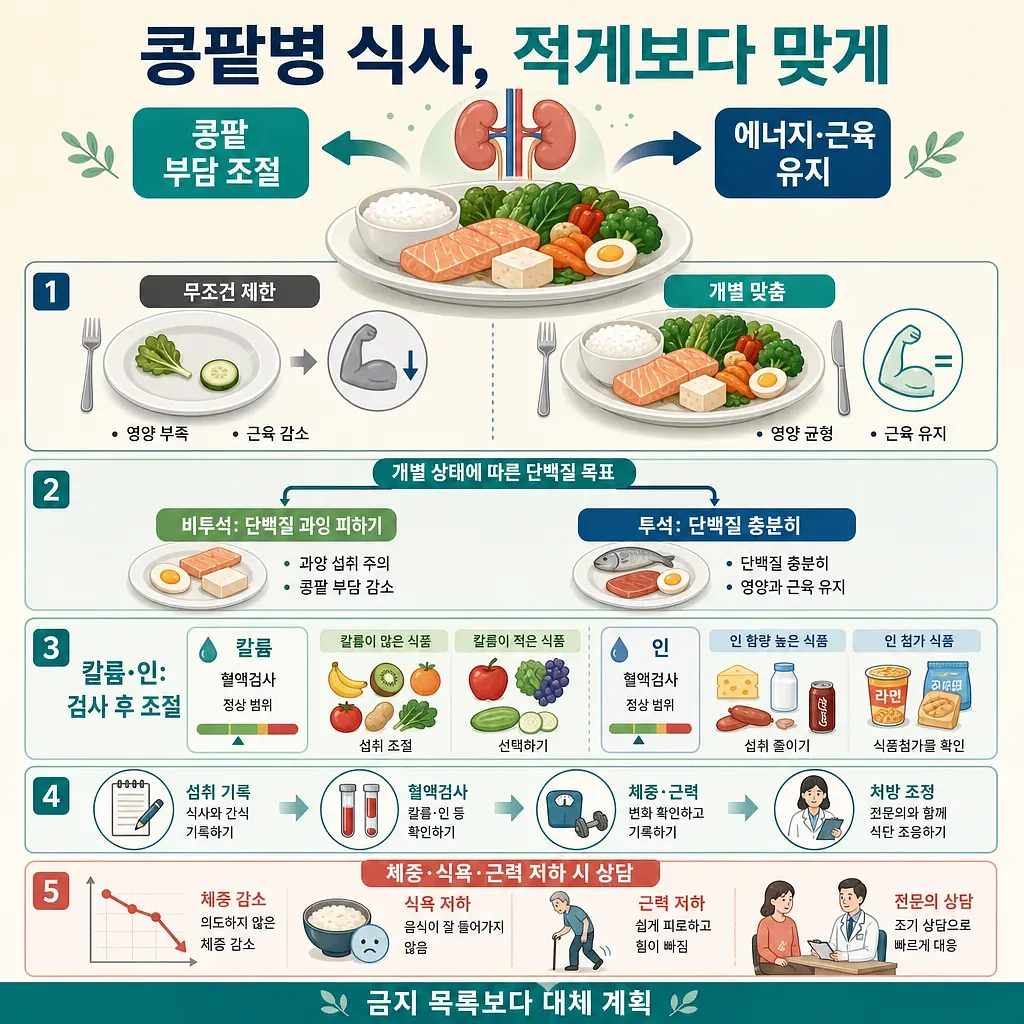
The infographic explains how personalized protein, potassium, and phosphorus intake can support nutrition and muscle health. Misconceptions About Dietary Restrictions for Kidney Disease: Why Eating Right Matters More Than Eating Less
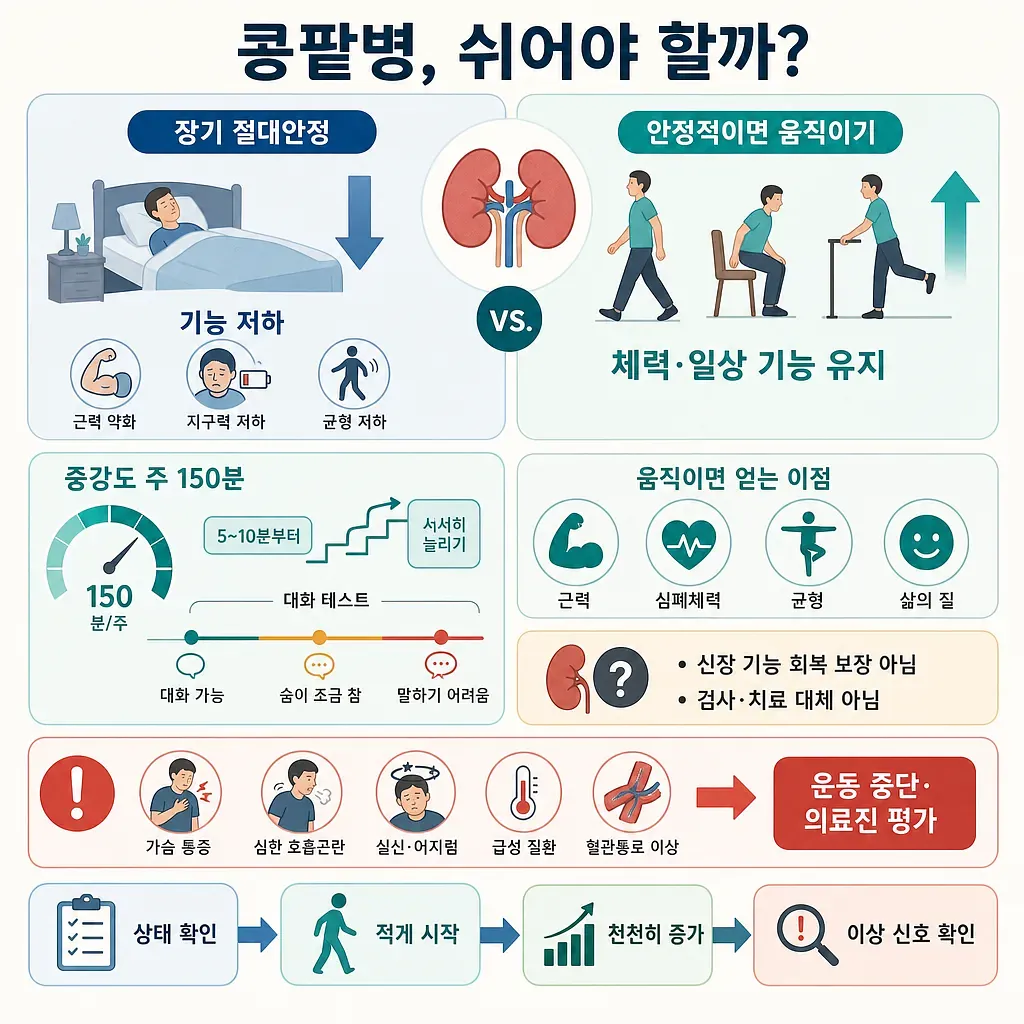
Safe activity can preserve strength and daily function, but warning symptoms require stopping and seeking medical assessment. Should Kidney Disease Patients Rest? Criteria for Exercise and Bed Rest
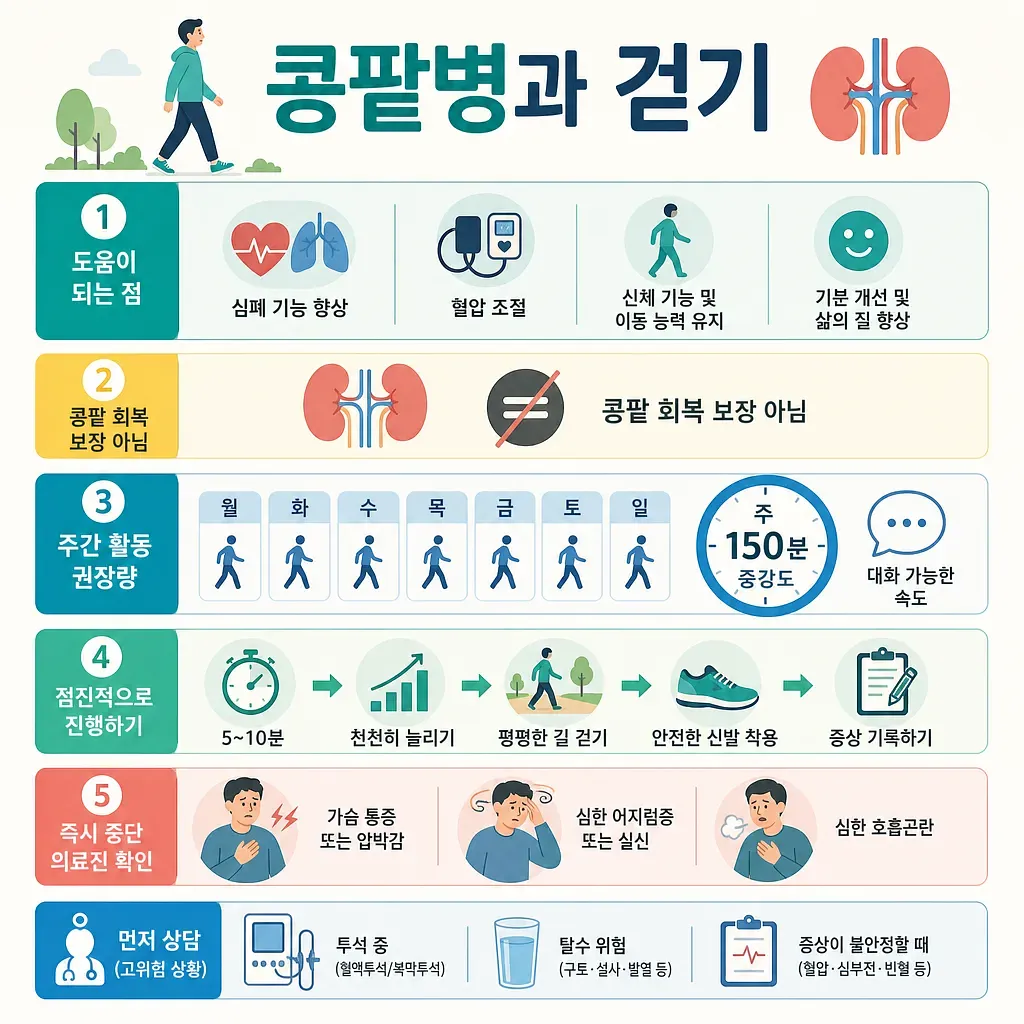
The infographic outlines how people with kidney disease can walk safely and when to seek medical advice. Should You Avoid Walking If Your Kidneys Are Unhealthy? Benefits and Safety Guidelines
The infographic outlines how to exercise consistently and safely according to individual health status. Should You Exercise Even If Your Kidneys Are Weak? Exercise Principles for Chronic Kidney Disease
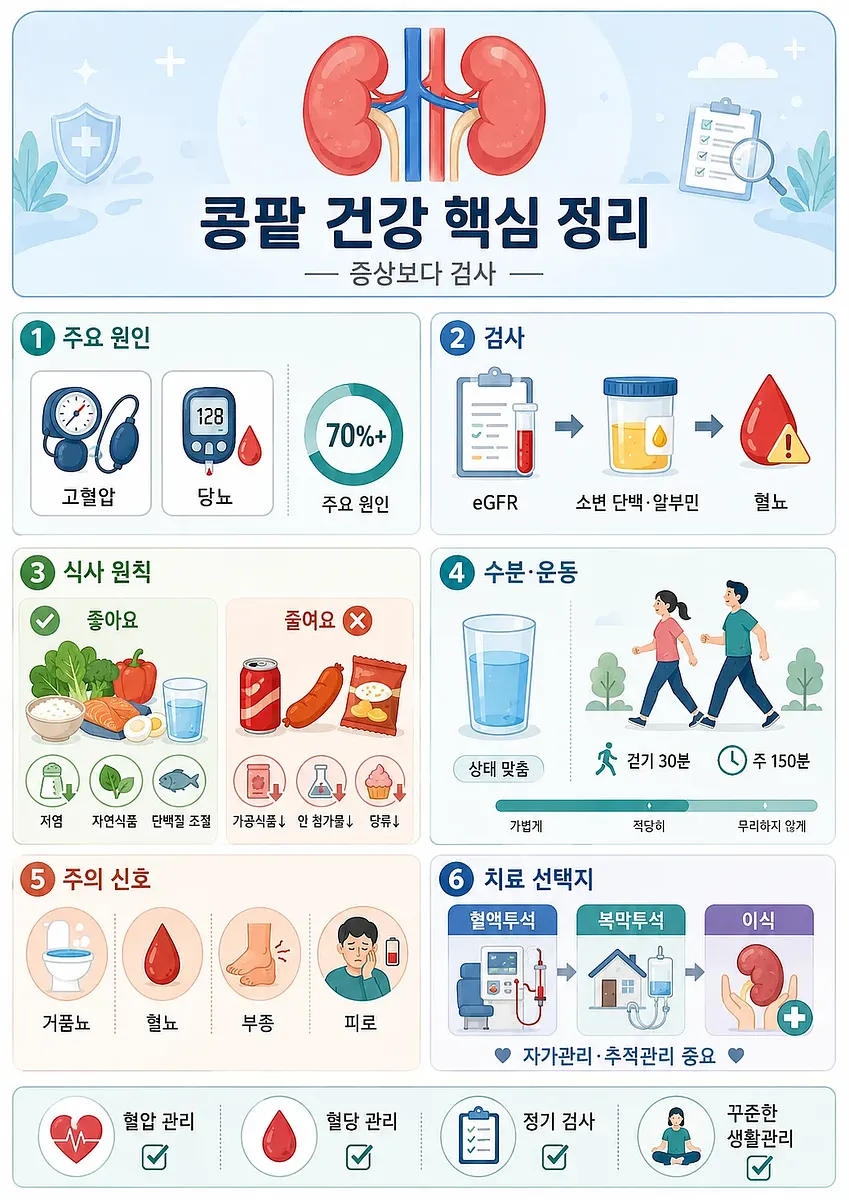
The infographic organizes chronic kidney disease prevention and care into causes, tests, diet, exercise, warning signs, and treatments. How to Maintain Kidney Health: Understanding Diet, Exercise, Dialysis, and Transplantation for Chronic Kidney Disease