Social & Videos
Short social takes on our content and our shorts, long-form and product videos, all in one stream with the newest first. Swipe through one at a time and follow through to the full article when you want more.


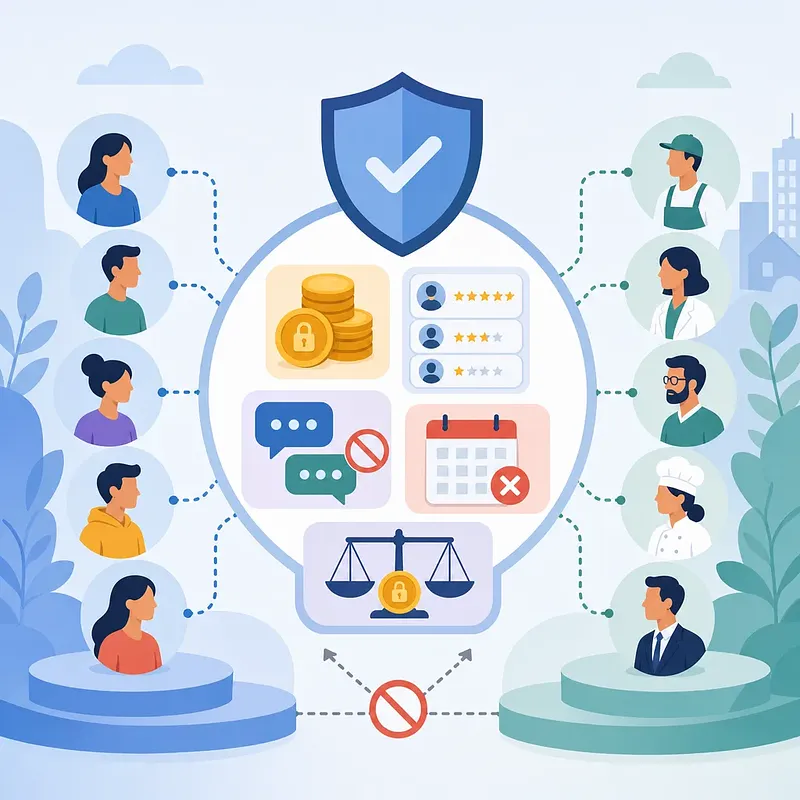
A matching platform cannot rely on booking, payment, and chat features alone. Its long-term viability depends on operational rules that keep transactions inside the platform and protect both customers and providers. This article outlines five policies to establish before launch: listing order, matching methods, cancellation and refund rules, direct transaction prevention, and dispute resolution with settlement timing. These are not just product details. They influence provider incentives, customer trust, commission revenue, and the platform’s ability to mediate when problems occur. For teams building a marketplace, defining these rules early can reduce revenue leakage and help maintain service quality as the platform grows. Read more : https://injoys.com/en/articles/matching-platform-policy-5-rules #Marketplace #PlatformStrategy

Why Planning Remains Crucial in the Age of AI Coding: Verifiable Intent Over False Speed
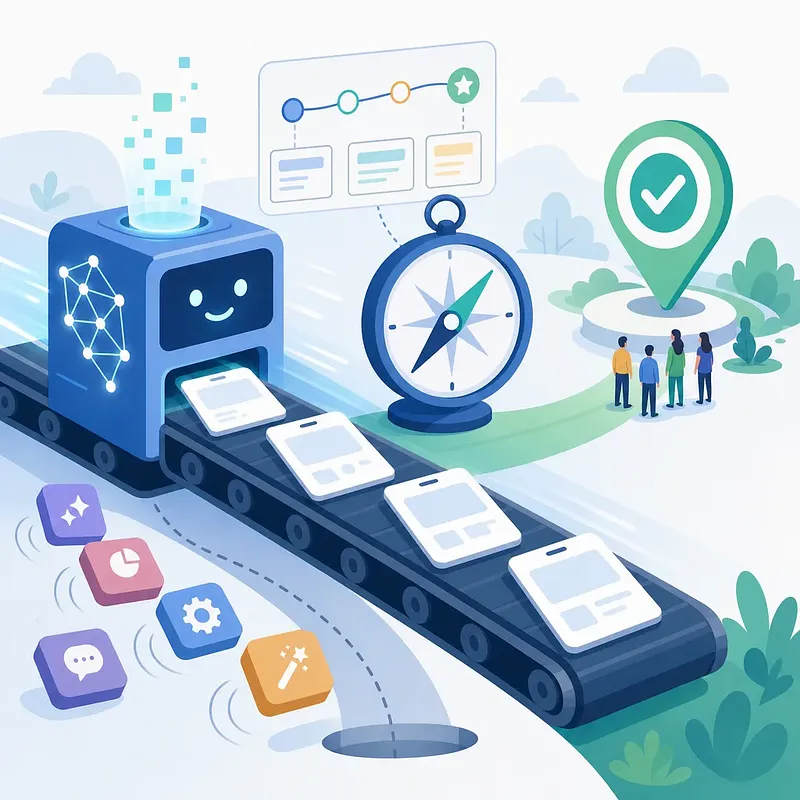
AI coding tools have made MVPs faster and cheaper to build, which changes how teams should approach early product work. Instead of spending weeks debating abstract requirements, a working prototype can help teams align, test assumptions, and reduce communication errors. The risk is treating speed as the goal. When the problem is vague, AI can quickly generate plausible screens and features that do not serve a validated purpose. This article explores why planning remains essential in the AI coding era: define small hypotheses, build only what is needed to test them, gather feedback, and decide whether to refine or scrap the prototype. Read more : https://injoys.com/en/articles/why-planning-matters-in-ai-coding-era #AICoding #ProductStrategy #MVP

Claims about new AI coding models often arrive before official benchmarks, pricing pages, or policy details are easy to verify. That matters for teams evaluating whether a model is ready for production. This article reviews the operator-provided Claude Opus 5 materials from a practical evaluation perspective: performance claims, pricing claims, coding workflows, Pixfield integration, and usage-limit assumptions. The main takeaway is caution: comparisons should be run under identical conditions, using the same prompt set, repository, and budget. For coding work, a useful evaluation should include task completion rate, number of revision iterations, cost, latency, and security rejection frequency—not just a single headline score. Read more : https://injoys.com/en/articles/claude-opus-5-claims-review #AICoding #Benchmark #MCP


AI’s impact on work is becoming clearer: the biggest changes are often at the task level, not the job-title level. Repetitive activities such as drafting, classification, summarization, and basic analysis are the first to be automated. That makes future competitiveness less about using AI as a standalone novelty and more about applying judgment: defining the right problem, validating AI outputs, translating results into business value, and managing risks such as data leaks, prompt injection, and deepfakes. The article also looks toward 2030, when AI may be embedded across productivity tools, search, customer support, appliances, and transportation services—and why talent, data, computing infrastructure, and safety standards will matter. Read more : https://injoys.com/en/articles/2030-ai-jobs-survival-skills #AI #FutureSkills #DigitalSafety


AI can speed up prototype development, but a working registration feature is not automatically production-ready. User sign-up is an operational system: authentication, password recovery, account deletion, privacy disclosures, terms of service, and data retention all need clear policies before launch. The article explains practical review points such as using one-way password hashing, setting secure password reset token rules, avoiding account existence disclosure, and defining retention and disposal procedures for personal information. For teams using AI-generated code, the key lesson is simple: ask AI to surface undecided policies before implementation, then have humans validate the security and legal design. Read more : https://injoys.com/en/articles/ai-generated-signup-security-privacy-checklist #WebSecurity #AIDevelopment

Antifragile Leadership: Organizational Principles for Turning Crises into Drivers of Growth
Organizations optimized solely for efficiency may perform well under stable conditions—yet become vulnerable when the unexpected occurs. Antifragile leadership offers a different design principle: create systems that learn from small setbacks and emerge stronger through volatility. This requires more than resilience. Leaders need to preserve spare capacity and alternative routes, delegate decision-making authority to the front line, and use small-scale experiments to gather feedback before problems escalate. The strategic task is to balance reliable operations with calculated challenges while clearly distinguishing productive experimentation from reckless risk. The article examines how these choices can strengthen crisis response and support long-term organizational growth. Read more : https://injoys.com/en/articles/antifragile-leadership-crisis-growth