Cheating with AI on the tax accountant exam affected candidates' prospects for their first job after passing. Some firms put trainee hiring on hold. The Korean Association of Certified Tax Accountants sought a way to check whether successful candidates could explain the reasoning behind their tax judgments without AI.
The number of successful candidates comes from the October 28, 2026 announcement. The follow-up measures are based on announcements through November 24.
What changed in trainee hiring for the 63rd cohort of tax accountants
A tax accountant who runs a firm in Suwon told the Joongboo Ilbo that the firm would put trainee hiring on hold for the time being. The decision came after the top scorer on the 63rd tax accountant exam admitted to using generative AI. When a firm puts hiring on hold, applicants who took the exam honestly also lose the chance to gain practical experience there.
The Human Resources Development Service of Korea announced on October 28 that 722 people had passed the second stage of the exam. On November 16, the National Tax Service began proceedings to invalidate the exam result and suspend exam eligibility for 5 years for one person: the top scorer. Being in the same cohort tells us nothing about how the other applicants took the exam.
To see how the hiring market as a whole has changed, we need to know how many trainee positions were advertised and how many trainees were actually hired for each cohort. The time it took candidates to land their first trainee position after passing is another useful measure. One firm's decision cannot tell us the percentage decline in hiring nationwide or how much the qualification is worth in pay.
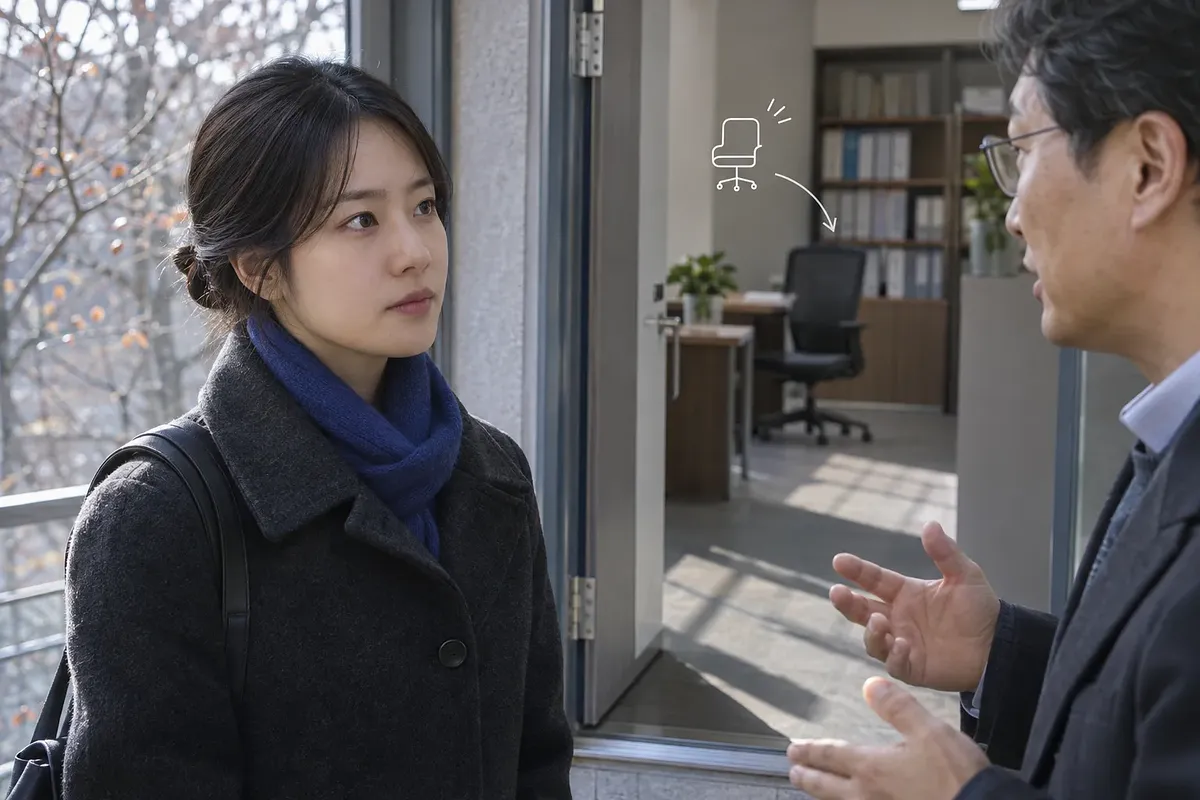
Some tax practices put trainee hiring on hold after AI-assisted cheating on the tax adviser exam came to light.
What do exam scores and practical assessments measure?
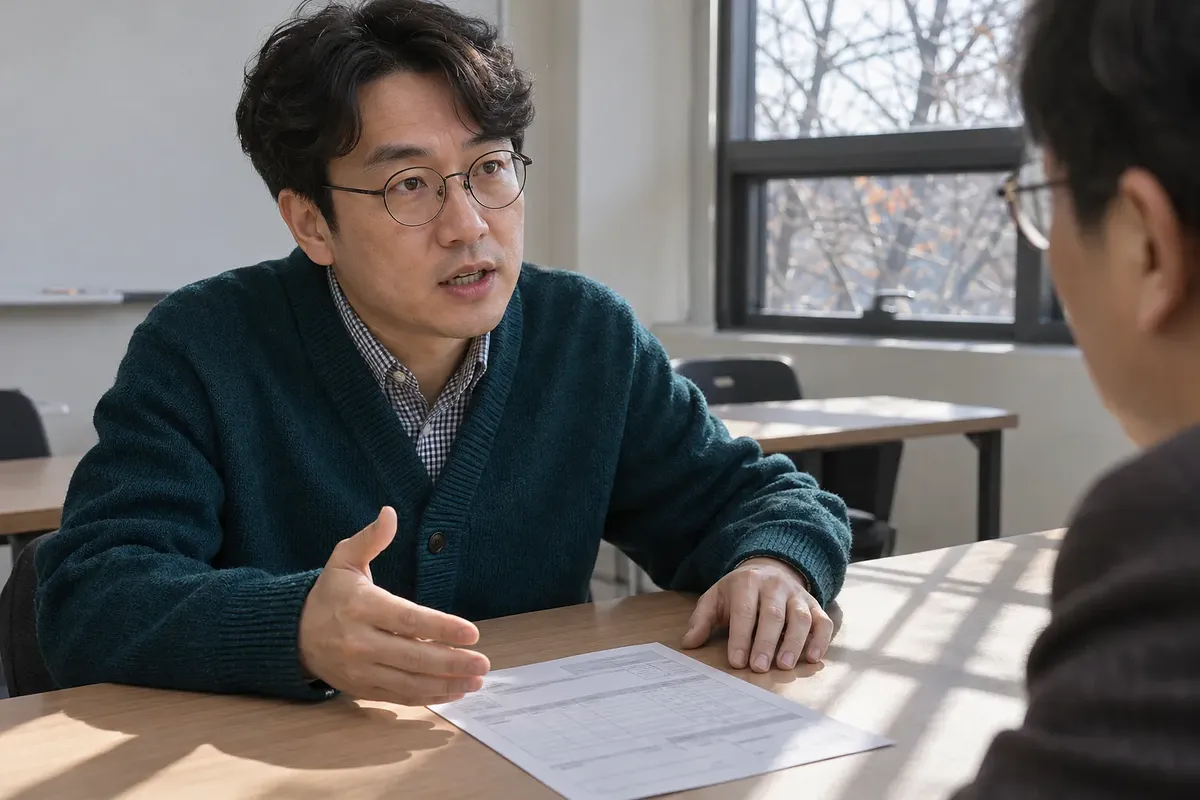
In an oral interview, an evaluator can ask a candidate to explain the reasoning behind a conclusion in their written answer. The Korean Association of Certified Tax Accountants' November 2026 proposal for assessing trainees during practical training included oral interviews and group discussions. Previous cohorts also completed about 6 months of practical training. The current discussion is about how to assess trainees' skills.
| Assessment method | What evaluators can assess | Example |
|---|---|---|
| Written exam | Answers submitted within the time limit and the scores they received | Tax accountant qualification exam |
| Oral interview | Why candidates applied tax law as they did in a given case and how they answer follow-up questions | Practical training assessment proposed by the Korean Association of Certified Tax Accountants |
| Group discussion | How candidates explain their judgment after hearing a different interpretation | Assessment method considered by the Korean Association of Certified Tax Accountants |
| Hands-on practical test | How candidates operate equipment themselves to complete a task | Loading, moving, and unloading cargo in the forklift operator certification test |
For example, two candidates who gave the same amount of tax due could be asked which facts they relied on. Changing the terms of the transaction in a follow-up question can show whether the original answer still applies. Interviews with hiring staff brought up a similar idea for company hiring: after online aptitude and personality tests, interviewers could check how applicants arrived at their answers.
Cheating cases detected on the CSAT and the cost of proctoring national qualification exams
The Ministry of Education's count of electronic device violations on the College Scholastic Ability Test (CSAT) for the 2027 academic year includes cases where test takers failed to turn in their devices. The provisional count through the fourth exam period on November 19, 2026 was 98 people. The next day, the Ministry of Education released a count of 111 cases covering all five periods.
| Ministry of Education count on November 20 | Count | What the count covers |
|---|---|---|
| All electronic device violations | 111 cases | All cases, including possession of a device or use during the exam |
| Detected through an emergency alert | 22 smartphones (detected when the first emergency alert was sent) | Cases in which an emergency alert helped uncover a device |
| Use of smart devices during the exam | 5 cases | Cases including use of smart glasses and taking photos or videos with smartphones |
National qualification exams require proctor training and equipment across multiple types of exams. On November 16, the government said it was considering expanding CCTV coverage at test sites and introducing radio signal detectors in response to the tax accountant exam incident. On November 24, the task force on fairness in national exams also discussed improving assessment methods.
Invalidation of the tax accountant exam result and suspension of eligibility to take the tax accountant exam for 5 years
Ministry of Finance and Economy, National Tax Service, and Human Resources Development Service of Korea, November 16, 2026, “Tax Accountant Exam Cheating Response Task Force” press release: sanctions covered by the disciplinary proceedings described in the release
A hypothetical increase in exam fees can give a sense of the scale of proctoring costs. In 2025, there were 2,290,491 candidates across written exams for test-based national technical qualifications and assessments for course-based qualifications. At an assumed additional cost of 1,000 won per person, that comes to 2,290,491,000 won. Actual proctoring budgets and exam fees can be checked in the testing bodies' budget and fee notices. (Verified fees: 30,000 won each for the first and second stages of the 2026 tax accountant qualification exam · Source: law.go.kr · As of 2026-03-20 · Verified on 2026-11-25)